 by Tealyra
Ultimate Guide to Caffeine Levels in Teas
Unlock actionable ideas for Ultimate Guide to Caffeine Levels in Teas with step-by-step tips and examples from Tealyra.
Ultimate Guide to Caffeine Levels in Teas
Table of Contents
- Start Here: Define Your Tea Caffeine Goal Before You Brew
- Pre-Work Checklist: Gather the Variables That Change Tea Caffeine
- Execution Checklist: Brew for the Caffeine Level You Want
- Validation Checklist: Taste, Note, and Compare Each Cup
- Common Misses: Avoid the Mistakes That Skew Tea Caffeine
You steep the same loose-leaf tea twice on a quiet morning, and the cup that sits a few minutes longer is the one that keeps you awake. Nothing on the tin changed. Tea caffeine did — because your brewing choices changed it.
That is where many tea drinkers get tripped up. We talk about caffeine as if it were fixed, yet a 3-gram sencha brewed for 90 seconds in 250 milliliters behaves differently from 5 grams forgotten in a 16-ounce mug while you answer email. The leaf matters. So do time, heat, dose, cup size, and leaf shape.
If you want calmer evenings, sharper 10 a.m. focus, or a breakfast tea that does not bulldoze your afternoon, treat caffeine as a brewing target instead of a mystery. Once you do that, your cups get easier to predict — and much easier to repeat.
Start Here: Define Your Tea Caffeine Goal Before You Brew
Before the kettle clicks on, decide what this cup needs to do for you. That one step saves more bad brews than any fancy teaware ever will.
Watch This Helpful Video
To help you better understand tea caffeine, we've included this informative video from Nutrition Made Simple!. It provides valuable insights and visual demonstrations that complement the written content.
Decide whether you want a gentle lift, steady focus, or minimal stimulation
Start with the moment, not the leaf. A 7 a.m. mug before a commute asks for something different from a 9 p.m. cup after dinner. If you skip this decision, you end up choosing tea by habit, then wondering why the result feels wrong.
- Pick a gentle lift when you want alertness without a hard edge — think a lightly brewed white tea or green tea in a small cup.
- Pick steady focus when you need a few solid work hours — measured oolong, sencha, or black tea often fits well.
- Pick minimal stimulation when the goal is comfort, not energy — herbal infusions like peppermint, chamomile, or rooibos usually make more sense than true tea.
Your own sensitivity matters as much as the category. One person can drink a second infusion of Tieguanyin at 4 p.m. and sleep fine. Another gets restless from a short green tea at noon. Build around your body, not somebody else's routine.
Identify the tea type you are starting with
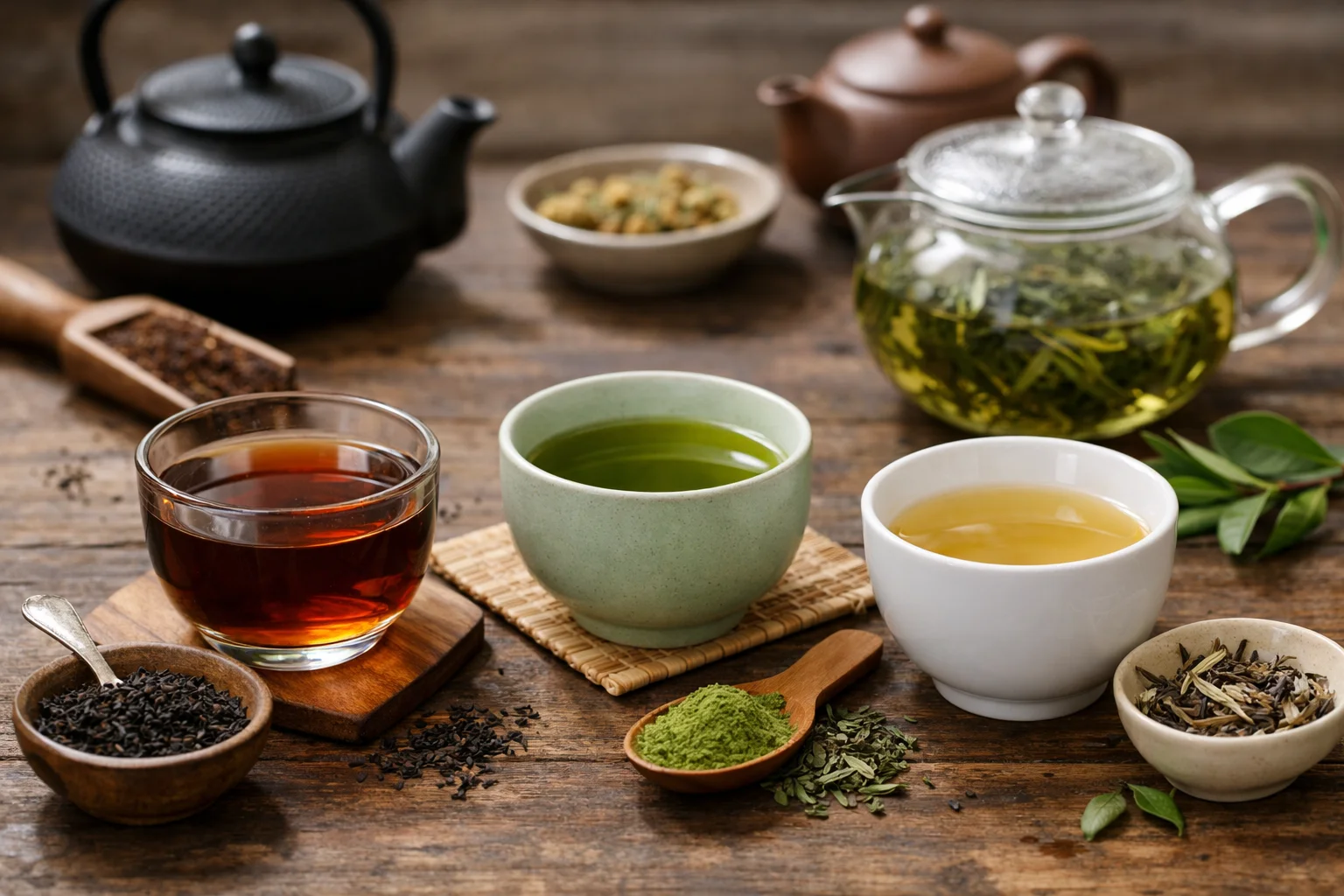
Next, name the leaf correctly. White, green, oolong, black, and pu-erh all come from Camellia sinensis. Herbal teas do not. That sounds basic, but flavored tins and gift blends often blur the line. “Jasmine” might be green tea. “Chai” might be black tea. “Mint tea” might contain no tea leaf at all.
Tea type gives you a starting point, not a verdict. A broken-leaf breakfast blend and a whole-leaf Darjeeling are both black tea, yet they can extract very differently. White tea is not automatically low. Green tea is not automatically light. Oxidation level shapes how the leaf responds to heat and water, and leaf size affects how quickly caffeine is pulled into the cup.
- Expect white and green teas to be sensitive to both time and temperature.
- Expect oolong to vary widely — green-leaning Baozhong and roasted Wuyi-style teas do not behave the same way.
- Expect black tea and many pu-erh styles to tolerate hotter water and fuller extraction.
- Expect herbal infusions to sit outside the usual tea caffeine conversation altogether.
Set a brewing plan before heating the water
Once you know the goal and the tea type, commit to a plan. Do not improvise mid-pour. Set your cup size, leaf amount, water temperature, and steep time first. A 100-milliliter gaiwan session and a 500-milliliter office mug can produce very different caffeine outcomes even when the leaf is the same.
- Choose the vessel size you will actually drink from.
- Measure the leaf, ideally in grams.
- Choose a water temperature that fits the tea style.
- Set a timer before the leaf touches water.
This sounds almost too simple. It works anyway. Most caffeine surprises come from unplanned brewing — a second spoonful tossed in, a kettle left fully boiling, or a “quick steep” that turns into 6 minutes while you take a phone call.
Rule: choose the cup you want before you choose the tea.
Pre-Work Checklist: Gather the Variables That Change Tea Caffeine
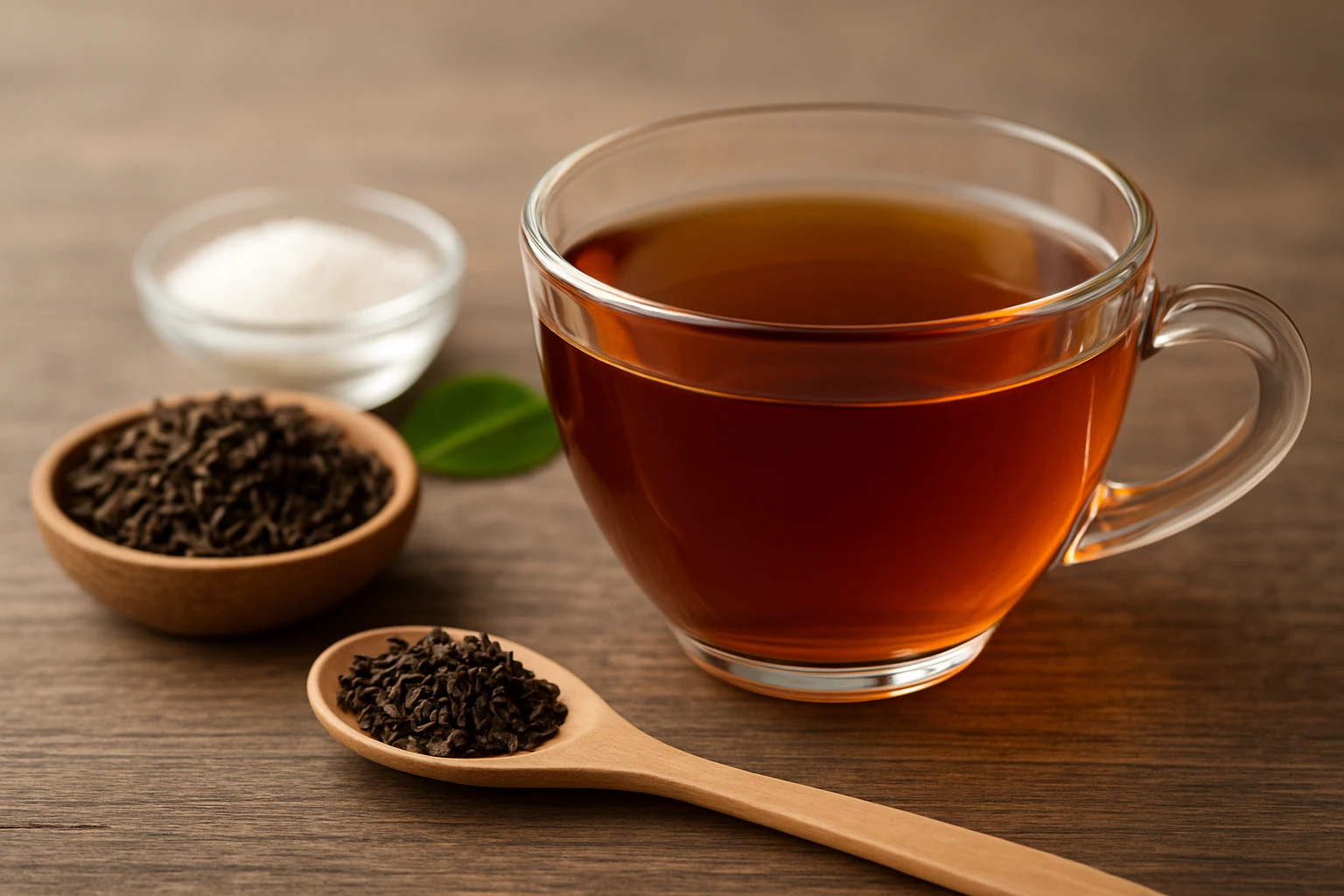
Good control starts with inventory. Lay out the tea, the vessel, the scale, and the timer. When every variable is visible, the brew stops being a guess.
Check whether the tea is white, green, oolong, black, pu-erh, or herbal
Read the label closely. If the base is white, green, oolong, black, or pu-erh, you are working with true tea from Camellia sinensis and some level of caffeine is part of the equation. If the base is peppermint, hibiscus, rooibos, or chamomile, it is an herbal infusion and is typically caffeine-free.
That distinction matters because people often judge by flavor words instead of plant identity. “Peach tea” could be black tea with fruit flavoring. “Vanilla rooibos” could be caffeine-free. “Masala chai” could be robust black tea underneath a pile of spices. If you misidentify the base, you misread the cup before you even start.
Confirm leaf style: whole leaf, broken leaf, fannings, or tea bags
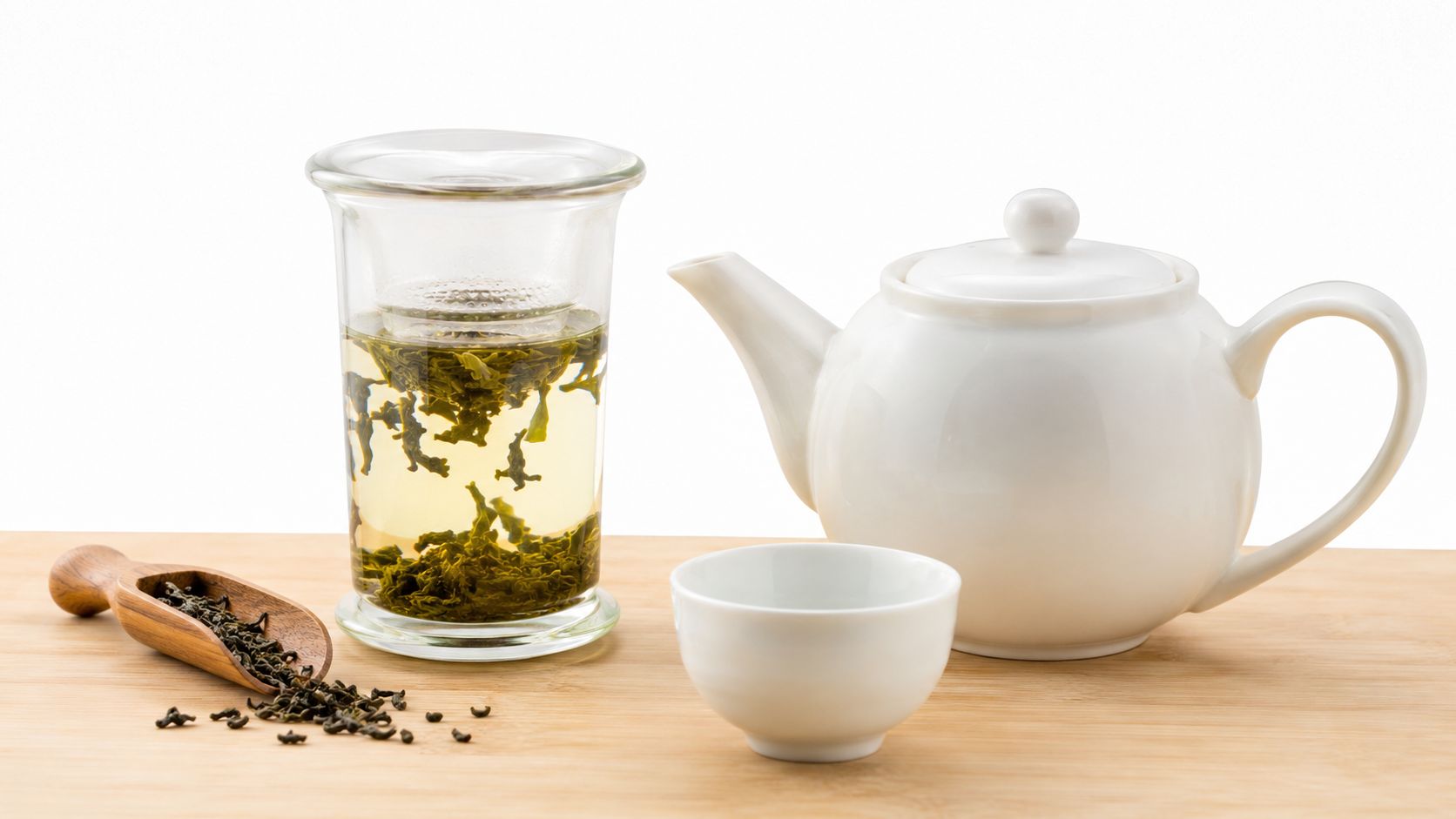
Now look at the physical leaf. Whole leaves, twisted strips, rolled pearls, broken fragments, fannings, and tea bags all extract differently. Smaller pieces expose more surface area, so they often release flavor and caffeine faster. That is why a bagged CTC Assam can turn brisk in 2 minutes while a rolled oolong may take several short infusions to fully open.
This is also where loose-leaf tea often gives you more control. With whole or larger leaf grades, you can watch the infusion develop instead of getting hit all at once. Heavily broken leaf is not bad. It is just faster, and fast extraction demands tighter timing.
- Use extra caution with fannings and fine-cut tea bags.
- Expect whole-leaf teas to respond well to shorter, repeatable infusions.
- Do not compare a roomy basket infuser and a cramped paper tea bag as if they brew the same.
Measure your usual leaf-to-water ratio and cup size
This is where “I only had one cup” often falls apart. One cup might mean 240 milliliters. Another might mean 475. If you use the same tablespoon in both, you did not make the same drink. Total liquid matters, and so does the leaf dose behind it.
Weigh the leaf if you can. A small digital scale removes a lot of noise. If you do not have one, use the same spoon and the same mug every time until you can compare more cleanly. I like thinking in grams per 100 milliliters because it scales well from a gaiwan to a teapot.
| Variable | What To Check | If You Want Less Stimulation | If You Want More Stimulation |
|---|---|---|---|
| Tea base | Herbal or true tea | Choose herbal or brew true tea lightly | Choose a true tea suited to fuller extraction |
| Leaf style | Whole leaf vs broken leaf | Start with whole leaf and tighter timing | Expect faster extraction from broken grades |
| Dose | Grams per 100 ml | Lower the leaf amount first | Increase the leaf amount carefully |
| Cup size | 250 ml mug or 500 ml pot | Keep the serving smaller | Remember total intake rises with volume |
Practical rule: if you do not measure the leaf, you are guessing the caffeine.
Execution Checklist: Brew for the Caffeine Level You Want
Once the setup is clear, you can steer the cup. In practice, three levers do most of the work: steep time, water temperature, and leaf dose.
Adjust steep time first when you want a faster or slower caffeine release
Time is usually the easiest lever to change without wrecking the style of the tea. If you like the tea itself but want a gentler result, shorten the steep by 30 to 60 seconds before you do anything drastic. If you want more intensity, lengthen in small steps and taste each version.
Longer steeping generally extracts more caffeine. It also extracts more bitterness and astringency, which is why “stronger” and “better” are not the same word. A green tea at 80°C for 90 seconds can feel very different from the same tea at 3 minutes. An English Breakfast left for 5 minutes is not just bolder than one steeped for 3 — it often feels more stimulating too.
- Shorten steep time first for a smoother, lighter cup.
- Lengthen in small increments, not giant jumps.
- Keep a timer visible; memory is unreliable at 7 a.m.
Use hotter water for stronger extraction, especially with black tea
Hotter water speeds extraction. That is why many black teas and pu-erh styles wake up best near 95 to 100°C, while many green teas behave more cleanly around 75 to 85°C. Raise the heat and you generally pull compounds out faster. Lower it and the cup slows down.
Match the heat to the leaf. If you push a delicate Japanese green with near-boiling water, you usually get harshness before you get balance. If you baby a bold Assam with lukewarm water, you can end up with a flat cup that still tastes unresolved. Heat is a tool, not a badge of seriousness.
| Your Goal | Change First | Then Watch For |
|---|---|---|
| Gentle lift | Shorten the steep | Flavor becoming too thin or grassy |
| Steady focus | Match temperature closely to the tea style | Balanced body without harshness |
| Stronger cup | Raise temperature within the tea's normal range | Bitterness, dryness, and over-extraction |
Reduce leaf quantity if you want a lighter cup without changing the tea style
This is the cleanest move when you love a particular tea and just want it to hit more softly. If your favorite Keemun at 4 grams per 250 milliliters feels too pushy, keep the water hot enough for black tea and reduce the leaf to 3 grams. That preserves the tea's identity better than trying to force it into submission with odd temperatures.
Do not cut the leaf and then compensate by oversteeping for 7 minutes. That often gives you the worst of both worlds — rough flavor and a cup that still extracts plenty. If your tea supports multiple infusions, especially whole-leaf oolong or pu-erh, spread the experience across two or three shorter brews instead of one long soak. For many teas, the first infusion carries most of the caffeine and later infusions are lighter.
Contrarian take: brewing “stronger” for flavor often also means brewing stronger for caffeine.
Validation Checklist: Taste, Note, and Compare Each Cup
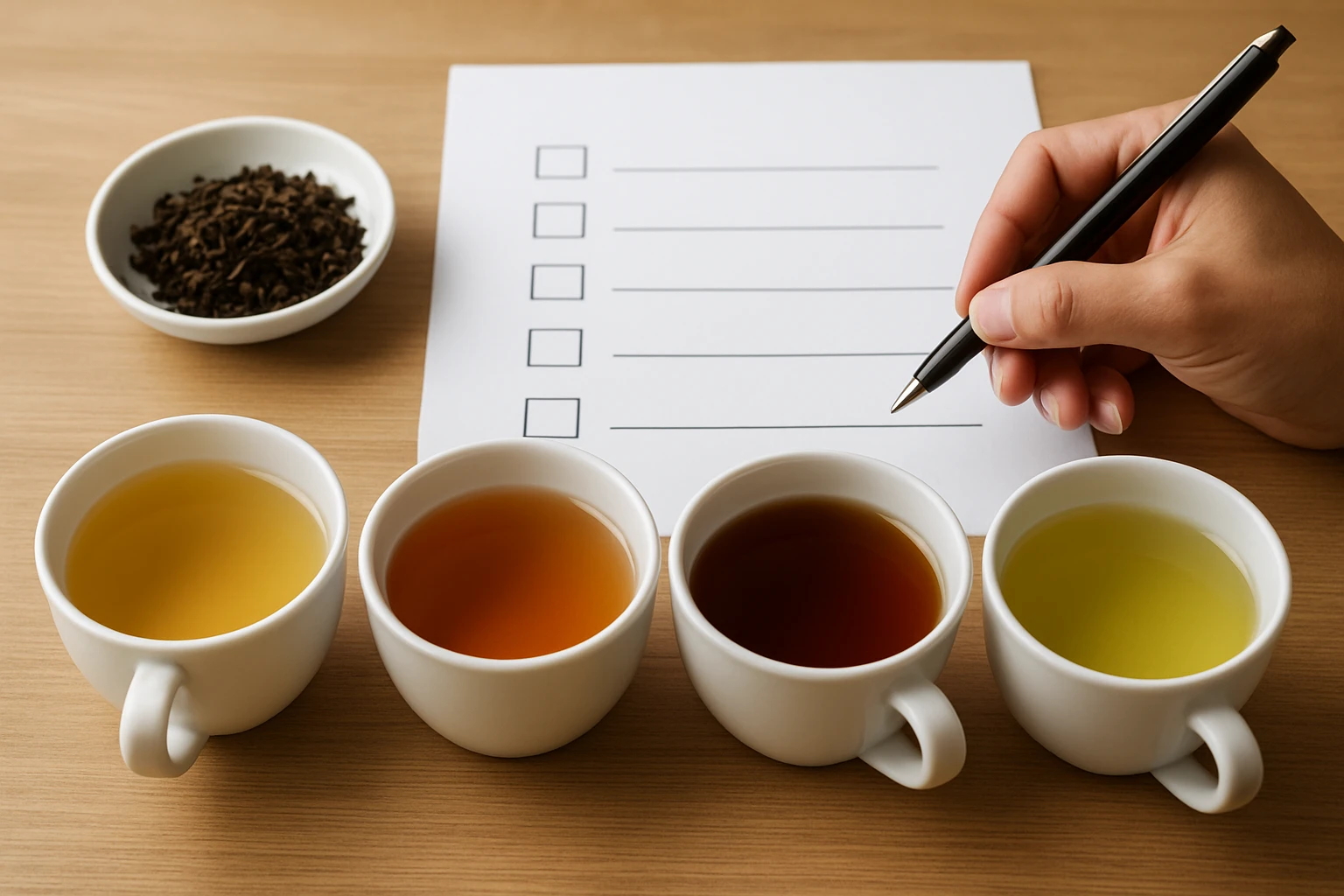
A good guess becomes a repeatable result only when you verify it. The cup in front of you matters more than the idea you had before the kettle boiled.
Taste the brew before judging caffeine by color alone
Color is a poor standalone signal. A dark cup does not always mean more caffeine, and a pale cup does not always mean less. Rooibos can brew deep red-brown and contain no true tea at all. A lighter Darjeeling or lightly oxidized oolong can look delicate and still feel lively.
Taste first. Then pay attention to body, briskness, bitterness, and the way the tea lands in your system 20 to 40 minutes later. Color can tell you something about extraction style. It cannot tell you the whole tea caffeine story on its own.
- Notice briskness and drying tannin, not just darkness.
- Check aroma and aftertaste as clues to over-extraction.
- Wait long enough to notice how the cup actually feels.
Record steep time, water temperature, and leaf amount
Write the brew down. Use a small notebook, a notes app, or the back of the tea pouch — anything you will actually keep using. If you ever had one perfect mug of sencha and could never repeat it, missing notes are usually why.
A useful record can be short:
- Tea name and type: for example, “Dragon Well, green tea.”
- Leaf and water: “3 g / 250 ml.”
- Temperature and time: “80°C / 1:30.”
- Effect: “clear focus at 10 a.m., no jitters.”
That last line matters. Brewing notes help you repeat a result that felt energizing, smooth, or too strong. They also show patterns. Maybe 95°C works for your Yunnan black in winter but feels too aggressive in the evening. Maybe your 12-ounce mug is perfect, while your 20-ounce tumbler pushes total intake too far.
Compare first infusion and second infusion for intensity
Brew the same leaf twice on purpose. Keep the vessel and dose fixed. Then compare. For many teas, the first infusion carries the biggest caffeine hit and the second is gentler, rounder, or slower. That is not universal, but it is common enough to be worth testing at home.
This comparison is especially revealing with whole-leaf teas. A rolled Tieguanyin, a sheng pu-erh, or a roomy black tea in a basket infuser can show a clear shift from first cup to second. Tea bags and fannings usually flatten that difference because they extract so quickly up front. If the second cup turns out to be your sweet spot, that is useful information you can build a routine around.
Rule: repeat the method that worked, not the color that looked strongest.
Common Misses: Avoid the Mistakes That Skew Tea Caffeine
Most frustrating cups are not ruined by bad tea. They are skewed by a few small habits that make your results feel random.
Do not assume all green tea has the same caffeine level
“Green tea” is a huge category, not a single caffeine setting. Bancha, sencha, Longjing, gyokuro-style teas, and a generic tea bag from the office kitchen are all green, yet they can behave very differently because processing, leaf grade, brewing method, and dose vary. Two teas in the same category can land miles apart in the cup.
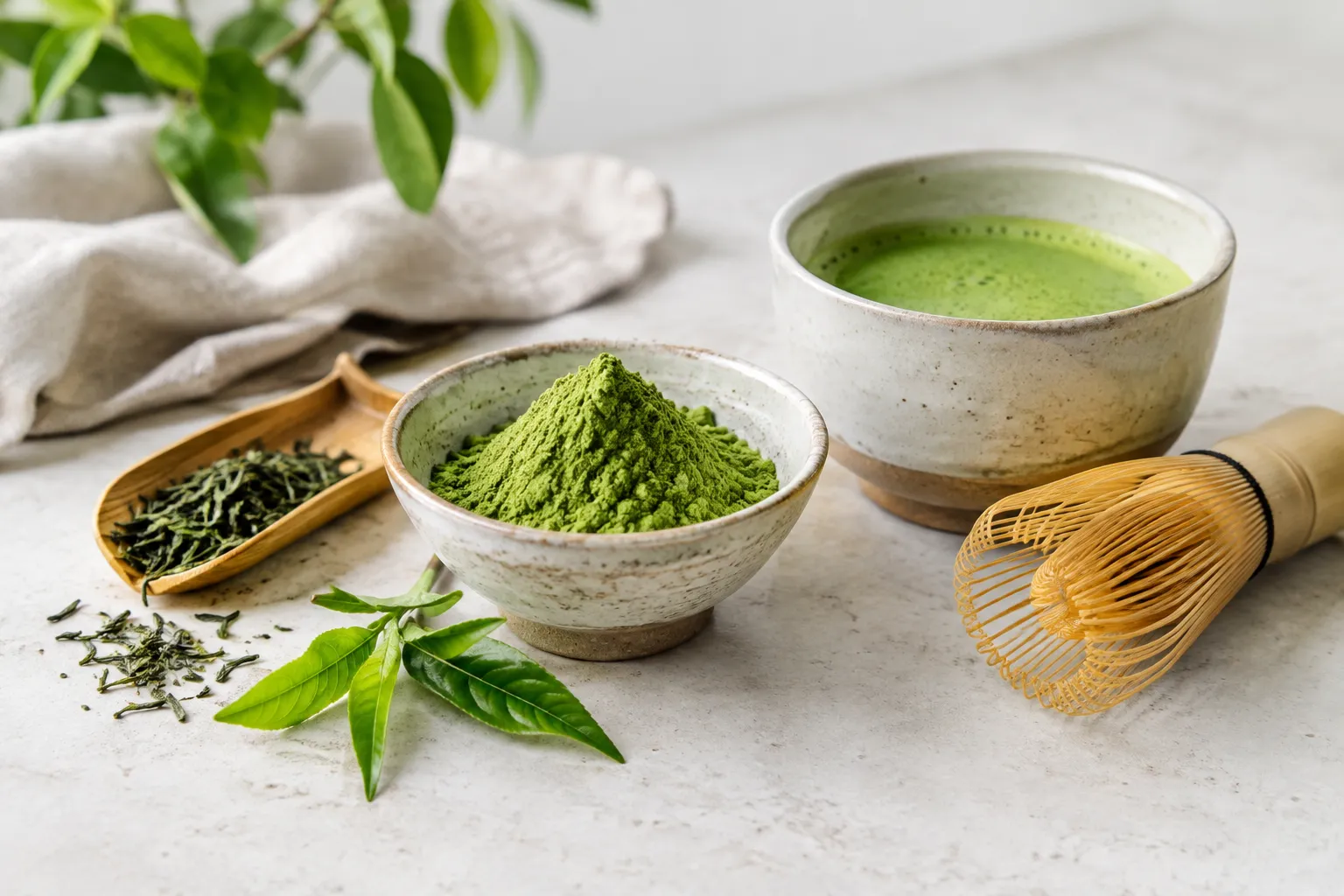
Then there is matcha. Because you consume the whole leaf powder rather than steeping leaves and discarding them, the drink delivers caffeine differently from a standard brewed tea. That makes broad green-tea assumptions even less useful. Judge the actual tea in your hand, not the color family it belongs to.
Do not forget that decaf tea still contains some caffeine
Decaffeinated tea is not the same as caffeine-free tea. If you are very sensitive, pregnant, limiting caffeine for medical reasons, or trying to protect sleep, that distinction matters. A decaf black tea can be a sensible compromise when you want familiar flavor, but it is not the same as peppermint or chamomile.
Herbal teas are typically caffeine-free because they are not made from Camellia sinensis. If your goal is truly minimal stimulation late at night, herbal is often the clearer choice. If your goal is lower caffeine while keeping a tea profile, decaf can still fit — just do not treat it like plain hot water.
Do not overbrew when your goal is a smoother cup
Overbrewing is one of the most common ways tea drinkers accidentally raise both roughness and stimulation. You want “more flavor,” so the bag sits in a 500-milliliter mug for 8 minutes. The result is dark, bitter, and often more caffeinated than you intended. That is not smooth. It is just over-extracted.
A better move is to keep the tea in its normal range and change one variable at a time. Use a bit more leaf if the cup tastes weak. Use a smaller mug. Use a basket infuser instead of crushing a tea bag against the side of a mug. And remember that two teas of the same type can differ because leaf grade, processing, and brew method all change the outcome. A properly timed gaiwan infusion and an oversteeped office tea bag are not fair comparisons.
Common mistake: thinking tea type alone determines caffeine, when the brew method can be just as important.
Tea caffeine is controllable when you choose the leaf, control the brew, and verify the result with notes.
Darker is not automatically stronger, and “one cup” is not a real measurement. Time, temperature, dose, and leaf style do most of the heavy lifting.
What changes when you brew your favorite tea tomorrow with just one variable moved on purpose?
Brew Smarter With Tealyra
Explore Premium loose leaf tea for clearer brewing choices, steadier energy, and confident steeping across green, black, oolong, and herbal favorites.
Shop Loose Leaf