 by Tealyra
Gyokuro Green Tea Benefits and Brewing
Discover the top gyokuro green tea benefits, from calm alertness to rich umami flavor. Learn the science of shading and the perfect low-temperature brew.
The most common advice about green tea is also the least useful for gyokuro: brew it like any other green tea. That approach can waste the very qualities that make this Japanese tea special. Gyokuro's benefits depend on extraction, and extraction depends on water temperature, steeping time, leaf quantity, and patience.
A properly prepared cup can taste richly savory, almost like a delicate broth, with a smooth texture and a lingering sweetness. Brew the same leaves with water that's too hot, and the cup may become sharp, bitter, and noticeably more stimulating. The leaf matters, but the method decides what reaches your cup.
Table of Contents
- Why Gyokuro Stands Apart from Standard Green Tea
- The Shading Innovation That Changed Tea History
- The Science of Calm Alertness and Amino Acids
- Understanding the Savory Umami Flavor Profile
- Mastering the Low-Temperature Brewing Method
- Common Brewing Mistakes That Ruin the Experience
- Elevating Your Daily Tea Ritual
Why Gyokuro Stands Apart from Standard Green Tea
Many tea drinkers treat green tea as one broad category, expecting every variety to offer the same grassy flavor and roughly the same wellness profile. Gyokuro challenges that assumption. It isn't a stronger version of sencha or a loose-leaf alternative to matcha. It's a shade-grown Japanese tea whose cultivation changes the chemistry, flavor, and brewing requirements of the leaf.
The distinction begins in the field. Farmers cover the tea plants before harvest, reducing their exposure to sunlight. This changes the balance between amino acids, caffeine, and catechins. The resulting leaves are deep green, soft, and intensely aromatic, while the infusion develops an umami character that standard green tea drinkers may not expect.
That cultivation requires more care than ordinary everyday tea production. Shading adds work for growers, and the finished tea rewards careful handling rather than speed. Gyokuro is valued as a premium agricultural product because its character comes from a deliberate interaction between plant biology, farming skill, processing, and preparation.
The important distinction: gyokuro isn't defined only by the tea plant. It's defined by what growers do to that plant before harvest and what the brewer does afterward.
The phrase “green tea benefits” can therefore be misleading when applied too broadly. A tea rich in amino acids and a tea with a more pronounced catechin profile may produce different sensory and functional experiences. The cup you drink also depends on how aggressively you extract each compound.
If you're used to sencha, start by approaching gyokuro as a separate style rather than adjusting your usual recipe. The guide to mastering Japanese tea can help place gyokuro within the wider world of Japanese tea preparation. Your tea cabinet may contain several green teas, but they shouldn't all be treated as interchangeable.
The Shading Innovation That Changed Tea History
Gyokuro's distinctive benefits begin in the field, yet they are not guaranteed by the leaf alone. The brewing method decides how much of its amino acids, caffeine, and catechins enters the cup, so preparation is part of the tea's identity rather than a final detail.
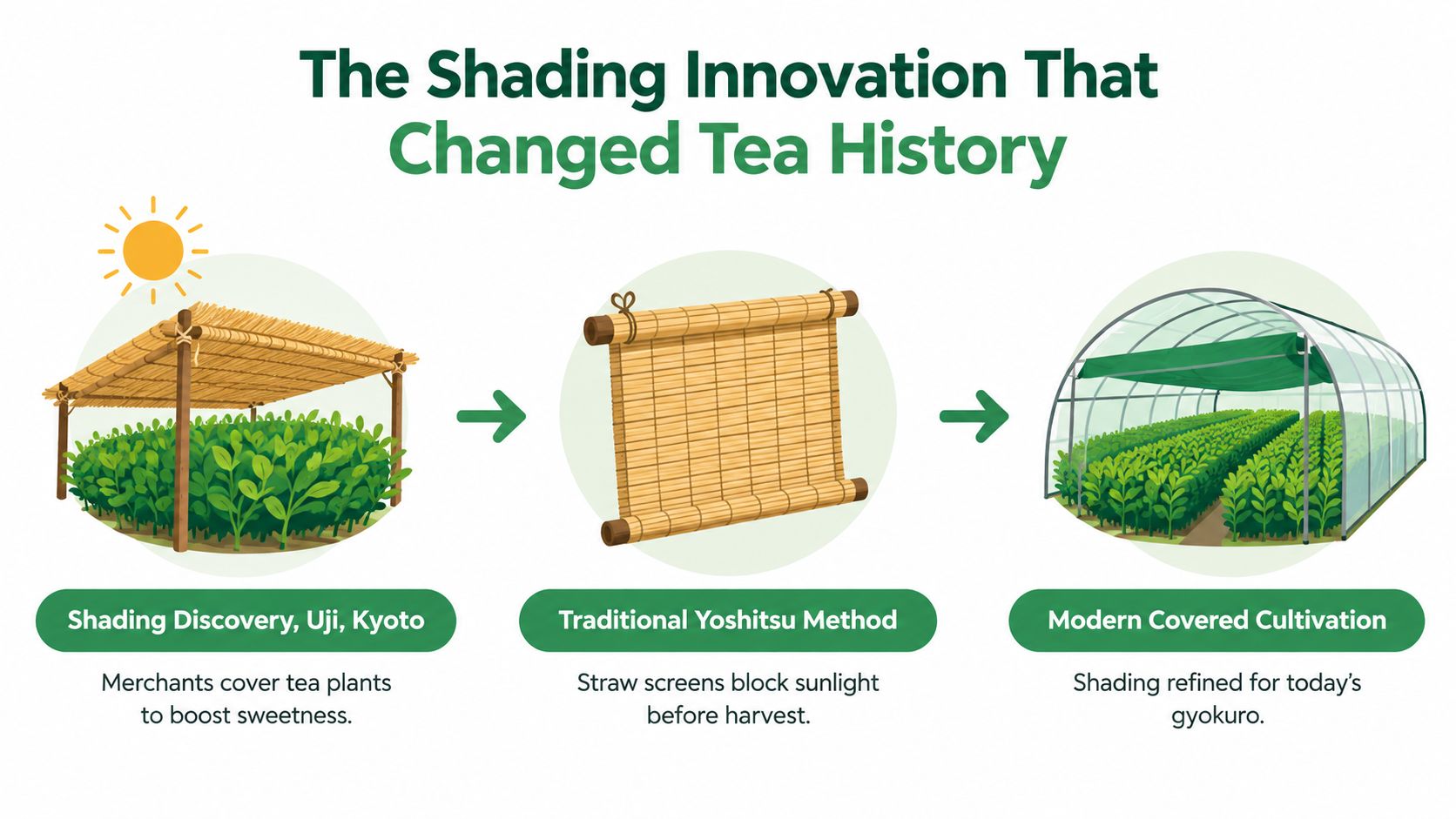
Gyokuro's modern history is usually traced to 1835 in Uji, Kyoto, when tea merchant Kahei Yamamoto observed that shaded tea plants produced a sweeter, less bitter leaf. The tea later reached Edo and gained popularity, as described in this account of gyokuro's history and character.
The discovery changed more than a farming routine. It showed that controlling sunlight could redirect the plant's chemistry and create a different sensory experience. By the nineteenth century, gyokuro had become a luxury style associated with shade cultivation and careful rolling, securing its place among Japan's most prized teas.
What sunlight changes in the plant
Tea plants use sunlight to drive photosynthesis and produce the compounds needed for growth. When growers shade them for about three weeks, the leaves retain more amino acids associated with savory taste and produce fewer catechins, compounds commonly linked with bitterness and astringency. The relationship between shading and composition appears in research on gyokuro's theanine and catechin profile.
The visual change is easy to notice. Shaded leaves become darker green and more supple, signs of altered composition beneath the surface. After processing, gyokuro leaves often resemble fine needles. Their appearance suggests quality, but it cannot predict how much the brewing method will release.
Gyokuro also occupies a narrower category than Green Tea, a broad group that includes Chinese and Japanese loose-leaf styles. “Green tea” names a family. Gyokuro identifies a premium style shaped by shade cultivation, processing, and careful extraction.
Why the history still matters
Historical tea methods can look ceremonial until their practical effect becomes clear. Uji growers discovered a way to change the raw material before harvest, while modern brewers determine which of those changes appear in the infusion. A low-temperature, carefully timed brew can preserve gyokuro's softness and umami; a harsher extraction can shift the balance toward bitterness and astringency.
That is why gyokuro deserves different standards from a light, brisk sencha. Its character rests on depth, softness, umami, and controlled intensity, and those qualities depend on drawing the leaf slowly rather than extracting it aggressively.
The Science of Calm Alertness and Amino Acids
Gyokuro's most distinctive nutritional feature is its high concentration of theanine and other amino acids, combined with substantial caffeine and comparatively low catechin levels. The shading process helps explain this balance. By limiting sunlight, growers suppress catechin biosynthesis while encouraging the accumulation of amino acids associated with umami.
A 2025 NIH/PMC study found that gyokuro contained more amino acids and caffeine than any other green tea in its comparison set, while catechins were the lowest among those teas except hojicha. Under the brewing conditions tested, gyokuro extracted 10 times more theanine and 7 times more caffeine than superior sencha. Those figures describe that specific comparison and brewing setup, not a universal value for every gyokuro or every cup. The findings are available in the peer-reviewed study of amino acids and caffeine in Japanese green teas.
Why theanine changes the experience
Theanine is an amino acid strongly associated with gyokuro's reputation for relaxed focus. Caffeine can increase alertness, while theanine and arginine are associated with anti-stress effects. The experience isn't necessarily “calm” because gyokuro lacks stimulation. It may feel calm because the stimulating compounds arrive alongside a high level of amino acids that soften the character of the cup.
This is why the phrase calm alertness is more accurate than “sleepy tea.” Gyokuro can be mentally engaging and savory at the same time. It may suit a quiet reading session, focused work, or a slow morning when you want attention without the aggressive impression of a highly bitter drink.
The Japanese Tea Association also identifies gyokuro with high L-theanine content, while an explanation of the shading mechanism from the Japanese Tea Association and JETRO connects reduced sunlight with amino-acid accumulation rather than catechin formation.
The ratio matters more than a single compound
It's easy to focus on one headline ingredient, but the experience comes from the balance among compounds. Research on green-tea stress effects indicates that theanine-rich teas may work best when the ratio of theanine and arginine is relatively high compared with caffeine and catechins. The same research associates theanine and arginine with anti-stress effects, while EGCG and caffeine can counterbalance them. You can read the discussion in this review of theanine, caffeine, and green-tea stress effects.
That balance is also why brewing becomes part of the benefit. Cooler water can leave theanine relatively stable while suppressing the extraction of caffeine and EGCG. Hotter water shifts the cup toward a stronger, more stimulating, and potentially more astringent profile.
If the broader subject interests you, this resource on calming green tea and stress offers useful context. Gyokuro isn't a medical treatment, and individual responses to caffeine vary. Its practical appeal lies in the way cultivation and preparation can create a more rounded relationship between stimulation, flavor, and relaxation.
Understanding the Savory Umami Flavor Profile
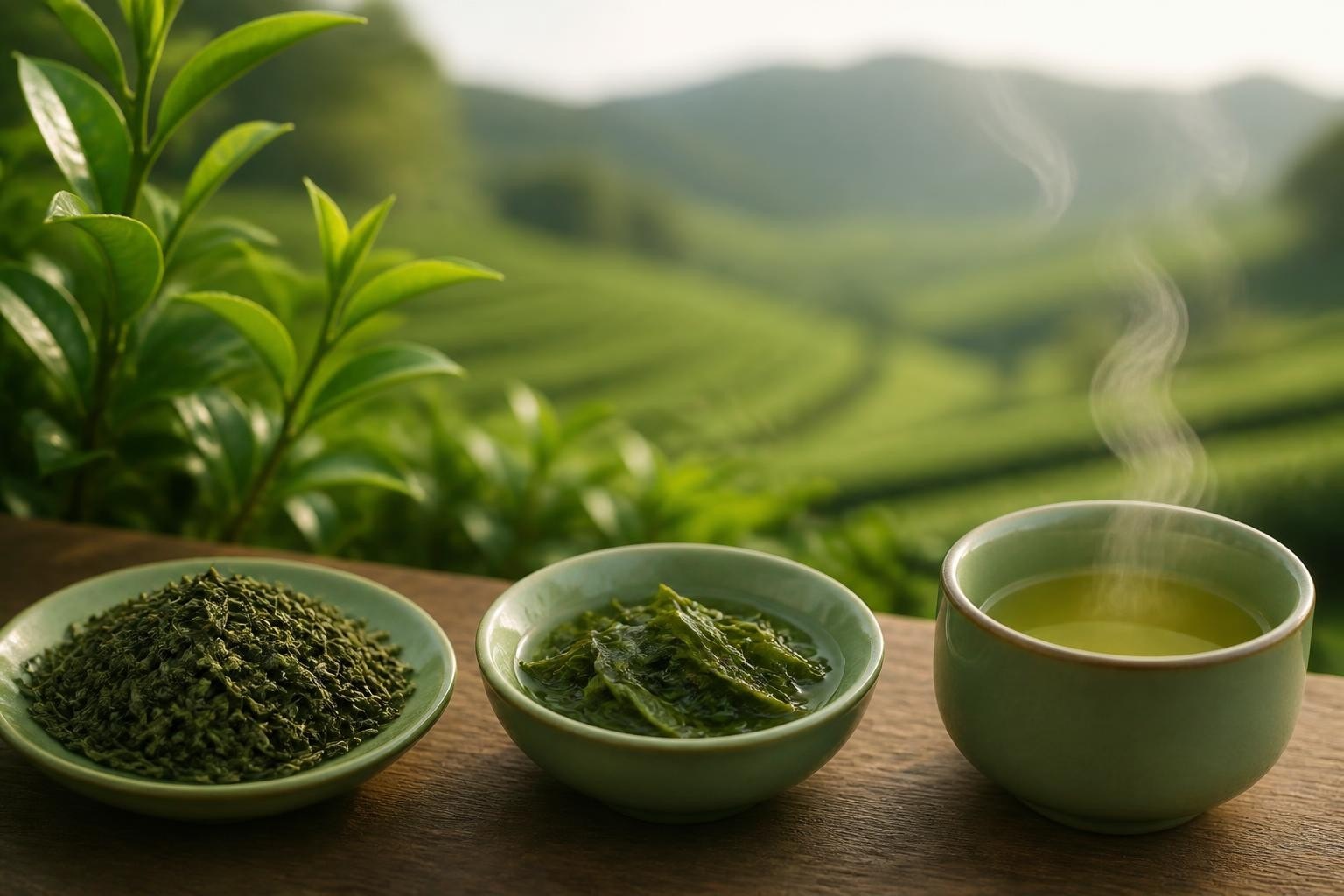
A first sip of gyokuro can confuse anyone expecting a light, grassy green tea. The liquor may be vivid green or yellow-green, depending on the leaf and preparation, but the flavor is often brothy, marine, sweet, and richly savory. It can suggest tender greens, fresh seaweed, or a clear soup rather than freshly cut grass.
That impression comes from the same chemistry that supports gyokuro's distinctive functional profile. Amino acids such as theanine and arginine contribute to umami, while lower catechin extraction can reduce the drying sensation that makes some green teas feel sharp. The result is a fuller mouthfeel with less aggressive astringency when the tea is brewed carefully.
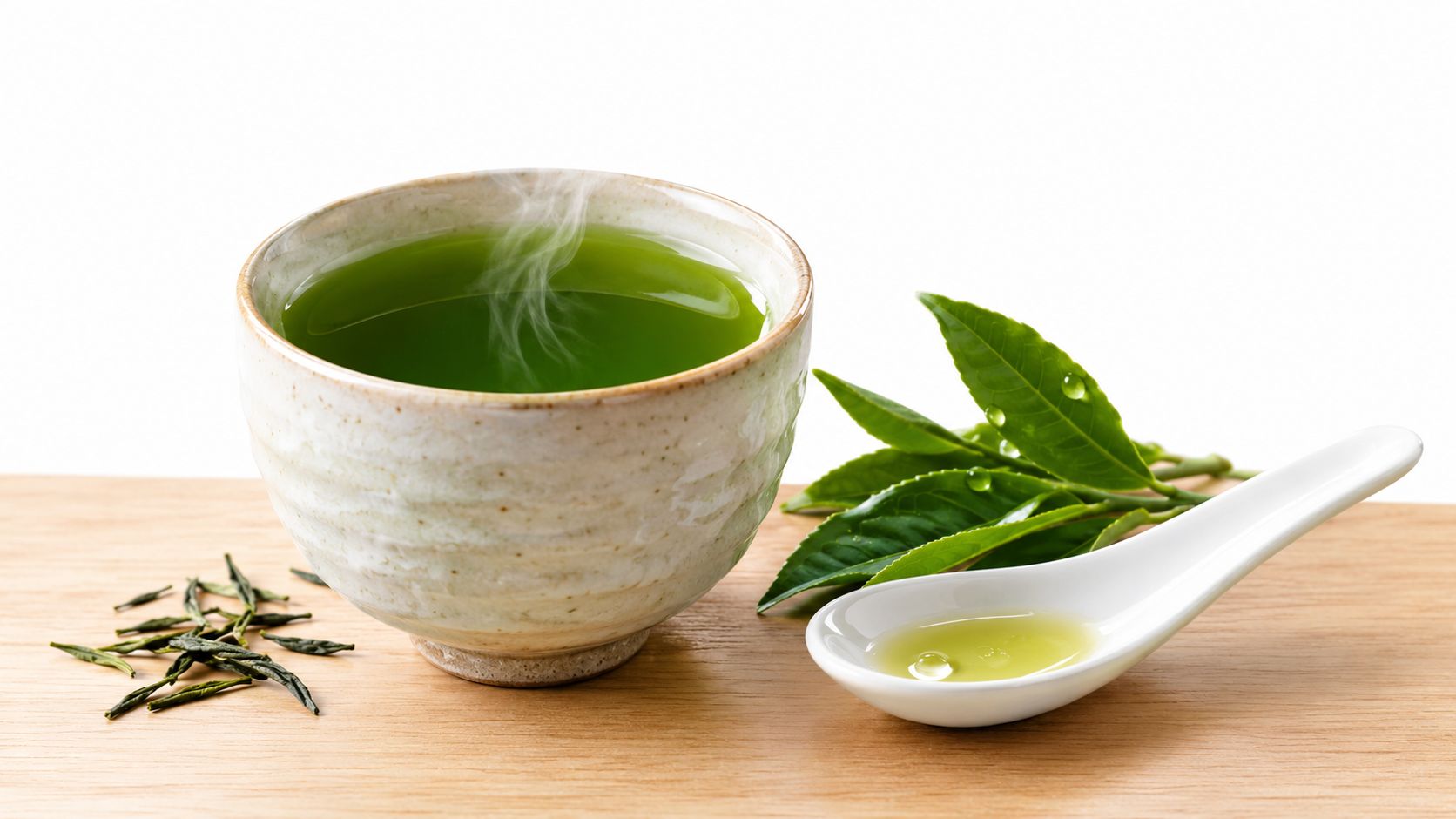
What to notice in the cup
Taste gyokuro in small sips rather than swallowing it quickly. Let the liquor spread across your tongue, then notice how the flavor changes after the initial savory impact.
- Aroma: Look for fresh vegetal notes, soft seaweed character, and a clean sweetness.
- Texture: A well-prepared cup can feel rounded and almost silky rather than thin.
- Flavor: The center of the sip should be savory and concentrated, with a gentle vegetal depth.
- Finish: Pay attention to the lingering sweetness after the liquid has gone.
The tea may taste unusual at first because umami is less familiar in a beverage than sweetness or bitterness. Don't judge the first sip in isolation. Gyokuro often develops as the palate adjusts to its savory structure.
How light affects flavor
A commercial-quality study on gyokuro-style tea found that shading plants to roughly 1% of ambient light intensity increased theanine concentration and improved theanine-to-caffeine balance. The resulting tea was described as more desirable, with greater umami and lower bitterness-associated caffeine perception. The finding appears in this study of shading and gyokuro-style tea quality.
That detail helps explain why gyokuro can taste so concentrated without relying solely on bitterness. The grower isn't merely making a stronger green tea. The cultivation process is steering the leaf toward a different sensory architecture, and the brewer must preserve it.
Mastering the Low-Temperature Brewing Method
Gyokuro doesn't reward the usual “hotter water extracts more flavor” instinct. Hot water can pull out compounds quickly, but speed isn't the objective here. The goal is to draw out theanine and savory amino acids while moderating the extraction of caffeine, EGCG, and other catechins that can make the liquor bitter or drying.
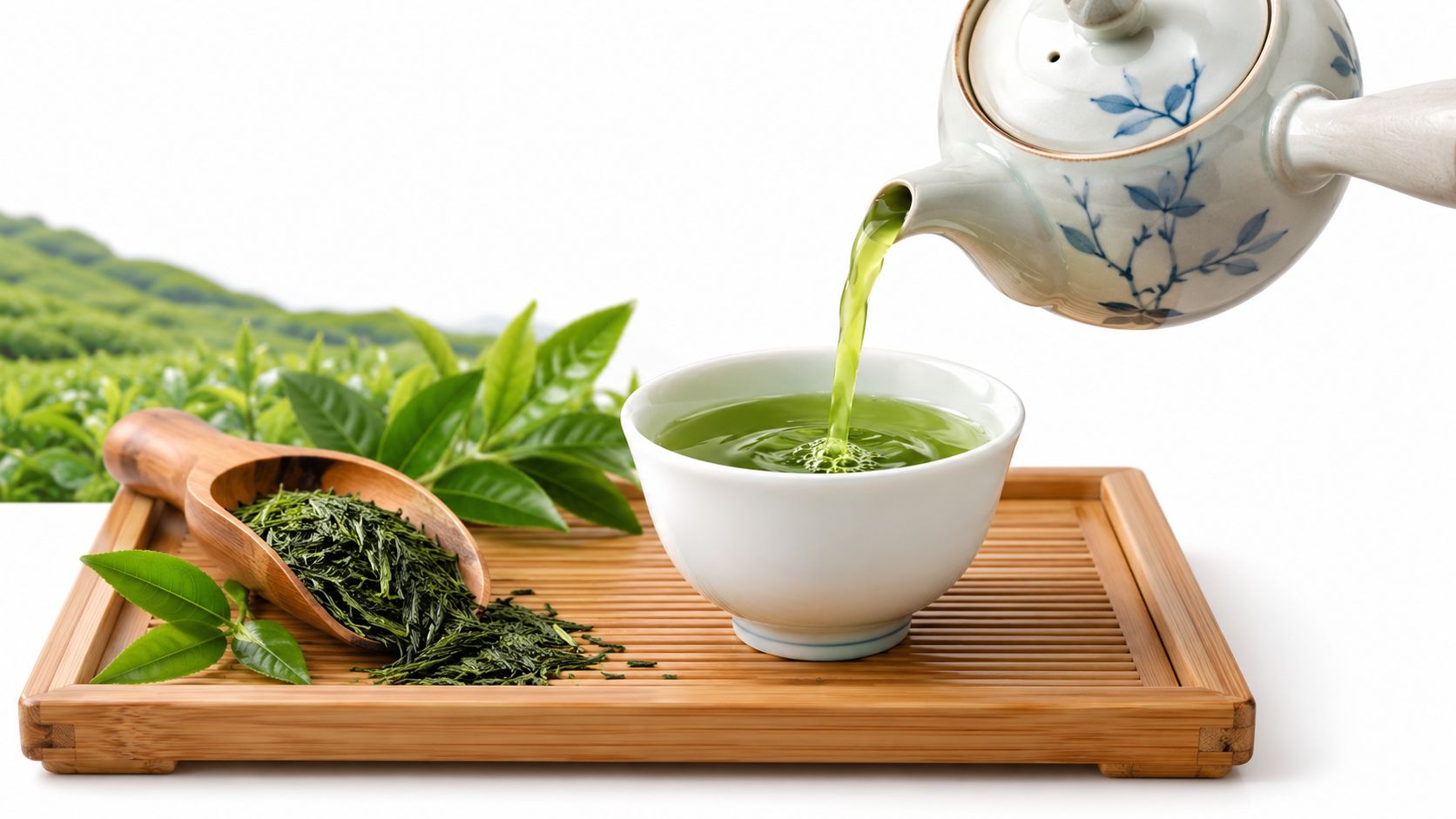
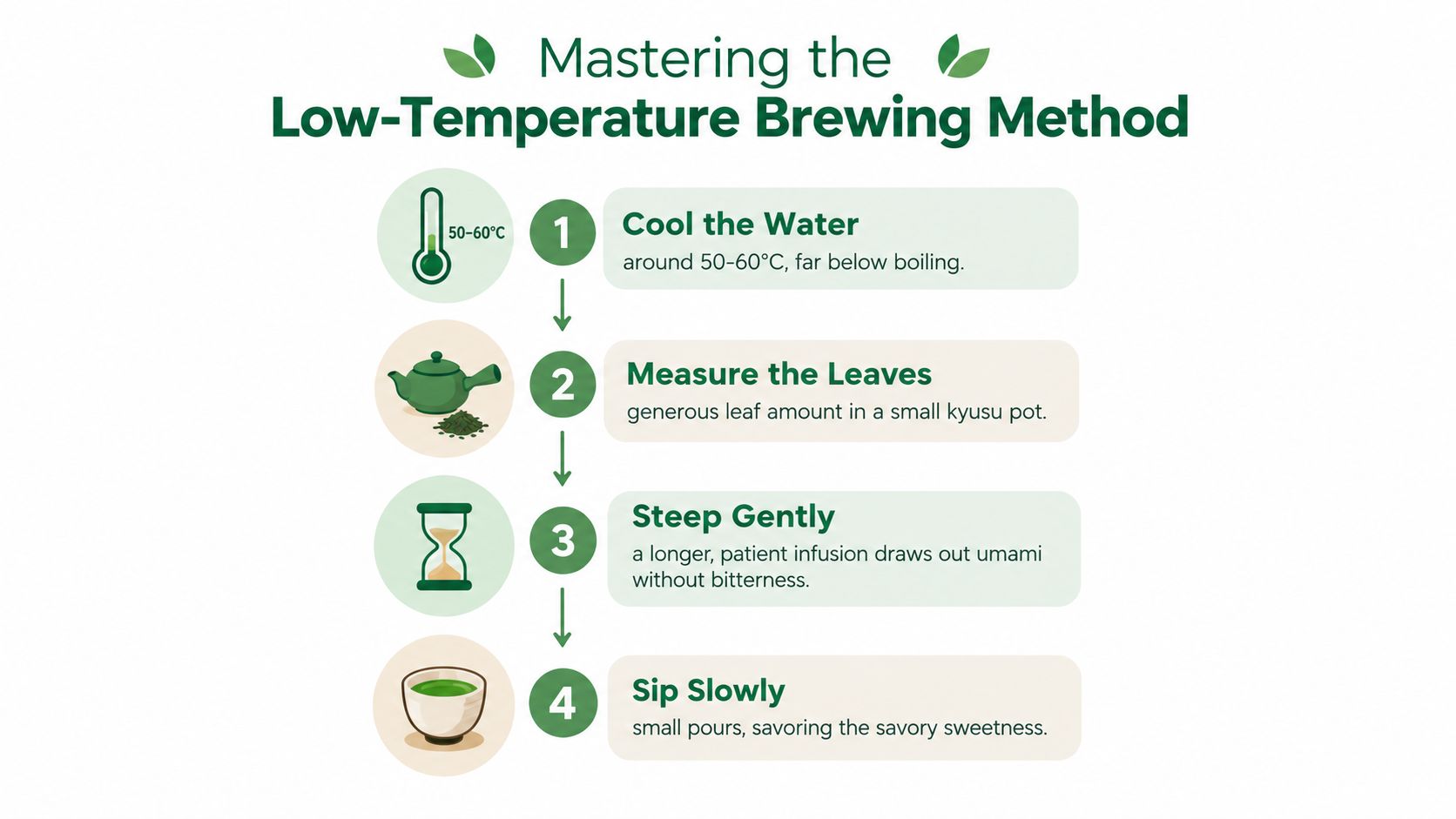
The most reliable starting point is water below 80°C. Traditional low-temperature brewing often uses water around 50 to 60°C, or 122 to 140°F, as shown in the brewing guide below. Use a thermometer if you have one, or let freshly boiled water cool substantially before pouring it over the leaves.
A careful first infusion
Warm the vessel. Pour hot water into your kyusu or small teapot, swirl it briefly, and discard the water. Warming the vessel helps prevent the brewing water from losing heat too quickly.
Use a generous amount of leaf. Gyokuro is commonly prepared with more leaf than a casual mug of green tea. Place the leaves in a small kyusu, where a concentrated quantity of leaf can meet a relatively modest volume of water.
Cool the water. Bring the water below 80°C, with the traditional low-temperature range around 50 to 60°C. This cooler environment favors a soft, umami-rich extraction.
Steep patiently. Give the first infusion enough time for the tightly rolled leaves to open and release their concentrated flavor. A longer, gentler infusion is more suitable than a brief pour when you want depth without harshness.
Pour completely. Distribute the liquor among cups in alternating passes if you're serving several people. This keeps the strength more even, and the final drops often contain valuable flavor.
Water quality also matters. Clean, pleasant-tasting water gives the leaf room to show its character, while strongly flavored or heavily mineralized water can obscure delicate umami. The guide to preparing water for tea offers practical advice for improving the foundation of your brew.
Practical rule: Change one variable at a time. If the cup tastes too bitter, lower the temperature before reducing the leaf or shortening the infusion.
Adjusting later infusions
The opened leaves can continue to yield flavor in later infusions. Once the leaves have hydrated, later pours generally need less time than the first. Taste each infusion rather than following a rigid timer, because leaf size, water chemistry, and vessel shape all affect the result.
Cold brewing offers another useful route. Cooler extraction markedly suppresses caffeine and EGCG while leaving theanine relatively stable, making it a practical choice for a smoother cup with lower bitterness. Place the leaves in cool water, allow time for a slow extraction, and taste periodically until the umami reaches the level you enjoy.
If you also prepare roasted Japanese tea, the hojicha brewing guide from TOO MATCHA provides a helpful point of comparison. Hojicha and gyokuro aren't brewed for the same sensory result, which is precisely why one universal green-tea recipe doesn't work.
Common Brewing Mistakes That Ruin the Experience
A premium gyokuro leaf can still produce a disappointing cup. Preparation determines whether its carefully developed character appears as savory, rounded, and sweet, or turns harsh and drying. The most common mistake is treating gyokuro like an ordinary green tea that can withstand rapid extraction with very hot water.
The temperature mistake
Boiling water is the quickest way to push gyokuro toward bitterness and astringency. High heat extracts caffeine and catechins more forcefully, making the tea's delicate savory character harder to recognize. The liquor may lose its thick, broth-like texture and finish with an unpleasant dryness.
The brewing choice changes the direction of the cup:
| Brewing choice | Likely direction of the cup |
|---|---|
| Cooler water | More umami, softer texture, less bitterness |
| Hotter water | Stronger extraction, more caffeine and catechin impact |
| Cold brewing | Lower bitterness and reduced extraction of caffeine and EGCG |
| Very brief steeping | Underdeveloped flavor and limited depth |
The exact result depends on the leaf and equipment, but the brewing principle remains steady. Temperature is a control dial, not a minor detail. It determines which parts of the leaf speak most loudly.
The quantity and timing mistakes
Too little leaf can leave gyokuro weak and watery. Its character depends on concentrated leaf material, so a large vessel with a small amount of tea often spreads the flavor too thinly. A small kyusu supports a more focused infusion and helps reveal the tea's texture.
Steeping for too little time creates a different problem. The leaves have not had enough opportunity to open, so their savory depth remains incomplete. Give the first infusion enough time to develop, then adjust subsequent infusions as the hydrated leaves release their remaining flavor.
As noted earlier, shading gives gyokuro a composition that favors its amino-acid-driven character. The brewer's task is to avoid putting bitterness back into the cup through careless extraction. Temperature, leaf quantity, vessel size, and steeping time work together, so changing one variable at a time makes the result easier to understand.
A Black tea comparison clarifies why a universal tea recipe fails. Black tea includes Chinese, Taiwanese, Indian, and Japanese styles, and its intended extraction can differ greatly from gyokuro's. Applying the same water temperature and sensory expectations to both teas can obscure what each style does well.
Check the water temperature, vessel size, leaf quantity, and steeping time before deciding that the leaf is poor.
Elevating Your Daily Tea Ritual
Gyokuro turns a routine drink into a small lesson in attention. Its history begins with a cultivation innovation in Uji, its character comes from shaded growth, and its most recognizable taste appears only when the brewer respects the leaf's chemistry. The experience rewards slowing down because every variable remains visible in the cup.
Start with a modest ritual. Warm a small vessel, cool the water, measure the leaf thoughtfully, and pour without rushing. Notice the color before tasting, then look for the transition from savory depth to a soft, sweet finish. If the cup feels too intense, change the temperature or infusion time rather than assuming the tea isn't right for you.
The most useful way to understand gyokuro green tea benefits is to connect the benefit to the method. Cooler brewing can emphasize theanine-rich umami and limit the harsher impression of caffeine, EGCG, and catechins. A hotter brew can produce a more forceful cup, but it may not deliver the relaxed, rounded profile that makes gyokuro distinctive.
Choose loose-leaf Japanese green tea from a source that clearly identifies the style and gives preparation guidance. Tealyra offers loose tea, tea bags, accessories, and a selection of Chinese and Japanese loose-leaf green teas, giving tea drinkers different formats to explore as they refine their daily brewing practice.
Explore Tealyra for loose-leaf tea and tea accessories that can support a more deliberate gyokuro ritual. Choose your leaves, prepare the water below 80°C, and give yourself a quiet brewing session in which the tea's umami and calm alertness can unfold.