 by Tealyra
Pu Erh Tea How to Brew a Practical Brewing Guide
Learn pu erh tea how to brew with confidence. Covers raw vs ripe, water temperature, steep length, gongfu and western methods, and easy fixes for bitter brews.
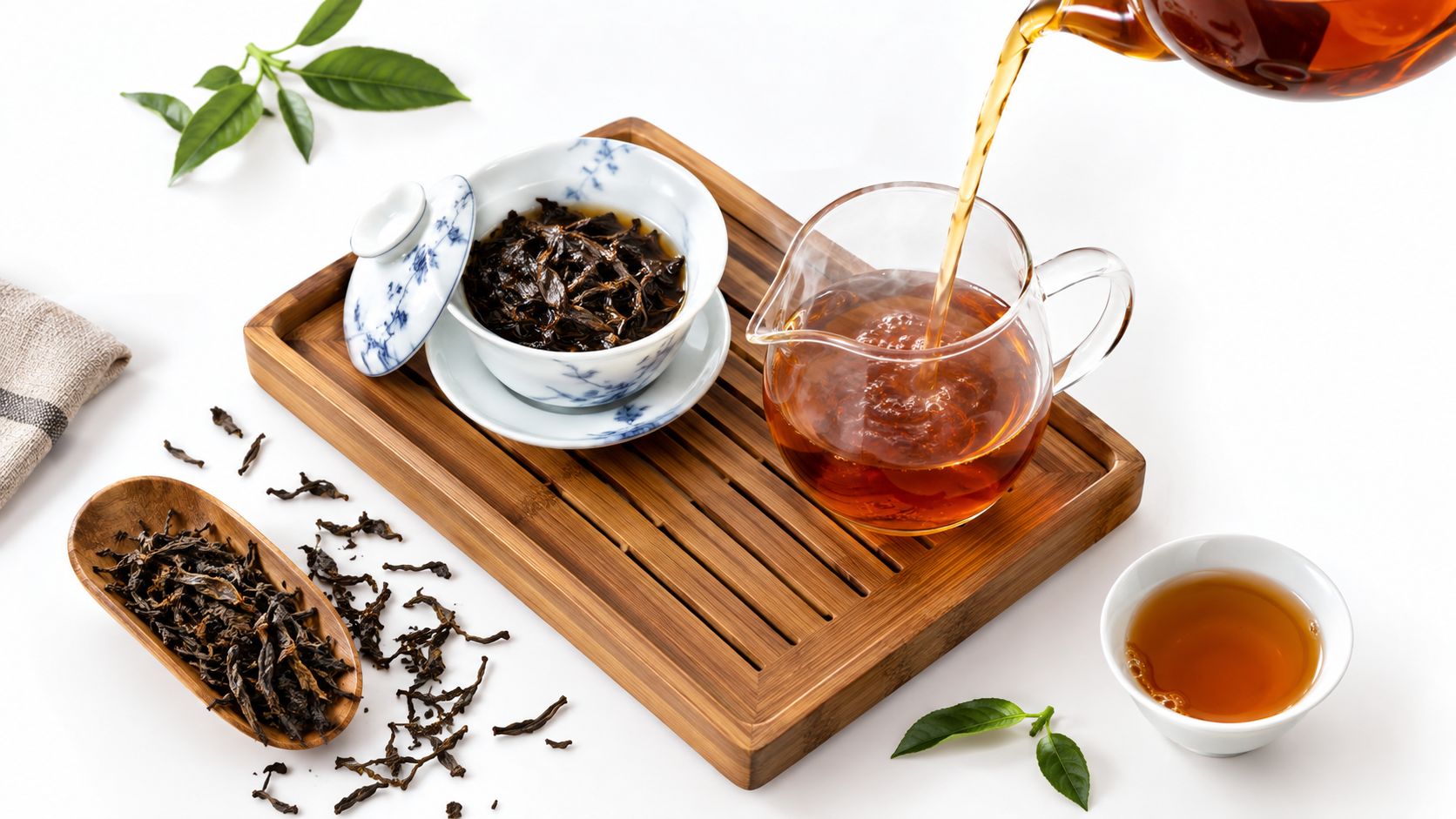
You've opened a pu-erh cake at the kitchen counter, peeled back the paper, and found yourself holding a dark, tightly pressed disk that smells either pleasantly woody or suspiciously like a damp cupboard. The kettle is ready, but the tea hasn't told you what it wants yet. That's the part most pu-erh brewing guides skip.
The useful question isn't just “pu erh tea how to brew.” It's what kind of pu-erh is this, and what problem am I trying to avoid? Raw sheng and ripe shou respond differently to heat, time, and rinsing. Once you identify the leaf, the brewing method becomes much less mysterious.
Table of Contents
- Getting to Know Your Pu-Erh Before You Brew
- Brewing Pu-Erh Gongfu Style at Home
- Western Style Brewing for an Everyday Cup
- Matching Water Temperature and Steep Time to Your Tea
- Fixing Bitter or Flat Pu-Erh With Simple Adjustments
- A Quick Mental Model for Your Next Session
Getting to Know Your Pu-Erh Before You Brew
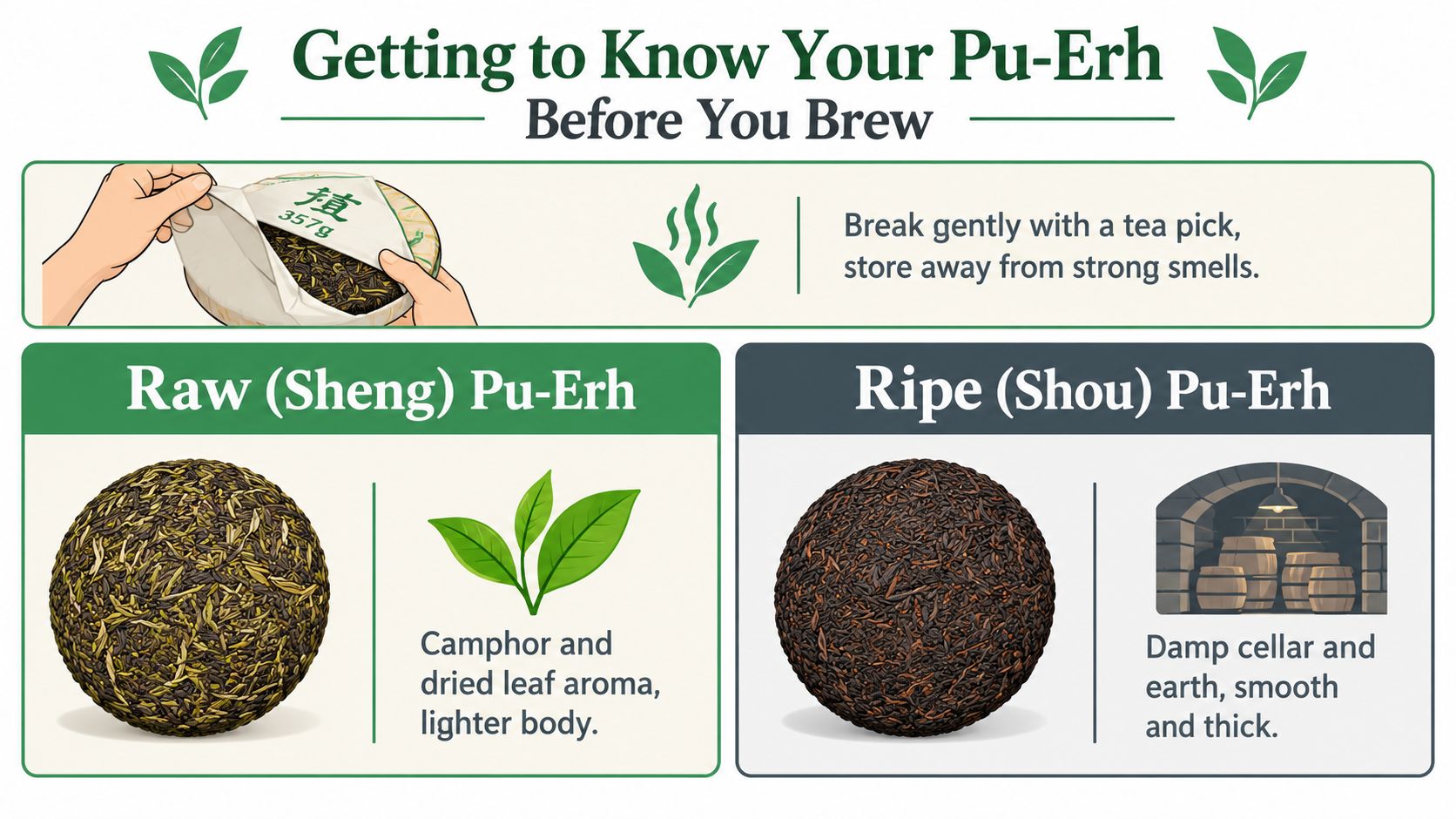
Start with the dry leaf, not the kettle. Raw sheng is the slowly aging style, often showing green, floral, dried-leaf, or camphor-like aromas. Ripe shou is deliberately fermented to produce a darker, smoother profile, with notes that can suggest earth, damp wood, coffee, or a cellar.
That difference changes your first brewing decision. Young sheng can become sharp and bitter when treated too aggressively, while shou usually needs enough heat to open its dense, earthy character. Pu-erh's history is closely connected with Yunnan, where compressed tea helped the leaf survive transport and storage. Pu-erh County was already described as a major tea-trade market during the Song Dynasty, from 960 to 1279, and ripe shou emerged as a modern way to recreate aged flavors more quickly. This overview of pu-erh brewing temperatures and history gives useful context for why style and age matter at the cup.
Read the cake before breaking it
Compression is your next clue. A loose leaf tea or lightly pressed brick opens quickly. A dense cake or tightly packed tuocha needs more time for water to reach the inner leaves, so its opening rinse may need to be handled patiently rather than poured off instantly.
Use a tea pick gently. Pry between leaves instead of stabbing down through the cake, and take a small section rather than pulverizing the whole piece. Broken leaf extracts quickly and can make a brew harsher, especially when the tea is already young or powerful.
Storage also leaves a signature. A clean, dry aroma suggests a tea that may need time to open in the cup. A stronger humid-storage aroma can make the first rinse more important, but rinsing won't turn unpleasant leaf into good tea. For a closer look at how processing creates these differences, see how pu-erh tea is made.
First check: smell the dry leaf, identify raw or ripe, look at the compression, and only then choose the water temperature.
Brewing Pu-Erh Gongfu Style at Home
Gongfu brewing gives pu-erh room to change. Instead of asking one long infusion to extract everything at once, you use a small vessel and several short infusions. That makes it easier to catch bitterness early, extend the next steep, and notice when the tea shifts from bright and woody to sweet and soft.
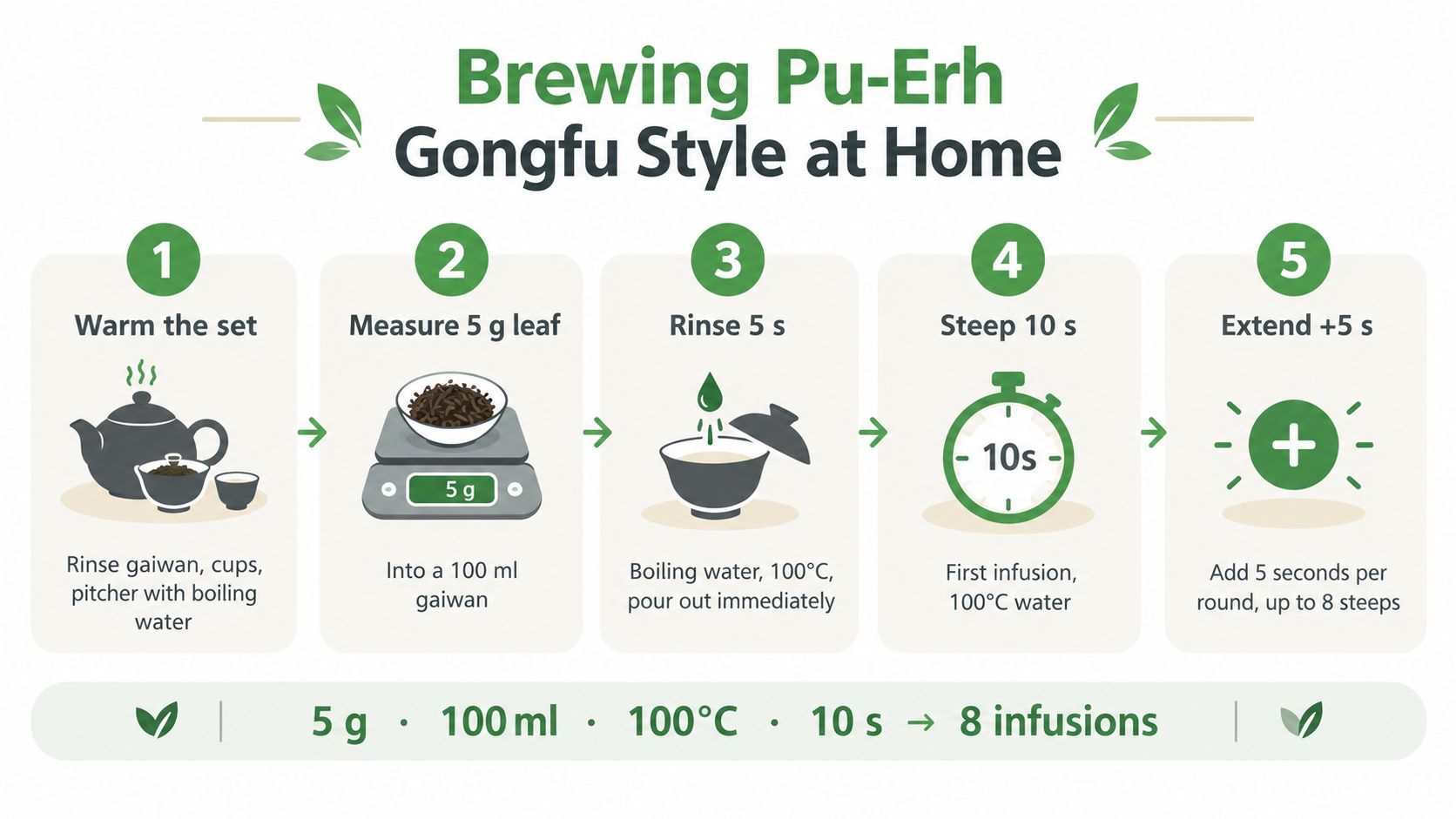
A practical setup includes a small gaiwan or pot, a fairness pitcher, cups, a tea tray, and a kettle with temperature control if you have one. For a vessel holding about 100 to 120 ml, use 5 to 7 g of loose-leaf pu-erh, a ratio supported by this gongfu pu-erh brewing guide. A scale helps, but don't let the absence of one stop you. Consistency matters more than ceremonial precision.
Set up the first infusion
Warm the vessels. Rinse the gaiwan, pitcher, and cups with hot water, then pour that water away. This keeps the brewing temperature from dropping as soon as it reaches the leaf.
Add the leaf. Place the measured tea in the gaiwan. If it's compressed, look for a natural seam and separate the leaves without crushing them.
Rinse briefly. Pour water over the leaf for roughly 5 to 10 seconds, swirl gently, and discard the rinse. This helps wake compressed leaf and clears away storage residue. A compact cake may need a more deliberate rinse because water takes longer to reach its center.
Start the true infusion. For the first drinkable steep, aim for about 20 to 45 seconds, choosing the shorter end for delicate or young raw tea and the longer end for a dense ripe tea. The reference guide recommends short successive infusions and extending the time gradually rather than committing to one long extraction.
Taste before changing everything. Pour the liquor completely into the fairness pitcher, then distribute it into cups. If the brew is thin, add time. If it's bitter or numbing, shorten the next steep or lower the temperature for young sheng.
Watch the liquor, but don't treat color as a perfect measuring device. Raw pu-erh may produce a pale gold or amber cup that changes quickly, while ripe tea can stay dark even after its flavor has started to weaken. Taste and texture tell you more than color alone.
The same leaf can support many infusions when the ratio and timing are controlled. Expert guidance describes gongfu pu-erh as capable of 15 or more re-steeps, particularly when short infusions are extended in 10 to 15 second increments. You don't need to force that result. Stop when the tea tastes empty, sour, or papery.
For a compressed nest or tuocha, this guide to brewing pu-erh tuocha is useful because the shape changes how quickly water reaches the leaf.
Here's a visual walkthrough of the rhythm, from warming the set to extending each round:
Western Style Brewing for an Everyday Cup
Gongfu brewing is rewarding, but it isn't always what the morning allows. Western brewing uses a larger pot or mug, more water, and a longer infusion. You lose some of the dramatic progression between steeps, but you gain a straightforward cup that can sit beside breakfast or a laptop.
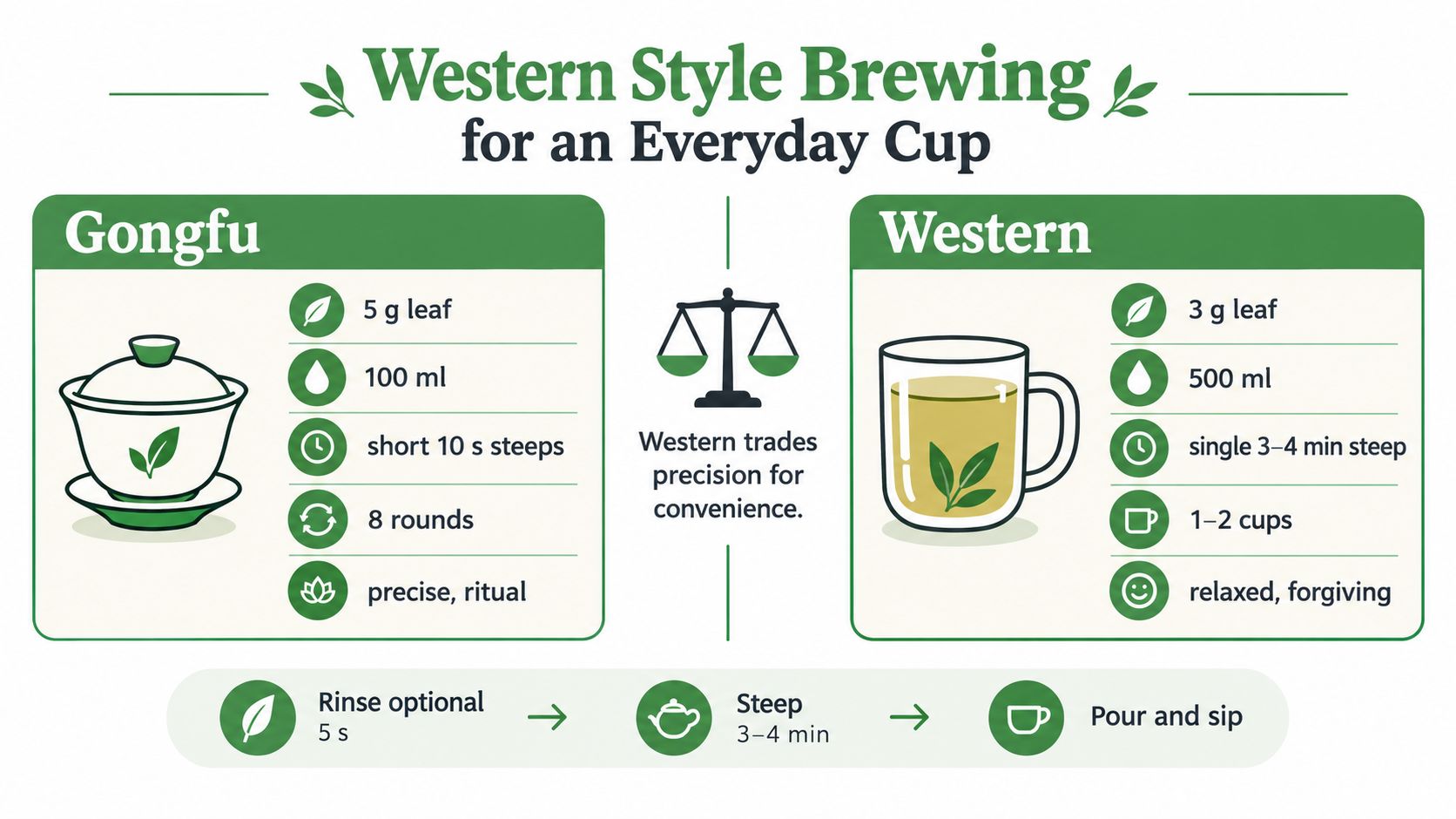
Use roughly 3 to 5 g of pu-erh for 200 to 240 ml of water. For ripe shou, begin with water close to a full boil and steep for about 2 to 3 minutes. Young raw tea often benefits from slightly cooler water and a somewhat shorter steep. These parameters align with practical western-style pu-erh brewing guidance.
Make the larger cup work
Use a basket infuser or a roomy, free-floating strainer. A giant tea ball often restricts the leaf, particularly when the tea starts as a compact cake. The outer leaves may swell while the center stays packed, producing a weak cup followed by an unexpectedly rough one.
Rinsing is still worthwhile in western brewing, especially for compressed material. Pour hot water over the leaf, let it sit briefly, discard it, and then begin the main steep. If you're using loose ripe leaf with a clean aroma, the rinse can be brief. If the tea smells strongly of storage, give the leaves more time to open before the main infusion.
The trade-off is simple. Western brewing gives you one balanced cup with less attention. Gongfu brewing gives you a sequence of smaller cups with more control. Neither method is automatically superior. Choose the larger mug when convenience matters, and choose the gaiwan when you want to study how the leaf evolves.
If you're adapting household equipment, PureHQ Inc.’s brewing advice on using a French press for tea offers practical context on giving loose leaves enough room to expand.
Matching Water Temperature and Steep Time to Your Tea
Start with the flavor in the cup, then trace it back to the leaf. A young raw tea that turns sharply bitter or drying is often meeting water that is too hot. A ripe or aged tea that tastes thin and quiet may need more heat, more time, or a better opening of the compressed leaf.
Use these ranges as working points rather than fixed rules. Young sheng often responds well to 85 to 90°C, while ripe shou and aged sheng commonly need 95 to 100°C to show their body and sweetness. In gongfu brewing, first infusions often run 20 to 45 seconds, with later steeps lengthening as the leaf gives up flavor. This detailed brewing reference explains how tea style, temperature, and infusion length affect the result.
| Tea Type | Water Temperature | First Steep | Flavor Target |
|---|---|---|---|
| Young raw sheng | 85 to 90°C, or 185 to 195°F | About 20 seconds, then adjust | Bright, floral, vegetal, less punishing |
| Aged raw sheng | 95 to 100°C | About 20 to 45 seconds | Fuller texture, dried leaf, wood, sweetness |
| Ripe shou | 95 to 100°C | About 20 to 45 seconds | Earth, dark wood, smooth body |
| Dark-aged ripe tea | 95 to 100°C | Start short, then extend | Thick, mellow, developed earthy notes |
Let compression change the baseline
Dense compression can make a correctly heated brew taste weak at first. Water reaches the outside leaves before the center opens, so the first infusion may show little flavor, followed by a sudden, rough extraction once the outer layer loosens. Give the cake a patient rinse, or repeat the rinse, then keep the first drinkable steep moderate rather than forcing it to run excessively long.
Leaf age also changes the temperature response. Young sheng can become aggressive with maximum heat, while aged raw tea often needs hotter water to draw out its deeper wood, dried-fruit, and sweet notes. Ripe tea with a strong storage aroma may need a fuller rinse and a vessel that lets those aromas disperse. A clean, fragrant cake can lose its higher notes if every infusion receives maximum heat.
Use the symptom to choose the next adjustment. A thin cup usually needs more extraction, so extend the steep before increasing temperature or leaf. A heavy cup calls for a shorter infusion first. This isolates the cause instead of changing several variables together.
For a deeper look at getting the water right before brewing, see how to prepare water for tea. Water may take several minutes to cool from boiling into the lower range, so fine kettle control is convenient, but a basic kettle still works. Pour into a pitcher or cup and wait briefly when young sheng tastes too sharp. This practical decision guide for brewing pu-erh also supports choosing temperature and steep time from the tea's response rather than following one universal recipe.
Fixing Bitter or Flat Pu-Erh With Simple Adjustments
Don't throw away a pu-erh because the first cup is unpleasant. A harsh brew often means the extraction is wrong, not that the leaf is hopeless. The fastest route to a better cup is to identify the symptom and change one variable at a time.
If the tea is sharp and numbing
This usually points toward young sheng brewed too hot or held too long. First, move the water toward the cooler end of the young-sheng range and shorten the next infusion. If the bite remains, use less leaf in the same vessel or increase the water volume.
Astringency can also build when you pour incompletely and leave liquid sitting around the leaves. Drain the gaiwan or pot fully after each round. Pu-erh doesn't improve because the old infusion keeps bathing the leaf between pours.
If the cup is hollow and watery
Start with the leaf, not the timer. Too little leaf, water that's too cool, or a dense aged cake that hasn't opened can all produce a thin cup. Add a little more leaf if the ratio is clearly low, then give the compressed tea a more effective rinse and allow the next infusion to run longer.
Change one lever: adjust temperature or time first. Changing leaf, vessel, and water together makes it impossible to learn what fixed the cup.
If ripe tea tastes muddy
A heavy compost-like cup often comes from over-leafing or skipping the rinse. Discard the initial rinse, reduce the leaf slightly, and keep the next infusion shorter. If the aroma is unpleasant before brewing, technique may not be the underlying issue. Some flaws in the tea itself won't disappear in the gaiwan.
Water can contribute to a flat or muddy impression too. If your tap water tastes strongly of chlorine or mineral residue, a basic under-sink water filtration guide can help you think through the water side of the setup without confusing filtration with a brewing fix.
For drinkers who want to compare pu-erh with other formats, Loose Tea provides a widest selection of different loose leaf tea. Keep the comparison practical: loose leaves make it easier to inspect expansion and adjust the amount than a tightly confined infuser does.
A Quick Mental Model for Your Next Session
A good pu-erh session is a conversation between leaf, water, time, and vessel. Leaf density determines how quickly water can enter. Temperature controls how forcefully the water extracts. Time determines how much of that extraction reaches the cup. Vessel size changes the ratio and the speed at which the liquor cools.
Before brewing, make a short inspection. Look at whether the leaf is loose or compressed. Smell it dry. Decide whether it behaves more like young sheng, aged sheng, or ripe shou. Then choose either a flash-style gongfu approach or a longer western infusion.
Use a controlled first attempt
The best way to learn an unfamiliar cake is to make the first session boringly consistent. Keep the same vessel, leaf amount, and water source throughout the session. If the opening cup is too bitter, lower the temperature or shorten the next infusion. If it's too thin, extend the time or use a little more leaf.
Don't judge a pu-erh from one awkward cup. Compressed leaves often change as they open, and a tea that tastes blunt at the start may become sweeter and more textured later. Continue through several infusions before deciding whether the tea suits you.
Write down just two things after each session, such as the approximate leaf amount and water temperature. You don't need a complicated tasting spreadsheet. A few notes like “cooler water helped” or “the cake needed a longer rinse” will reveal patterns across different teas.
A useful rule: repeat one tea with small adjustments before chasing a completely different cake.
That repetition builds judgment. You learn how a dense sheng behaves in your gaiwan, how much heat your shou needs, and whether your water makes the cup feel thin or rounded. Eventually, “pu erh tea how to brew” stops being a search query and becomes a set of decisions you can make by looking, smelling, and tasting.
Tealyra offers loose tea and tea accessories for drinkers who want to compare different leaves and brewing approaches at home. Visit Tealyra to explore options for your next pu-erh session, then brew one tea several ways and keep the method that gives you the clearest cup.