 by Tealyra
Da Hong Pao: A Guide to China’s Famous Oolong Tea
Discover Da Hong Pao, China's legendary rock oolong tea. Learn about its rich history, unique roast profiles, and how to brew the perfect cup with confidence.
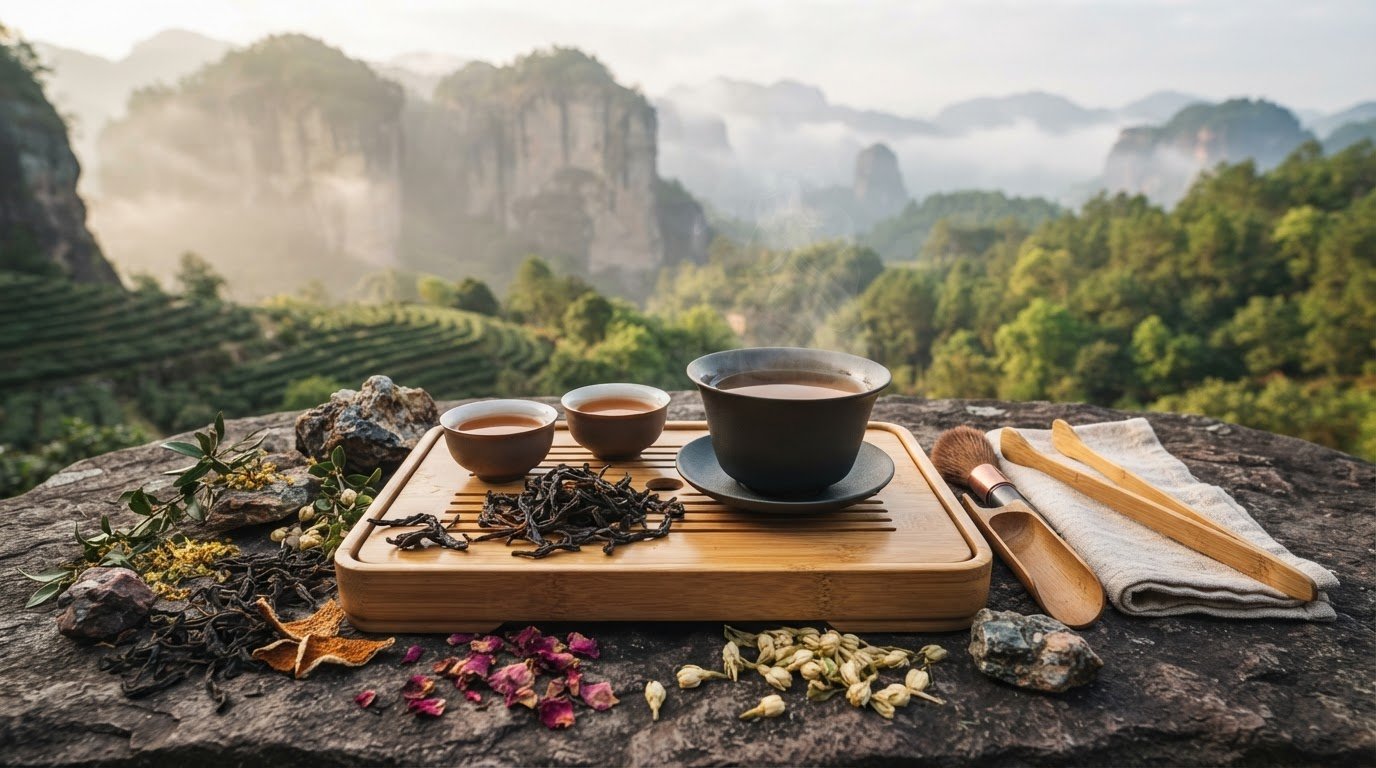
What if Da Hong Pao’s appeal lies not in one legendary, unchanging flavor, but in the craft behind each cup? The name da hong pao can point to different Wuyi rock oolongs, so its aroma and taste may shift with the tea’s origin, blend, oxidation, and roast.
If the stories around its history seem hard to reconcile, or terms like yancha and roasting feel unfamiliar, you’re not alone. Da Hong Pao is best understood as a tea style with many expressions, rather than a single fixed profile. This guide will help you place it among Chinese oolongs, see how its processing shapes the cup, and brew it with confidence. We’ll untangle the history without treating legend as settled fact, explain the language of oxidation and roast in plain terms, and offer a practical starting point for gongfu brewing. Expect a sensory map, not a rulebook: the goal is to notice what you enjoy, from a warm roasted aroma to a lingering, mineral-like finish.
Key Takeaways
- Understand how da hong pao fits within Chinese oolong tea, and why the name can describe a range of styles.
- Learn how oxidation and roasting shape a tea’s aroma, flavor, and feel without assuming every tea is processed alike.
- Compare brewing approaches and adjust leaf, water, and steeping to find a balanced cup.
- Use aroma, roast, texture, aftertaste, and brewing response to decide what you enjoy, rather than relying on reputation alone.
- Explore the wider oolong category if you’d like to continue discovering varied tea styles.
Table of Contents
- What Is Da Hong Pao? Understand the Oolong Behind the Legend
- How Da Hong Pao Is Made: Oxidation, Roasting, and Craft
- What Does Da Hong Pao Taste Like? Read Its Range of Styles
- How to Brew Da Hong Pao: A Gentle Starting Point for Gongfu or Western Style
- Choosing & Exploring Da Hong Pao: What to Notice in the Cup
What Is Da Hong Pao? Understand the Oolong Behind the Legend
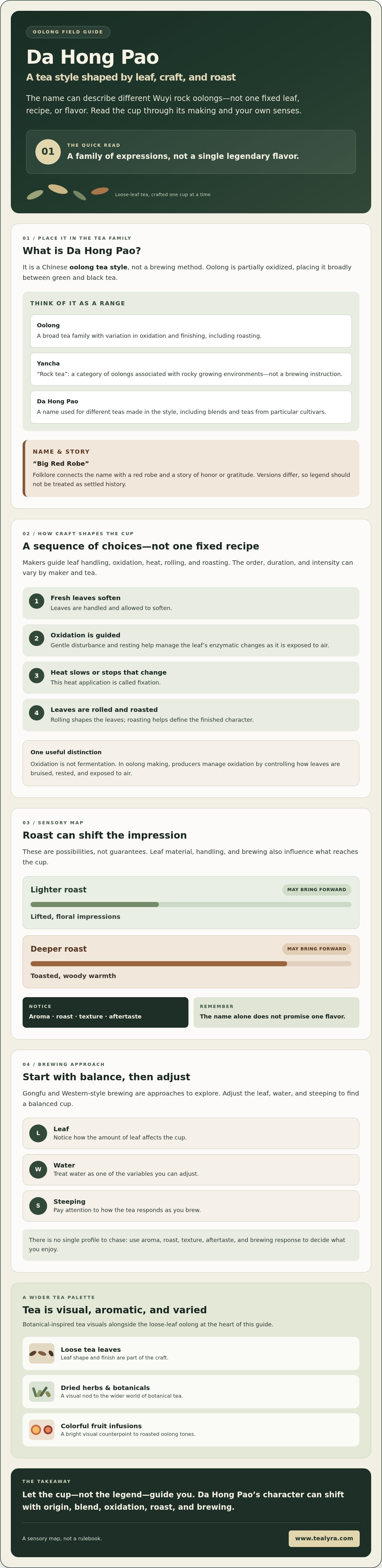
Da Hong Pao is a Chinese oolong tea style, not a brewing method. Oolong is partially oxidized, placing it broadly between green and black tea, though its processing can vary considerably. That range matters: the name doesn’t promise one exact leaf, recipe, or flavor.
For a visual introduction to this celebrated tea, watch the video below.
What does the name Da Hong Pao mean?
The name translates as “Big Red Robe,” an evocative phrase that has helped give the tea its enduring aura. Popular folklore connects the name with a red robe and a story of honor or gratitude, but versions differ, and the details shouldn’t be treated as established history without reliable evidence. The tea’s reputation and its legends are part of its cultural story, not proof that every account is factual.
That distinction also helps set expectations in the cup. Today, da hong pao can refer to different teas made in the style, including blends and teas from particular cultivars. A famous name alone doesn’t establish a single production method or guarantee a uniform flavor. For a broader account of its history, cultural associations, and production, see this overview of Da Hong Pao.
Where does Da Hong Pao fit among Chinese teas?
It belongs to the oolong family, whose teas vary in oxidation and finishing, including roasting. The term yancha means “rock tea” and refers to a group of oolongs associated with rocky growing environments; it’s a category term, not a brewing instruction. If you’re exploring how this tea sits within the broader tradition, start with Chinese tea styles and origins, then compare it with other oolongs in the oolong tea category.
In short, da hong pao is best approached as a family of expressions shaped by leaf and craft, rather than one legendary flavor profile. Its place among Chinese teas is clear; the precise story behind its name and the character of any particular cup deserve a little more nuance.
How Da Hong Pao Is Made: Oxidation, Roasting, and Craft
The finished cup reflects a sequence of choices, not a single fixed recipe. Fresh leaves are handled and allowed to soften, then their oxidation is guided through gentle disturbance and resting. Heat is applied to slow or stop that change, after which the leaves are rolled and roasted. The order, duration, and intensity of these steps can vary by maker and tea.
Processing choices shape Da Hong Pao’s aroma, body, and finish, so teas sold under the same name can taste distinctly different. A lighter roast may leave more room for lifted, floral impressions, while a deeper roast can bring forward toasted, woody warmth. These are possibilities, not guarantees; leaf material, handling, and brewing also influence what reaches the cup.
How oxidation shapes this oolong
Oxidation is a set of enzymatic changes that begins when leaf cells are disturbed and their contents interact with oxygen. It isn’t fermentation, though the terms are sometimes confused. In oolong production, makers manage this transformation by controlling how leaves are bruised, rested, and exposed to air. The degree varies among styles and producers, so there’s no single oxidation level that defines every tea in this family.
After oxidation reaches the desired point, fixation applies heat to slow the enzymes and preserve the maker’s chosen character. Rolling then shapes the leaves and can help release their juices, preparing them for further drying and roasting. This broad sequence is useful for understanding the craft, but individual methods may differ.
Why roasting can change the tea’s character
Roasting is a finishing step that develops warmth and depth. Its intensity can soften some fresh or floral impressions, emphasize toast and wood, or bring several aromatic qualities into a more rounded balance. A more pronounced roast may also make the liquor feel fuller, while a gentler one can allow brighter details to remain noticeable. The result depends on the leaf and the full process, not roast alone.
After roasting, storage and resting may influence how aromas are perceived over time. How quickly those changes occur depends on the tea and its conditions, so avoid assuming that every roast follows the same timeline. UNESCO’s account of the UNESCO World Heritage site describes a landscape with a long history of tea cultivation, offering context for the close relationship between tea, place, and craft.
To explore the broader range of leaves shaped by these methods, browse the oolong tea selection from Tealyra Store - The Best Galaxy of Teas; availability of any particular style may vary.
What Does Da Hong Pao Taste Like? Read Its Range of Styles
There isn’t one flavor that every cup of da hong pao must deliver. Depending on the tea, you might notice toasted grain, warm wood, dried flowers, fruit, or a mineral-like quality sometimes described as “rocky.” These are tasting possibilities, not guarantees. Cultivar, leaf handling, roast, storage, and brewing all influence which notes come forward and how they settle on the palate.
Think of tasting as noticing balance rather than checking for a required flavor. Does the roast feel integrated or dominant? Is the texture light and crisp, or rounder and more coating? Does the finish fade quickly, or leave a gentle sweetness or mineral impression? Your answers can help you find the style you enjoy, without treating prestige or folklore as a tasting standard.
How roast level may influence aroma and mouthfeel
A gentler roast may leave more space for floral, fruity, or fresh impressions, while a deeper roast can bring out toast, wood, and a warmer aroma. Neither is inherently better. The liquor’s texture and finish are observations that can vary with the tea and how you brew it. A strong infusion may taste more concentrated and roast-forward; a lighter one can reveal subtler layers.
| Expression | Possible impressions |
|---|---|
| Gentler roast | May seem brighter, with floral or fruit-like notes more noticeable. |
| Deeper roast | May lean toward toasted, woody warmth and a fuller-feeling cup. |
Use the comparison as a starting point, not a rule. Two teas with similar roast levels can still differ, and changing the leaf amount or steeping time can shift the perceived intensity.
How Da Hong Pao compares with other oolongs
Oolong is a broad family, so comparisons are most useful as orientation rather than ranking. Some oolongs are known for a more lifted, floral character, while others are shaped toward roasted depth. Iron Guan Yin can offer a helpful point of comparison: explore this Iron Guan Yin oolong profile to consider how another named style may express a different balance of aroma and finish.
Da Hong Pao doesn’t have to match one tasting note to be authentic. Treat each cup as its own expression, and explore the broader oolong tea category to discover how varied this tea family can be.
How to Brew Da Hong Pao: A Gentle Starting Point for Gongfu or Western Style
A balanced cup comes from a few adjustable choices, not specialist equipment or a rigid formula. Da hong pao is commonly brewed with hot water, but leaf amount, water temperature, and steeping time depend on the tea and the vessel. Treat any suggested measurements as a starting point, and check the supplier’s guidance when available.
A simple gongfu-style brewing sequence
Gongfu brewing uses a small vessel and several brief infusions, letting you follow how the aroma and flavor shift as the leaves open. A gaiwan or small teapot is traditional, but a heat-safe cup with a strainer can work for a first try.
- 1. Warm the vessel. Swirl in hot water, then discard it. This helps the vessel start warm and readies the space for brewing.
- 2. Add the leaves. Use the tea’s package directions for the leaf-to-water ratio if provided. Without guidance, begin modestly and adjust the amount on the next brew rather than changing several variables at once.
- 3. Pour and steep briefly. Use hot water, following a reliable tea-specific temperature recommendation when available. Keep the first infusion short, then taste; extend later steeps gradually if the liquor seems too light.
- 4. Repeat and observe. Pour off each infusion before starting the next. Notice whether the aroma becomes softer, sweeter, toastier, or otherwise changes. The number of satisfying infusions varies with the leaves and brewing choices.
A straightforward teapot method
For a larger serving, use a teapot or infuser and let the leaves steep longer than they would in a gongfu sequence. Start with the package’s suggested leaf amount and time, then taste before extending the brew. This simple pause can help prevent a cup from becoming more bitter or intense than you prefer.
- 1. Warm the pot with hot water, then empty it.
- 2. Add leaves and hot water, using the product guidance for the amount and temperature where available.
- 3. Taste before pouring a full cup. If it’s weak, steep a little longer next time or use slightly more leaf. If it’s too intense, shorten the steep or reduce the leaf amount on your next attempt.
Make one adjustment at a time. That way, you can tell whether the change came from leaf quantity, temperature, or steeping duration, and gradually find the balance you enjoy. For leaves and accessories to support your tea ritual, explore tea options at Tealyra Store - The Best Galaxy of Teas.
Choosing & Exploring Da Hong Pao: What to Notice in the Cup
A satisfying cup isn’t a test of whether you can identify one celebrated flavor. It’s an invitation to notice how aroma, texture, roast, and finish come together, then decide whether that balance suits your palate. Descriptions and naming conventions can differ between sellers, so read the tea’s listed style and processing details rather than assuming the name alone tells the whole story.
What to look for when evaluating a Da Hong Pao tea
Take a quiet moment with each infusion. A simple checklist can help you observe the tea without turning tasting into a hunt for a prescribed note:
- Aroma: Is it clean and inviting? Notice whether you find toasted, woody, floral, or other impressions, without expecting any one of them.
- Roast balance: Does the warmth feel integrated with the other aromas, or does it dominate your experience?
- Texture: Does the tea feel light, smooth, rounded, or more drying on your palate?
- Aftertaste: What remains after you swallow? It might be a soft sweetness, a roasted impression, or a clean finish.
- Brewing response: Do later infusions change in aroma or intensity? Does a small adjustment make the cup more balanced?
One cup can be misleading if the brew is too concentrated or too weak. Before deciding a tea isn’t for you, try adjusting just one variable, such as steeping time or the amount of leaf, and taste again. Product descriptions may make claims about origin, cultivar, or production, but don’t treat a prestige label or scarcity story as proof on its own. Look for clear details, and assess the cup on its own terms.
Is Da Hong Pao right for your tea ritual?
If you enjoy warm, layered flavors and the gentle discovery of an oolong changing across infusions, this style may suit a slower, attentive tea ritual. A more roasted expression might appeal if you like toasted depth; a lighter, fresher tea may feel more at home if you prefer delicate aromas and less roast. Neither preference is more discerning. The best guide is your own response to the cup.
There’s no need to measure your taste against the tea’s reputation. Notice what draws you in, what feels out of balance, and whether you’d enjoy brewing it again. If you’d like to continue exploring oolong styles, take a look at Tealyra’s oolong tea selection. It offers a broader place to discover the variety of the oolong family, without implying that any particular Da Hong Pao tea is available.
Bring a More Curious Eye to Your Next Cup
Da hong pao is best approached as a style with many expressions, shaped by leaf, oxidation, roasting, storage, and brewing rather than one legendary flavor. A cup may lean warm and toasted or feel more floral and delicate, and neither profile alone defines what you should enjoy.
Let curiosity guide your tasting. Notice the aroma, texture, roast balance, and finish, then adjust one brewing variable at a time to discover what brings the tea into balance for you. You don’t need specialist equipment or a fixed set of tasting notes, just a little attention and room to explore.
If you’d like to continue your journey through Chinese oolongs and other styles, explore the oolong tea selection at Tealyra Store - The Best Galaxy of Teas. The store offers an oolong category, along with loose-leaf teas and tea accessories to support your own brewing ritual. The right cup is the one that invites you back.
Frequently Asked Questions
What is Da Hong Pao tea?
Da Hong Pao is a Chinese oolong tea style, not a brewing method. It’s often associated with yancha, or “rock tea,” and may be made as a blend of different tea cultivars or as a single-cultivar tea. The name means “Big Red Robe,” but its legends don’t define the tea itself. Leaves, processing, and roast all help shape the character of a particular cup.
What does Da Hong Pao taste like?
Da Hong Pao can offer roasted, woody, toasted, floral, or mineral-like impressions, but no single note is required. The balance depends on the tea’s cultivar, processing, roast, storage, and brewing. A gentler roast may leave brighter aromas more noticeable, while a deeper roast may emphasize warmth and toast. Taste for aroma, texture, and finish rather than judging the tea against one expected flavor.
Is Da Hong Pao a green tea or a black tea?
Da Hong Pao is an oolong, not a green or black tea. Oolong is partially oxidized, placing it broadly between green and black tea in processing, though individual oolongs vary. Oxidation is an enzymatic change in the leaf, and makers guide it alongside steps such as heating and roasting. These choices create a wide range of aromas and flavors within the oolong family.
How do you brew Da Hong Pao at home?
Brew it in a small cup or pot with hot water, using the tea’s package directions for leaf amount, temperature, and steeping time when available. For a gongfu-style approach, warm a vessel, add leaves, and make short repeated infusions, tasting each one. For a larger pot, steep longer and taste before extending the brew. If it’s weak or too intense, change one variable at a time.
Does Da Hong Pao contain caffeine?
Yes, Da Hong Pao, as a tea made from the tea plant, contains caffeine. The amount in a serving can vary with the leaves, how much you use, water temperature, steeping time, and serving size. A stronger or longer infusion may extract more caffeine than a brief, lighter brew, though the precise amount can’t be judged from the tea’s name alone. If you’re sensitive, consider that when choosing when and how much to drink.
Is the Da Hong Pao red robe story true?
The red robe story is best treated as folklore, not confirmed history. Versions connect the name “Big Red Robe” with a robe given in a tale of honor or gratitude, but details vary and shouldn’t be presented as established fact without reliable historical evidence. The legend helps explain the tea’s cultural aura, yet it doesn’t verify a tea’s production, origin, or flavor. Read the story with curiosity and a little caution.
What is the difference between Da Hong Pao and Iron Guan Yin?
Da Hong Pao and Iron Guan Yin are both oolong styles, but their names refer to different tea traditions and expressions. Da Hong Pao may be blended or made from a particular cultivar, and it’s often associated with roasted depth. Iron Guan Yin is commonly described through a distinct balance of aromas and processing choices. Neither is inherently better; compare their aroma, texture, roast, and finish to discover which suits your taste.
Article by
Tealyra
The Best Galaxy Of Teas