 by Tealyra
White Tea: A Guide to Its Origins, Styles, and Delicate Flavor
Explore our complete guide to white tea. Discover popular styles like Silver Needle, understand delicate flavors, and master brewing the perfect cup today.
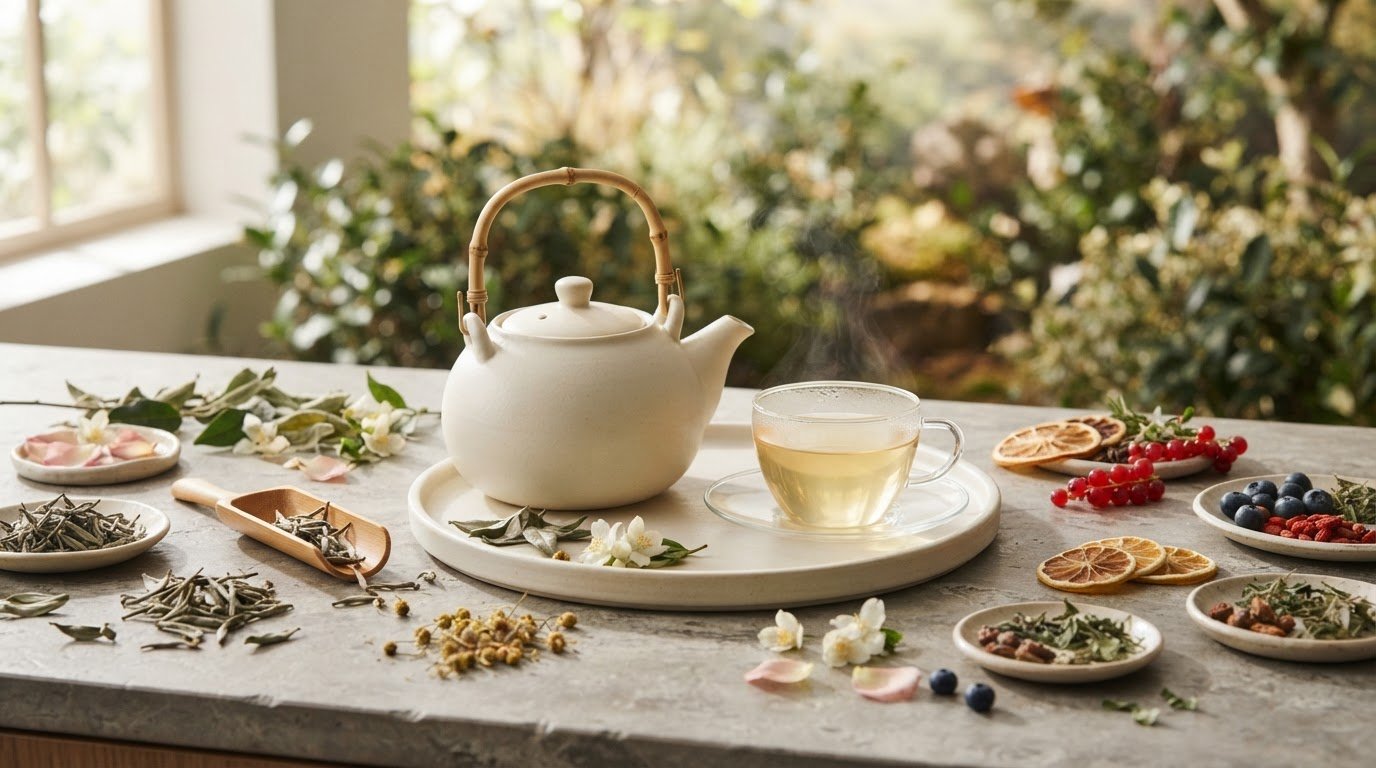
What if white tea’s delicacy came from how it’s made, rather than one signature flavor? Often imagined as a single pale, whisper-light cup, white tea is better understood as a family of styles shaped by the leaves picked and the gentle processing that follows. Some cups are soft and floral; others offer more body, sweetness, or a mellow, earthy note.
If the names and brewing advice seem confusing, you’re not alone. Silver Needle and White Peony differ in more than appearance, and a light-colored brew doesn’t mean caffeine-free. Water temperature and steeping time also influence whether delicate leaves taste rounded and fragrant or turn flat and sharp.
This guide will help you understand how white tea is made, recognize the character of its main styles, and brew a clear, balanced cup. We’ll explore its origins and processing, compare the sensory differences among styles, and share practical brewing guidance so you can choose a tea that suits your palate and know what to expect from your first sip.
Key Takeaways
- Learn what gentle processing means and why it doesn’t give every white tea the same character.
- Compare the leaf appearance and general profiles of Silver Needle, White Peony, and other styles to find a promising first cup.
- Use a simple brewing method, then adjust steeping to bring out the clarity and flavor you enjoy in white tea.
- Choose a tea by its flavor, leaf style, and the kind of unhurried brewing ritual you prefer.
- Understand why caffeine can vary from cup to cup, and what to consider when storing tea and tasting it for the first time.
Table of Contents
- What Is White Tea? A Clear Introduction to the Delicate Tea Category
- How White Tea Is Made: Buds, Leaves, Withering, and Drying
- White Tea Styles Compared: Silver Needle, White Peony, and Other Expressions
- How to Brew White Tea for a Clear, Balanced Cup
- Choosing and Enjoying White Tea: Caffeine, Storage, and a First Cup
What Is White Tea? A Clear Introduction to the Delicate Tea Category
White tea is tea made from the buds and leaves of Camellia sinensis, gently withered and dried with minimal processing. That careful approach helps explain its reputation for delicacy, but it doesn’t define a single flavor. The leaves selected, their growing conditions, and the way they’re brewed all shape the cup.
What makes it different from other true teas?
White, green, oolong, and black teas all come from the same tea plant. Their differences emerge largely through processing: after harvest, leaves may be handled in ways that limit, encourage, or otherwise shape oxidation, changing their color, aroma, and taste. For white tea, withering and drying are central steps, with comparatively little processing between the fresh leaf and the finished tea.
The name describes a tea category, not a white-colored herbal infusion. Herbal infusions, such as chamomile, are made from other plants; true teas are made from Camellia sinensis. For a broader overview of the category’s history, processing, and familiar styles, see What Is White Tea?
Does it always taste light and mild?
No single tasting note belongs to every cup. Some are delicate and floral, with a fresh, sweet impression; others lean toward softly vegetal flavors or feel fuller and more rounded. Even the pale appearance often associated with this tea doesn’t guarantee a faint taste.
Several details contribute to that variation. The origin and growing conditions influence the leaves, while the proportion of buds and mature leaves, processing choices, and brewing method affect aroma and texture. A short steep and a longer one can bring different qualities forward, so the same leaves may seem brighter at first and more substantial with further extraction.
Silver Needle, made from buds, and White Peony, made from buds and leaves, offer a helpful glimpse of how leaf material can distinguish styles. Tealyra’s white tea selection includes Bai Hao Yin Zhen Silver Needle and Pai Mu Tan White Peony, examples to keep in mind as you explore the differences. The next step is to look more closely at how plucking and gentle processing give each style its own character.
How White Tea Is Made: Buds, Leaves, Withering, and Drying
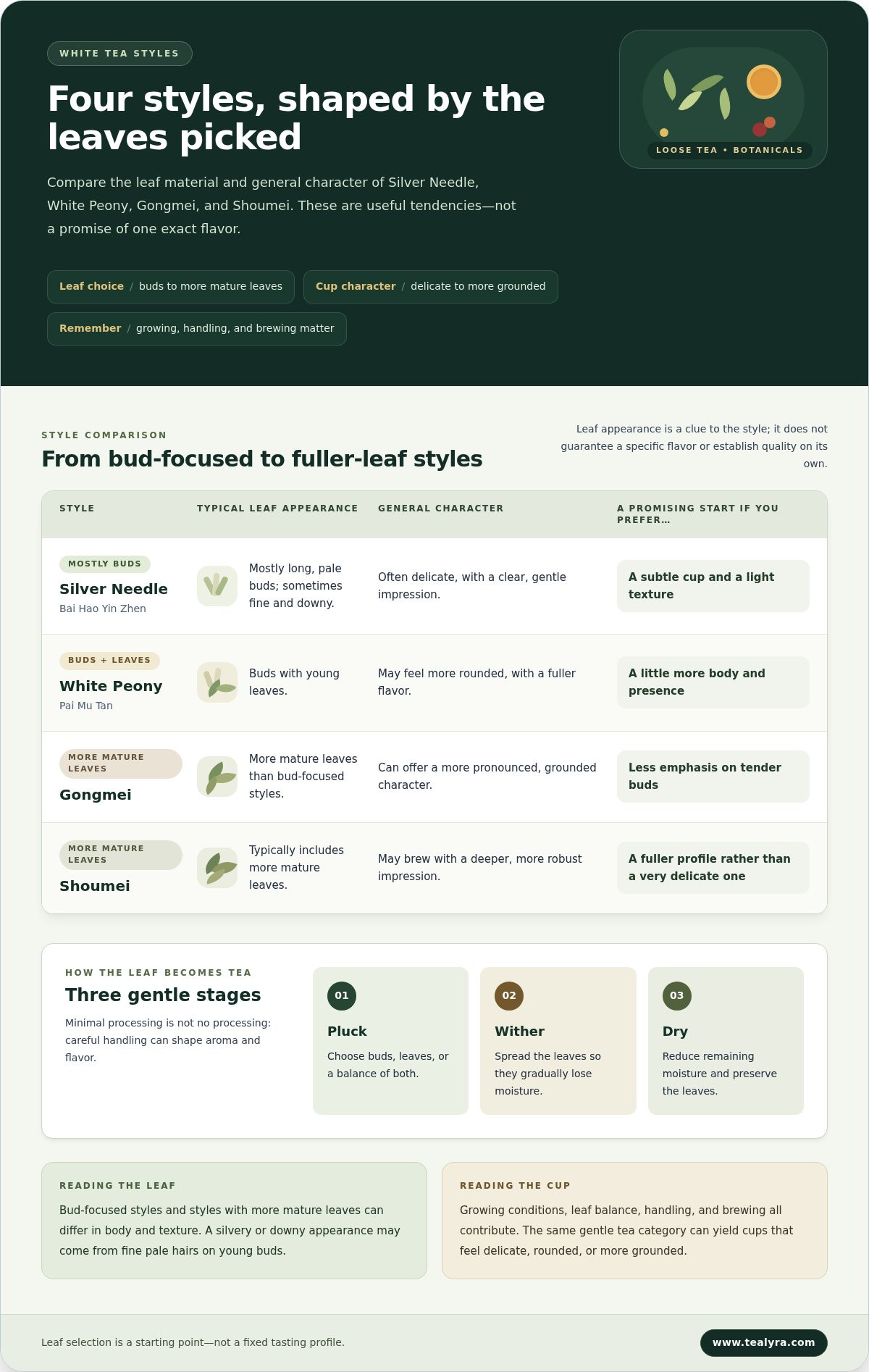
The finished leaf begins with a choice in the field: which buds and leaves to pluck, and in what proportions. Some styles use mostly young buds, while others include more mature leaves. That difference is visible in the dry leaf, but it can also influence the infusion’s body and texture. It’s one reason minimal processing doesn’t make every white tea taste alike.
After plucking, the leaves are spread out to wither, allowing them to lose moisture gradually. They’re then dried to reduce remaining moisture and preserve the leaves. The process is simple in outline, but careful handling matters: the condition of the leaf and the choices made during withering and drying can shape its aroma and flavor. Harvard’s overview of tea types and processing offers further context for how processing distinguishes tea categories.
White tea’s gentle processing leaves room for a broad flavor range, from fresh and floral to softly sweet or rounded, shaped by the leaf and the way it’s handled. These are possibilities, not a fixed tasting profile. Growing conditions, the balance of buds and leaves, processing, and brewing all contribute to the cup.
Why are some leaves silvery or downy?
Young buds on some teas carry fine, pale hairs that can give the dry leaf a silvery or downy appearance. Bai Hao Yin Zhen Silver Needle is a familiar example of a bud-focused style where this feature may be noticeable. Still, appearance is only a clue: it doesn’t guarantee a particular flavor or, on its own, establish quality.
Does minimal processing mean the leaves are unprocessed?
No. The leaves are intentionally plucked, withered, and dried, and the details of handling can differ among producers and origins. “Minimal” describes the relative simplicity of the process, not an absence of craft or variation. There’s no single set of timings or temperatures to apply to every tea; avoid assuming that one producer’s method represents them all.
As you explore, notice how the leaf’s shape, color, and proportion of buds to leaves relate to the aroma and texture in your cup. Tealyra’s white tea selection offers a way to begin that comparison with different styles and expressions.
White Tea Styles Compared: Silver Needle, White Peony, and Other Expressions
White tea styles are often distinguished by the leaves selected for plucking, especially the balance of young buds and more mature leaves. That difference offers a helpful starting point, not a promise of a particular flavor: growing conditions, handling, and brewing also shape the cup.
| Style | Typical leaf appearance | General character | A good place to start if you prefer |
|---|---|---|---|
| Silver Needle | Mostly long, pale buds, sometimes fine and downy | Often delicate, with a clear, gentle impression | A subtle cup and a light texture |
| White Peony | Buds with young leaves | May feel more rounded, with a fuller flavor | A little more body and presence |
| Gongmei | More mature leaves than bud-focused styles | Can offer a more pronounced, grounded character | A cup with less emphasis on tender buds |
| Shoumei | Typically includes more mature leaves | May brew with a deeper, more robust impression | A fuller profile rather than a very delicate one |
What distinguishes Silver Needle from White Peony?
Bai Hao Yin Zhen Silver Needle is a bud-focused style, while Pai Mu Tan White Peony combines buds with leaves. In the cup, Silver Needle is commonly associated with a more restrained, delicate feel; White Peony may bring greater body and a more noticeable flavor. These are tendencies, not guarantees. If you enjoy subtlety, begin with Silver Needle; if you’d like a little more weight and intensity, White Peony may suit you. Tealyra’s white tea selection includes both styles as examples to explore.
How do flavored white teas differ from classic styles?
Classic styles let the character of the tea leaves lead. A flavored version adds another sensory layer, which can bring added aroma or taste alongside the tea’s own qualities. Ingredients and flavoring approaches can vary, so there isn’t one profile shared by all flavored teas. They’re a welcoming choice if you enjoy a more aromatic cup, while an unflavored style can make the leaf’s quieter nuances easier to notice.
Choose by the experience you’re after: bud-focused delicacy, a rounder cup with more leaf, or an additional flavor dimension. Leaf appearance can guide your curiosity, but tasting is the surest way to discover what feels balanced and inviting to you.
How to Brew White Tea for a Clear, Balanced Cup
A gentle infusion rewards attention more than precision for its own sake. Leaf size, style, and personal taste all affect extraction, so begin with the brewing guidance for your tea rather than assuming one temperature or steeping time suits every leaf.
What water temperature and steeping time suit it?
Use the tea’s own brewing directions as your starting point. If they offer a range, begin at its gentler end and taste before extending the steep. Water that’s too hot or leaves steeping too long may make some cups taste less delicate, though the result depends on the tea. Adjust one variable at a time so you can tell what changes the aroma, texture, and finish.
- Heat fresh water. Follow the tea’s recommended temperature; avoid assuming boiling water is ideal for every style.
- Measure the leaves. Use the package’s suggested leaf quantity for the amount of water you’re preparing.
- Steep as directed. Start with the shorter end of any recommended time range, if one is given.
- Taste and adjust. If the infusion seems too faint, steep a little longer next time. If it tastes overly strong or less rounded than you’d like, shorten the steep or use a little less leaf.
- Keep a simple note. Record the leaf amount and steeping time you enjoyed, then make small adjustments with the next cup.
For a balanced first cup, follow the tea’s specific directions, taste early, and adjust steeping gradually to suit your palate. This approach gives you a dependable starting point without treating a particular temperature or duration as universal.
Can the leaves be steeped more than once?
Some loose-leaf teas can be infused again, though the result depends on the leaves and how they were brewed. Later steeps may bring a different balance: the first can feel more aromatic, while a following infusion may seem softer, fuller, or sweeter. Let each cup guide you rather than expecting a fixed number of infusions. If the next steep tastes pleasing, continue; if its flavor has faded, the leaves have given what they can.
Brewing is part of discovering a tea’s character. For loose-leaf teas suited to this slower, adjustable ritual, explore Tealyra’s tea selection.
Choosing and Enjoying White Tea: Caffeine, Storage, and a First Cup
Choosing a tea is easier when you begin with the kind of cup you enjoy. If you’re drawn to a subtle, unhurried infusion, a bud-focused style may appeal; for a fuller impression, a tea with more leaves can be a good starting point. Leaf appearance offers a clue, while the brewing ritual matters too: loose leaves invite a little more attention as you measure, steep, and taste.
Does it contain caffeine?
Yes. White tea comes from Camellia sinensis, the tea plant, so it naturally contains caffeine. The amount in a cup can vary with the leaf material, serving size, and brewing choices. Its delicate reputation doesn’t mean it always has less caffeine than other true teas. Herbal infusions made from plants other than Camellia sinensis are a separate category, and some are naturally caffeine-free.
If caffeine is a consideration for you, treat the tea’s style as a sensory guide, not a reliable measure of its caffeine content. Pay attention to how a particular cup fits into your routine, and choose accordingly.
How should loose leaves be stored?
Protect the leaves from the elements that can dull their aroma. Keep them in a clean, airtight container, stored somewhere cool and dry, away from direct light, heat, moisture, and strong-smelling foods or spices. Tea can readily absorb surrounding aromas, so a tightly sealed container helps preserve its own delicate fragrance and flavor. Avoid opening the container near steam or leaving it uncovered after measuring.
For your first cup, choose by preference rather than by the idea that one style is best. Consider whether you want a gentle, understated flavor or a more noticeable presence, then follow the tea’s brewing directions and taste with curiosity. A calm first sip can reveal what you’d like to explore next.
Once you have a sense of the flavors and ritual you enjoy, browse Tealyra’s white tea selection to find a style for your next cup.
Let Your Next Cup Begin with Curiosity
The quiet character of white tea begins with gentle handling, but each style carries its own expression. The balance of buds and leaves offers a useful clue to what you might enjoy, while brewing gives you room to shape the cup: follow the tea’s guidance, taste as it steeps, and adjust gradually.
For a delicate, bud-focused experience, Bai Hao Yin Zhen Silver Needle may catch your interest; Pai Mu Tan White Peony offers another expression, with buds and leaves together. And if you’d like an added aromatic dimension, flavored white tea brings another way to explore. The first cup doesn’t need to be perfect. Let its aroma, texture, and finish show you what to try next.
Tealyra offers white tea, flavored white tea, and styles including Silver Needle and White Peony. Explore Tealyra’s white tea selection and choose a tea that suits your palate and the pace you want to set. Then warm the water, take a quiet moment, and enjoy discovering where each infusion leads.
Frequently Asked Questions
What is white tea made from?
White tea is made from the buds and leaves of Camellia sinensis, the same plant used for green, oolong, and black tea. After harvest, the leaves are withered and dried with relatively minimal processing. Different styles use different proportions of buds and mature leaves, which can influence the dry leaf’s appearance and the brewed tea’s aroma, texture, and flavor.
Is white tea less caffeinated than green or black tea?
Not necessarily. White tea naturally contains caffeine, and the amount in a cup can vary with the leaves used, serving size, and brewing method. Its gentle flavor or pale appearance doesn’t reliably indicate how much caffeine it contains, nor does its category mean it always has less than green or black tea. If caffeine matters to you, consider your serving and steeping choices.
How do you brew white tea without making it bitter?
Start with the brewing directions provided for your tea, since suitable water temperature and steeping time vary. If a time range is given, taste toward its shorter end before letting the leaves steep longer. Overly hot water or a long infusion may make some cups taste sharp or less delicate. Adjust one factor at a time, such as steeping duration or leaf quantity, to find a balanced cup.
Can you steep white tea more than once?
Often, loose leaves can be steeped again, though the result depends on the tea and how the first infusion was prepared. A later cup may reveal a softer aroma, a different body, or a sweeter impression as the leaves continue to open. Taste each infusion rather than expecting a set number of steeps. If the flavor remains pleasant, continue; if it has faded, the leaves are spent.
What is the difference between Silver Needle and White Peony tea?
Silver Needle, also called Bai Hao Yin Zhen, is a bud-focused style with long, pale buds. White Peony, or Pai Mu Tan, includes buds and leaves. Silver Needle is often described as delicate, while White Peony may feel fuller and more pronounced, though these are tendencies rather than guarantees. For a subtle cup, try the former; for more body, the latter may appeal.
Does white tea expire, and how should you store it?
Over time, tea can lose aroma and flavor, especially if exposed to air, moisture, heat, light, or strong odors. Store loose leaves in a clean, airtight container in a cool, dry place, away from sunlight and pungent foods or spices. Keep the container closed between uses, and avoid measuring tea near steam. Rather than relying on a fixed freshness timeline, notice whether the leaves retain their fragrance.
Is white tea an herbal tea?
No. White tea is a true tea made from Camellia sinensis; herbal teas, also called herbal infusions, are made from other plants, flowers, or herbs. Chamomile is one familiar example of an herbal infusion. The distinction matters if you’re choosing a drink based on ingredients or caffeine, since white tea naturally contains caffeine while some herbal infusions are caffeine-free.
Article by
Tealyra
The Best Galaxy Of Teas