 by Tealyra
Drink Tonight or Cellar 5–10 Years: Raw vs Ripe Puerh for Tea Lovers
Compare raw (sheng) and ripe (shou) puerh with tasting notes, 5–10 year aging guidance, exact brewing temps, and a buyer's checklist for collectors and...
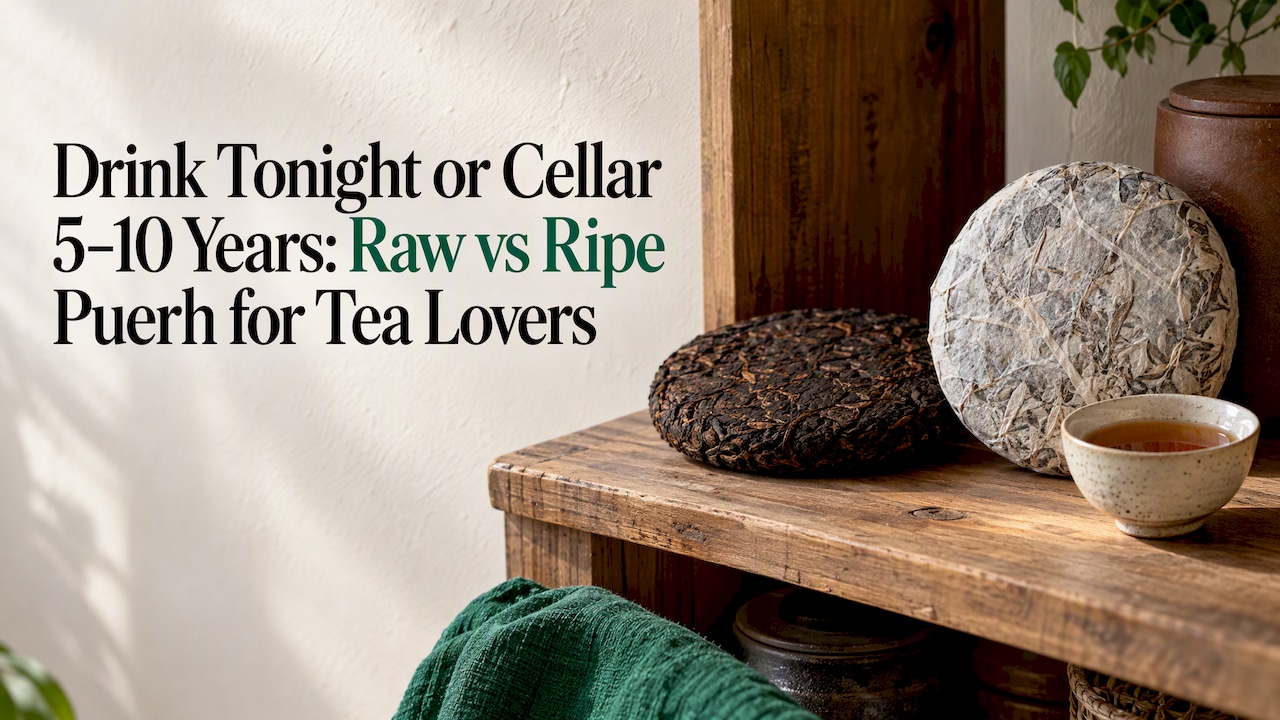
Raw puerh, known as sheng, is minimally processed and built for aging, while ripe puerh, known as shou, is fermented quickly through a controlled piling process that makes it drinkable right away. If you want a tea that evolves for years in your cabinet, sheng is your style. If you want something earthy and mellow tonight, reach for shou.
TL;DR:
- Raw puerh can be aged for decades, developing complex flavors, while ripe puerh remains relatively stable and ready to drink after fermentation.
- Ripe puerh undergoes an engineered wet-piling process that accelerates fermentation, creating a dark, earthy flavor profile from the first brew.
- Young raw puerh tastes bright and floral with a light liquor, transforming into mellow, dried fruit, and honey over years; ripe offers consistent earthy, mushroom, and cocoa notes immediately.
- Proper storage is crucial for aging raw puerh; avoid extreme temperatures and damp conditions to prevent mold or sourness, unlike ripe puerh, which is less sensitive.
- Brewing raw puerh benefits from slightly cooler water, while ripe puerh withstands near-boiling temperatures; short, multiple infusions maximize flavor without bitterness.
Table of Contents
- 1. Raw and ripe puerh at a glance
- 2. How raw and ripe puerh are actually made
- 3. Flavor, aroma, and appearance differences you’ll actually taste
- 4. Aging, storage, and what changes over time
- 5. How to brew raw and ripe puerh for the best cup
- 6. What research says about puerh’s chemistry and health effects
- 7. A shopper’s checklist for tasting and choosing between styles
- 8. Why I keep both styles stocked at once
- 9. Where to start exploring puerh at Tealyra
- FAQ
- Sources
1. Raw and ripe puerh at a glance
Before you dig into the details, here’s how the two styles stack up side by side.
- Processing: Raw puerh is sun-dried and lightly processed, then left to transform slowly; ripe puerh goes through wet-piling, a fast, engineered fermentation.
- Liquor color: Young raw pours pale gold to light amber; aged raw deepens to amber or red; ripe pours dark brown to nearly black from its first brew.
- Flavor: Young raw tastes bright, floral, and grippy; aged raw turns mellow and layered; ripe tastes earthy, smooth, and consistent from one session to the next.
- Aging potential: Raw puerh can be cellared for decades, gaining complexity with time; ripe changes far less dramatically after it’s pressed.
- Brew temperature: Raw prefers slightly cooler water than ripe, which can handle a near-boil without turning bitter.
- Buying tip: For raw, ask the seller about harvest year and storage conditions; for ripe, look for a clean, earthy aroma with no musty or sour edge.
2. How raw and ripe puerh are actually made
The difference between sheng and shou starts long before the tea reaches your pot. Both begin the same way: leaves are picked, withered, pan-fired to halt enzymatic browning, then sun-dried into what’s called maocha, the raw material for puerh production.
From there, the two paths split. Raw puerh is pressed into cakes, bricks, or left loose with little else done to it. Any transformation after that point happens slowly, driven by ambient microbes, oxygen, and humidity over months and years. It’s a passive process, closer to how a good wine develops in a cellar than anything engineered in a factory.
Ripe puerh takes a shortcut. Producers moisten the maocha and pile it in thick heaps, a technique called wo dui, or wet-piling. The pile heats up as microbial activity takes hold, and workers turn it periodically to manage temperature and oxygen flow. This accelerated fermentation can compress what might take raw puerh a decade to develop into a matter of weeks. A 2021 review of puerh’s chemical makeup notes that this post-fermentation and wet-piling process drives much of the sensory and chemical gap between the two styles, including shifts in microbial diversity that raw puerh simply doesn’t experience in the same way.
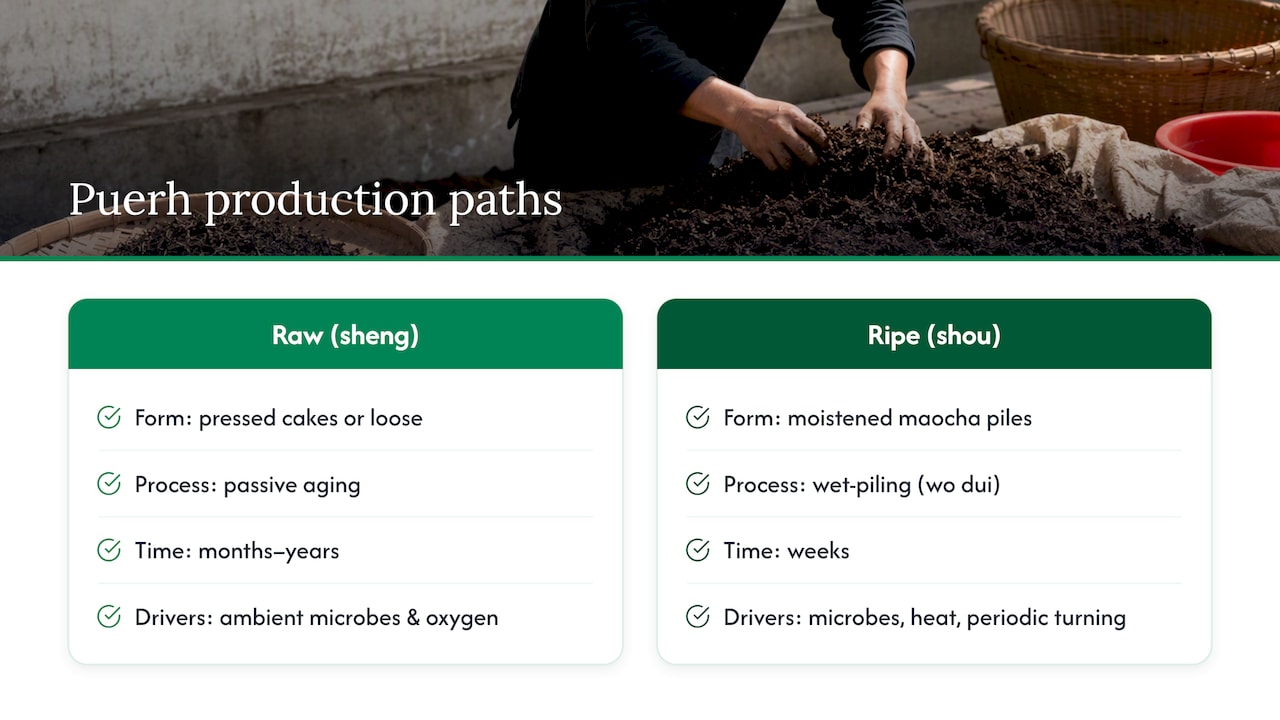
At the chemical level, wet-piling encourages the formation of theabrownins, the dark pigmented compounds responsible for ripe puerh’s deep color and earthy character, along with broader oxidation of catechins and other polyphenols. Raw puerh undergoes similar transformations, just far more gradually and without the concentrated microbial push.
Quality still comes down to craftsmanship either way. Leaf grade, how carefully a pile is monitored for even heat and sanitation, and how a finished cake or brick is stored afterward all shape what ends up in your cup.
3. Flavor, aroma, and appearance differences you’ll actually taste
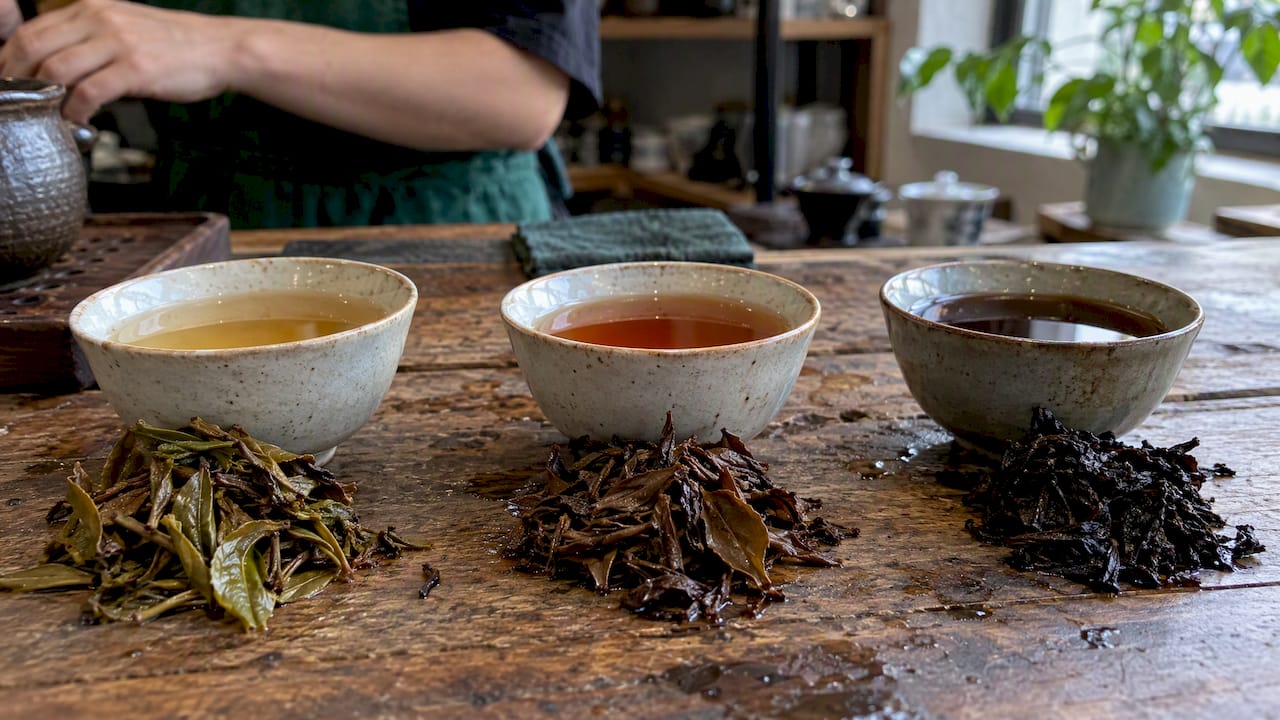
Young raw puerh announces itself immediately: bright, often floral or faintly fruity, with a vegetal edge and enough astringency to make your tongue sit up. The liquor runs pale gold to light amber, and the dry leaves look dark green to olive, still holding some of their original color.
Give that same raw tea five to ten years, and it becomes a different experience. The sharp edges soften into something closer to dried fruit, camphor, honey, or dried flowers, with tannins that feel rounder instead of grabby. The liquor deepens toward amber or red, and the leaves themselves darken to a chestnut or walnut brown as oxidation does its slow work.
Ripe puerh skips the dramatic arc entirely. From the first infusion, you’ll find mushroom, cocoa, wet earth, and sometimes leather, all wrapped in a smoothness that raw puerh takes years to reach. The liquor is dark brown to nearly black, and the leaves look uniformly dark, almost black, a visual giveaway of the wet-piling they went through. Ripe puerh’s flavor range is narrower than aged raw, which is part of its appeal: it’s dependable and familiar brew after brew rather than a moving target.
When you’re evaluating a cake, look at the leaf color and liquor hue together. Olive-green leaves and pale liquor point to young raw; chestnut leaves and red liquor suggest well-aged raw; uniformly black leaves and dark liquor confirm ripe.
4. Aging, storage, and what changes over time
Raw puerh is the style built for patience. Left in stable conditions, it transforms through slow oxidation and microbial activity, trading grassy sharpness for the honeyed, woody depth collectors chase. A raw cake aged 5 to 10 years or more often tastes rounder, sweeter, and far less astringent than it did fresh, assuming it was stored well from the start.
Ripe puerh, having already gone through accelerated fermentation, is comparatively stable. It still mellows slightly with age, losing some of the rawest fermentation notes, but the change is subtle rather than transformative. You’re not waiting years to enjoy it the way you would raw.
Good storage matters for both, though raw is far more sensitive to it. Avoid extreme temperature swings, and skip airtight plastic storage in favor of breathable packaging like paper wrapping or clay containers that let the tea breathe without drying out.
Watch for red flags when buying aged cakes: a musty or sour smell beyond typical earthy ripe notes, visible white or green fuzzy spots, or a seller who can’t speak to where and how the tea was stored. Provenance matters as much as age here, since a decade in a damp, poorly ventilated space does more harm than good.
5. How to brew raw and ripe puerh for the best cup
Brewing parameters differ enough between the two styles that using one method for both will shortchange whichever tea you’re not optimizing for.
Raw puerh, especially younger cakes, does well with water around 194 to 203°F (90 to 95°C); older raw can handle temperatures closer to boiling without turning harsh. Ripe puerh prefers water closer to a full boil, around 203 to 212°F (95 to 100°C), since the compressed fermentation it’s gone through can handle more heat without becoming bitter. Use roughly 5 to 7 grams of leaf per 100 to 150 milliliters of water, and favor a gaiwan or small yixing pot over a western-style infuser if you want control over short, repeated steeps.
Start with a rinse: pour hot water over the leaves for 10 to 30 seconds, then discard it. This wakes up compressed leaf and washes away any surface dust, especially useful for aged cakes.
- Rinse the leaves for 10 to 30 seconds and discard the water.
- First infusion: steep for 5 to 10 seconds.
- Second and third infusions: steep for 10 to 15 seconds each.
- Fourth through sixth infusions: add 5 to 10 seconds per steep as the leaves open further.
- Continue for several more rounds, extending time gradually until flavor fades.
Pro Tip: Keep steeps short and frequent rather than long and infrequent. Puerh, raw or ripe, gives up its best flavor in quick bursts, and over-extraction tends to pull out bitterness before it pulls out depth.
6. What research says about puerh’s chemistry and health effects
Puerh’s reputation for health benefits comes with real chemistry behind it, though the human evidence is still thin. A meta-analysis of animal studies found that puerh tea extracts reduced serum MDA while increasing SOD and GSH-Px, markers that point to antioxidant activity in preclinical models, though the researchers noted high heterogeneity across the studies they reviewed. That’s a meaningful signal, but it’s animal data, not proof of what happens in a person drinking a daily cup.
Other research has looked at puerh’s effect on digestive enzymes tied to blood sugar. A systematic review of alpha-glucosidase and alpha-amylase inhibition found that puerh polysaccharides can inhibit alpha-glucosidase, with alpha-amylase inhibition varying depending on fermentation stage and age, longer-fermented or older samples sometimes showing stronger effects in lab assays. Again, this is enzyme-level evidence, not a clinical outcome.
The compounds behind both the flavor and the reported bioactivity are largely the same: theabrownins, catechins, and the broader family of polyphenols that shift as the tea ferments and ages. A study isolating phenolic compounds from puerh found that some isolated phenolics showed stronger radical-scavenging activity in lab assays than crude extracts, reinforcing that puerh’s chemistry is genuinely active, just not yet mapped onto reliable human outcomes.
The broader 2021 review of puerh’s constituents and biological properties also flags a real safety concern: mycotoxins and heavy metals have turned up in some samples, tied to growing conditions, processing, and storage rather than the tea category itself. Buying from a reputable seller with clear sourcing is the simplest way to sidestep that risk.
7. A shopper’s checklist for tasting and choosing between styles
Tasting puerh with intention beats guessing from a label. Brew a sample, then note the liquor color, aroma, body, astringency, and how the flavor lingers after you swallow. Compare those notes across a young raw, an aged raw, and a ripe sample, and the differences become obvious fast.
- Check the basics: Ask for harvest year, storage history, and leaf grade before buying an aged cake.
- Match the tea to your goal: Choose young raw if you plan to cellar it, aged raw for drinking now with complexity, and ripe for a reliable daily cup.
- Smell before you commit: A musty, sour, or chemical smell is a red flag regardless of style.
- Verify online sellers: Look for clear photos of the actual cake or leaf, not stock imagery, and sellers willing to answer sourcing questions directly.
Buying for a gift versus buying for your own collection calls for different choices too. A gift usually calls for ripe or a lightly aged raw that’s pleasant immediately, while a cellaring project rewards patience with young raw.
8. Why I keep both styles stocked at once
I treat raw and ripe puerh as two different hobbies wearing the same name. A young raw cake is a long game, something I taste once a year to track how it’s changing. Aged raw and ripe are what I actually reach for most days, one for complexity, one for reliability.
A good starter set is simple: one young raw, one aged raw, and one ripe. Drink the ripe with breakfast, save the raw samples for slower afternoons, and you’ll understand the spectrum faster than any amount of reading could teach you.
— Tealyra
9. Where to start exploring puerh at Tealyra
The company offers a large selection of loose leaf teas, including puerh, which makes it easy to compare raw and ripe styles side by side. Shipping policies and pricing details can be found on the company’s website.
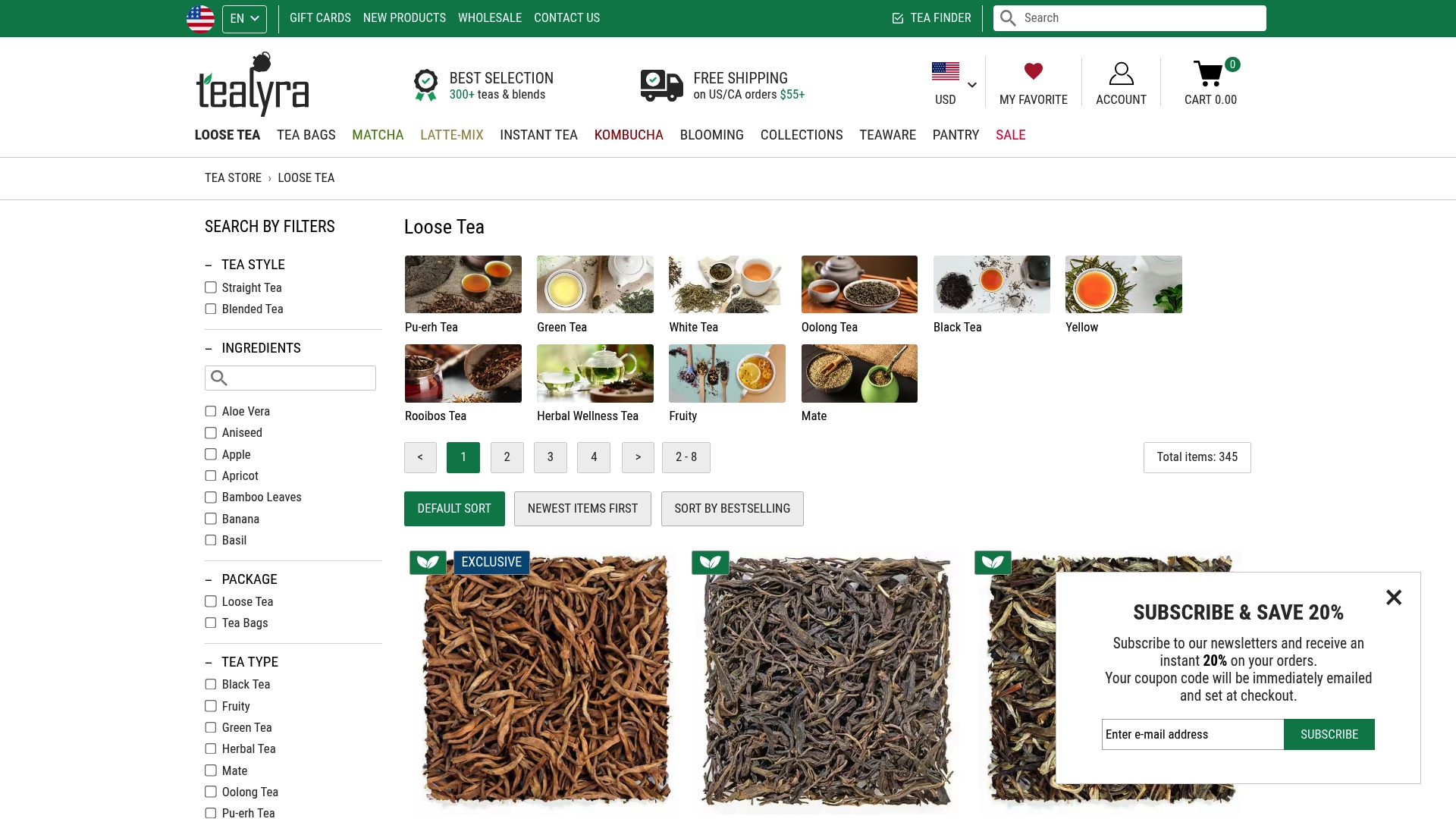
If you’re new to puerh, start with a smaller quantity of each style rather than a full cake. Browse the current selection on Tealyra’s loose leaf tea page and build your own tasting set from there.
FAQ
Which type of puerh tea is best?
There’s no single best type since raw and ripe serve different goals: raw suits long-term aging and evolving flavor, while ripe delivers an earthy, ready-to-drink cup immediately. The right choice depends on whether you want a tea to cellar or one to enjoy tonight.
Who shouldn’t drink puerh tea?
Anyone sensitive to caffeine late in the day should be cautious, since puerh contains caffeine like other true teas. People with existing health conditions, or those concerned about contaminants in poorly sourced batches, should buy from reputable sellers and check with a healthcare provider if unsure.
Is puerh the healthiest tea?
Puerh isn’t established as healthier than other teas; research on its antioxidant activity and enzyme-inhibiting effects is still largely limited to animal and lab studies. It shows promising chemistry, but the human evidence needed to call it the healthiest option simply isn’t there yet.
What is raw puerh tea good for?
Raw puerh is valued for its aging potential, developing deeper, mellower flavors over years of proper storage. It also offers the brighter, more astringent profile that many tea enthusiasts specifically seek out in younger cakes.
What’s the main difference between raw and ripe puerh?
Raw puerh ages slowly through natural oxidation, while ripe puerh undergoes an accelerated wet-piling fermentation that makes it drinkable right away. That processing difference shapes nearly everything else, from color and flavor to how long each style can sit in storage.