

The healthiest coffee alternative isn’t necessarily the one with the most celebrated ingredients. It’s the one that fits your caffeine preferences and feels satisfying in your cup. If you’re searching for healthy alternatives to coffee, it can be hard to tell which drinks contain caffeine, which offer a comforting roasted flavor, and which claims deserve a closer look.
You may want to ease off coffee without giving up the warmth, aroma, and small pause that make a morning drink feel like a ritual. That’s a reasonable place to start. Alternatives differ in caffeine, flavor, and preparation, and none is automatically a better choice for everyone.
This guide compares seven inviting options, from matcha and yerba mate to naturally caffeine-free rooibos, chicory, and herbal teas. You’ll learn what each tastes like, how its caffeine compares, and what to consider when weighing health claims. Whether you’re looking for a different caffeinated drink or a soothing cup without caffeine, choose what suits your routine, not what promises the most.
Key Takeaways
- Compare healthy alternatives to coffee by caffeine level, flavor, and preparation to find a cup that fits your routine.
- Green tea, black tea, matcha, and yerba mate contain caffeine, but amounts can vary with serving size and brewing.
- Rooibos and many herbal infusions are caffeine-free. Check the specific product, especially when choosing blends.
- Use a simple selection process: decide how much caffeine you want, choose a flavor and format, then settle on a brewing ritual you enjoy.
- Look beyond broad health claims and consider your individual needs, ingredients, and how you prepare each drink.
Healthy alternatives to coffee: what makes a drink a good fit?
A coffee alternative is any drink chosen in place of coffee for its flavor, caffeine content, preparation, or fit with a personal routine. It might be another caffeinated brew, such as tea or yerba mate, or a caffeine-free option like rooibos or a herbal infusion. The right choice depends on what you want from the cup, not on a promise that it’s automatically healthier.
The phrase coffee substitute can also refer to drinks made from ingredients such as chicory or roasted grains. For background on the range and history of these options, see Coffee substitutes.
Is switching from coffee automatically healthier?
Not necessarily. Caffeine content is one consideration, but it doesn’t by itself explain a drink’s overall effects or nutritional profile. A lightly brewed tea and a sweetened café-style drink may have very different ingredients, even if both replace coffee in your routine.
Added sugar, syrups, milk, and serving size can all change what ends up in the cup. Look at the prepared drink, not only its base ingredient, and be cautious of broad claims that a particular alternative will improve energy, digestion, or general well-being. If you have a health condition, are pregnant, or take medication, ask a qualified healthcare professional for guidance about caffeine and specific ingredients.
Which qualities matter when choosing a coffee alternative?
Start with your everyday preferences. Do you want to keep some caffeine, reduce it, or avoid it? Are you drawn to a brisk, grassy cup, a round roasted note, or something gentle and floral? Think, too, about whether you enjoy whisking matcha, steeping loose-leaf tea, or preparing a quick infusion. The best option is one you’ll look forward to making.
- Caffeine: Compare caffeinated choices, including green or black tea, matcha, and yerba mate, with caffeine-free options. Check the specific product, since blends and preparation can vary.
- Flavor: Consider whether you want a familiar depth or a different profile, such as rooibos’s mellow character or chicory’s roasted notes.
- Time and temperature: Decide whether your ritual calls for a quick hot cup, a carefully prepared brew, or a refreshing cold drink.
Familiarity matters. A drink that preserves a comforting pause, aroma, or favorite way of brewing may be easier to keep in your routine than one chosen only for a health claim. Exploring healthy alternatives to coffee is less about finding a universal winner and more about choosing a cup that suits your tastes and needs.
Caffeinated coffee alternatives: tea, matcha, and yerba mate
If you enjoy coffee’s lift but want a different flavor or brewing rhythm, caffeinated teas and yerba mate offer distinct options. Their caffeine content isn’t fixed: leaf quantity, serving size, and brewing method all affect what ends up in the cup. The comparisons below describe caffeine qualitatively. Add specific amounts only after verifying them for the serving and preparation being discussed.
| Drink | Caffeine | Flavor and preparation |
|---|---|---|
| Green tea | Contains caffeine; amount varies | Fresh, vegetal, or gently savory; steep the leaves in hot water. |
| Black tea | Contains caffeine; amount varies | Fuller-bodied than many green teas; steep the leaves to your preferred strength. |
| Matcha | Contains caffeine; amount varies | Powdered green tea whisked into water, with a smooth, vivid taste. |
| Yerba mate | Contains caffeine; amount varies | Often earthy and sometimes smoky; prepare as an infusion. |
Green and black tea as familiar alternatives
Green tea can make a lighter, more delicate cup, with notes that range from fresh and grassy to gently savory. Black tea tends to feel fuller and more robust, making it a satisfying choice if you like a substantial hot drink, though its flavor isn’t the same as coffee. Explore loose-leaf green tea by style and adjust the brew to suit your palate.
Both are made from Camellia sinensis, but their flavor depends on the tea and how you prepare it. Steeping longer or using more leaf can change the cup, including its caffeine level. Treat caffeine figures as estimates unless they’ve been checked against a specific product, serving, and brewing method.
Matcha and yerba mate for distinct preparation rituals
Matcha is powdered green tea mixed directly into water, commonly whisked until smooth. Unlike loose-leaf tea, it isn’t steeped and removed, so the ritual and texture feel different. Yerba mate is a separate caffeinated infusion with its own flavor and preparation traditions. It may suit someone looking for an earthy cup rather than a conventional tea profile. Explore yerba mate tea if you’d like to learn more about this option.
These drinks can offer a different way to enjoy caffeine, but none is a guaranteed treatment for energy or performance. If you’re curious about a caffeine-free roasted alternative, Drugs.com provides an overview of chicory. Choose according to taste and your own caffeine preferences, not broad health promises.
Caffeine-free coffee alternatives: rooibos, chicory, and herbal infusions
A warm cup can keep its place in your day even when you’re stepping away from caffeine. Rooibos, herbal infusions, and chicory-based drinks each offer a different flavor and brewing experience, but they aren’t all made from the same plants or suited to the same preferences.
Tea in the strict sense comes from Camellia sinensis, the plant used for green, black, white, and oolong tea. Herbal infusions are made from other leaves, flowers, roots, spices, or fruits. Rooibos is an infusion made from a South African plant, while chicory drinks are prepared from the plant’s root, often roasted. These categories can help you narrow your search, but check the label: blends and added ingredients vary, and a product’s caffeine status should be confirmed individually.
Rooibos and herbal infusions for a caffeine-free cup
Pure rooibos is naturally caffeine-free. Its cup is often mellow and rounded, with a gentle earthy sweetness that makes it pleasant on its own or with milk. For a familiar loose-leaf ritual without caffeine, browse rooibos red tea and follow the product’s preparation guidance.
Herbal infusions offer a wide range of aromas, from bright and fruity to floral or spiced. “Herbal” describes a broad category, not one fixed ingredient profile, so read the full ingredient list and any caffeine information on the package. If avoiding caffeine is essential for you, confirm the status of the specific blend rather than relying on its name or flavor.
Chicory and roasted flavors when coffee taste matters
Roasted chicory can bring deep, earthy, slightly bitter notes that may appeal if you miss coffee’s darker flavor. It can be brewed as a standalone drink or included in a blend, but it won’t reproduce coffee exactly, and it shouldn’t be assumed to offer the same effects. Check the ingredient list to see whether a product contains only chicory or combines it with coffee or other ingredients. That distinction matters if you’re avoiding caffeine.
As you explore healthy alternatives to coffee, think of caffeine-free options as choices for flavor and ritual, not automatic health upgrades. Added sweeteners and other ingredients can change what’s in your cup, while individual needs differ. A fragrant herbal infusion, smooth rooibos, or roasted chicory drink may each make a satisfying pause in the day. The best fit is the one whose ingredients, taste, and preparation feel right for you.
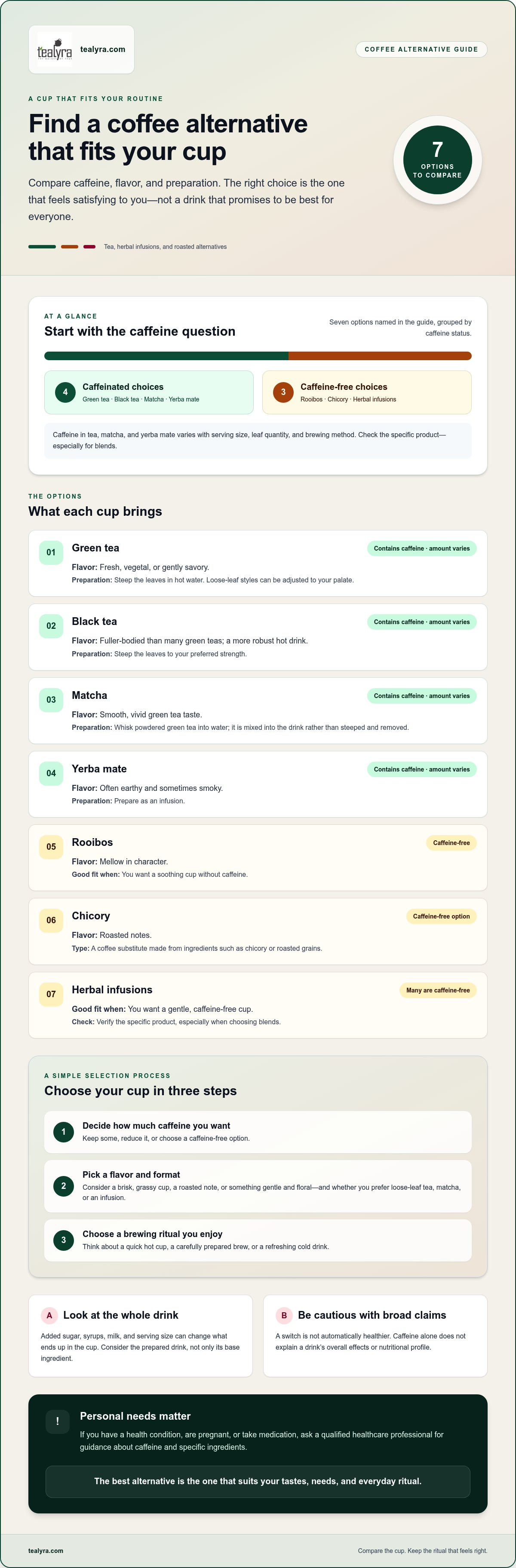
How to choose a healthy coffee alternative for your routine
The best match depends on what you want from your cup, how much time you have, and the flavors you enjoy. Use this simple process to narrow the choices, then give a promising drink a few tries before deciding whether it belongs in your day.
- 1. Choose your caffeine level. Decide whether you want to avoid caffeine, reduce it, or simply try a different caffeinated drink. If you’re comparing caffeinated options, check serving size and preparation, since both can affect the amount in your cup.
- 2. Find a flavor you’ll look forward to. Green tea can taste fresh or gently savory, black tea is often fuller-bodied, matcha has a distinct, smooth character, and rooibos offers a mellow, earthy profile. Start with the notes that sound appealing, since preferences are personal.
- 3. Pick a format that fits. Loose-leaf tea needs an infuser or strainer, matcha is whisked into water, and herbal infusions are steeped. Choose a method and equipment that feel manageable in your morning or afternoon routine.
- 4. Settle on a brewing ritual. Try the drink hot or, if suitable, chilled. Adjust steeping strength to taste, following product guidance, before deciding it isn’t for you.
How can you choose between caffeinated and caffeine-free options?
Think about your reason for changing: are you hoping to reduce caffeine, avoid it altogether, or simply explore another flavor? Green tea, black tea, matcha, and yerba mate contain caffeine, while rooibos and many herbal infusions are caffeine-free. Check the label for the specific product, especially if it’s a blend. Caffeine tolerance varies between people. Ask a clinician for advice if you have a health concern, take medication, or need individualized guidance.
- Green or black tea: A familiar steeped cup, with strength shaped by the tea and brewing method.
- Matcha: Powder whisked into water, offering a more hands-on preparation.
- Rooibos or herbal infusion: A caffeine-free choice when the product’s ingredients and label confirm it.
How can you make a new drink part of your day?
Match the preparation to the moment. A quick infusion may suit a busy morning, while whisking matcha or steeping loose leaves can make a slower pause feel intentional. If a tea tastes too light or too strong, experiment with steeping time or leaf quantity within the product’s directions. You might also try a gradual change, replacing one coffee occasion at a time rather than reshaping your whole routine overnight.
In short, match your drink to your preferred caffeine level, flavor, preparation time, and daily rhythm. If loose-leaf green tea sounds like a good place to begin, explore green tea options and choose a style that invites you back for another cup.
Explore tea-based alternatives to coffee with Tealyra
Once you’ve settled on the flavor and preparation that suit you, it’s easier to explore tea with a clear preference in mind. Tealyra offers loose-leaf teas, matcha, rooibos, and herbal infusions to enjoy for their taste and ritual, not as medical solutions.
Which Tealyra tea categories may suit your preferences?
For a brewed tea with caffeine, explore green tea or fuller-bodied black tea. Matcha offers a different texture and preparation, while rooibos and herbal tea provide options for a caffeine-free infusion. Check product details and labels, particularly for blends, to confirm ingredients and caffeine status.
- For a brewed cup: Green or black tea lets you explore different flavors through steeping.
- For a whisked preparation: Matcha brings a distinct texture and hands-on ritual.
- For an infusion without caffeine: Consider rooibos or herbal tea, verifying the specific product label.
How can you begin exploring loose-leaf tea?
Choose one category that appeals to your palate, then follow the brewing guidance and adjust the steeping to taste. A strainer or infuser can help prepare loose-leaf tea at home. A favorite cup or teapot can make the process feel familiar without adding complexity. Let flavor, rather than a promised health result, guide your next choice.
If you’re curious about a fresh, vegetal cup, green tea is one place to begin. Explore Tealyra’s green tea selection and discover a style that feels at home in your daily ritual.
Choose a cup that feels right for your day
A change in your daily drink can be an invitation to notice what you enjoy: the aroma as it steeps, the warmth in your hands, or the quiet moment before the day gathers pace. Let your preferences lead, and treat health claims with care rather than assuming one alternative suits everyone.
Finding healthy alternatives to coffee is a personal exploration, not a search for a universal replacement. You can begin with a small change, keep the ritual that matters to you, and let your taste shape what comes next.
Tealyra offers loose-leaf teas, matcha, rooibos, herbal infusions, and accessories for preparing tea at home. Explore Tealyra’s tea and teaware selection to find an option for your daily ritual.
Frequently Asked Questions
What is the healthiest alternative to coffee?
There isn’t one healthiest alternative for everyone. The right choice depends on your caffeine preference, ingredients, serving size, preparation, and individual needs. Green tea, matcha, and yerba mate contain caffeine, while rooibos and many herbal infusions can offer a caffeine-free cup. Compare the drink as you actually prepare it, including sweeteners or other additions, and be cautious of claims that promise specific health effects.
Is tea a healthier alternative to coffee?
Tea isn’t automatically healthier than coffee; it’s a different drink with its own caffeine level, flavor, and preparation. Green and black tea contain caffeine, with amounts that can vary according to the serving and brew. Added sugar, syrups, and serving size also affect what’s in your cup. Choose tea if you prefer its taste or ritual, and consult a healthcare professional about caffeine if you have a medical concern.
Which coffee alternatives contain caffeine?
Green tea, black tea, matcha, and yerba mate are caffeinated alternatives. White and oolong teas also contain caffeine because they’re made from the tea plant, Camellia sinensis. The amount can change with the quantity used, serving size, and brewing method, so don’t assume every cup contains the same amount. Rooibos and many herbal infusions are caffeine-free, but check the label for blends or added ingredients.
Can matcha replace coffee for a morning drink?
Yes, matcha can take the place of coffee as a morning beverage if you enjoy its flavor and preparation. It’s powdered green tea whisked into water, rather than leaves steeped and removed, so the finished cup has a different texture and ritual. Matcha contains caffeine, but the amount varies by serving and preparation. It may be a welcome change of pace, though it won’t taste or feel identical to coffee.
What can I drink instead of coffee if I want to avoid caffeine?
Consider rooibos, a pure herbal infusion, or a chicory-based drink made without coffee. Rooibos has a mellow, earthy character, while roasted chicory can offer deeper, slightly bitter notes. Herbal infusions vary widely in flavor and ingredients. Check product labels to confirm that a particular drink or blend is caffeine-free, especially if avoiding caffeine is important for a health-related reason. A clinician can advise you about your individual situation.
Does rooibos taste like coffee?
Rooibos doesn’t taste just like coffee. It’s often described as mellow, earthy, and gently sweet, without coffee’s familiar roasted bitterness and body. You can enjoy it plain or prepare it with additions you already like, keeping in mind that sweeteners or milk change the finished drink. If you’re seeking darker, roasted notes, chicory may be another option, but check its ingredients and caffeine status before choosing a blend.
How can I switch from coffee to tea without giving up my morning ritual?
Keep the parts of your routine you enjoy, such as preparing a warm drink in a favorite cup or taking a quiet moment before the day begins. Try replacing one coffee occasion with green or black tea, matcha, or a caffeine-free infusion, and adjust steeping strength to taste. If you’re reducing caffeine, make gradual changes that feel manageable. For personal guidance about caffeine, check with a healthcare professional.


