

What if the gentlest part of easing post-meal discomfort isn’t a “detox” promise, but a fragrant cup and a few quiet minutes? If bloating leaves you wary of wellness claims, it’s sensible to ask which herbs may help and how to brew them well. A thoughtfully chosen herbal tea for digestive health can be a comforting part of your routine, though a cup isn’t a cure. Research on concentrated extracts also doesn’t always reflect traditionally brewed tea.
This guide explores familiar botanicals such as peppermint, ginger, and chamomile, with practical steeping tips to help their aromas and flavors unfold. It separates grounded expectations from marketing language, compares the sensory appeal of loose-leaf herbs with tea bags, and shares simple ways to make an after-meal cup feel like a mindful ritual. Let flavor, comfort, and routine guide your choice, one calming sip at a time.
Key Takeaways
- Choose herbal tea for digestive health with a clear-eyed approach to wellness claims and traditional uses.
- Compare warming roots, cooling leaves, and floral botanicals by their distinct aromas and flavors.
- Match your brewing method to the herb, using suitable steeping and an infuser to bring out its character.
- Learn how bitter botanicals are traditionally used after meals, and why they shouldn’t be treated as a cure.
- Make your after-meal cup a sensory ritual with loose-leaf herbs and inviting teaware.
The Restorative Power of Herbal Infusions for Digestive Wellness
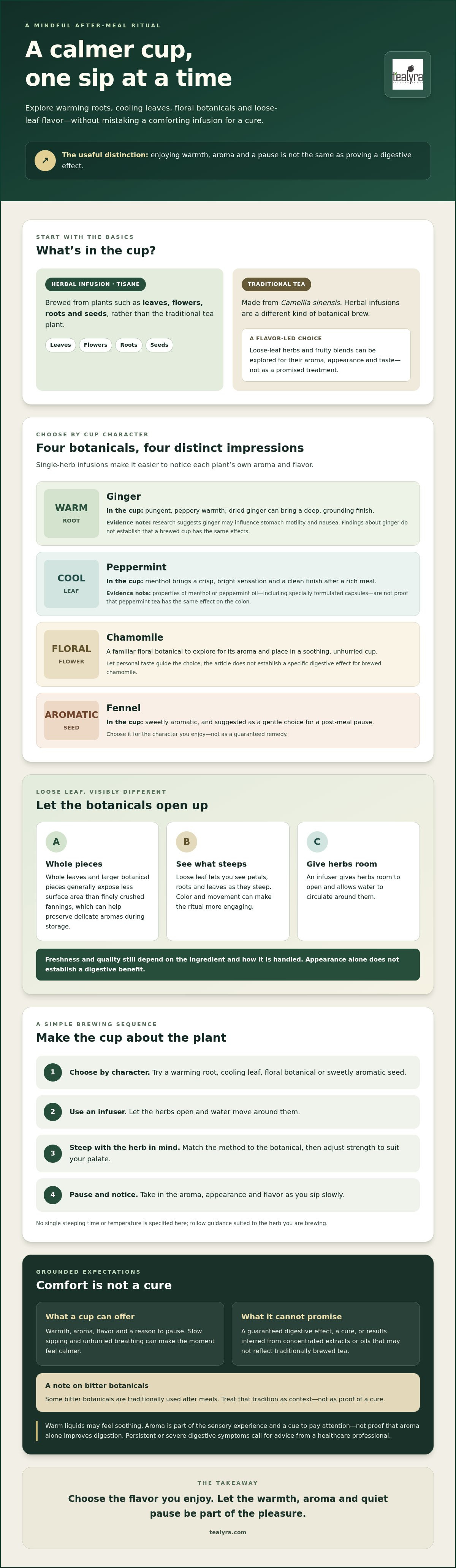
After a meal, a warm cup can invite you to pause, breathe, and notice what you’re tasting. Herbal infusions, often called tisanes, are brewed from plants such as leaves, flowers, roots, and seeds rather than the traditional tea plant, Camellia sinensis. This distinction is explained in the overview of herbal infusions. People enjoy these botanical brews for their flavors and as a comforting part of daily care.
Warm liquids may feel soothing and make slow sipping after a meal more appealing, but a cup shouldn’t be presented as a treatment or a guaranteed way to relax digestive muscles. Aroma can also make the experience more inviting. Smelling food and drink is part of the cephalic phase, the body’s early sensory response as it prepares for eating. That’s a cue to pay attention, not proof that aroma alone improves digestion.
For a visual introduction to the topic, watch this overview of digestive herbal teas:
Understanding the Gut-Brain Connection and Tea
The vagus nerve helps connect the brain with digestive organs and is involved in the parasympathetic “rest and digest” response. A quiet tea break may support a calmer mood, especially when paired with unhurried breathing. However, claims that tea itself lowers cortisol or reliably changes digestion need stronger evidence. Think of a restorative infusion as a botanical drink enjoyed mindfully for its warmth, aroma, and place in a soothing routine.
Why Loose-Leaf Quality Matters for Your Cup
Whole leaves and larger botanical pieces generally expose less surface area than finely crushed fannings, which can help preserve delicate aromas during storage. Quality and freshness still depend on the ingredient and how it’s handled. Loose leaf also lets you see petals, roots, and leaves as they steep. Tealyra sources botanicals directly from growers and focuses on loose-leaf teas, offering ingredients to explore through aroma, appearance, and flavor. An infuser gives herbs room to open and lets water circulate around them. Browse the herbal tea selection to start comparing botanicals. Color and movement can make the ritual more engaging, even though appearance alone doesn’t establish a digestive benefit.
Choose an infusion for the flavor you enjoy, and let the pause itself be part of the pleasure. A thoughtfully brewed cup can complement a post-meal routine, but persistent or severe digestive symptoms call for advice from a healthcare professional.
Warming Roots and Cooling Leaves: Herbal Tea for Digestive Health
The best choice depends on what you enjoy and when you want to sip: warming ginger after a rich meal, cooling peppermint when you want a clean finish, or sweetly aromatic fennel for a gentle post-meal pause. Each botanical has its own character. Herbal tea for digestive health is best approached as a comforting ritual, not a guaranteed remedy. Single-herb infusions are a useful place to begin because they let you notice each plant’s aroma and flavor without a blend obscuring its profile.
Ginger Tea: A Warming Choice for Nausea
Ginger’s pungent compounds include gingerols in fresh root and shogaols formed as ginger is dried or heated. Research on ginger suggests it may influence stomach motility and nausea, but findings about ginger itself don’t establish that a brewed cup will have the same effects. For context, Johns Hopkins Medicine discusses the benefits of ginger for digestion. In the cup, dried ginger offers deep, peppery warmth and a grounding finish. Try it after a heavy meal or in the morning if you feel sluggish, adjusting the strength to suit your palate.
Peppermint Tea: A Crisp, Cooling Finish
Peppermint’s menthol brings a cool, bright sensation that can refresh the palate after a rich meal. Menthol has smooth-muscle-relaxing properties, but evidence about peppermint oil, including specially formulated capsules, shouldn’t be treated as proof that peppermint tea has the same effect on the colon. If you enjoy its clean, lifted aroma, try sipping it after eating. For more background on this familiar herb, explore peppermint tea benefits.
Fennel and Anise: Sweet Seeds for After a Meal
Fennel seeds are traditionally chewed after meals in South Asian mukhwas, a fragrant blend of seeds and spices. Brewed fennel and anise have sweet, liquorice-like aromas and a rounded, almost silken mouthfeel. They’re traditionally used for gas and bloating, though individual responses vary and a cup isn’t a treatment for persistent symptoms. Their gentle sweetness makes them an inviting post-meal choice, especially if you prefer a less peppery infusion.
For a simple tasting practice, brew one herb at a time and notice its fragrance, warmth, and finish before combining it with anything else. Tealyra sources botanicals directly from growers and focuses on loose-leaf teas, making whole herbs a way to explore each ingredient’s character. Browse the loose-leaf herbal tea selection to find a single botanical that suits your taste. Then decide whether you prefer it before or after a meal.
Beyond the Basics: Floral and Bitter Botanicals for Gut Health
Floral and bitter infusions offer different experiences: one soft and fragrant, the other earthy or pleasantly sharp. In traditional Chinese and Ayurvedic practices, herbs have long been incorporated into food and drink as part of broader approaches to wellbeing. Those traditions provide cultural context, but they don’t guarantee a specific effect from a modern cup of tea. When choosing herbal tea for digestive health, let taste guide you and keep health claims measured.
Bitter flavors are traditionally associated with stimulating digestive secretions, including bile, which helps the body digest fats. That doesn’t mean every bitter tisane reliably increases bile production or eases symptoms. If you have a gallbladder or other health condition, check with a healthcare professional before using bitter herbs medicinally. An unhurried tea ritual may also make a meal feel less hurried. It can support relaxation without replacing care for ongoing stomach upset.
Chamomile: A Gentle Floral Pause
Chamomile’s golden infusion is softly apple-like, with a honeyed finish and delicate floral aroma. Its flowers contain apigenin, a plant flavonoid studied for its biological activity. That alone doesn’t establish chamomile tea as a treatment for digestive symptoms or prove that apigenin acts as a carminative in a brewed cup. Enjoy chamomile as an evening drink if you like its gentle flavor. It isn’t a proven remedy for acid reflux, and lying down soon after eating may aggravate reflux for some people.
Dandelion Root and Burdock: Earthy, Bitter Notes
Roasted dandelion root brews into a deep, earthy cup with a coffee-like edge, while burdock has a more mellow, rooty character. The liver produces bile, which plays a role in fat digestion, but a dandelion or burdock infusion shouldn’t be assumed to “detox” or improve liver function. Burdock root contains inulin, a fermentable fiber also found in some foods. Its presence in the root doesn’t mean a strained tea delivers a meaningful prebiotic dose or reliably changes the gut microbiome.
Pu’erh: A Fermented Tea for the Curious
Pu’erh isn’t herbal tea. It’s made from the tea plant and undergoes microbial fermentation during processing. Its mellow, earthy depth can feel especially satisfying after a substantial meal, but fermentation doesn’t make brewed tea a probiotic source or establish a digestive benefit. For a closer look at its character and processing, explore the aged ripe Pu’erh tea guide.
Think of these as distinct tasting experiences, not interchangeable remedies: chamomile for floral softness, roasted roots for grounding bitterness, and Pu’erh for a rounded, fermented profile. To explore loose-leaf botanicals and find aromas that suit your routine, browse Tealyra’s herbal tea selection.
Brewing for Potency: How to Extract the Full Benefit of Your Tisane
A well-brewed tisane balances temperature, time, and enough room for the botanicals to open. These details shape aroma and flavor, but they don’t guarantee a medicinal effect. When brewing herbal tea for digestive health, follow the directions supplied with the herbs when available, then adjust gently to find a taste you enjoy.
Temperature and Timing: Give Each Botanical Room to Shine
Roots are dense; delicate flowers are not. Ginger or dandelion root can usually take freshly boiled water, while chamomile often tastes softer with water allowed to cool briefly after boiling. For leafy herbs and flowers, start with a covered steep of 5 to 10 minutes, then taste. Roots may need a longer infusion or gentle simmer to develop their flavor, so check the guidance for the specific herb rather than relying on one timing rule.
Over-extraction is easy to spot in the cup: the fragrance may seem muted, while the flavor turns harsh, overly bitter, or drying. If that happens, shorten the steep next time or use slightly cooler water for delicate material. Use this simple routine:
- Measure: Use the quantity recommended for the herb.
- Heat: Match the water temperature to whether you’re brewing a root, leaf, or flower.
- Cover and steep: Start within the suggested time range, then taste.
- Strain: Remove the herbs once the cup reaches a pleasing balance.
The Covered Steep: Keep the Aroma in the Cup
The fragrant compounds you smell are aromatic volatiles dispersing into the air, not “medicine” escaping in any proven therapeutic sense. Covering the cup helps retain more aroma and keeps the infusion warm as it steeps. Use a teapot lid or a small saucer over an open cup. An infuser should hold the herbs securely while still allowing water to circulate around them. No special seal is needed for a good infusion.
Choose teaware to suit the amount and type of herb. A cup with an infuser works well for a single serving, while a teapot is convenient for sharing. Clear glass can make unfurling leaves and petals part of the pleasure; a lid makes a practical difference during steeping. For a simple way to prepare loose-leaf herbs, explore Tealyra’s teaware and infusers.
Let aroma, color, and taste guide your adjustments. A carefully covered, well-timed steep makes the ritual more satisfying and the botanical character easier to appreciate, without turning a comforting cup into a promised cure.
Creating a Mindful Digestive Ritual with Tealyra
A cup can begin as a response to discomfort, then become something more generous: a small pleasure you make room for because you enjoy its aroma, warmth, and flavor. Herbal tea may complement a personal routine, but it isn’t a cure or a substitute for medical advice when digestive symptoms persist.
Try setting aside a brief “digestive hour” after a meal, without needing to make it a full hour or add another task to a busy day. Choose an infusion you genuinely like, let it steep while you clear the table, then sip slowly instead of rushing into the next demand. The ritual may help you notice the difference between physical fullness and a more settled feeling of satisfaction, though it can’t guarantee a change in digestion.
Sourcing the Finest Botanicals
Tealyra sources botanicals directly from growers and focuses on loose-leaf teas. Freshness and careful storage matter to a herb’s aroma and flavor. Look for botanicals that smell distinct and lively rather than flat or stale. Growing conditions, including soil and climate, can influence a herb’s sensory character, but they don’t establish its medicinal potency. Peppermint may smell bright and cooling, while chamomile often offers a softer, apple-like floral note.
Whole leaves, petals, and roots also give you more to observe as they steep. Clear teaware can make their unfolding colors and shapes part of the experience, while an infuser keeps loose botanicals easy to brew and remove. These details make a cup more engaging, not more medically effective.
Integrating Tea into Your Daily Wellness Practice
Pair a cup with the meal and moment that suit its flavor. A light, floral chamomile may feel welcome after dinner; a minty infusion can offer a crisp finish after a rich meal. Let your taste and tolerance lead, and remember that herbs can affect people differently. If you have a health condition, take medication, or are unsure whether an herb is suitable, ask a healthcare professional.
Consistency can make a tea break a familiar cue to pause, breathe, and savor, but evidence doesn’t support promising that regular herbal tea will improve gut health over the long term. Think of herbal tea for digestive health as one enjoyable part of a broader routine, rather than a stand-alone solution. Over time, you can discover which herbs you reach for because you like their taste and how the ritual fits your day.
For a thoughtful starting point, explore Tealyra’s loose-leaf herbal tea selection and choose a botanical that invites you to slow down. Brew it with care, notice the fragrance as it rises, and let the pleasure of the cup matter in its own right.
Make Your Next Cup a Moment to Savor
A more enjoyable tea ritual begins with simple choices: select a botanical whose flavor appeals to you, brew it with care, and give yourself a moment to sip without rushing. The right herbal tea for digestive health isn’t a guaranteed remedy. It’s an infusion you can enjoy as part of a thoughtful routine, while discussing persistent symptoms with a healthcare professional.
Keep the essentials in mind: different herbs call for different steeping approaches, covering your cup helps retain its aroma, and the pleasure of a blend matters as much as its traditional use. Loose-leaf botanicals also let you appreciate the color, form, and fragrance of the ingredients. Tealyra sources botanicals directly from growers and offers loose-leaf teas and teaware for making the ritual your own.
Let curiosity guide your next choice, whether you’re drawn to a bright, cooling scent or a softly floral finish. Explore Tealyra’s herbal tea selection and find an infusion that makes pausing after a meal feel natural. One unrushed cup can be a lovely place to begin.
Frequently Asked Questions
Which herbal tea is best for immediate bloating relief?
No herbal tea can guarantee immediate relief, and results vary by person. Peppermint or fennel is a familiar after-meal choice, while ginger may appeal if you’re feeling queasy. Evidence about concentrated extracts doesn’t necessarily apply to brewed tea. A cup of herbal tea for digestive health can offer warmth and a moment to slow down, but seek medical advice if bloating is severe, persistent, or accompanied by other concerning symptoms.
Can I drink digestive herbal teas every day?
Many people enjoy a cup daily, but whether a particular herb is suitable depends on your health, medications, and the blend’s ingredients. Check the package guidance, and ask a healthcare professional before making an herb a regular habit if you’re pregnant, managing a health condition, or taking medication. Pay attention to how you feel, too. Stop drinking an infusion if it causes an unwanted reaction rather than assuming daily use is always appropriate.
Is it better to drink herbal tea before or after a meal for digestion?
There’s no universal timing that guarantees better digestion. Try sipping a mild infusion after a meal if its warmth and flavor help you settle into a slower pace; enjoy it beforehand if that’s when it fits your routine. Choose according to taste and comfort rather than treating timing as a remedy. If drinking a large amount with meals feels uncomfortable, have a smaller cup or wait until afterward.
Does peppermint tea help with acid reflux?
Peppermint tea may not suit people with acid reflux. Peppermint can relax smooth muscle, including the muscle that helps keep stomach contents from rising into the esophagus, so it may worsen reflux for some. If you notice more heartburn after drinking it, avoid peppermint and choose another infusion that agrees with you. Frequent or troublesome reflux deserves advice from a healthcare professional, rather than relying on tea alone.
Are there any herbal teas I should avoid for gut health?
Avoid any tea that triggers an allergy or makes your symptoms worse, and check the full ingredient list, especially for blends marketed as “detox.” Some contain stimulant laxative herbs, such as senna, which can cause cramping or diarrhea and aren’t simply everyday digestive tonics. Herbs may also interact with medication or be unsuitable during pregnancy or with certain conditions. Ask a healthcare professional if you’re unsure what’s safe for you.
How long should I steep herbal tea to get the digestive benefits?
Follow the package directions when available, since flowers, leaves, and roots extract differently. As a starting point, many delicate flowers and leafy herbs can steep covered for about 5 to 10 minutes; dense roots may need longer or gentle simmering. Taste as you go. If the infusion becomes harsh, overly bitter, or drying, shorten the steep next time. A longer brew may change the flavor, but doesn’t guarantee stronger digestive effects.
Can I add honey or lemon to my digestive tea without ruining the benefits?
Adding honey or lemon doesn’t automatically cancel out a tea’s traditional properties. Start with a small amount so the sweetener or citrus complements rather than overwhelms the herb’s aroma. Lemon’s acidity may aggravate reflux for some people, and honey adds sweetness, so choose according to your taste and needs. If you’re monitoring sugar intake or have dietary guidance from a clinician, follow that advice when sweetening your cup.
Is loose-leaf tea really better for digestion than tea bags?
Loose leaf isn’t automatically more effective for digestion, and the format alone can’t promise a health benefit. Whole leaves, flowers, or roots can be more visible and aromatic than finely broken material, while freshness, storage, ingredient quality, and brewing all shape the cup. Choose a format you enjoy and can prepare well. An infuser gives loose botanicals room to steep, making it easier to appreciate their distinct color, fragrance, and flavor.


