

What if the tea world's most misunderstood cup isn't an aggressive blast of campfire smoke, but a remarkably sweet, nuanced infusion? If you've ever hesitated to steep lapsang souchong, you aren't alone. Far too many commercial blends assault the senses with pungent, synthetic smoke that tastes medicinal and leaves an astringent bite on the palate.
Authentic leaf, however, is a quiet revelation. Hailing from the cloud-draped Wuyi Mountains of Fujian, traditional pine-smoked black tea represents a harmonious marriage of high-altitude terroir and fragrant pine embers. When crafted by artisanal hands, the initial woodsmoke yields to an astonishingly velvety liquor; beneath the resinous pine aroma lies an intricate bouquet of dried longan fruit, wild honey, and mineral sweetness. In this guide, you'll explore the storied heritage of this foundational Chinese black tea, learn how to identify authentic leaf over artificial flavoring, and master the temperatures and vessels needed to pour a smooth, restorative cup into your quiet daily ritual.
Key Takeaways
- Uncover the imperial Wuyi origin story and learn how historic pine-smoking methods created the world's first recorded black tea.
- Discover why authentic lapsang souchong never tastes like harsh ash, yielding instead a velvety liquor rich with dried longan, wild honey, and sweet resin.
- Understand how its savory depth and gentle tannins set it apart from brighter, maltier heritage black teas.
- Master precise water temperatures and steeping times for both classic teapots and mindful gongfu tea rituals.
- Explore inspired culinary pairings that utilize gentle woodsmoke to complement rich dishes, artisan cheeses, and slow afternoon repasts.
What Is Lapsang Souchong? Origins, Legend, and Pine Smoke Heritage
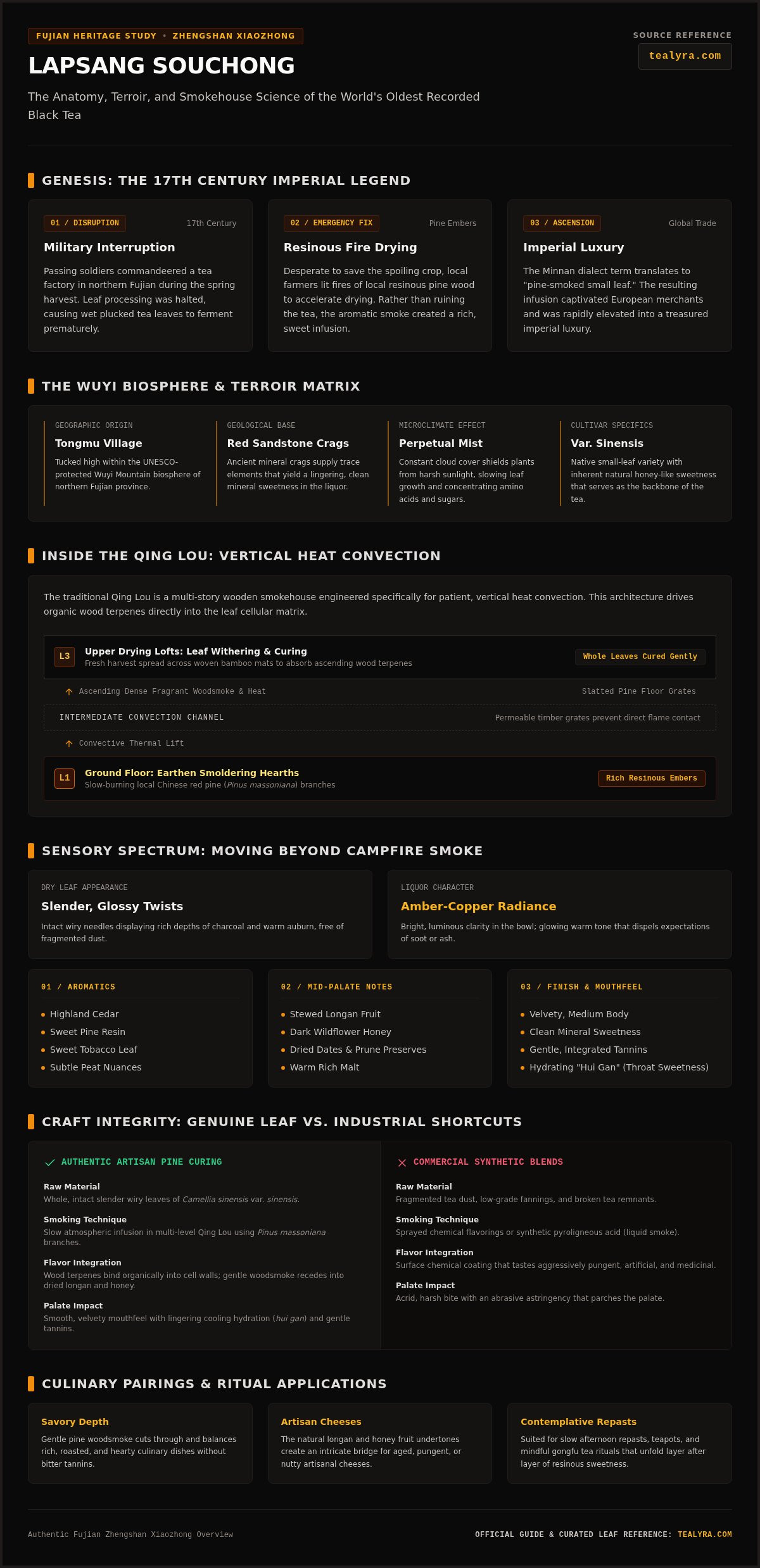
Regarded by tea scholars as the world's oldest recorded black tea, lapsang souchong was born in the rugged highlands of northern Fujian province during the seventeenth century. The name itself derives from the local Minnan dialect, translating roughly to "pine-smoked small leaf." According to folklore detailed throughout Lapsang souchong history, passing soldiers commandeered a tea factory during the spring harvest, delaying processing and causing the wet leaves to ferment. To save the crop from spoiling, desperate farmers lit fires of resinous pine wood to accelerate the drying. Rather than ruining the tea, the aromatic embers created a rich, sweet infusion that captivated European traders and eventually became a treasured imperial luxury.
The Misty Slopes of Tongmu Village and Wuyi Terroir
Genuine Zhengshan Xiaozhong comes exclusively from Tongmu Village, tucked high within the UNESCO-protected Wuyi Mountain biosphere. Here, ancient red sandstone crags sit beneath perpetual banks of mountain mist. This constant cloud cover shields the tea plants from harsh sunlight, slowing leaf growth and concentrating natural amino acids, polyphenols, and sugars. Harvested from the native Camellia sinensis var. sinensis small-leaf cultivar, these leaves possess a delicate, natural honey-like sweetness that forms the living backbone of the finished tea.
Inside the Qing Lou: The Multi-Story Smokehouse Tradition
The alchemy of smoke takes place inside the Qing Lou, a traditional multi-level wooden smokehouse designed for patient, vertical heat convection. On the ground floor, earthen hearths smolder with locally harvested Pinus massoniana (Chinese red pine) branches. Dense, fragrant smoke ascends through slatted pine floors, gently withering and curing the fresh leaves spread out on bamboo mats above.
This artisanal architecture marks the crucial difference between genuine craft and mass-produced versions. While industrial shortcuts rely on sprayed chemical flavorings or artificial liquid smoke that taste acrid and medicinal, slow curing in a Qing Lou binds the organic wood terpenes into the leaf matrix. The result is a smooth, sweet amber liquor, contrasting sharply with both modern unsmoked Fujian black teas and artificially flavored imitations.
Tasting Notes and Sensory Profile: Moving Beyond Campfire Smoke
Pouring a steeped bowl of lapsang souchong reveals a visual warmth that immediately dispels any expectation of harsh, acrid soot. The dry leaves present themselves as slender, glossy twists of deep charcoal and auburn. Once submerged in heated water, they unfurl into an inviting amber-copper liquor that glows with luminous clarity. The aroma is unquestionably smoky, yet it evokes the restorative warmth of a hearth in winter rather than the stinging bite of an extinguished fire pit.
The palate unfolds across a surprising sensory spectrum:
- Aromatics: Highland cedar, sweet resin, sweet tobacco leaf, and subtle peat.
- Mid-palate: Dark wildflower honey, dried dates, prune preserves, and stewed longan fruit.
- Texture and Finish: Velvety, medium-bodied liquor leading to a clean, lingering mineral sweetness.
The Symbiosis of Sweet Dried Fruit and Pine Embers
Carefully managed oxidation unlocks rich, jammy undertones that balance the initial rush of pine resin. High-altitude Chinese black tea possesses concentrated natural carbohydrates. As the liquor washes over the tongue, woodsmoke recedes, revealing luscious notes of sun-dried fruit and rich malt. Connoisseurs prize this style for its soothing hui gan, the coveted returning throat sweetness that cools and hydrates long after you take your last sip.
Artisanal Smoking vs. Commercial Artificial Smoke
Discerning palates quickly learn to separate heritage curing from industrial shortcuts. True wood-cured tea displays whole, intact wiry leaves that absorb aromatics gradually through the cell walls. In contrast, mass-market blends often rely on broken dust and fannings doused in synthetic pyroligneous acid, better known as liquid smoke. This artificial shortcut creates an abrasive, medicinal astringency that parches the palate.
Authentic pine curing integrates seamlessly with the leaf's organic tannins. If you enjoy discovering nuanced infusions that bridge bold aromatics with delicate sweetness, explore the curated collection of whole-leaf craftsmanship at Tealyra's loose-leaf tea selection to elevate your daily ritual.
Lapsang Souchong vs. Other Historic Black Teas
Every historic black tea tells a story shaped by its geographic home, but lapsang souchong occupies a singular, evocative niche. Where traditional world teas rely entirely on atmospheric oxidation and gentle pan-firing, this Wuyi original invites the wild element of open embers into the cure. For drinkers who appreciate dark-roast coffee, peaty Islay single malts, or dark chocolate, its resinous depth offers an immediate, welcoming bridge into the broader world of whole loose leaf.
To help you choose the right harvest for your cup, consider how traditional styles compare across the sensory spectrum:
- Lapsang Souchong: Medium body; distinct pine embers, dried longan, and wild honey; soft, velvety tannins; ideal for quiet afternoons or brisk mornings.
- Keemun Mao Feng: Light-to-medium body; unsweetened cacao, dried plum, and floral orchid; gentle tannins; perfect for mid-morning reflection.
- Assam Orthodox: Full, heavy body; malt, damp loam, and molasses; brisk, drying tannins; traditionally matched with a morning dash of milk.
- Yunnan Dian Hong: Medium-to-full body; caramelized sweet potato, honey, and baked cocoa; buttery, supple mouthfeel; wonderful for lingering evening sips.
Russian Caravan and Smoked Blends
During the eighteenth century, camel caravans carried vast wooden chests of Fujian teas across the frozen Mongolian steppe toward St. Petersburg. Folklore suggests the leaf absorbed the smoke of nightly campfires along the thousand-mile overland trail, inspiring the famous Russian Caravan style. Today, this tea is purposefully blended from lapsang souchong, stone-fruit Keemun, and dark oolong. Drinking single-origin Lapsang gives you pure, unadulterated pine-wood terroir, whereas Russian Caravan softens that campfire resonance into a sweet, balanced fireside medley.
Classic Unsmoked Black Teas: Keemun, Assam, and Yunnan Dian Hong
Stepping away from woodsmoke brings other terroir signatures to light. Anhui's Keemun leans into delicate, wine-like fruit without any fire curing. Down in India's Brahmaputra Valley, the broad-leaf var. assamica cultivar produces robust Assam with deep malt and brisk astringency that readily handles dairy. Moving west to China's misty cradle in Yunnan, Dian Hong relies on dense, golden leaf buds to yield a luscious texture overflowing with brown sugar. Lapsang souchong remains distinct from all three; it trades brisk astringency for an open, hearth-warmed sweetness that soothes the senses.
How to Brew Lapsang Souchong: Western and Gongfu Steeping Rituals
Brewing lapsang souchong is an exercise in quiet patience. Because artisanal leaves carry volatile pine terpenes alongside deeply oxidized sugars, water straight from a violent rolling boil can scorch the delicate aromatic top notes. Using fresh, mineral-balanced spring water heated just off the boil preserves the tea's nuanced sweetness while gently drawing out its rich resinous body. Whether you desire an effortless morning mug or an immersive afternoon tasting, two distinct rituals showcase the leaf's multifaceted depth.
Western Teapot Method for Comforting Everyday Cups
For everyday contemplation, Western pot brewing offers comforting warmth and reliable balance:
- Leaf-to-Water Ratio: Use 3 to 4 grams of whole leaf for every 250 milliliters of water.
- Water Temperature: Bring spring water between 95°C and 100°C, letting it rest for thirty seconds after boiling.
- Steep Timing: Infuse for 3 to 4 minutes to achieve full extraction without coaxing out excessive astringency.
Always give the twisted leaves ample room to unfurl inside a spacious glass teapot or an extra-fine stainless steel infuser basket. Restricting leaf expansion in cramped brewing balls limits flavor extraction and can create an uneven, flat infusion.
Gongfu Cha Method for Layered Sensory Discovery
Gongfu Cha transforms steeping into a meditative sensory exploration. Place 5 grams of dry leaf into a preheated 100ml porcelain gaiwan or unglazed clay pot. Saturate the leaves with 95°C water and decant a brisk 15-to-20-second flash infusion. This opening cup emphasizes high pine notes, clear cedar, and gentle embers.
Extend each subsequent steep by 5 to 10 seconds. Over six or more successive rounds, you can watch the dark leaves relax and open fully. As the initial woodsmoke softens, hidden layers of stone fruit, wild honey, and delicate floral undertones step into the foreground.
Equipping your space with dedicated vessels ensures clean, consistent extractions that bring out the best in whole-leaf harvests. To refine your daily tea practice, shop Tealyra teaware and infusers and discover the pure, unfurling potential of every steep.
Culinary Pairings, Savory Infusions, and Curating Your Tea Ritual
Beyond the quiet solace of an afternoon cup, lapsang souchong stands as an extraordinary gastronomic companion. In fine dining, sommeliers celebrate its structured tannins and lingering resinous sweetness for their palate-cleansing magic. The tea cuts effortlessly through dense, savory fats, clearing the tongue and refreshing your appetite between rich courses.
Epicurean Food Pairings: From Sharp Cheeses to Rich Chocolate
Matching this smoked liquor with complementary foods opens delightful sensory possibilities:
- Artisan Cheeses: Aged clothbound cheddar, creamy blue Stilton, and aged gouda harmonize with the tea's savory woodsmoke and bring out its latent honey notes.
- Decadent Confections: Bittersweet dark chocolate truffles, burnt caramel tarts, and traditional butter shortbread provide an indulgent counterpoint to the pine embers.
- Earthy Fare: Charred maitake mushrooms, roasted autumn squashes, and glazed barbecue echo the tea's forest floor terroir.
Cooking with Tea: Smoky Broths, Marinades, and Cocktails
Step into the kitchen, and you'll find brewed lapsang souchong functions like pure, culinary-grade liquid smoke without any chemical bitterness. Simmer a concentrated brew into a delicate poaching broth for root vegetables, or use it to deglaze savory reduction sauces. Finely ground leaves blend effortlessly with sea salt, cracked peppercorns, and garlic powder to create a distinct rub for roasted tofu, braised lentils, or grilled proteins.
In modern zero-proof mixology, a chilled, double-strength infusion shaken with fresh citrus and a dash of botanical bitters offers all the peaty complexity of a classic Islay single malt.
Inviting Loose-Leaf Excellence into Your Daily Cup
Honoring whole-leaf tea means protecting its delicate volatile oils. Keep your leaves stored inside an opaque, airtight tin placed safely away from sunlight, humidity, and pungent kitchen spices. Taking time to measure, heat, and pour loose leaf transforms modern haste into an intentional daily sanctuary. When you're ready to expand your sensory horizons, explore the world of premium artisanal black teas at Tealyra and welcome quiet, handcrafted luxury into your home.
Cultivating Your Hearthside Tea Ritual
True lapsang souchong isn't a brash novelty; it's an enduring testament to centuries of Fujian craftsmanship. When brewed with patient attention and gentle water temperatures, the leaf rewards you with an extraordinary sensory spectrum where aromatic pine embers soften into dried longan fruit, wild honey, and velvety sweetness. Each infusion offers a restorative pause in a hurried world, inviting you to quiet your mind and savor pure mountain terroir.
Curating your own mindful tea ritual begins with pristine botanical ingredients. Tealyra sources pure leaves directly from respected tea-growing origins worldwide, offering carefully curated loose-leaf harvests with zero artificial shortcuts. Supported by dedicated fulfillment facilities across the United States and Canada, bringing authentic leaf into your home is effortless. When you're ready to awaken your senses and elevate your daily steeping practice, warm your teapot and explore Tealyra's artisanal tea collection today.
Frequently Asked Questions
Does Lapsang Souchong contain more caffeine than unsmoked black tea?
No, lapsang souchong doesn't contain more caffeine than typical unsmoked black tea. The traditional smoking process alters aromatics rather than caffeine levels. Because authentic harvests rely on the small-leaf Camellia sinensis var. sinensis cultivar and include mature leaves rather than tender young buds, caffeine extraction remains moderate. You can expect a gentle, sustained lift of around 40 to 50 milligrams per cup, free from abrupt midday energy crashes.
Is Lapsang Souchong artificially flavored or naturally smoked over real wood?
Authentic loose-leaf versions are naturally cured over real pine embers, though low-grade commercial blends often rely on artificial additives. True heritage teas wither slowly over smoldering Pinus massoniana wood inside multi-story smokehouses. In contrast, mass-market producers frequently cut corners by spraying broken tea dust with synthetic liquid smoke flavorings. Checking the ingredient list ensures you receive unadulterated whole leaf without artificial flavoring agents or synthetic oils.
Can you add milk and honey to a cup of Lapsang Souchong?
Yes, you can certainly add milk and honey, especially when brewing a robust Western-style pot. While connoisseurs often enjoy whole leaves unadorned to appreciate delicate dried-fruit nuances, the liquor possesses enough structure to welcome dairy. A splash of warm milk softens the pine smoke into a creamy richness, while a spoonful of raw honey amplifies the tea's inherent stone-fruit undertones for a comforting, hearthside treat.
What makes traditional Zhengshan Xiaozhong different from export Lapsang Souchong?
Traditional Zhengshan Xiaozhong features a far subtler, sweeter wood-cured character than heavy export styles. During the height of maritime trade, foreign merchants demanded intense, pungent tarry smoke, which led export producers to heavily scent lower-grade leaves. Within Fujian, however, authentic Zhengshan Xiaozhong prizes harvest quality above all else. The pine smoking remains delicate and balanced, allowing the leaf's natural floral fragrance, wild honey notes, and velvety finish to lead each sip.
Why does some Lapsang Souchong taste like medicinal campfire while others taste sweet?
The vast difference in flavor comes down to leaf quality and processing integrity. A harsh, medicinal taste indicates broken fannings treated with chemical liquid smoke or scorched over rushed, poorly ventilated fires. High-altitude whole leaf, however, undergoes patient convection smoking in a traditional smokehouse. This artisanal process binds organic pine terpenes into the leaf without scorching, releasing luscious notes of dried longan, malt, and a hydrating sweet throat finish.
Can I re-steep Lapsang Souchong loose leaf multiple times?
Yes, premium whole-leaf harvests easily yield four to six rewarding infusions, especially when brewed using Gongfu methods. Unlike broken commodity tea bags that surrender their flavor in a single pour, intact leaves release their profile in layered waves. You'll discover that bold initial woodsmoke recedes after the second steep, revealing deep undercurrents of wild mountain honey, baked plum, and stony mineral sweetness that evolve with each successive round.
How should I properly store smoky loose-leaf black tea at home?
Store your smoky loose leaf in an opaque, airtight tin kept in a cool, dry cupboard. Because wood-cured teas carry rich, resinous volatile oils, they can easily transfer their fragrance to more delicate greens, whites, or light oolongs stored nearby. Giving your tea its own dedicated container shields it from ambient humidity, light, and cross-aromas, preserving its crisp pine aroma and deep sweetness for well over two years.


