 by Tealyra
Top 10 Premium Loose Leaf Teas for 2026
Master the essentials of Top 10 Premium Loose Leaf Teas for 2026 so you can make smarter decisions backed by Tealyra.
Top 10 Premium Loose Leaf Teas for 2026
Table of Contents
- Selection criteria for premium loose leaf tea
- Premium green teas to start with
- Floral oolongs for drinkers who want complexity
- White teas for subtle sweetness
- Classic black teas with premium character
- Roasted and aged teas for depth seekers
- How to choose the right premium loose leaf tea
At a wooden table before sunrise, a handful of leaves opens in hot water, and the first sip decides whether the cup tastes grassy, floral, smoky, or sweet. That little moment tells you almost everything. Aroma off the steam. Texture on the tongue. Whether the finish lingers for ten seconds or disappears before the cup is back on the tray.
If you are shopping for premium loose leaf tea in 2026, this guide is for you. Maybe you already know you like Japanese greens but have not yet found the right Gyokuro. Maybe you want a floral oolong that holds up through five infusions. Maybe you want one black tea that makes 7 a.m. feel civilized. We will stay close to what matters most: leaf quality, origin, processing style, flavor, and how the tea behaves in a real kitchen with a real kettle.
Not every expensive tea deserves the word premium. Price can reflect rarity, packaging, or brand prestige just as easily as cup quality. The better test is simpler: do the leaves tell a clear story, and does that story show up when you brew them?
Selection criteria for premium loose leaf tea
Before naming favorites, we need a working definition. For this list, premium means a tea with visible care in the leaf, traceable identity on the label, and enough depth in the cup to reward proper brewing more than once.
Watch This Helpful Video
To help you better understand premium loose leaf tea, we've included this informative video from Jesse's Teahouse. It provides valuable insights and visual demonstrations that complement the written content.
Whole leaf, whole bud, or broken leaf?
Premium loose leaf tea usually means whole leaves or whole buds rather than fannings or dust. That is not snobbery. It is practical. Intact leaves tend to preserve more volatile aroma, more texture, and more nuance in the cup. When you see needle-like Silver Needle buds, twisted Dian Hong leaves with golden tips, or tightly rolled Taiwanese oolong pellets, you are looking at leaf material that can unfold gradually instead of dumping everything at once.
Broken leaf is not automatically bad. A stout breakfast blend can be satisfying, and some broken orthodox black teas are genuinely good. But when you are paying for delicacy, fragrance, or layered aftertaste, you usually want the leaf to arrive with its structure still intact.
If the leaves look broken before they ever hit the pot, the cup will usually taste flatter.
Origin, harvest, and processing style
Named origin, harvest season, and processing method are strong signals of quality because they explain why two teas with the same name can taste very different. A Long Jing from Zhejiang can show sweet chestnut and spring pea notes, while a generic Dragon Well-style green from elsewhere may taste simpler and duller. An Anxi Tie Guan Yin can be greener and more orchid-like, or more roasted and rounded, depending on the maker. Darjeeling first flush and second flush are both Darjeeling, yet they can feel like different families of tea.
Good labels help you predict the cup. Look for clues such as shade-grown, pan-fired, first flush, high mountain, roasted, raw pu-erh, or ripe pu-erh. Those words are not decoration. They tell you how the leaf became what it is.
Freshness, re-steeping, and value
Freshness matters most for green and white teas. A spring green that sat half-open near heat for six months will not show you what that harvest could do. White tea is also more delicate than many buyers expect. Oolongs, black teas, and pu-erh are different. You still want clean storage, but they are often judged more on processing style and aging character than on pure just-packed freshness.
Value is not only about price per gram. Whole-leaf teas often support multiple infusions, which can make a higher-priced tea a better buy over several cups. A good Alishan oolong or aged pu-erh can keep giving long after a cheaper tea has gone hollow. When I buy for myself, I think in sessions, not sticker price.
| Signal | What You See | Why It Matters | What It Suggests in the Cup |
|---|---|---|---|
| Leaf integrity | Whole leaves, whole buds, minimal dust | Better handling and less aroma loss | More clarity, texture, and layered flavor |
| Named origin | Zhejiang, Anxi, Darjeeling, Yunnan, Alishan, Lishan | Traceability and style expectations | More predictable character |
| Harvest detail | Spring pick, first flush, aged lot | Season affects sweetness and structure | Brighter or deeper profiles depending on timing |
| Processing note | Shade-grown, pan-fired, roasted, raw, ripe | Explains flavor direction | Umami, chestnut, roast, fruit, mineral, or earth |
| Re-steep strength | 2 to 8 good infusions | Shows substance in the leaf | Better value across several cups |
Premium green teas to start with
This is the bright, high-aroma end of the spectrum. Greens can feel electric when brewed well — vivid, fragrant, and clean. They can also turn bitter fast if you rush them.
#1 Gyokuro — best for umami and sweetness
Summary: Gyokuro is a Japanese shade-grown green tea, and that shading is the point. It deepens umami, rounds the texture, and pushes the cup toward sweetness rather than sharpness. In a good Gyokuro, you get savory depth, tender vegetal notes, and a long, almost brothy finish that still feels elegant rather than heavy.
Best for: You will likely love Gyokuro if you enjoy concentrated flavor, silky texture, and a tea that asks you to slow down. It suits quiet morning sessions more than distracted desk drinking.
#2 Long Jing (Dragon Well) — best for nutty, chestnut-like notes
Summary: Long Jing, also called Dragon Well, is a Chinese pan-fired green tea from Zhejiang known for vegetal sweetness and chestnut-like flavor. The leaves are flat, smooth, and instantly recognizable. The premium versions show freshness first, then a sweet roasted-nut note, with less grassiness than many buyers expect from green tea.
Best for: Choose Long Jing if you want green tea with lift but not too much intensity. It is a smart bridge for drinkers who want something refined yet easier to understand than Gyokuro on day one.
Brewing note: keep the water cool and the steep short
Premium green teas generally reward lower temperatures and short steeping times because boiling water can push the cup toward bitterness. For Gyokuro, think very cool by tea standards — often around 140 to 160°F, or 60 to 70°C. For Long Jing, 170 to 180°F, or 77 to 82°C, is a comfortable starting point. Start short. Taste. Adjust on the next infusion instead of trying to force everything out in one steep.
Boiling water can turn a premium green tea from vibrant to bitter in a single pour.
Floral oolongs for drinkers who want complexity
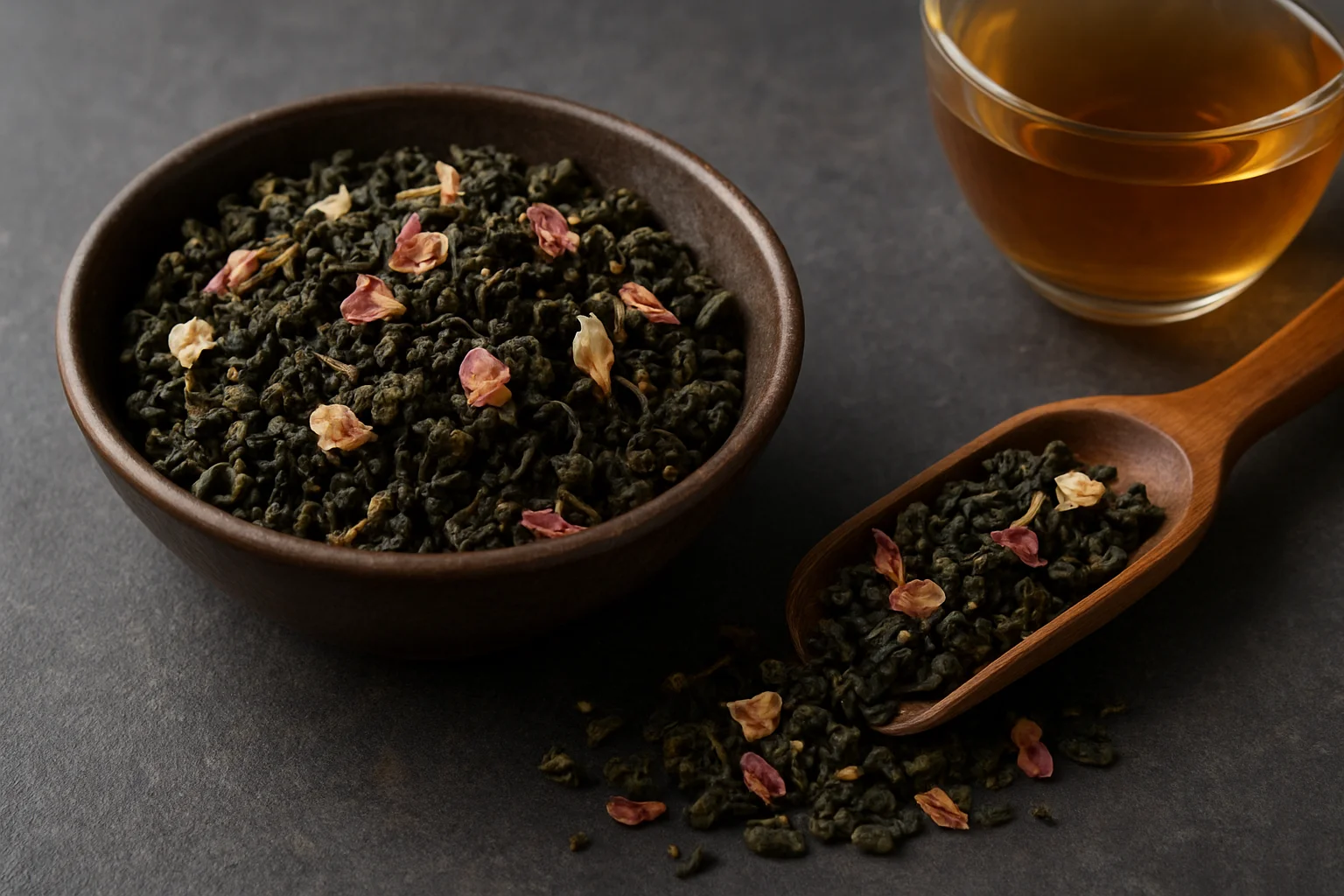
Oolong is the category I return to most often when I want range. It can be bright or toasted, creamy or fruity, light in body or surprisingly deep. If you want complexity without the fragile edge of green tea, this is usually where to start.
#3 Tie Guan Yin — best for floral, orchid-like aroma
Summary: Tie Guan Yin is an Anxi oolong from Fujian, and style matters as much as name. Greener versions can smell strikingly floral — think orchid, fresh cream, and spring leaves. More roasted versions lean rounder and warmer. The better examples feel composed rather than perfumed, with aroma rising clearly from the cup instead of shouting.
Best for: Pick Tie Guan Yin if aroma is your main pleasure. It suits drinkers who want an expressive tea that still stays graceful and re-steeps well.
#4 Taiwanese high mountain oolong — best for creamy, elegant sweetness
Summary: Taiwanese high mountain oolongs, often associated with regions like Alishan or Lishan, are prized for floral fragrance and a creamy texture. The altitude tends to slow growth and build refinement in the cup. Good versions taste clean, cool, and polished, with a sweetness that feels more like orchid nectar and fresh milk than sugar.
Best for: This is the choice for drinkers who want softness, lift, and repeat infusions without a lot of roast. If you host friends, high mountain oolong is one of the safest ways to impress them without risking bitterness.
Brewing note: oolong sits between green and black on oxidation
Oolongs cover a wide oxidation range, which is why they can taste bright, toasty, fruity, or creamy depending on the style. Most reward water in roughly the 185 to 205°F range, or 85 to 96°C. Rolled oolongs open gradually, so the first steep may feel restrained, then the second and third come alive. A gaiwan works beautifully here, but a simple pot is fine if you keep the steeps short and attentive.
If you want complexity without heaviness, oolong is usually the safest premium bet.
White teas for subtle sweetness
White tea asks more of your attention than of your technique. The processing is minimal, so the flavor does not hide behind roast, smoke, or strong tannin. When it is good, the delicacy is the luxury.
#5 Silver Needle — best for pure bud character
Summary: Silver Needle is made from young buds only, which gives it a pale liquor and a delicate, refined profile. The best cups show soft floral notes, gentle sweetness, and a clean finish that can hint at melon, fresh hay, or light honey. There is very little noise in the cup. Everything feels precise.
Best for: Choose Silver Needle if you value restraint, clarity, and texture over force. It rewards quiet tasting more than casual chugging.
#6 Bai Mu Dan (White Peony) — best for a fuller white-tea cup
Summary: Bai Mu Dan, or White Peony, uses buds plus young leaves, so it often tastes broader and more textured than Silver Needle. You still get the soft floral side of white tea, but with more body and a little more fruit, straw, or honey character. It is often the more forgiving white tea for everyday brewing.
Best for: Start here if Silver Needle sounds appealing but you want a touch more shape in the cup. Bai Mu Dan gives you subtlety without feeling fragile.
Brewing note: gentle heat keeps the sweetness intact
White tea is minimally processed, which is why it often shows soft floral, hay-like, melon, or honeyed notes rather than roast or strong astringency. Gentle heat helps. Try around 170 to 185°F, or 77 to 85°C, and give the leaves enough room. You can steep western-style for a bit longer than green tea, or use several short infusions if you want to watch the profile unfold.
White tea is not weak tea; it is subtle tea.
Classic black teas with premium character
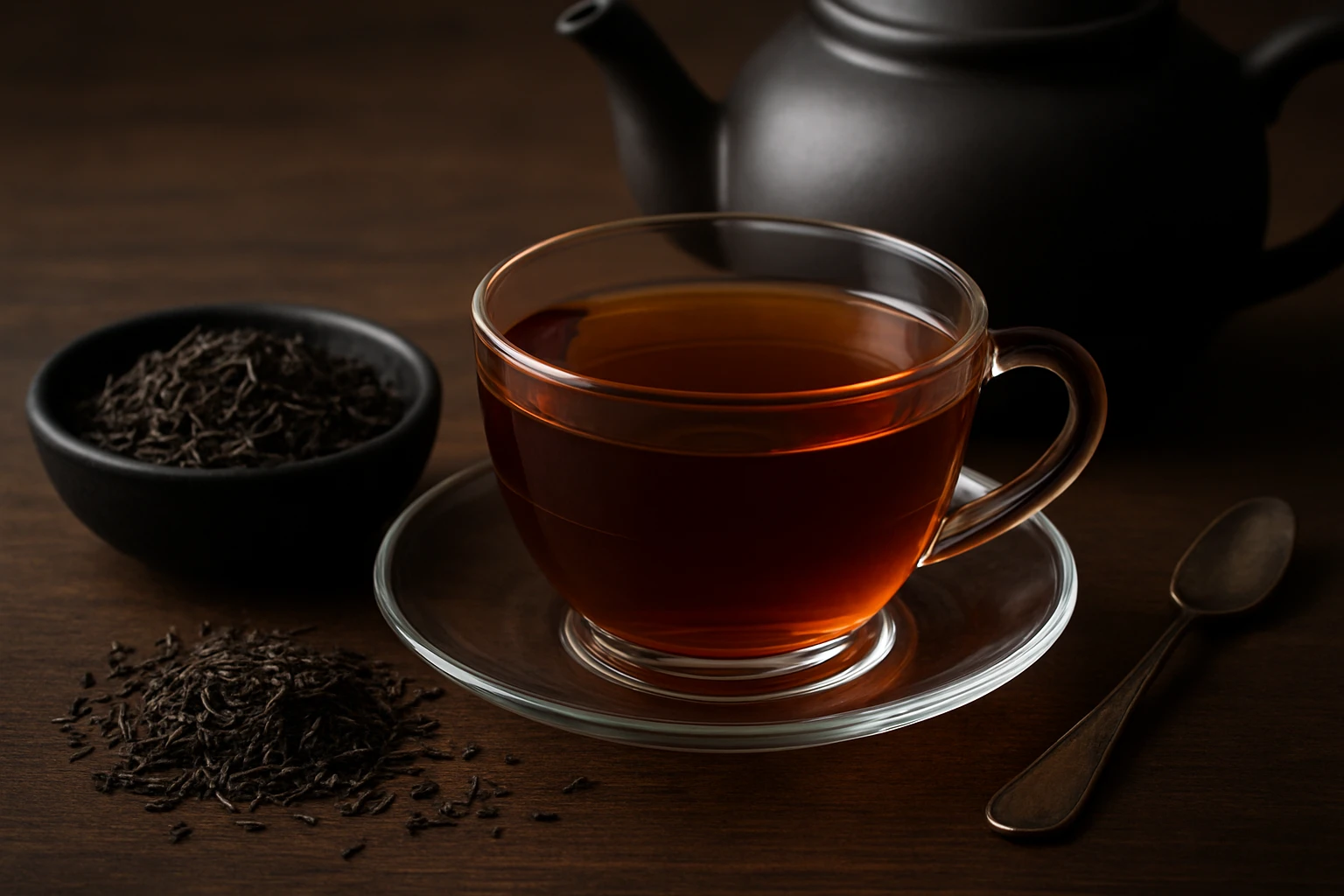
Black tea can be the easiest premium category to brew confidently, and that matters. You get hotter water, clear aroma, and less risk of immediate bitterness. Yet the best examples still carry nuance — spring flowers in one cup, cocoa and honey in another.
#7 First Flush Darjeeling — best for a light, springlike cup
Summary: First Flush Darjeeling is an early spring harvest from India’s Darjeeling region and is prized for a lighter, more floral profile. It can be brisk, bright, and lively, with a lifted aroma that feels closer to a crossing point between green and black tea than to a heavy breakfast blend. Good Darjeeling tastes animated.
Best for: This is for drinkers who want black tea with elegance rather than weight. It shines in the late morning or as a reset after richer foods.
#8 Yunnan Dian Hong — best for malt, cocoa, and honey
Summary: Yunnan Dian Hong is a black tea from China’s Yunnan province often associated with golden tips, malt, cocoa, and honey notes. The premium versions feel plush and warm, with sweetness carried by texture rather than added flavoring. Where Darjeeling dances, Dian Hong settles in and stays.
Best for: Choose Dian Hong if you want comfort, depth, and a black tea that can stand on its own without milk or sugar. It is especially good when mornings are cold and rushed.
Brewing note: black teas tolerate hotter water than green or white teas
Black teas generally handle higher brewing temperatures better than green or white teas, which makes them easier for many drinkers to brew well. Around 195 to 205°F, or 90 to 96°C, is a sensible starting point, and some robust styles take a full boil just fine. Darjeeling benefits from a bit more restraint than very hearty black teas. Dian Hong is usually more forgiving. In either case, avoid treating all black tea like an anonymous bagged blend.
If your only black tea memory is harsh and tannic, these two are the reset button.
Roasted and aged teas for depth seekers
Some teas win you in the first five seconds. Others reveal themselves slowly — through mineral grip, roast, wood, or the mellow strangeness that comes with age. This is the more contemplative side of the list.
#9 Da Hong Pao — best for roasted, mineral depth
Summary: Da Hong Pao is a Wuyi rock oolong associated with roasted and mineral flavors. The premium versions can show dark florals, stone-fruit hints, and a rocky, dry-mineral structure that makes the cup feel architectural. Roast is part of the attraction, but it should frame the tea, not bury it.
Best for: Reach for Da Hong Pao if you want a tea with gravitas. It suits drinkers who enjoy toasted notes, structure, and a finish that seems to cling to the palate.
#10 Aged pu-erh — best for earthy, evolving flavor
Summary: Pu-erh comes from Yunnan and is commonly sold as raw (sheng) or ripe (shou), with aging that can deepen earthy complexity. Aged raw pu-erh can move toward camphor, dried fruit, wood, and depth. Ripe pu-erh often leans darker, smoother, and more soil-like. Good pu-erh feels clean and layered, not muddy.
Best for: Choose aged pu-erh if you enjoy evolution in the cup and do not mind a tea that asks for comparison over time. It is less about one perfect note and more about a sequence.
Brewing note: these teas reward patience more than speed
Roasted and aged teas appeal to drinkers who want depth, texture, and evolution in the cup rather than bright freshness. Near-boiling water is common here. Many drinkers use short repeated steeps, and pu-erh is often given a quick rinse first. The point is not to hurry. It is to notice how infusion three differs from infusion one, and why a tea from Wuyi or Yunnan can keep changing long after a simple green would be done.
Aged tea rewards patience; freshness is not the only path to premium flavor.
How to choose the right premium loose leaf tea
Most people do not need a larger tea shelf. They need a cleaner way to decide. Start with the cup you actually crave, then work backward to the leaf.
Choose by flavor family first
If you want brightness and freshness, start with green or white tea. If you want depth and body, lean toward black tea, roasted oolong, or pu-erh. Oolong sits in the middle and can slide either way. This is the simplest and most reliable filter. Ignore hype words for a minute and ask one plain question: do you want spring, cream, honey, roast, or earth?
| If You Want... | Start With | Brewing Style | Likely Good Infusions |
|---|---|---|---|
| Vegetal sweetness and lift | Gyokuro or Long Jing | Cooler water, short steeps | 2 to 4 |
| Floral aroma and creamy texture | Tie Guan Yin or high mountain oolong | Medium-hot water, repeated short steeps | 4 to 6 |
| Subtle floral or honeyed softness | Silver Needle or Bai Mu Dan | Gentle heat, moderate steeps | 2 to 4 |
| Brisk elegance or warm malt | First Flush Darjeeling or Dian Hong | Hotter water, moderate steeps | 2 to 3 |
| Roast, mineral depth, or earth | Da Hong Pao or aged pu-erh | Near-boiling water, many short steeps | 5 to 8 |
Choose by when you drink tea
Your schedule matters more than many tea descriptions admit. If you drink before breakfast, a reliable black tea such as Dian Hong may make more sense than a subtle white tea that deserves a slower pace. If you brew at 3 p.m. between meetings, a forgiving oolong can be easier than a precise Gyokuro session. Tea contains natural caffeine and plant compounds, but the feel of the cup depends heavily on leaf quantity, water temperature, and steep time — not just category.
Think about routine, not fantasy. A tea that needs close temperature control may be perfect for Sunday morning and wrong for Tuesday at 8:10 a.m.
Choose by how often you re-steep
Many premium loose leaf teas can be steeped more than once, so whole-leaf oolongs, greens, and pu-erh can offer more cups per purchase. If re-steeping is part of the pleasure for you, that should affect what you buy. A rolled oolong from Alishan or an aged pu-erh cake can stretch across an afternoon. A delicate Darjeeling may deliver its best material in fewer rounds, then fade.
A sampler is often the smartest first buy because it lets you compare styles without committing to a large tin of one flavor. If you want that side-by-side learning experience plus straightforward brewing help, a specialist shop with educational notes can shorten the trial-and-error stage; Tealyra is one example. Buy small, take notes, and repeat the session with one green, one oolong, and one black tea. That is how preference becomes knowledge.
Buy for the cup you will actually brew, not the cup you imagine yourself making.
The best premium loose leaf tea is the cup that matches your palate, your kettle habits, and the flavor you really want in front of you.
If you are starting fresh, buy a small sampler and compare one green, one oolong, and one black tea side by side. You will learn faster, spend smarter, and start hearing the language of leaf, origin, and processing in your own cup.
Which direction sounds right for your next session — the sweet pull of Gyokuro, the orchid lift of oolong, or the darker echo of roast and age?
Find Better Leaves With Tealyra
Tealyra pairs premium loose leaf tea, teaware, and clear brewing guidance so you can choose with confidence and make better cups from the first session.
Explore Teas