 by Tealyra
7 Loose Leaf Tea Brewing Guide Tips
Get proven strategies for 7 Loose Leaf Tea Brewing Guide Tips with step-by-step tips and examples from Tealyra.
7 Loose Leaf Tea Brewing Guide Tips
Table of Contents
- #1 Measure the leaves before you pour
- #2 Match water temperature to the tea type
- #3 Time the steep instead of leaving it to instinct
- #4 Give the leaves room to unfurl
- #5 Use fresh water and pre-warm your vessel
- #6 Pick the brewing method that fits your tea
- #7 Re-steep quality whole-leaf teas
- How to choose the right brewing approach in this loose leaf tea brewing guide
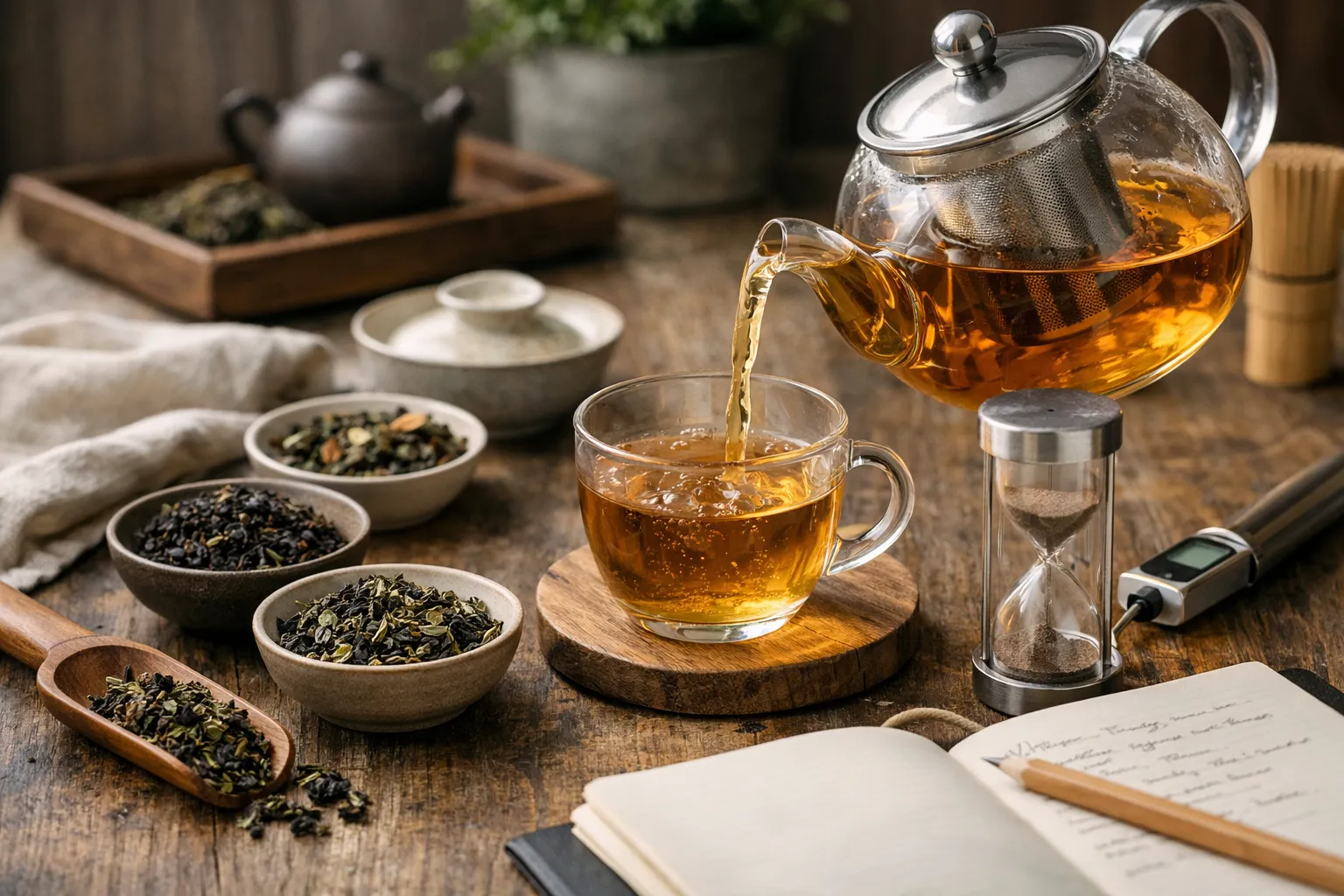
Steam rises from a small pot beside a kitchen timer as the tea leaves unfurl just before the lid comes off. At the 2-minute mark, the liquor shifts from pale gold to amber, and you have a small, very real choice to make: pour now, or risk losing the sweetness you just smelled.
That quiet moment is where a good loose leaf tea brewing guide proves its worth. You do not need a lab bench or a shelf full of gear. You need a few repeatable habits that let you understand why one cup of sencha tastes buttery and bright while the next tastes flat or sharp.
Once you can control dose, temperature, time, space, water, vessel, and re-steeping, tea gets easier. A spring green from Zhejiang, a malty Assam, and a roasted oolong from Fujian all ask for different handling — but none of it is mysterious.
#1 Measure the leaves before you pour
What it is
Watch This Helpful Video
To help you better understand loose leaf tea brewing guide, we've included this informative video from Whittard of Chelsea Official. It provides valuable insights and visual demonstrations that complement the written content.
Start with a simple leaf-to-water ratio and keep it consistent. For many loose-leaf teas, a common first pass is about 1 teaspoon per 8 oz of water, then a small adjustment up for larger whole leaves or down for very dense teas. If you own a small scale, even better — grams remove a lot of guesswork.
Why it matters
A repeatable cup begins here. One of the most visible search results on this subject centers on two questions: how much tea to use and how long to steep. That makes sense. Dose and time are the fastest ways to change strength, body, and balance, so if your ratio changes every morning, the rest of your brewing notes do not mean much.
Start with a consistent ratio before you change anything else; it is the fastest way to taste the difference between teas.
Quick example
If you brew a 12 oz mug, begin with roughly 1.5 teaspoons of a black tea or around 2.5 to 3 grams. A fluffy white tea such as Silver Needle may need more volume to taste present, while a dense rolled oolong can taste strong with less than you expect. When a cup comes out weak, do not reach for a longer steep first — check the leaf dose.
#2 Match water temperature to the tea type
What it is
Not every tea wants boiling water. Green and white teas usually perform better with cooler water than black, oolong, or herbal teas. That is why the same kettle can make a jasmine green smell fresh at 175°F and taste rough at 212°F.
| Tea type | Starting water temperature | Starting steep time | What you may notice if it runs too hot |
|---|---|---|---|
| Green | 160°F to 180°F | 1.5 to 3 minutes | Bitterness, spinach-like notes, thinner aroma |
| White | 175°F to 185°F | 2 to 4 minutes | Muted sweetness, rough finish |
| Oolong | 185°F to 205°F | 2 to 4 minutes | Drying finish if pushed too hard |
| Black | 200°F to 212°F | 3 to 5 minutes | Briskness turning harsh or woody |
| Herbal | 205°F to 212°F | 5 to 7 minutes | Usually forgiving, though some blends can go flat |
Why it matters
Temperature changes extraction speed. Hotter water pulls flavor compounds faster, which sounds helpful until it drags bitter or drying notes into the cup before the sweeter aromatics have a chance to shine. With delicate teas like Longjing or bai mu dan, temperature is often the line between lively and lifeless.
If a tea tastes suddenly bitter, temperature is often the first thing to check.
Quick example
Say your jasmine green keeps tasting sharp at 3 minutes. Instead of blaming the tea, lower the water to around 175°F and try again for 2 minutes. You may get more floral aroma, less bite, and a cleaner finish without changing the leaves at all.
#3 Time the steep instead of leaving it to instinct
What it is
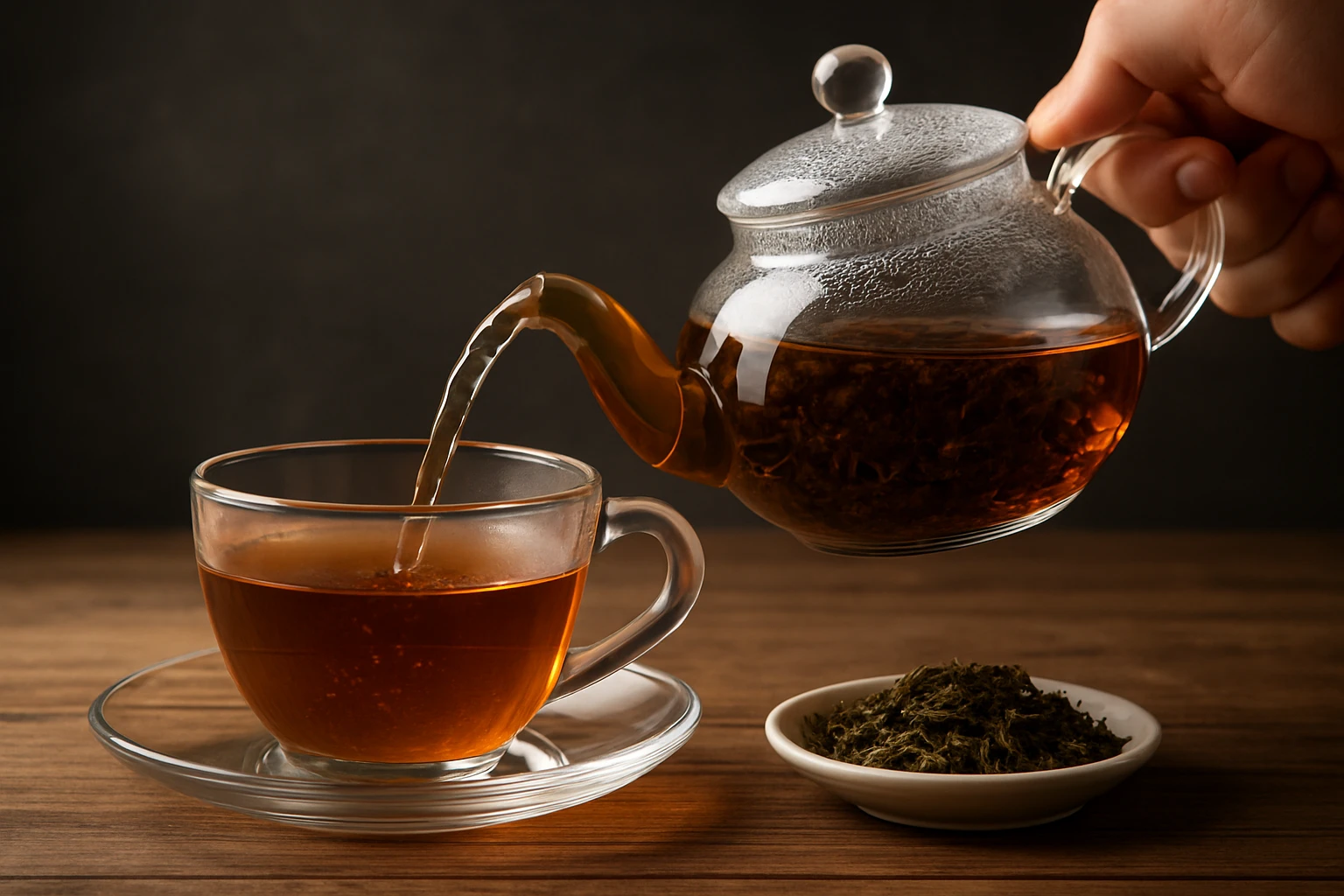
Use a timer. Your phone, a kitchen timer, or the clock on a microwave is enough. This matters so much that one of the top results people find on loose-leaf tea is built around steep times alone, which tells you how often timing is the source of trouble.
Why it matters
Shorter steeps usually preserve sweetness and aromatics. Longer steeps pull more tannin, more grip, and more bitterness. That can help a sturdy breakfast tea stand up to milk, but it can also flatten a delicate Darjeeling in under 60 seconds if you drift past the sweet spot.
Oversteeping does not make tea stronger in a better way; it often just makes it harsher.
Quick example
Brew the same Assam twice: once for 4 minutes and once for 6 minutes in near-boiling water. The first cup often feels bold and malty. The second can tip into woody and astringent. If you want more impact, increase the leaf dose a little before you start adding extra minutes.
#4 Give the leaves room to unfurl
What it is
Whole-leaf tea needs physical space to expand. Loose-leaf tea is often larger and less broken than bagged tea, so a cramped mesh ball or narrow infuser can stop the leaves from opening properly. If the leaves look packed together after wetting, the brewing basket is probably too small.
Why it matters
When leaves cannot open, water cannot move around them evenly. That leads to thin extraction in one spot and over-extraction in another. Rolled teas like Tieguanyin make this easy to see — those tight pellets can swell dramatically after the first 30 to 60 seconds, and they need room to do it.
If the leaves look packed together after wetting, the brewer is probably too small.
Quick example
Brew a whole-leaf green in a roomy basket infuser inside a 12 oz mug, then brew the same dose in a small tea ball. The basket version usually tastes fuller and more even, because the leaves can unfurl and release flavor gradually instead of steaming themselves in a tight clump.
#5 Use fresh water and pre-warm your vessel
What it is
Use fresh water, preferably filtered if your tap water tastes strongly of chlorine or minerals, and warm your teapot or mug before brewing. A 10-second rinse with hot water is often enough. Then discard that water and begin the actual infusion.
Why it matters
Tea is mostly water, so water quality is not a side note. If your water tastes dull, metallic, or pool-like, your tea will carry that with it. Pre-warming matters too. A cold ceramic mug can pull heat away fast, especially when you are trying to brew a white tea at 180°F or keep an oolong steady through the first minute.
Tea is mostly water, so water quality is not a minor detail.
Quick example
Try a side-by-side test with filtered water and strongly chlorinated tap water using the same 3 grams of black tea in a 400 ml pot. Then repeat the better version after pre-warming the pot. You will usually notice a cleaner aroma first, then a smoother finish and more stable body as the cup cools.
#6 Pick the brewing method that fits your tea
What it is
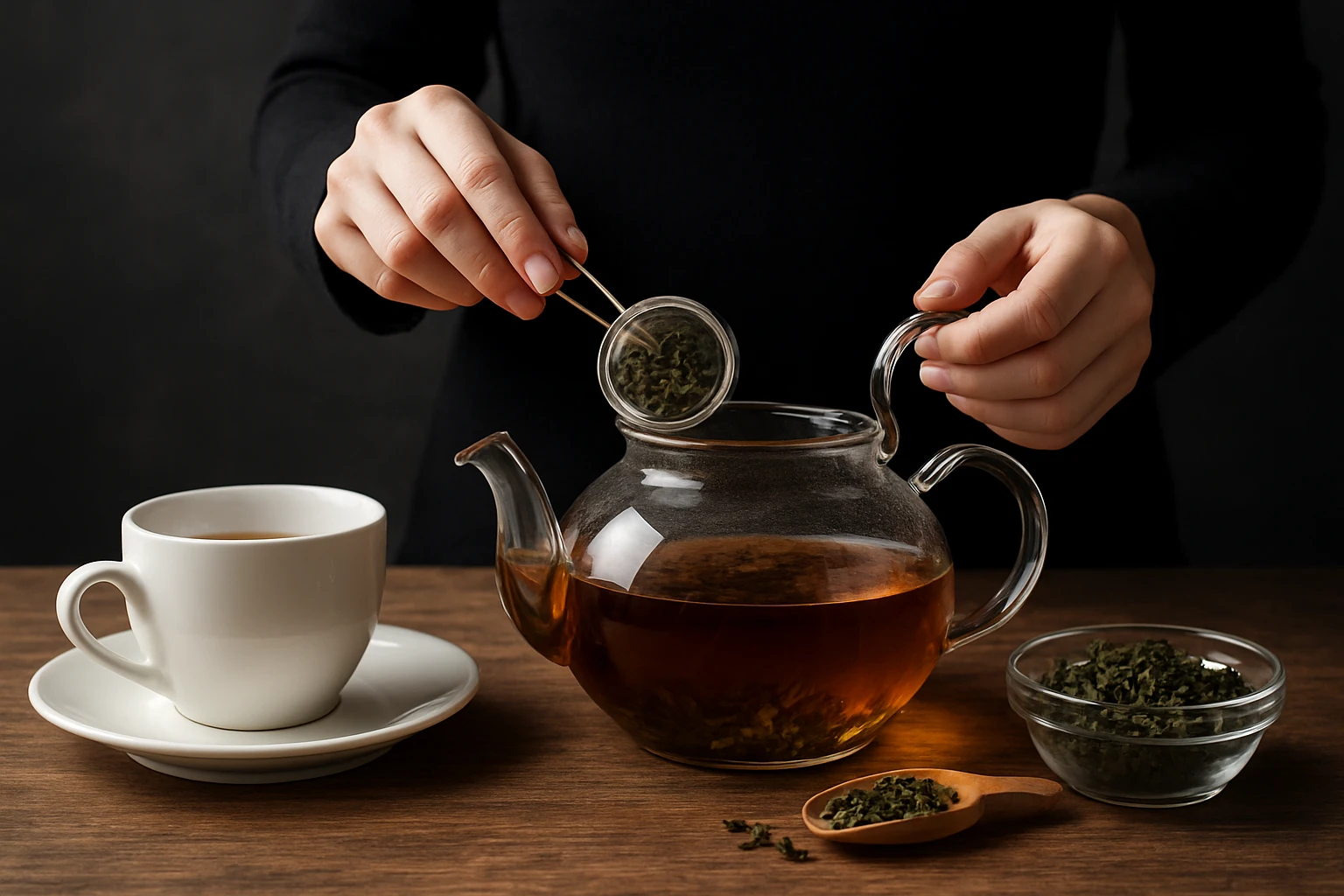
You can brew loose tea in a mug, basket infuser, teapot, or gaiwan, and each vessel changes both extraction and cleanup. None of these methods is universally “best.” Each one serves a different kind of tea session, from a quick Tuesday morning cup to a slow Saturday tasting.
| Brewing method | Best for | Control level | Cleanup |
|---|---|---|---|
| Mug with basket infuser | Daily black, green, or herbal tea | Moderate | Easy |
| Teapot | Sharing tea or brewing 2 to 4 cups | Moderate | Easy to moderate |
| Gaiwan | Oolong, pu-erh, focused tasting | High | Moderate |
| Grandpa-style mug brewing | Some greens and everyday casual sipping | Low to moderate | Very easy |
Why it matters
Method shapes control. Smaller vessels and shorter infusions often help with delicate or expressive teas because you can adjust in small steps. Larger pots work well for relaxed, everyday brewing. A gaiwan lets you watch a Dan Cong or yancha evolve steep by steep, while a basket infuser is hard to beat when you need a clean, simple mug before a 9 a.m. meeting.
Do not force one brewing method onto every tea; method should serve the leaf, not the other way around.
Quick example
If you are tasting a floral oolong, try a 100 ml gaiwan and several short infusions. If you are making English Breakfast before work, use a large basket infuser in a mug and call it done. The tea is not asking for ceremony every time; it is asking for a method that fits its structure and your morning.
#7 Re-steep quality whole-leaf teas
What it is
Many whole-leaf teas can be infused more than once. This is especially true for many oolongs and pu-erh styles, though some whole-leaf black and white teas also reward a second or third steep. If the leaves still look full and lively after the first cup, do not throw them out too quickly.
Why it matters
A second infusion often shows you a different side of the tea. The first steep may give roast, body, or structure; the second can open into sweetness, florals, or a softer mineral note. Later infusions are often lighter, but “lighter” does not mean lesser. With a good Tieguanyin, the second cup can be the most graceful one on the table.
If your leaves still look full after the first cup, they may have more to give.
Quick example
Take a rolled oolong brewed at about 195°F. Try 2 minutes for the first infusion, 2 minutes 30 seconds for the second, then 3 minutes for the third. You may notice the roast softening, a sweeter middle appearing, and a more floral aroma rising from the lid with each round.
How to choose the right brewing approach in this loose leaf tea brewing guide
Start with tea type
Begin with the leaf in front of you. Delicate teas usually benefit most from lower temperatures and tighter timing, while sturdier teas can take more heat and longer steeps. If you are new to loose leaf tea, change one variable at a time — first dose, then temperature, then time — so you can actually taste what improved the cup.
When in doubt, change one variable per cup so you can tell what actually worked.
Check your schedule
Your calendar matters more than tea culture debates. If you have 5 minutes before the school run or your first Zoom call, use a forgiving setup: basket infuser, black tea, fresh water, timer. If you have 20 quiet minutes in the afternoon, that is when a gaiwan or multiple short steeps start to feel rewarding rather than fussy.
Match the method to your gear
Use what you already own well before you buy something new. A kettle, mug, and roomy infuser can produce excellent tea. A thermometer helps if you love greens and whites. A small teapot or gaiwan helps if you enjoy tasting the same oolong across 3 or 4 infusions. If you are shopping for new leaves, sources that publish clear brewing notes can shorten the learning curve.
| If your goal is... | Focus on this first | Simple starting setup |
|---|---|---|
| A sweeter green tea | Lower temperature | Mug + basket infuser + 175°F water |
| A stronger breakfast cup | More leaf, not extra time | Teapot or mug + near-boiling water |
| More nuance from oolong | Shorter repeated steeps | Small pot or gaiwan |
| Better consistency every day | Measure and time | Scale or spoon + timer |
That is the whole decision framework in practice: tea type first, schedule second, gear third. Not every cup needs the same intensity of attention. A useful loose leaf tea brewing guide helps you make better choices without turning a drink you love into homework.
Great tea gets easier the moment you stop chasing one universal rule and start matching dose, temperature, time, space, and method to the leaf.
That is what a reliable loose leaf tea brewing guide gives you: cause and effect you can taste in the cup. When you brew your next sencha, Assam, or oolong, which single adjustment will you test first?
Discover Better Cups With Tealyra
Tealyra pairs Premium loose leaf tea with clear guides so you can choose confidently, brew accurately, and taste more from every cup.
Shop Better Tea