 by Tealyra
Chinese Green Tea: Origins, Styles, and How to Choose
Explore the rich world of Chinese green tea. Learn about key origins, iconic styles like Longjing, distinct flavor profiles, and how to choose the right cup.
Table of Contents
- Key Takeaways
- Table of Contents
- What Is Chinese Green Tea, and What Makes It Distinct?
- How Processing and Terroir Shape Chinese Green Tea
- Chinese Green Tea Styles Compared: Finding a Flavor to Explore
- How to Choose Chinese Green Tea by Taste and Tea Experience
- Enjoying Chinese Green Tea: A Gentle First Tasting
- Find Your First Favorite Cup
- Frequently Asked Questions
What if the character of Chinese green tea begins long before the first sip, in the landscape where the leaves grow and the craft that shapes them? If unfamiliar names and sparse product descriptions make it hard to know what you’re choosing, you’re not alone. Chinese and Japanese green teas can also seem interchangeable at first, though their growing traditions and processing methods create different cups.
This guide will help you understand how growing regions, harvest timing, leaf style, and processing influence flavor, from fresh and gently sweet to more rounded and toasty. You’ll also meet familiar examples, including Longjing and jasmine-scented dragon pearls, without needing to learn a specialist’s vocabulary.
We’ll look at the qualities that distinguish Chinese green teas, clarify how their styles differ from Japanese green tea, and share practical cues for choosing a tea that suits your palate. There’s no need to master every name at once. A single leaf style or flavor note can be a lovely place to begin.
Key Takeaways
- Understand how growing conditions, leaf craft, and preparation shape the character of chinese green tea.
- Use familiar styles such as Longjing and Bi Luo Chun as starting points for exploring regional differences.
- Choose a flavor direction, such as sweet, nutty, floral, vegetal, or savory, before comparing tea details.
- Look beyond a style’s name to the product information that can help you decide whether it suits your preferences.
- Make a first tasting more revealing by noticing the dry leaf, aroma, liquor, first sip, and lingering finish.
Table of Contents
What Is Chinese Green Tea, and What Makes It Distinct?
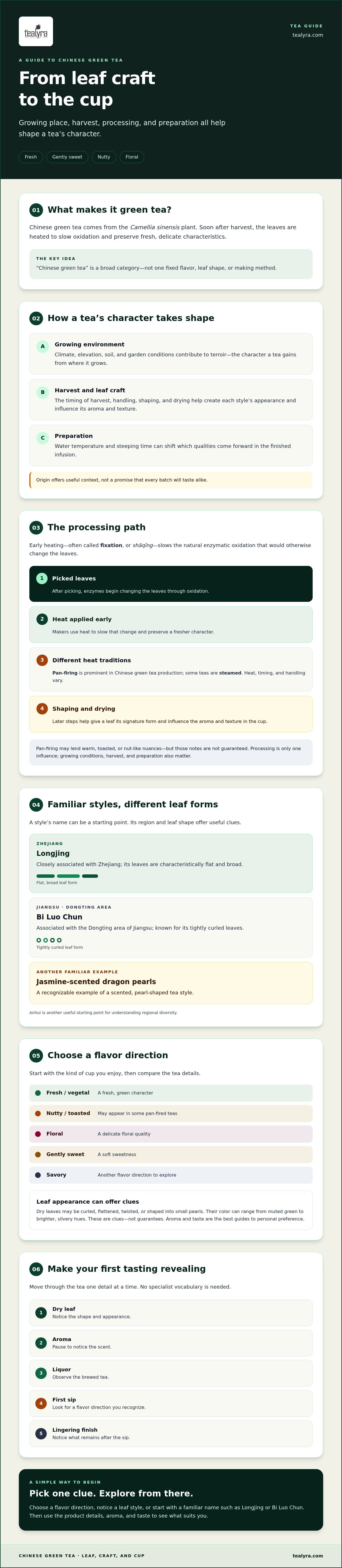
Chinese green tea is tea made from the leaves of the Camellia sinensis plant, heated soon after harvest to limit oxidation and preserve a range of fresh, delicate characteristics. It’s a broad tea category, not one fixed flavor or leaf shape. Longjing and Bi Luo Chun, for example, are distinct Chinese styles, each with its own craft traditions and appearance.
Growing conditions, how makers handle the leaves, and how the tea is prepared all shape the cup. Green tea originated in China, and Chinese production includes varied approaches rather than a single method. That variety is what makes Chinese green tea rewarding to explore: a cup may feel fresh and vegetal, gently sweet, nutty, or floral, depending on the tea.
For a visual introduction to some styles, watch this overview:
How Chinese green tea is made from tea leaves
After picking, green tea leaves are heated to slow the natural enzymatic oxidation that would otherwise alter their color and character. This early heating step is often called fixation, or shāqīng. In many Chinese styles, makers apply heat in a pan, a process known as pan-firing, while other production traditions use different heat treatments, including steaming.
Fixation is a broad principle, not a recipe followed identically by every maker. The timing, heat, and later shaping and drying steps vary. Those choices help give a leaf its signature form and influence the aroma and texture that eventually unfold in the cup.
What Chinese green tea can taste and look like
There’s no single flavor that defines every style. Depending on the tea and its preparation, you might notice fresh or vegetal notes, a soft nuttiness, delicate florals, or a gentle sweetness. Growing conditions contribute to a tea’s character, while water temperature and steeping time can shift what comes forward in the finished infusion.
Dry leaves offer clues, not guarantees. They may be curled, flattened, twisted, or shaped into small pearls, and their color can range from muted green to a brighter, silvery hue. Such details reflect both the leaf and its making, but aroma and taste are the best guides to personal preference. To explore the range, browse the Chinese green tea selection from Tealyra Store - The Best Galaxy of Teas as a starting point, not a checklist of flavors every tea should share.
How Processing and Terroir Shape Chinese Green Tea
Terroir is the character a tea gains from its growing environment: climate, elevation, soil, and the conditions around the garden. These influences meet the maker’s choices after harvest, so a tea’s origin offers useful context, not a promise that every batch will taste alike. The long cultural story behind these practices is part of Chinese tea in world history.
Why heat processing matters
Once leaves are plucked, enzymes begin changing them through oxidation. For green tea, makers apply heat early in processing to slow this change and preserve a fresher character. This step is often called fixation, or shāqīng. Pan-firing heats leaves in a wok or similar vessel and may lend a tea warm, toasted or nut-like nuances, though those notes aren’t guaranteed.
Pan-firing is prominent in Chinese green tea production, but it isn’t the only approach. Some teas are steamed, and makers vary the heat, timing, and handling according to the leaf and desired style. Processing choices shape flavor variation, but they don’t determine it alone. Growing conditions, harvest, and preparation also contribute.
How growing place and craftsmanship leave their mark
Zhejiang, Jiangsu, and Anhui are useful starting points for understanding regional diversity. Zhejiang is closely associated with Longjing, whose leaves are characteristically flat and broad. Bi Luo Chun is associated with the Dongting area of Jiangsu and is known for its tightly curled leaves. Anhui, too, has a rich green-tea tradition, including Huangshan Maofeng.
These names signal a place and a way of making tea, not a fixed tasting note. Longjing is often described with gently toasted or nutty impressions, while Bi Luo Chun may be noted for a more floral or fruit-like aroma. Such descriptions are helpful reference points, but the cup can vary with the particular tea and how it’s brewed.
Pay attention to the whole experience. Leaf shape can hint at the maker’s shaping technique; aroma may suggest freshness or warmth; liquor color and texture add further clues. A pale, clear infusion and a soft, rounded mouthfeel can describe one tea, while another may feel brisker or more fragrant. None of these signs tells the whole story on its own.
As you explore, compare origin and processing details alongside the sensory description rather than relying on a region name alone. The Chinese green tea selection from Tealyra Store - The Best Galaxy of Teas offers a place to explore styles and notice which descriptions appeal to you.
Chinese Green Tea Styles Compared: Finding a Flavor to Explore
Names become easier to remember when you connect them to what you can see and smell. The styles below offer a first map of Chinese green tea, not a definitive ranking: individual gardens, makers, harvests, and preparation can all change the experience.
| Style | Region | Leaf appearance | Aroma and broad flavor impression |
|---|---|---|---|
| Longjing | Zhejiang, especially associated with Hangzhou | Flat, smooth, blade-like leaves | Often described with warm, chestnut-like aromas and a mellow, gently sweet impression |
| Bi Luo Chun | Dongting area of Jiangsu | Fine, tightly curled leaves, often with visible down | May suggest flowers or fruit, with a fresh, rounded taste |
| Jasmine-scented green tea | Varies by the green tea base and where it is made | Depends on the base tea; some forms are rolled into pearls | Jasmine fragrance overlays the tea’s own character, bringing a floral aroma |
What to notice in Longjing and Bi Luo Chun
Try comparing them in stages. First, look at the dry leaves: Longjing’s flattened shape contrasts with Bi Luo Chun’s curls. Then notice the brewed aroma. One may lean toward warm, roasted-nut impressions, the other toward floral or fruit-like notes, though neither profile is guaranteed by the name alone. On the sip, consider texture and sweetness, then pause for the aftertaste. Does it fade cleanly, or linger softly?
Jasmine-scented tea offers a different comparison because its fragrance comes from scenting, rather than being an inherent marker of every green tea. The base tea still matters, so jasmine can accompany different leaf forms and flavor profiles. UNESCO’s account of Traditional tea processing techniques also places making and sharing tea within a wider living craft tradition.
How Chinese and Japanese green tea traditions differ
A useful broad distinction is that many Chinese green teas are pan-fired, while Japanese green teas are often steamed. These are tendencies, not rules for every tea. The heat method, leaf handling, and preparation can influence liquor color, aroma, texture, and taste, so it’s better to compare individual styles than assume every tea from either country shares one profile. Explore Japanese green tea styles for a related comparison, and let the leaf and cup guide you.
How to Choose Chinese Green Tea by Taste and Tea Experience
Choosing a tea can begin with a simple question: what kind of cup sounds inviting today? For chinese green tea, try this three-step path: choose a flavor direction, shortlist a style, then read the product details. It keeps unfamiliar names from becoming a barrier and gives you a practical way to compare options.
- Choose a flavor direction. Do you enjoy gentle sweetness, warm nuttiness, floral fragrance, fresh vegetal notes, or a more savory impression?
- Select a style to explore. Let leaf shape, origin, or scenting help narrow your choices, while keeping an open mind about how each tea may taste.
- Review the details. Check what the seller shares about origin, leaf form, processing, scenting, and harvest.
Choose a style that fits your palate
Use sensory prompts rather than strict labels. If you like fragrant teas, a jasmine-scented style may appeal; if you prefer a cup without added floral scent, look for an unscented tea. Longjing and Bi Luo Chun can offer recognizable starting points, but neither should be treated as a guaranteed flavor profile. Jasmine Dragon Pearls Green Tea from Tealyra Store - The Best Galaxy of Teas is one confirmed example of a jasmine-scented green tea, not a stand-in for the full range.
Still unsure? Begin with the description that feels most appealing, then notice what you enjoy in the cup. A tasting note is an invitation to explore, not a test you need to pass.
Read the tea description with confidence
Look for useful specifics: where the tea was grown, how the leaves are shaped, whether they’re scented, and what processing or harvest information is provided. Details can help you understand what you’re considering, though product descriptions may not include every point. Tasting notes are guidance, not a promise that every batch or brew will feel identical.
Steeping changes the result, too. Water temperature, steeping time, and the amount of leaf can shift the balance between sweetness, freshness, aroma, and astringency. Follow the seller’s brewing guidance as a starting point, then adjust gently to suit your taste. You don’t need to master every variable before choosing a tea.
If you’d like to compare more styles and find a cup that suits your palate, explore green tea varieties. For a more focused browse, explore Chinese green tea selections and use the details that matter to you as a guide.
Enjoying Chinese Green Tea: A Gentle First Tasting
A first tasting doesn’t need to be technical. Give the tea a little attention before, during, and after the sip, and let your own impressions lead. With chinese green tea, origin and processing offer useful context, but your senses are the final guide.
A simple sequence for tasting the first cup
Prepare the tea according to its package directions, since leaf style and steeping choices can affect the cup. Water temperature and steeping time matter: a small change in either can bring different qualities forward. If you’re looking for exact measurements, follow a dedicated brewing guide when one is available for your tea.
- Begin with the dry leaf. Look at its shape and color, then take a gentle breath of its aroma. Is it grassy, warm, floral, or softly sweet?
- Notice the liquor. After steeping, observe the infusion’s color and clarity. Bring the cup closer and notice how its aroma has changed with the warmth of the water.
- Take an unhurried first sip. Notice the texture and the first impression, whether fresh, nutty, sweet, floral, vegetal, or something else entirely.
- Pause after swallowing. See what lingers. The finish may feel soft, bright, or gently savory, or it may simply fade away.
There’s no single correct answer. You might recognize a tasting note from the tea description, or find a quality that wasn’t mentioned. Both are part of learning what you enjoy.
Where to continue exploring Chinese green tea
Each cup brings together several influences: where the leaves grew, how they were handled, and the way you prepared them. As you taste, you can begin to notice which aromas and textures you’d like to meet again. A few quiet observations are enough; there’s no need to name every nuance.
When you’re ready to continue, explore Chinese green tea and use the descriptions as gentle guides to possible styles. Then return to the cup with fresh curiosity. A familiar leaf can reveal something new when you take time to notice.
Find Your First Favorite Cup
Chinese green tea is a world of small differences: growing place, leaf shape, and the maker’s touch all help shape what reaches the cup. Longjing and Bi Luo Chun offer familiar points of discovery, while tasting with attention to aroma, texture, and finish can help you recognize what you enjoy. Product notes are useful guides, but your own palate has the final say.
Start with one style that catches your interest, then give it time. A fresh, vegetal cup may appeal one day; a floral or gently sweet one may feel right another. Tealyra Store - The Best Galaxy of Teas offers a dedicated chinese green tea category, including Jasmine Dragon Pearls Green Tea as one scented example, not a definition of the whole tradition.
Whenever you’re ready to continue exploring, explore Tealyra Store - The Best Galaxy of Teas's chinese green tea selection. Let curiosity lead, and enjoy discovering the cup that feels like yours.
Frequently Asked Questions
What is Chinese green tea?
Chinese green tea is tea made from Camellia sinensis leaves processed to limit oxidation after harvest. It includes many regional and crafted styles, so there isn’t one flavor that defines every cup. Depending on the tea, you may notice fresh, nutty, floral, sweet, or vegetal qualities. Growing conditions, leaf processing, and preparation all contribute to its character, making each style an invitation to explore rather than a single taste standard.
Is Chinese green tea different from Japanese green tea?
Yes. Broad production traditions differ, and those differences can influence a tea’s aroma, color, texture, and flavor. Chinese green teas often use heat treatments such as pan-firing, while Japanese styles are commonly associated with steaming. These are general tendencies, not rules for every tea. Regions and makers vary within both countries, so compare specific styles and their product details rather than assuming all Chinese or Japanese green tea tastes alike.
How does Chinese green tea taste?
Its flavor depends on the style, how it’s made, and how it’s prepared. One cup may seem gently sweet or nutty; another may suggest fresh greens, flowers, or savory notes. Leaf shape and a seller’s tasting description offer helpful clues, but neither can guarantee exactly what you’ll taste. Water temperature and steeping time also affect the finished cup, so your own impressions may shift as you adjust how you brew it.
Can Chinese green tea be bitter?
Yes, it can taste bitter or astringent, but that isn’t inevitable. The tea’s style and leaf quality, along with water and steeping choices, all influence the result. If a cup tastes sharper than you enjoy, adjust your brewing approach gradually and taste again. Changing one variable at a time can help you identify what makes the cup more balanced for your palate. There’s no single standard you need to match.
What are the best-known Chinese green tea styles?
Longjing and Bi Luo Chun are well-known examples, each associated with a distinct tea-making tradition and recognizable leaf form. Jasmine-scented green tea is another style, in which scenting adds a floral dimension to the tea. A style name doesn’t guarantee an identical flavor in every tea. Look for reliable details about origin and processing, then use the product’s tasting notes as guidance when deciding what you might enjoy.
Does Chinese green tea contain caffeine?
Yes. Green tea made from Camellia sinensis, including Chinese green tea, naturally contains caffeine, but the amount in a cup can vary. Leaf type, serving size, water, and steeping conditions all play a part. A general estimate shouldn’t be treated as an exact figure for a particular tea. If caffeine is a concern for you, check whether the seller provides product-specific information rather than relying on a broad category description.
How should I choose Chinese green tea as a beginner?
Start with the flavor notes that appeal to you, then check the tea’s style name, stated origin, and processing details. A familiar example can make the first choice feel more approachable; if a small amount is available, it may let you explore without committing to a large quantity. As you taste, note what you enjoy. That simple habit turns choosing into a personal discovery, not a search for one universally best tea.
How should Chinese green tea be brewed?
Follow the instructions provided for the specific tea, since leaf shape and processing can call for different brewing approaches. Don’t assume boiling water or one steeping time suits every green tea. Instead, adjust one variable at a time and taste the result, noticing how the aroma and flavor change. For exact temperatures and timing, consult a dedicated green tea brewing guide or the tea seller’s product instructions.