 by Tealyra
Osthamus Flower Oolong Tea
Osthamus flower oolong tea. Discover what osmanthus flower oolong tea is, its unique flavor, how to brew it perfectly, and expert pairing suggestions
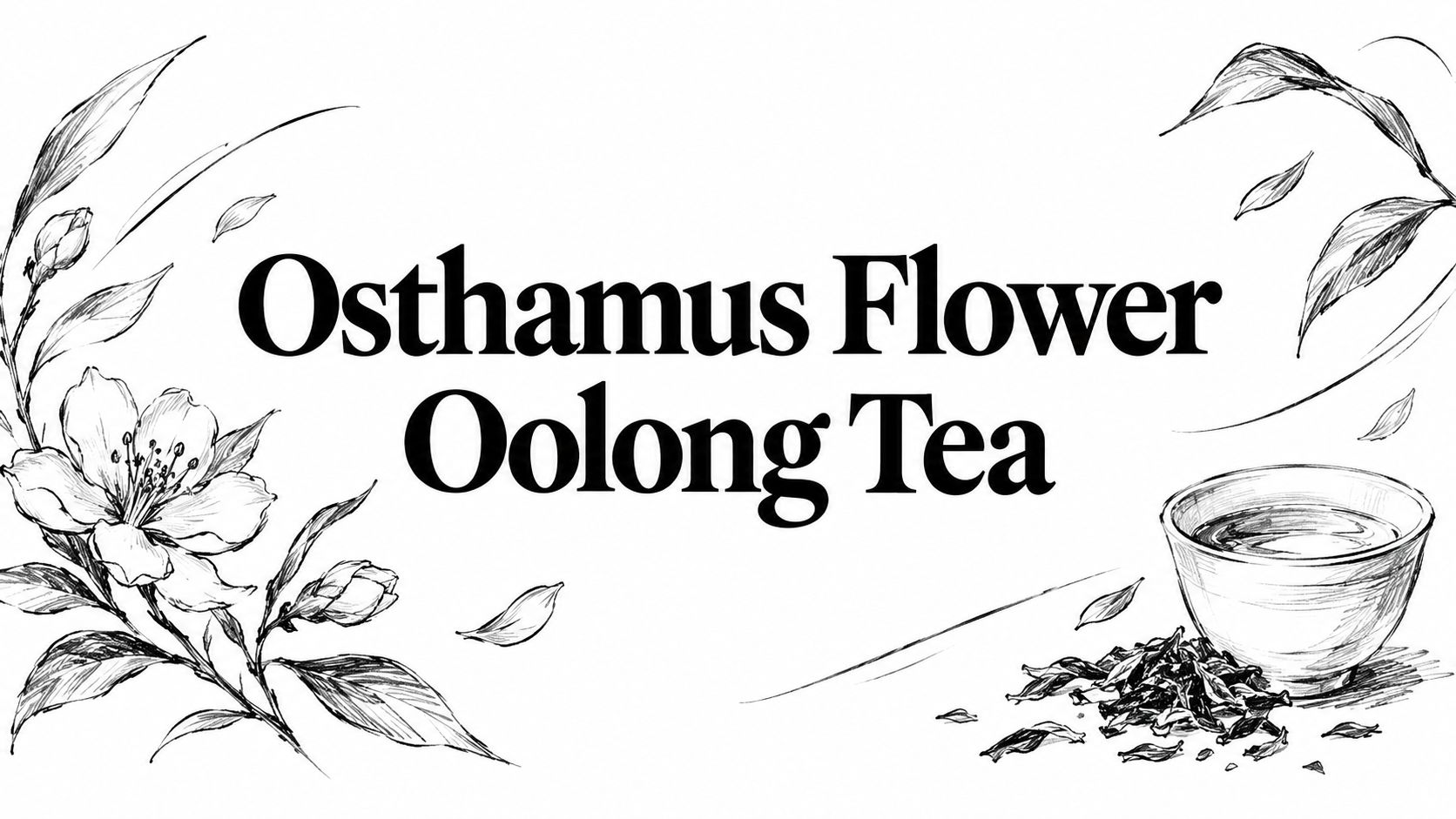
Have you ever wondered why one cup of tea can smell like fresh blossoms and ripe fruit, while another tea with flowers added still tastes flat? Osmanthus flower oolong tea answers that question beautifully, because its aroma isn't just decorative, it's built from a tea craft that joins scented blossoms with a carefully made oolong base.
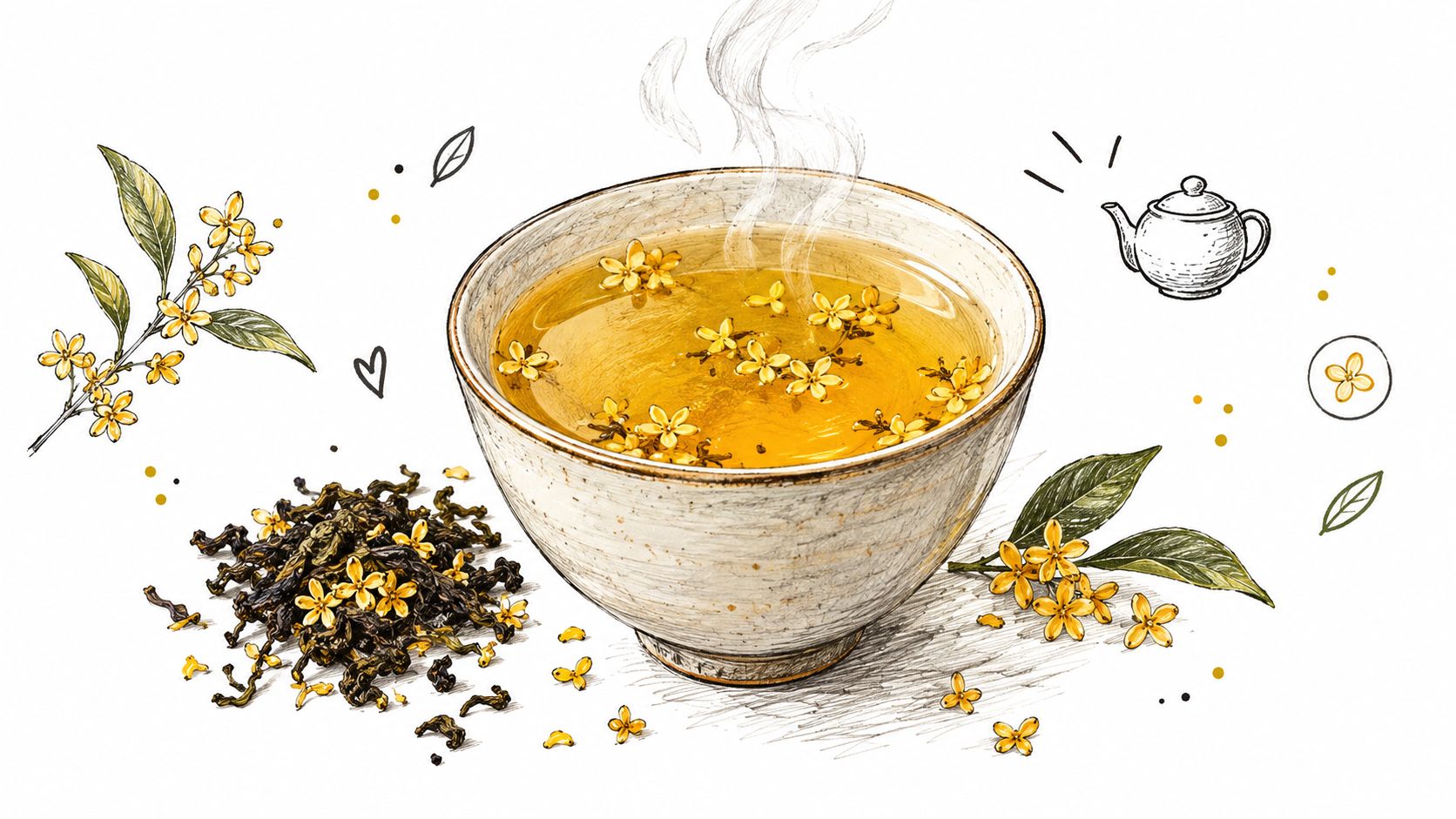
Tea makers have long used osmanthus to lift oolong into something gentler, rounder, and more fragrant. The flower brings a soft golden perfume, while the oolong keeps the cup grounded with body and texture. If you already know the basics of oolong, a resource like Tealyra's oolong tea selection gives a useful sense of how broad the category is before floral blending enters the picture.
Table of Contents
- Introduction to Osmanthus Oolong Tea
- The Science Behind the Signature Aroma
- How to Brew the Perfect Cup
- Historical Roots and Origins
- Exploring Health and Wellness Benefits
- Food and Dessert Pairing Ideas
- Conclusion Embracing the Floral Tradition
Introduction to Osmanthus Oolong Tea
A good cup starts in the tea room, but the story feels almost like harvest season in miniature. Osmanthus blossoms are gathered for their sweet scent, then layered with semi-oxidized oolong leaves so the tea can absorb that fragrance without losing its own structure. The result is neither a plain herbal infusion nor a heavily perfumed novelty, it's a balanced tea with floral sweetness, creamy texture, and a finish that often feels like stone fruit.
That balance is why beginners are often surprised by the drink. They expect something sugary or artificial, then find a cup that tastes more like peach skin, apricot flesh, and a soft floral breeze drifting over warm leaf. The aroma seems to hover above the cup, but the base tea keeps it honest and drinkable.
A practical way to think about it is this, the blossom is the accent and the oolong is the sentence. If either side dominates too much, the harmony breaks. For readers who want to compare floral oolongs with other flavored styles, Tealyra's flavored oolong collection shows how aroma can be used as a craft choice rather than a gimmick.
Practical rule: if a floral oolong smells intense in the dry leaf but tastes thin in the cup, the blending or brewing was probably pushed too far.
This is why osmanthus flower oolong tea has such an easy appeal. It feels special, but not difficult, and it gives new tea drinkers a clear entry point into the wider world of scented Chinese teas.
The Science Behind the Signature Aroma
Why the scent tastes like fruit and flowers
The aroma of osmanthus flower oolong tea becomes clearer once you look at the chemistry behind it. Independent fragrance analysis of osmanthus identified cis-jasmone, gamma-decalactone, delta-lactones, ionone derivatives, and theaspirane derivatives as major contributors, while a study of scented osmanthus tea found the aroma dominated by alpha-ionone, indole, beta-ionone, and 1-dodecenal (Leffingwell osmanthus analysis). Those names look technical, but the tasting result is familiar, they shape peach, apricot, violet, and deep floral notes.
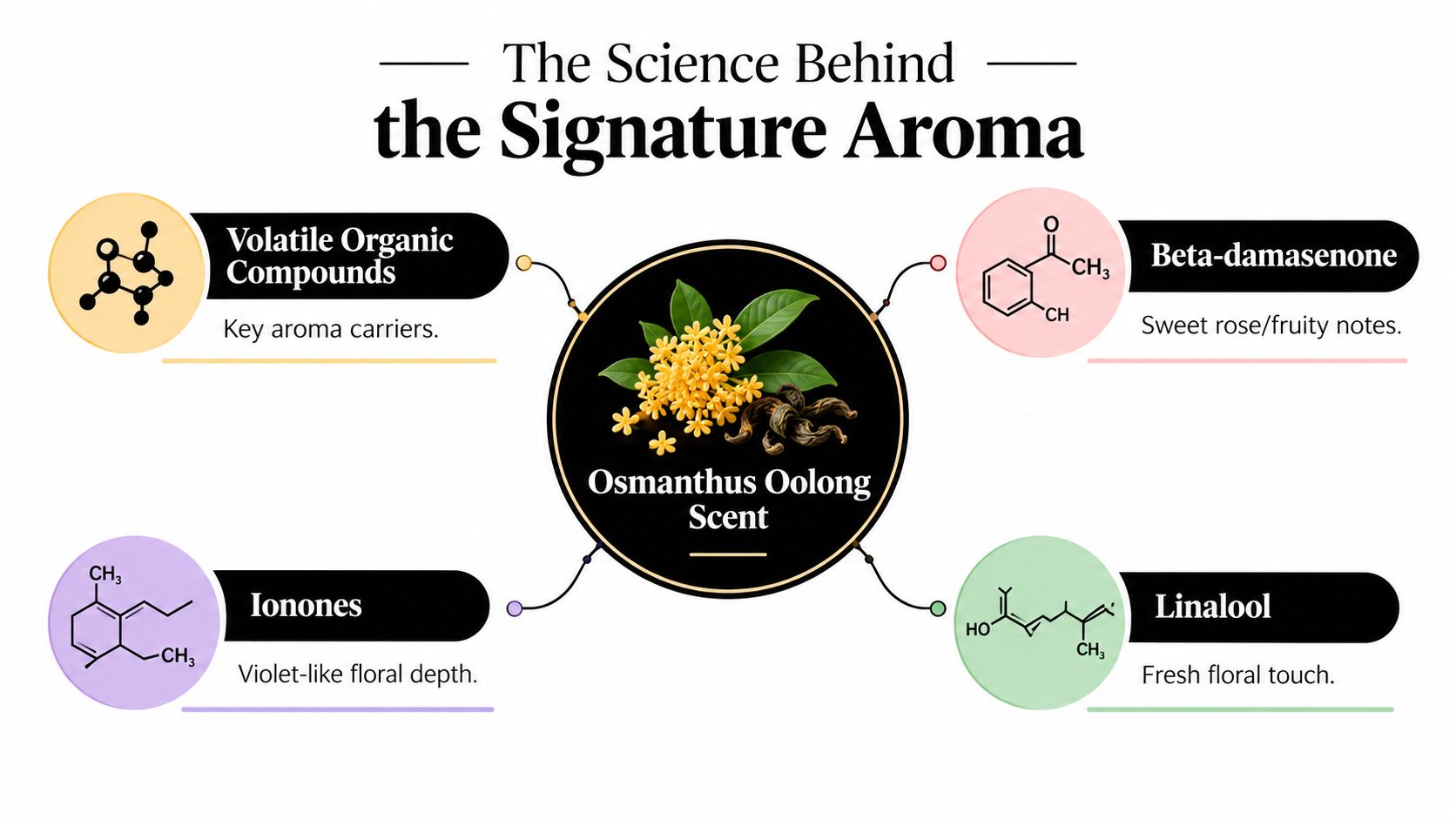
These compounds are low-threshold aroma molecules, so even tiny amounts can steer the whole cup. A blend with more osmanthus volatiles can feel lush and fruity, while a lighter blend stays cleaner and more tea-forward. That is why two teas with the same label may taste noticeably different.
What this means in the cup
A useful way to test the aroma is to brew the same leaf twice, once at 85°C and once at 95°C, then compare the cups side by side. The warmer brew often pushes the violet-like ionone note to the background first, while the peachier lactone character stays more noticeable. The result feels less like a perfume sample and more like a change in balance, with the higher heat pulling the tea base forward.
The oolong itself still sets the frame. A well-made leaf gives the floral aroma a clean surface to rest on, while an oversteeped cup can bury those notes under bitterness. That is why osmanthus flower oolong tea may seem delicate in one cup and richly perfumed in another, the aroma compounds stay the same, but extraction changes how they show up.
Tasting cue: if the cup feels more peach-driven than grassy, the osmanthus aroma is carrying more of the impression than the base oxidation notes.
For readers comparing floral styles, Tealyra's flavored oolong page shows how aroma can be part of the tea's design, not just something added for effect.
How to Brew the Perfect Cup
Use heat, but don't blast the leaf
Brewing osmanthus flower oolong tea is mostly about restraint. Water in the 85–95°C range, roughly 1–2 teaspoons, about 2 g, per 200–250 ml, and a 2–5 minute steep is the practical window most expert tea sources converge on (brewing guide). That temperature range is hot enough to release the floral aroma, but not so hot that the tea turns harsh.
Start with the shorter end if you're new to the tea. A quick infusion keeps the top notes bright, then you can adjust upward if the cup feels too faint. Osmanthus aroma can disappear fast when the leaf sits too long in the water.
A simple method that keeps the cup balanced
- Warm the vessel: A quick rinse helps the aroma lift more clearly.
- Measure lightly: Use the smaller amount first if your tea is strongly scented.
- Steep briefly: Two minutes is a good first test, then taste.
- Re-infuse if you like: Repeated infusions are often possible, and each round changes a little.
Short steeps usually protect the floral perfume. Longer steeps pull out more tannin from the oolong base, which can flatten the sweetness you wanted in the first place.
Brew like this: think of the flower as perfume and the leaf as structure. You want both, but neither should overwhelm the other.
A gaiwan, small teapot, or even a simple mug can work well. What matters most is attention, not equipment. Once you've found the sweet spot, osmanthus flower oolong tea becomes one of the easiest floral teas to repeat at home.
Historical Roots and Origins
Could a flower tea feel this storied if its base were not already woven into tea culture? Oolong provides the backbone of osmanthus flower oolong tea, and its history reaches back to Fujian province before spreading into Taiwan and Guangdong. One academic review notes exports reached about 21,671 tons by 2009, which was 4.7 times the 1887 level, with 70–80% of primary oolong production consumed domestically in China, and the same review places oolong at roughly 11% of China's total tea production (tea science review). That scale matters because floral oolong grew from a tea category that was already culturally established and widely made.
Two traditions meet in one cup
Oolong history is usually traced to the late Ming and early Qing eras, while floral oolong styles are often tied to Taiwan in the late 19th century, when tea farmers reportedly noticed distinctive floral character in their teas. Osmanthus flower oolong tea sits between those two threads, old semi-oxidation craft on one side, later floral blending innovation on the other.
Taiwan still appears as a major origin reference for floral oolong products today, which helps explain why many modern descriptions point to Taiwanese harvest areas and processing traditions. The tea is not just tea with flavor, it is regional skill layered over a long production history.
For readers who want a fuller sense of how tea identity forms from leaf to finish, tea journey from leaf to cup is a useful companion read. It shows how growing, processing, and brewing each shape the final cup, which also explains why floral teas can feel traditional and modern at the same time.
Osmanthus flower oolong tea carries that layered identity into the cup. You taste an old tea base first, then a later aromatic style built on top of it, and that meeting of craft is what gives the drink its refined character.
Exploring Health and Wellness Benefits
People often ask whether osmanthus flower oolong tea is “good for you,” and the careful answer is more modest than many wellness claims online. A 2025 paper in Frontiers in Nutrition on sweet osmanthus white tea reports antioxidant-rich compounds and strong sensory appeal, and it also summarizes osmanthus metabolites as showing mainly antioxidant, anti-inflammatory, antibacterial, and anticancer activity, with much of that evidence still preclinical. That matters because a fragrant tea can sound more medicinal than the evidence does.
What the evidence can and can't tell you
Osmanthus flower oolong tea can fit into a normal wellness routine, but it should not be treated like a cure-all. The aroma may make the cup feel calming or uplifting, yet that feeling is not the same as a medical effect. Good tea supports a habit of slowing down, much like a clean desk helps you focus, but it does not replace treatment, sleep, or a balanced diet.
| What readers often hope | What's actually supported |
|---|---|
| A fragrance that feels restorative | A pleasant, sensory tea experience |
| Strong medical outcomes | Mostly laboratory or formulation evidence |
| A daily cup that does no harm in moderation | A reasonable, enjoyable beverage choice |
A practical way to view osmanthus flower oolong tea is as a flavorful ritual first and a wellness claim second. If you want a careful example of how tea and health are discussed, Tealyra's article on fighting osteoporosis with oolong tea shows why health conversations around tea need restraint.
The cup is still worth drinking without bold promises. Sometimes the most trustworthy benefit is just a tea that gives you a pleasant pause.
Food and Dessert Pairing Ideas
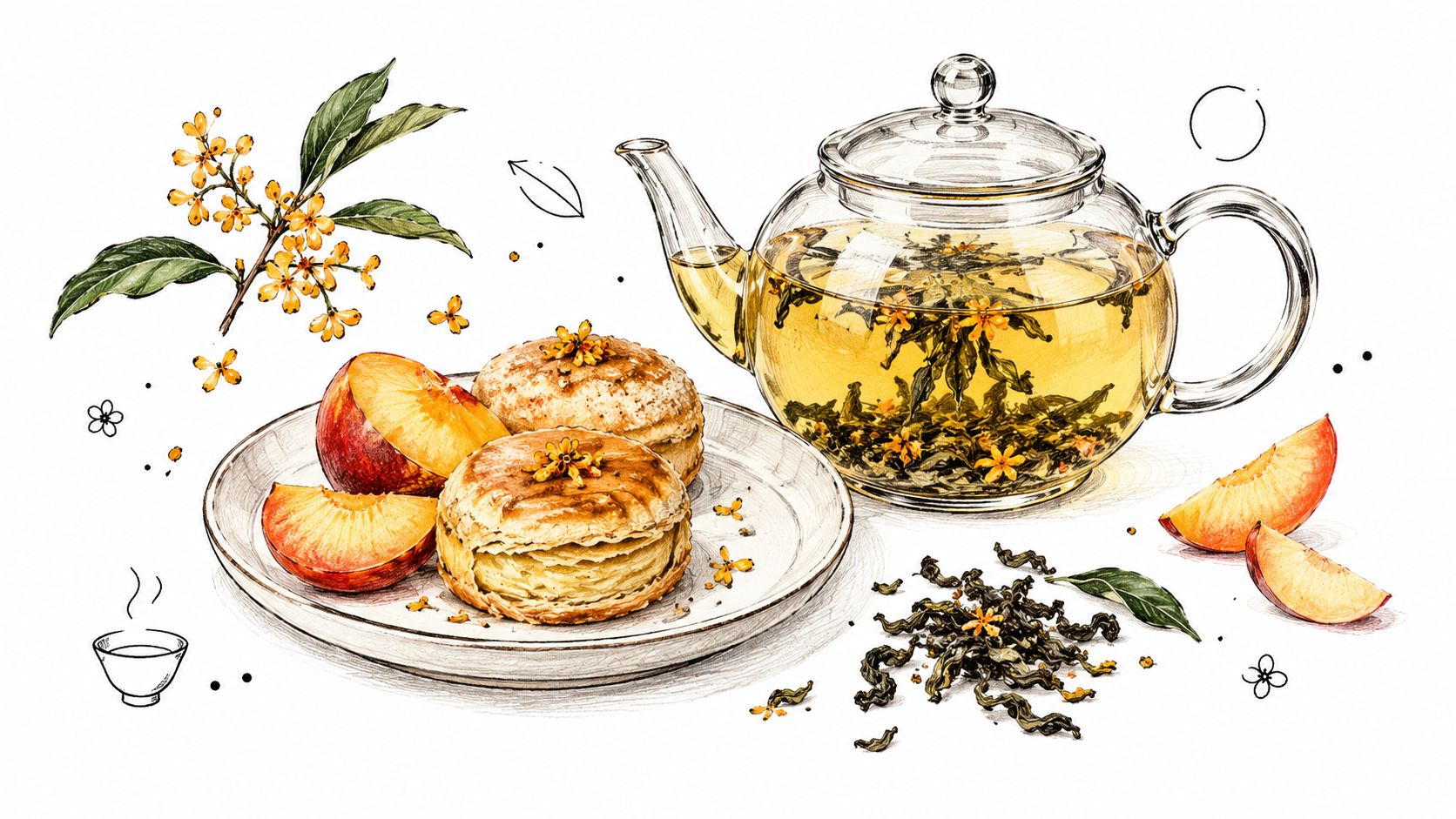
Osmanthus flower oolong tea isn't only for quiet sipping. Its peachy floral profile makes it easy to pair with foods that would crush a more fragile tea, and it can also brighten simple snacks that seem ordinary on their own. A buttery croissant, almond biscuit, or soft sponge cake works well because the tea cuts through richness without fighting the dessert.
Pair by texture, not just sweetness
Think about what the tea does in the mouth. The floral aroma gives lift, while the oolong body adds enough structure to refresh the palate. That makes it a natural companion for rice cakes, sesame snacks, and other lightly sweet treats where you want balance rather than sugar on sugar.
For savory pairings, keep the seasoning subtle. Steamed dumplings, clean grilled fish, or lightly salted nuts let the tea stay fragrant. Heavy sauces can flatten the osmanthus note and make the cup feel thinner than it is.
A useful contrast comes from more playful dessert drinks, like bubble tea with grass jelly, which leans toward texture and sweetness rather than fine floral aroma. Osmanthus oolong sits at the opposite end of that spectrum, where elegance matters more than novelty.
If you're serving guests, osmanthus flower oolong tea makes an easy bridge between dessert and tea service. It feels polished without needing a complicated menu, and that makes it a smart choice for an afternoon table.
Conclusion Embracing the Floral Tradition
Osmanthus flower oolong tea earns its charm because it brings together two careful crafts, the structure of oolong and the fragrance of osmanthus blossoms. Once you know that the perfume comes from compounds such as ionones and lactones, the cup becomes easier to understand, and easier to appreciate. You stop thinking of it as “just floral” and start noticing how the aroma changes the whole tasting experience.
That awareness also makes pairing more fun. A soft pastry, a rice-based dessert, or a light savory snack will each show a different side of the tea, because the floral top notes interact with texture and fat in ways a plain black tea wouldn't. Even a simple quiet cup after dinner can feel more vivid when you know what to expect from the scent and how to brew it gently.
The deeper history matters too. This tea sits inside the long oolong tradition rooted in Fujian and later shaped by Taiwanese floral tea culture, so every cup carries a sense of lineage as well as pleasure. That mix of heritage and aroma is why osmanthus flower oolong tea keeps finding new drinkers, even among people who already know a lot about tea.
If you want to explore osmanthus oolong, fragrant loose leaf teas, or brewing tools that make floral tea easier to enjoy, visit Tealyra and compare the options with your own palate in mind. Choose a tea that fits the way you drink, then brew it lightly and let the flowers do their work.
Prepared with the Outrank app