 by Tealyra
Natural Sweeteners for Tea: 8 Gentle Ways to Sweeten Your Cup
Learn how to enjoy naturally sweet tea or choose from 8 gentle sweeteners to elevate your cup. Find the right match for black, green, herbal, and iced tea.
Table of Contents
- Key Takeaways
- Table of Contents
- Natural Sweeteners for Tea: What Counts and What to Consider
- 8 Natural Ways to Sweeten Tea, from Honey to Fruit
- Which Natural Tea Sweetener Fits Your Cup Best?
- How to Sweeten Tea Naturally Without Overpowering It
- Naturally Sweet Tea: Enjoy More Flavor with Less Added Sweetener
- Find the Balance That Makes Each Cup Yours
- Frequently Asked Questions
The sweetest choice for tea may be no sweetener at all. A naturally sweet tea can offer enough gentle, rounded flavor on its own, while another cup may welcome a touch of honey, maple syrup, or another natural option. If you’re wondering what will dissolve smoothly, suit a delicate brew, or add sweetness without taking over, the answer depends on the tea as much as the sweetener.
It’s natural to want a little sweetness and still taste the leaves beneath it. But “natural” doesn’t mean every sweetener tastes or behaves the same, and a small measure can make a more balanced cup than an unhurried pour. This guide compares eight ways to sweeten tea, including their flavors, textures, and usefulness in hot or iced cups. You’ll also learn how black, green, herbal, rooibos, and fruity teas can guide your choice, and why tasting first is a useful place to begin.
Key Takeaways
- Learn how added sweeteners differ from tea that simply tastes sweet, so you can choose with clearer expectations.
- Compare eight ways to add sweetness or aromatic depth, including how their flavors and textures may shape a cup.
- Use a simple taste-and-adjust method to add sweetness gradually without masking the tea’s character.
- Discover how a naturally sweet tea may offer fruity, floral, or rounded impressions without proving sugar is present.
- Explore how black, green, herbal, rooibos, and fruity teas can guide your sweetener choice, while leaving room for personal taste.
Table of Contents
Natural Sweeteners for Tea: What Counts and What to Consider
A softer, more balanced cup doesn’t have to begin with refined sugar. A natural sweetener is an ingredient added to tea to contribute sweetness, such as honey, syrup, fruit, or a plant-derived sweetening ingredient. Tea that tastes sweet without additions is different: its impression comes from the brewed leaves or other blend ingredients, not from something stirred in. In brief, a sweetener changes the cup, while tea selection shapes its natural flavor.
“Natural” describes an ingredient’s origin, not its nutritional effect. Honey and many syrups still contribute sugars and calories, while other sweetening ingredients have different properties. Natural origin alone doesn’t mean sugar-free, calorie-free, or healthier. The broad category of sugar substitutes includes options with different sources and characteristics, so check the ingredient and nutrition information for the specific sweetener you choose.
Added sweetness versus a naturally sweet-tasting tea
A cup may seem sweet because of its aroma, fruit-like notes, or gentle, rounded finish, even when no sugar has been added. These sensory impressions can suggest ripe fruit or flowers, but they don’t confirm that the tea contains sugar. Honey or syrup, by contrast, contributes sweetness directly, along with its own flavor and texture.
Tea character varies by type and blend. Fruity, herbal, green, and black teas each offer different aromas and finishes, so taste the brewed cup before deciding it needs anything. For example, explore the range of green tea options without assuming a particular tea tastes sweet or contains added ingredients. Check its product details for specifics.
How to choose a sweetener before stirring it in
Start with three practical questions: Does the sweetener’s flavor suit the tea? Will it mix easily into your hot or iced cup? How much do you want to add? A strongly flavored syrup brings its own depth, while a fine-grained or liquid option may be easier to mix, depending on the drink’s temperature and the ingredient.
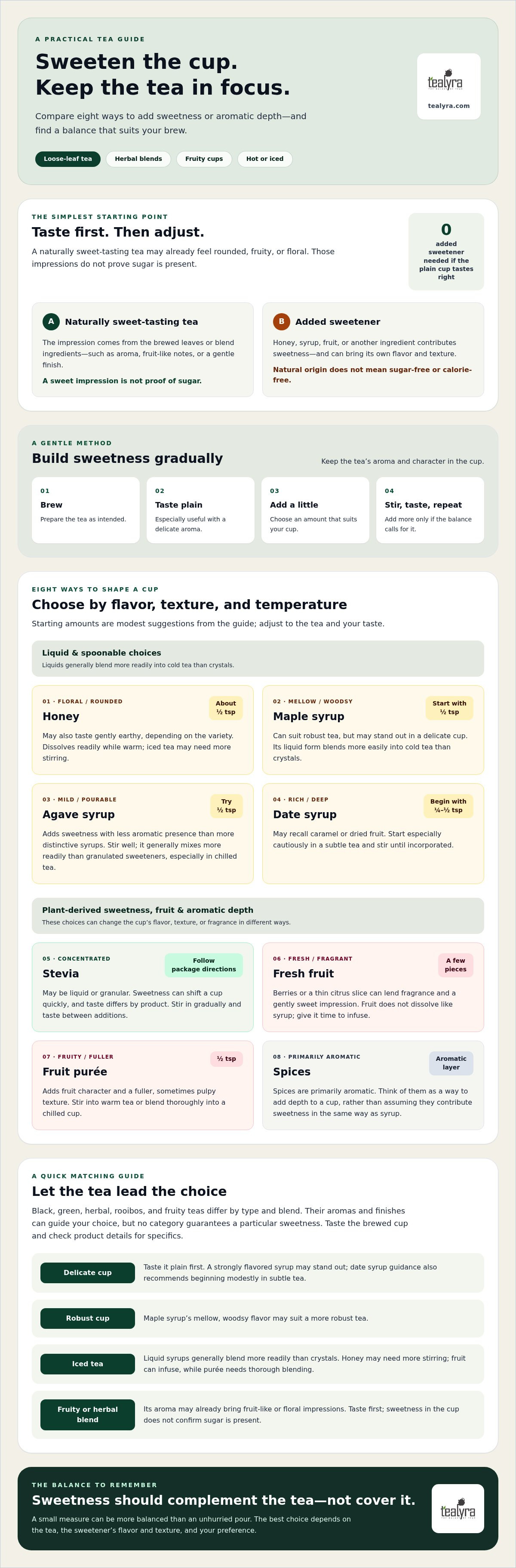
Brew the tea as intended and taste it plain, especially if its aroma is delicate. Then add a small amount, stir, and taste again before adding more. A sweetener’s flavor and texture can alter the balance as much as its sweetness does. There’s no universally best choice. The right one complements your cup and suits your preference.
8 Natural Ways to Sweeten Tea, from Honey to Fruit
A small addition can soften a brisk brew or bring a new aromatic layer, but each option leaves its own signature. These starting amounts are intentionally modest. Adjust to the tea and your taste.
Liquid and spoonable sweeteners
- Honey: Floral, rounded, or gently earthy, depending on the variety. Stir about ½ teaspoon into hot tea to begin. It dissolves readily while warm but may take more stirring in iced tea.
- Maple syrup: Its mellow, woodsy flavor can suit robust tea, though it may stand out in a delicate cup. Start with ½ teaspoon. As a liquid, it blends more easily into cold tea than crystals.
- Agave syrup: Mild in flavor and pourable, it can add sweetness without as much aromatic presence as more distinctive syrups. Try ½ teaspoon and stir well. It generally mixes more readily than granulated sweeteners, especially in a chilled drink.
- Date syrup: Rich and deep, with a flavor that may recall caramel or dried fruit. Begin with ¼ to ½ teaspoon, particularly in a subtle tea, and stir until incorporated.
Honey, maple syrup, agave syrup, and date syrup are liquids. Stevia may come in liquid or granular forms, while fruit and purée add substance and spices are primarily aromatic. Liquid syrups generally blend more readily into cold tea than crystals do.
Fruit, spices, and plant-derived sweetness
- Stevia: Concentrated sweetness can shift a cup quickly, and the taste differs by product. Follow the package directions rather than guessing at a spoonful. Stir in gradually and taste between additions. The FDA’s overview of sweeteners offers regulatory context on ingredients used to sweeten foods.
- Fresh fruit: A few berries or a thin citrus slice can lend fragrance and a gently sweet impression, though fruit won’t dissolve like syrup. Add a few pieces to hot or iced tea and give them time to infuse.
- Fruit purée: A ½ teaspoon adds fruit character and a fuller, sometimes pulpy texture. Stir it into warm tea, or blend it thoroughly into a chilled cup. Add more only if you like the added body.
- Warming spices: A small pinch of cinnamon can make tea smell rounder and cozier without acting as a sweetener by default. Steep it with the tea or stir in a pinch, then adjust carefully so its fragrance doesn’t dominate.
If you want to explore a cup with fruit notes, browse fruity tea options. Check each blend’s ingredients and taste it before deciding whether it needs added sweetness.
Which Natural Tea Sweetener Fits Your Cup Best?
Let the tea lead. A sweetener that rounds out a full-bodied brew might blur the fine aroma of a delicate one, and temperature affects how easily it mixes. Use the table as a starting point, not a set of rules. Steeping style, blend ingredients, and personal taste all shape the result.
| Option | Flavor | Form and mixing | May suit |
|---|---|---|---|
| Honey | Floral to rounded, depending on variety | Liquid; stirs into hot tea, slower in cold | Black or herbal infusions, if the honey’s aroma fits |
| Maple syrup | Woodsy and distinctive | Liquid; convenient to stir into hot or iced tea | Fuller black teas or warming blends |
| Agave syrup | Generally mild | Liquid; mixes readily | Green or herbal tea when a lighter flavor is preferred |
| Date syrup | Rich, with dried-fruit or caramel-like notes | Liquid; stirs into warm tea, may need extra stirring when cold | Robust black tea or spice-forward infusions |
| Stevia | Concentrated sweetness; taste varies by product | Liquid or granular; follow label directions | Any style where a small amount suits your palate |
| Fresh fruit | Bright, fragrant, sometimes gently sweet | Slices or pieces; infuses rather than dissolves | Iced tea or fruit-friendly herbal blends |
| Fruit purée | Juicy and rounded | Thick; stir or blend thoroughly | Fuller teas that can carry extra body |
| Cinnamon or similar spice | Warm and aromatic, not sweet by default | Ground or whole; infuse or stir, then strain if desired | Black, rooibos, or herbal blends with compatible spice notes |
Match sweetness to the tea
With delicate green tea, begin sparingly so the sweetener doesn’t overtake the leaf’s aroma. A gentle option may be preferable, though even a mild addition can change the cup. Fuller black teas may accommodate bolder notes such as maple or date, while herbal infusions may already have fruit, spice, or floral aromas that create a sweet impression. Explore different green tea styles, and let each brewed cup guide your choice.
Adjust for hot or iced tea
Granulated sweeteners can dissolve more slowly in cold tea than in hot tea. For iced tea, stir a measured amount into a little warm liquid first, then combine it with the chilled brew. Liquid sweeteners are often convenient to mix into cold drinks, but convenience doesn’t guarantee a good flavor match.
Natural origin isn’t the same as sugar-free. Honey, syrups, and fruit can contribute sugars, while products such as stevia differ in ingredients and serving guidance. Check labels and keep portions in mind. The best match depends on the tea’s flavor and what you enjoy in the cup. To find a naturally sweet tea experience, start with the plain brew, then add only what improves its balance.
How to Sweeten Tea Naturally Without Overpowering It
A balanced cup begins before the sweetener reaches the spoon. Brew the tea according to its package or type-specific instructions, then taste it plain. Notice its aroma, body, and finish. This first sip gives you a baseline: you can tell whether the tea needs sweetness or whether a sweetener’s own flavor would complement it.
Brew, taste, add a little, stir, and taste again. Stop as soon as the tea feels balanced. This measured approach helps preserve the character of the leaves. It also gives you time to account for a sweetener’s floral, fruity, or toasted notes, which can change the cup beyond simply making it sweeter.
A measured approach for hot tea
Once the tea is brewed, add a small amount of your chosen sweetener and stir thoroughly so it disperses evenly. Take another sip before adjusting. Distinctive honey or syrup may contribute noticeable flavor, so consider that character before adding more. With delicate aromas, stop as soon as sweetness rounds the brew without masking its finer notes.
A smooth method for naturally sweetened iced tea
Cold tea can make crystals slower to dissolve. If appropriate for the sweetener, stir a measured amount into a little warm tea or water first, then combine it with the chilled brew. Add liquid sweeteners gradually and stir well, especially when preparing a pitcher, so the sweetness is consistent from one serving to the next.
Taste again after chilling. Cold temperature can change how flavors come across, and a sweetener that seemed subtle while warm may feel more pronounced, or less apparent, in the finished drink. Adjust only after tasting the cooled tea, and keep the sweetener’s own aroma in mind.
- Brew: Follow the instructions for your tea.
- Taste: Sip it plain before deciding what to add.
- Add: Start with a small amount, especially with concentrated sweeteners.
- Stir and taste: Let it mix fully, then reassess before adding more.
This approach works whether you’re sweetening a bold black tea or seeking a naturally sweet tea experience with a lighter infusion. The aim isn’t to reach a fixed level of sweetness, but to let the tea remain present in every sip. To find a cup whose character you enjoy on its own, explore Tealyra’s loose-leaf tea selection.
Naturally Sweet Tea: Enjoy More Flavor with Less Added Sweetener
Before reaching for a sweetener, give the brewed tea a moment of attention. Notice its aroma first, then its body and finish. A fruit-like fragrance, floral lift, or rounded texture can feel sweet on the palate without proving sugar is present. These are flavor impressions, not ingredient claims, so check a tea’s product details if you want to know what’s in the blend.
Tea styles to explore when you want a naturally expressive cup
If you’re curious about fruit-forward aromas, browse fruity loose-leaf teas and taste a cup plain before deciding whether to add anything. Rooibos red tea is another category to explore. Rooibos is naturally caffeine-free. For a blend with additional flavor notes, flavored green tea offers another direction. These categories are starting points for discovery, not a guarantee that a particular tea tastes sweet or contains a sweetening ingredient.
A naturally sweet tea experience can come from the way aroma, body, and finish meet, even when no sweetener has been added. Let the cup tell you what you’re tasting, and keep perceived sweetness separate from what the ingredient list confirms.
A calm, personal routine for finding your preferred balance
Try brewing two cups of the same tea. Taste the first plain, then add a small, measured amount of your chosen sweetener to the second, stir, and compare. Notice whether the added flavor complements the tea or draws attention away from it. If the sweetness feels too strong, you have a clear reference for next time.
You might jot down pairings you enjoy, such as a floral note with a mild sweetener or a fuller tea with a more distinctive one. Treat these as personal observations rather than fixed rules. The same combination can feel different with another tea, recipe, or mood. Over time, this comparison can help you find a satisfying cup with less added sweetness, or none at all.
Choose a tea that appeals to your senses, brew it with care, and adjust only if the cup asks for it. Explore Tealyra’s loose-leaf teas and find a style to savor, one thoughtful cup at a time.
Find the Balance That Makes Each Cup Yours
The right sweetener is the one that complements your tea, not the one that hides it. Honey, syrups, fruit, and spices each bring their own flavor and texture, while a naturally sweet tea may offer a pleasing impression through its aroma and finish alone. Brew first, taste plain, then add a little and adjust only if the cup needs it.
Sweetness is personal, and the same addition can feel different in delicate green tea, full-bodied black tea, or a fragrant herbal infusion. Exploring different tea styles can help you discover which cups you enjoy as they are and which welcome a gentle touch.
Tealyra offers loose-leaf teas across traditional tea and infusion categories, with options for varied flavor preferences. Explore Tealyra’s loose-leaf teas and find a cup to enjoy on its own or with a touch of sweetness.
Frequently Asked Questions
Can you sweeten tea naturally without adding sugar?
Yes, if you mean without adding a conventional spoonful of sugar, but the ingredients matter. Fruit, spices, or expressive tea aromas can create a sweeter impression without a separate sweetener, while honey and maple syrup still contribute sugars. Taste the brewed tea plain first, then decide whether a small addition suits your preferences. If you’re monitoring ingredients or sugars, check the sweetener’s label and the tea’s ingredient list.
What is the healthiest natural sweetener for tea?
There isn’t one natural sweetener that’s healthiest for everyone, and natural origin alone doesn’t establish a health benefit. Honey, syrups, and other sweeteners can contribute sugars; concentrated options may be used in smaller amounts, depending on the product. Read labels and consider your dietary needs and portion size. If you have a medical concern or need personalized guidance, ask a qualified health professional which choices may be appropriate for you.
How do you sweeten iced tea naturally?
Liquid sweeteners often mix conveniently into cold tea, while crystals may dissolve more slowly. For a granular sweetener, dissolve a measured amount in a little warm tea or water first, then stir it into the rest and chill. Add sweetness gradually and taste before adjusting. Fruit can also bring aroma and flavor to iced tea, though it may lend a gentler impression than a concentrated sweetener.
Is honey better than sugar in tea?
Honey isn’t automatically sugar-free or healthier than sugar. Both can add sweetness, and your choice may depend on taste and dietary needs. Honey can bring floral or herbal notes, while sugar generally adds sweetness with less distinctive flavor. Either can change the tea’s character, so check product labels if ingredients matter to you. Start with a small amount, stir well, and taste before adding more.
What tea tastes naturally sweet without a sweetener?
There’s no single answer, since perceived sweetness varies with the tea, how it’s prepared, and your palate. Some cups may seem softly sweet because of fruity, floral, or rounded aromas, but that sensation doesn’t confirm sugar is present. Brew according to the tea’s instructions and taste it plain first. If you need to know whether a blend contains sweeteners or fruit ingredients, check its ingredient list.
Can you use stevia to sweeten hot tea?
Yes, you can use stevia in hot tea if the product label indicates it’s suitable for that use. Stevia products can be concentrated, so follow the package directions, add a small amount, stir, and taste before adding more. Its flavor may stand out in a delicate tea, so try it in one cup first. This lets you judge both the sweetness and the flavor balance before making it a regular choice.