 by Tealyra
5 Teas That Help Sleep, Backed by U.S. Research
Five evidence-backed bedtime teas—chamomile, valerian, lavender, passionflower, magnolia. How to trial each safely for 2–3 weeks and when to consult a doctor.

Chamomile, valerian, lavender, and passionflower are the teas most commonly used for sleep, and the honest answer is that they tend to help a little, not a lot. Most of the benefit comes from mild anxiety reduction and the calming ritual of a warm drink rather than strong sedation. If sleep trouble is frequent or you take medication, talk to a doctor before relying on herbal tea alone.
TL;DR:
- Herbal sleep teas like chamomile and lavender offer mild anxiety reduction, but their effects are generally subtle and vary depending on preparation and individual response.
- Valerian root has the most research backing but produces inconsistent results, performing better with repeated use and higher-quality, whole-root preparations.
- Drinking herbal tea 30 to 60 minutes before bed, and pairing it with a relaxing routine, enhances its calming effects, especially when trialed over two to three weeks.
- Safety considerations include allergy risks with chamomile and interactions of valerian with alcohol and sedatives, making medical consultation advisable for frequent use or pre-existing conditions.
- For chronic insomnia, structured treatments like Cognitive Behavioral Therapy for Insomnia are more effective than reliance on herbal teas alone, which should only serve as a supporting habit.
Table of Contents
- 1. Best teas for sleep and what each one offers
- 2. What the science actually shows about herbal sleep teas
- 3. Safety, side effects, and drug interactions to know
- 4. How to use tea for sleep effectively
- 5. How clinicians and health agencies view herbal sleep aids
- What we think you should actually do
- Finding quality bedtime teas worth trying
- Sources
- FAQ
1. Best teas for sleep and what each one offers
Not every bedtime tea works the same way, and picking one that matches your actual problem, whether that’s racing thoughts, trouble winding down, or just a restless mind, makes the trial worth running. Here’s what the research says about each of the most popular options.
Chamomile is the most familiar bedtime tea, and for good reason. It has a long history of traditional use for anxiety and mild sleeplessness, and it’s generally recognized as safe for short-term use. That said, the clinical trial evidence remains limited and mixed, so think of chamomile as gentle support rather than a proven fix. To prepare it, steep 1 teaspoon of dried flowers (or one tea bag) in hot water for 5 to 10 minutes. People with allergies to ragweed, daisies, or related plants should be cautious, since chamomile can trigger allergic reactions in sensitive individuals.
Valerian root has the most substantial research behind it of any sleep-focused herb, though the results are far from consistent. A large systematic review and meta-analysis covering 60 studies and nearly 6,900 participants found mixed outcomes across trials, with some evidence pointing to whole-root preparations performing better than certain extracts. Valerian also seems to work better with repeated use rather than as a one-off before an important night. Steep it for a full 10 to 15 minutes to draw out the active compounds, and never combine it with alcohol or sedative medications, since the combination can intensify drowsiness beyond what’s safe.
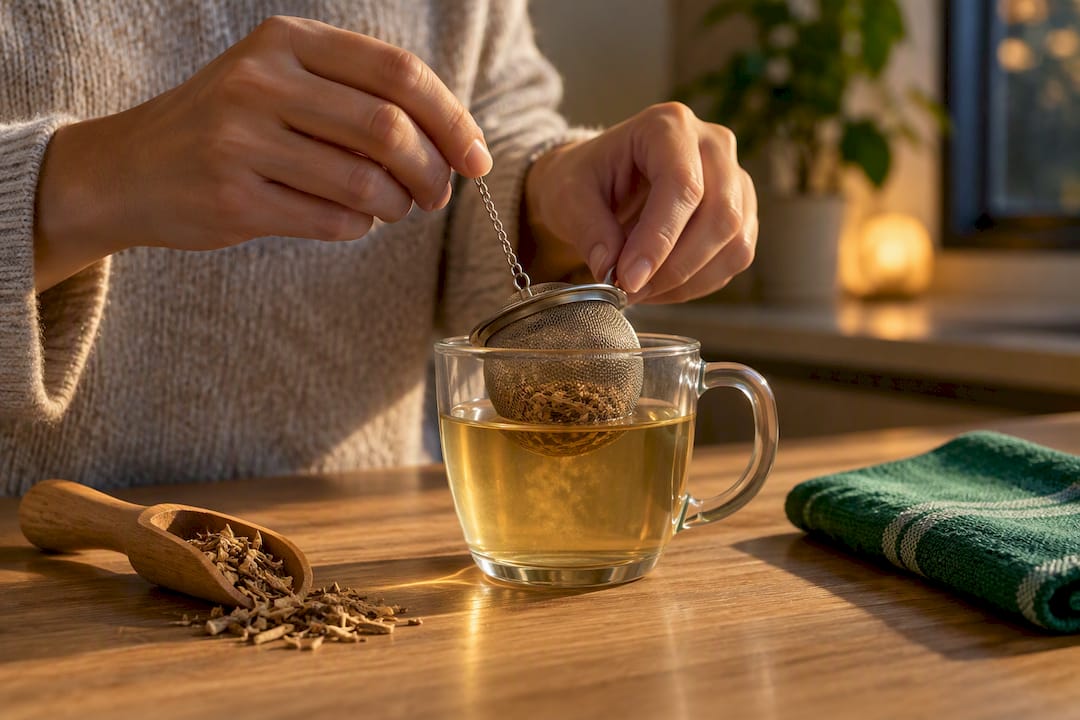
Lavender is best known through aromatherapy, where its anxiety-reducing effects are fairly well documented. As an oral tea, the evidence is thinner but still promising for people dealing with mild anxiety at bedtime. Lavender tea has a distinct floral taste that some readers find calming in itself, almost as a cue that it’s time to slow down. Steep for 5 to 7 minutes and pair it with dim lighting or a short breathing exercise for the best chance of noticing an effect.
Passionflower shows up less often in sleep conversations but has a reasonable case for anxiety-related sleeplessness specifically. It’s typically gentler in flavor than valerian and works well blended with chamomile or lemon balm. Magnolia bark tea and low-caffeine green or oolong varieties occupy a different niche. Some of these contain fragrant compounds studied for mild tranquilizing effects in preclinical and small human studies, though the evidence is still preliminary. These options make sense for readers who want a lighter, more exploratory tea rather than a targeted sleep aid.
A quick summary of what each is best suited for:
- Chamomile: general relaxation and mild anxiety before bed, with the lowest evidence bar to clear.
- Valerian: more persistent difficulty falling asleep, best trialed over multiple nights rather than once.
- Lavender: anxiety-driven sleeplessness, especially when paired with a calming pre-bed routine.
- Passionflower: racing thoughts or mild worry that keeps you from settling down.
- Magnolia or low-caffeine green/oolong: a lighter option for readers who want variety without a strong herbal effect.
2. What the science actually shows about herbal sleep teas
It helps to separate what sounds convincing from what’s actually been tested. Valerian has the deepest research base of the group, but that depth reveals a problem: the systematic review and meta-analysis found substantial heterogeneity across the 60 included studies, meaning results varied widely depending on the preparation, dosage, and population studied. Whole-root valerian appeared to outperform some standardized extracts in subgroup comparisons, which suggests that not all valerian products are created equal and that consistent sourcing may matter more than brand marketing implies.
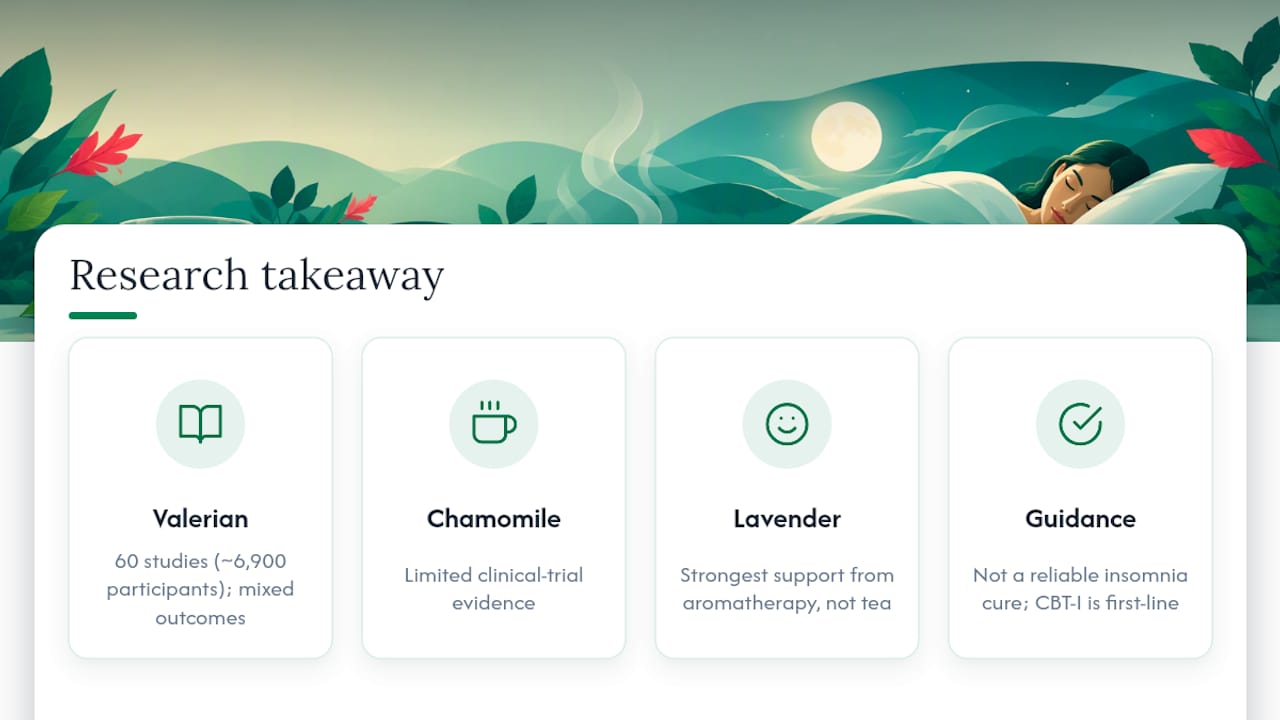
Chamomile and lavender tell a similar story from a different angle. The NCCIH’s own safety summary is candid that clinical trial evidence for chamomile remains limited, even though its traditional use is centuries old. Lavender’s strongest evidence comes from aromatherapy studies rather than oral tea trials, so the leap from “lavender calms you when you smell it” to “lavender tea makes you sleep better” is not fully backed by direct research yet.
What might explain the modest effects seen across these herbs? Researchers point to mild anxiolytic activity, possibly through interaction with GABAergic pathways in the brain, the same general system targeted by prescription sedatives, though at a much gentler level. Some teas also contain fragrant compounds that appear to have a light tranquilizing effect in early studies, though this research is still preliminary and far from conclusive.
The bigger picture matters here. According to NCCIH’s own myth-busting guidance, herbs like valerian and chamomile have not been shown to reliably treat insomnia, and relaxation techniques carry better supporting evidence. That doesn’t mean tea is worthless. It means tea works best as an adjunct, a supporting habit layered onto other sleep-friendly behaviors, not a replacement for them. For anyone dealing with chronic insomnia, Cognitive Behavioral Therapy for Insomnia (CBT-I) is the recommended first-line treatment, and tea should be viewed as a complement to that kind of structured approach rather than a substitute for it.
3. Safety, side effects, and drug interactions to know
Herbal teas feel harmless because they’re familiar, but “natural” doesn’t mean risk-free, especially if you take other medications. A few precautions go a long way toward a safe trial.
- Chamomile allergy risk: people allergic to ragweed, daisies, or chrysanthemums may react to chamomile, and it may also interact with blood thinners like warfarin.
- Valerian and sedation: avoid combining valerian with alcohol or sedative medications, since the sedative effects can stack unpredictably.
- Common side effects: valerian has been linked to headaches and vivid dreams in some users, effects worth tracking if you’re trying it for the first time.
- Avoid kava: kava has been associated with liver injury risk and is not a tea we’d suggest reaching for despite its reputation as a relaxant.
- Pregnancy and children: herbal sleep teas haven’t been adequately studied in pregnant people or children, so caution and a doctor’s input are warranted before use.
Herbal products can carry real interaction risks even at food-level doses. NCCIH safety guidance notes that valerian and related herbs may interact with prescription sedatives and blood thinners, which is exactly why a quick chat with a pharmacist or doctor before starting a new tea is worth the five minutes it takes.
Watch for red flags that suggest the problem is bigger than tea can address: daytime sleepiness that interferes with work or driving, noticeable memory or concentration problems, or insomnia that persists more than three nights a week for several weeks. Those patterns point toward a conversation with a healthcare provider rather than another cup of tea.
4. How to use tea for sleep effectively
Getting a fair read on whether a tea helps requires more structure than just sipping it once and waiting. A short, deliberate trial gives you a real answer.
- Time it right. Drink your tea 30 to 60 minutes before bed, giving your body time to wind down as part of the ritual itself.
- Cut caffeine early. Avoid caffeinated teas, including most green and black varieties, within 6 hours of bedtime, since caffeine’s effects can linger longer than expected.
- Steep with intention. Use single-ingredient herbs like chamomile or valerian on their own first, so you know which one is actually doing something before moving to blends.
- Choose whole-root or standardized options when trying valerian specifically, since preparation quality appears to influence results.
- Track results for two to three weeks. Note how long it takes you to fall asleep, how many times you wake, and how rested you feel, since valerian in particular tends to show benefits with repeated use rather than immediately.
- Stop and reassess if you notice no change after three to four weeks, or if side effects like headaches or grogginess outweigh any benefit.
- Pair it with a wind-down routine. Dim lights, put screens away, and try a few minutes of slow breathing alongside your tea to reinforce the relaxation cue.
Pro Tip: Keep a simple one-line sleep note each morning, “fell asleep fast” or “woke twice”, so you’re comparing real patterns instead of relying on memory after a few weeks.
5. How clinicians and health agencies view herbal sleep aids
Government health researchers take a measured stance on herbal sleep teas. NCCIH’s guidance is clear that herbs like valerian and chamomile haven’t been shown to reliably treat insomnia, while relaxation techniques and consistent bedtime routines have stronger backing. Sleep medicine specialists go further: the American Academy of Sleep Medicine’s patient guidance positions CBT-I as the gold-standard treatment for chronic insomnia, with improvements often visible within weeks, and treats herbal remedies as, at best, a supporting habit.
The valerian systematic review adds a practical wrinkle: inconsistent results across studies are plausibly tied to differences in preparation, standardization, and dosage rather than the herb being ineffective outright. That’s where sourcing quality starts to matter. A focus on curating authentic, clearly labeled loose-leaf herbs gives readers a straightforward way to know what they’re actually steeping, which matters more for a plant-based remedy than for a manufactured pill with a fixed dose.
What we think you should actually do
The honest takeaway from the research is that bedtime tea works best as a habit, not a treatment. Too much marketing around sleep tea implies a pill-like fix, when the real evidence points to something gentler: a calming ritual with a small anxiolytic assist, most reliable when repeated night after night rather than reached for during a crisis. The mistake we see most often is treating tea as a rescue remedy for a bad night instead of a steady practice built alongside good sleep habits.
If you’re dealing with occasional restlessness, start with a single herb, chamomile or valerian are the most reasonable first tries, and give it two to three weeks before judging it. If sleep trouble is frequent, persistent, or paired with daytime exhaustion, treat that as a signal to see a doctor and look into CBT-I rather than experimenting further with herbs. Tea can be part of a good night’s sleep. It was never designed to carry the job alone.
— Tealyra
Finding quality bedtime teas worth trying
Since preparation and sourcing quality appear to affect how well herbs like valerian work, starting with a well-labeled, single-ingredient tea makes your trial more meaningful. A wide variety of loose-leaf teas are available, including chamomile, valerian, and calming herbal blends, which gives you room to try one herb at a time before deciding whether a combination blend suits you better.
A few buying tips worth keeping in mind:
- Start small. Buy a modest quantity first so you can judge the effect before committing to a larger order.
- Check the ingredient list. Look for clear labeling of whole herbs versus blends, especially with valerian, where whole-root preparations may perform differently than extracts.
- Confirm origin details. Transparent sourcing information helps you know what you’re actually steeping each night.
If you’re ready to build your own bedtime tea routine, browse Tealyra’s loose-leaf tea collection to find single-ingredient herbs and calming blends suited to your sleep goals.
This article is general information, not a substitute for advice from a qualified doctor. Consult a qualified healthcare professional about your own circumstances before acting on anything here.
Sources
- Chamomile: Usefulness and Safety | NCCIH
- Valerian Root in Treating Sleep Problems and Associated Disorders—A Systematic Review and Meta-Analysis
- Behavioral and psychological treatments for insomnia patient guide | AASM
FAQ
What tea helps you sleep the fastest?
No tea works instantly, but chamomile and valerian are the most commonly used for sleep support, mainly through mild anxiety reduction rather than fast-acting sedation. Valerian in particular tends to show more benefit with repeated use over several weeks rather than as a one-time fix.
Is it safe to drink sleep tea every night?
Chamomile and valerian are generally considered safe for regular short-term use, though valerian shouldn’t be combined with alcohol or sedative medications. Anyone with allergies, on blood thinners, or who is pregnant should check with a doctor before making herbal tea a nightly habit.
How long does it take for sleep tea to work?
Most people should trial a single herbal tea for two to three weeks before judging its effect, since benefits, especially with valerian, tend to build with consistent use rather than appearing after one cup. If there’s no noticeable change after three to four weeks, it’s reasonable to stop and consider other approaches.
Can herbal tea replace treatment for chronic insomnia?
No. For chronic insomnia, Cognitive Behavioral Therapy for Insomnia (CBT-I) is the recommended first-line treatment, with herbal teas serving only as a possible complement. Persistent sleep trouble, especially with daytime impairment, warrants a conversation with a healthcare provider.
Does chamomile tea interact with any medications?
Yes, chamomile may interact with blood-thinning medications like warfarin, and people allergic to ragweed or related plants should avoid it due to possible allergic reactions. Checking with a pharmacist before adding chamomile to a regular medication routine is a reasonable precaution.