 by Tealyra
Tea That Helps with Bloating and Gas: A Gentle, Evidence-Aware Guide
Looking for a tea that helps with bloating and gas? Explore evidence-based herbal infusions like peppermint and ginger to gently soothe your digestion today.
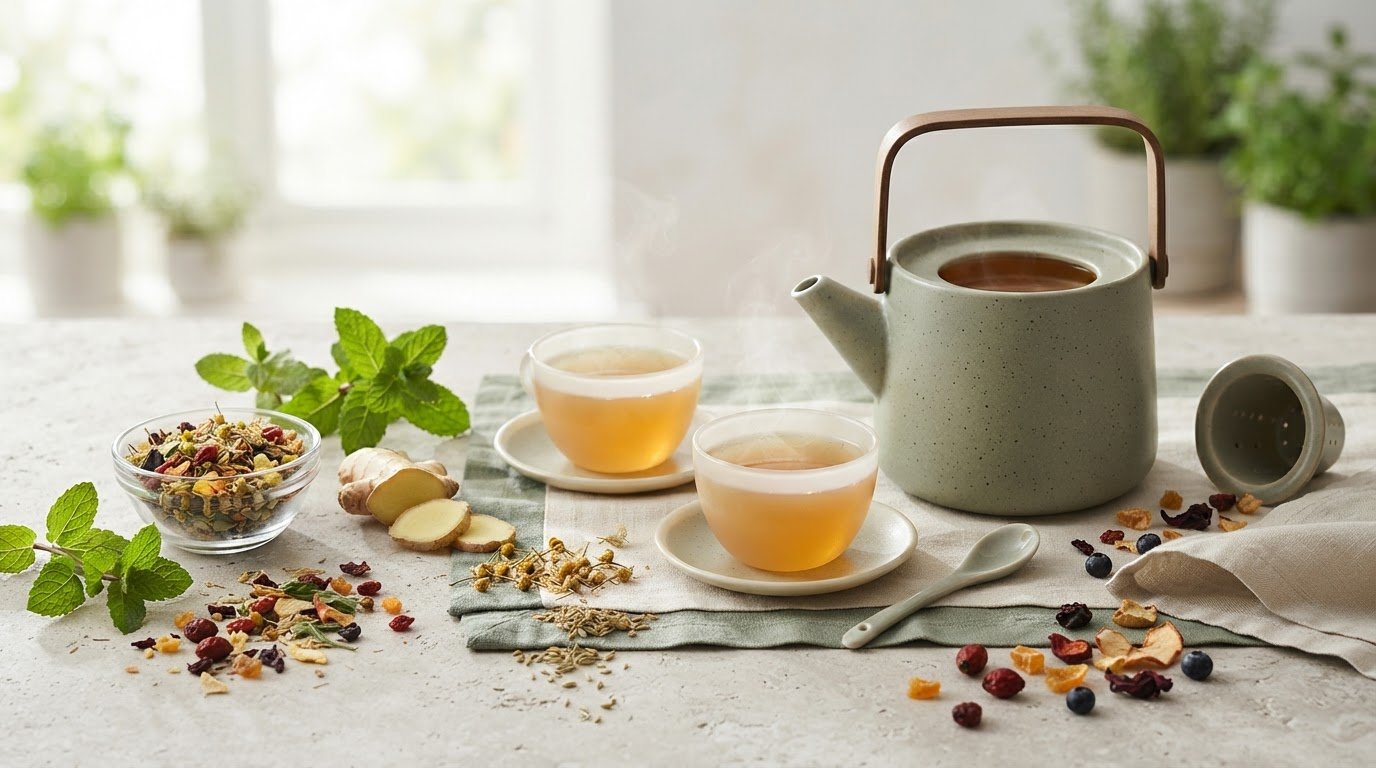
The tea with the strongest research behind it may not be the same as the soothing cup in your hands. Studies of peppermint, for example, have focused largely on concentrated oil capsules, so a brewed infusion shouldn’t be expected to work the same way. Still, if you’re looking for a tea that helps with bloating and gas, a warm, carefully chosen cup may offer comfort without promising a cure.
Abdominal fullness and gas can have many causes, and advice about digestive teas can be difficult to sort through. You deserve a clearer guide. We’ll compare commonly discussed options, including peppermint, ginger, and chamomile, and explain what research can and can’t tell us about tea itself. You’ll also find practical points to consider around caffeine, reflux, allergies, and other sensitivities, so you can choose an infusion that feels gentle and suits your needs. If symptoms persist, worsen, or feel concerning, a healthcare professional can help you look beyond the teacup.
Key Takeaways
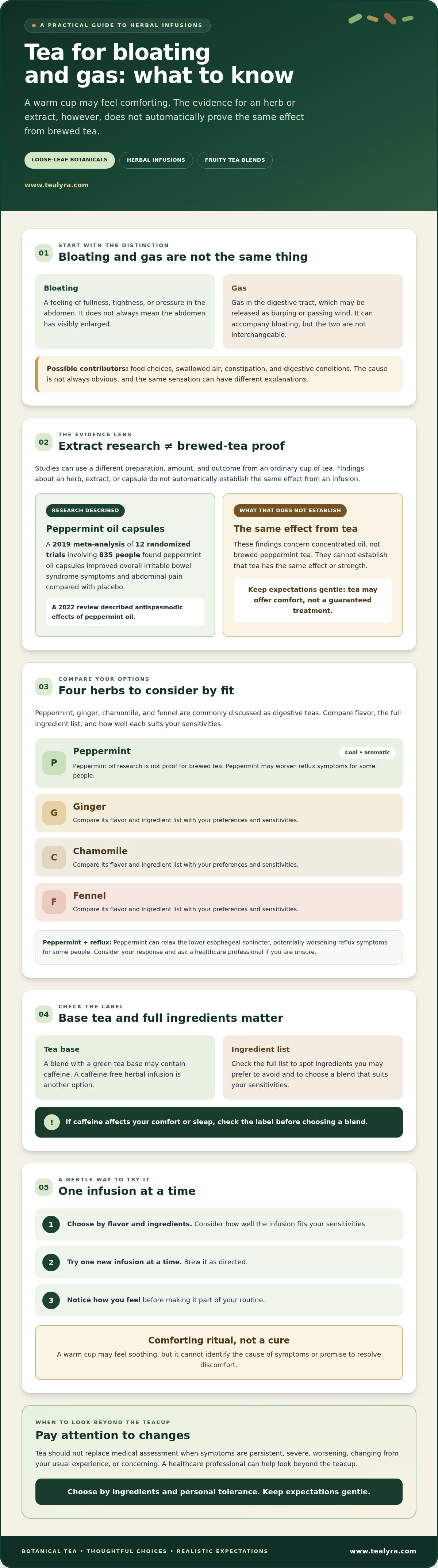
- Compare peppermint, ginger, chamomile, and fennel by flavor, ingredient list, and how well each suits your sensitivities.
- When choosing a tea that helps with bloating and gas, remember that research on an herb or extract doesn’t necessarily show the same effect from brewed tea.
- Check the tea’s base and full ingredient list to understand its caffeine content and spot ingredients you may prefer to avoid.
- Try one new infusion at a time, brew it as directed, and notice how you feel before making it part of your routine.
- Use tea as a comforting ritual, not a substitute for medical advice if symptoms persist, worsen, or concern you.
Table of Contents
- Why bloating and gas happen, and what tea can realistically do
- What evidence says about teas commonly used for bloating and gas
- Peppermint, ginger, chamomile, or fennel: how to compare your options
- How to try a tea gently and track whether it suits you
- Choosing a tea for bloating and gas without expecting a cure
Why bloating and gas happen, and what tea can realistically do
Some people find a warm herbal tea soothing, but the effect varies from person to person. A comforting cup can offer a quiet pause when your abdomen feels unsettled; it can’t identify why you feel that way or promise to resolve the discomfort. The phrase “tea that helps with bloating and gas” is best understood as a question about possible comfort, not a guaranteed treatment.
Food choices, swallowed air, constipation, and digestive conditions can all contribute to abdominal symptoms. The cause isn’t always obvious, and the same sensation can have different explanations for different people. Tea may be a gentle part of a routine, but it shouldn’t replace medical assessment when symptoms are persistent, severe, or changing.
For a general overview of mint tea and its varieties, see this page on peppermint tea for digestion. It can provide background on the drink, but it isn’t clinical evidence that brewed tea relieves symptoms.
To hear a tea-focused perspective on gas and bloating, watch this video. Treat its suggestions as general information, not a diagnosis or a promise of relief.
What is the difference between bloating and gas?
Bloating is the feeling of fullness, tightness, or pressure in the abdomen. It’s a sensation, and it doesn’t always mean the abdomen has visibly enlarged. Gas refers to gas in the digestive tract, which may be released as burping or passing wind. Gas can accompany bloating, but the two aren’t interchangeable: you can feel bloated without noticing much gas, or pass gas without feeling pressure.
Pay attention to patterns, but don’t assume one food or habit explains every episode. If discomfort lasts, becomes severe, or changes from your usual experience, seek individualized advice from a healthcare professional.
Can tea help with bloating and gas?
A warm drink may feel soothing, and the flavor or pause in your day may be part of that comfort. Evidence depends on the herb, amount, and preparation. Studies of concentrated extracts or capsules don’t automatically show that an infusion made from the same plant has the same effects. A useful distinction is: evidence about an herb or extract isn’t proof that brewed tea relieves symptoms.
Ingredient lists matter, too. A blend with a green tea base may contain caffeine, unlike a caffeine-free herbal infusion, so check the label if caffeine affects your comfort or sleep. Choose by ingredients and personal tolerance, and keep expectations gentle.
What evidence says about teas commonly used for bloating and gas
Peppermint, ginger, chamomile, and fennel have long histories in traditional use and are often discussed as digestive teas. But evidence about a plant, extract, or capsule isn’t automatically evidence that a cup brewed at home eases bloating or gas. The distinction matters: studies may use different preparations, doses, and outcomes than an ordinary infusion.
Peppermint tea: traditional use versus clinical evidence
Peppermint is commonly used as a digestive infusion, with a cool, aromatic flavor. A 2019 meta-analysis of 12 randomized trials involving 835 people found peppermint oil capsules improved overall irritable bowel syndrome symptoms and abdominal pain compared with placebo. A 2022 review also described antispasmodic effects of peppermint oil. These findings concern concentrated oil, not brewed peppermint tea, so they can’t establish that tea has the same effect or strength.
Peppermint may not suit everyone. It can relax the lower esophageal sphincter, potentially worsening reflux symptoms for some people. If you have reflux, consider your own response and ask a healthcare professional if you’re unsure.
Ginger, chamomile, and fennel: what can be said carefully?
Ginger is a familiar warming infusion, traditionally taken for digestive discomfort. A 2020 systematic review of 109 randomized controlled trials found evidence supporting ginger’s effects on digestive function broadly, but that doesn’t show that brewed ginger tea reliably relieves bloating or gas. Research on ginger preparations shouldn’t be treated as direct proof for every infusion.
Chamomile is often chosen for its gentle, floral character. In a 2015 randomized trial, chamomile extract taken for four weeks reduced several irritable bowel syndrome symptoms, including bloating. The study examined an extract, not chamomile tea. People sensitive to ragweed or related plants may also react to chamomile.
Fennel, with its sweet, anise-like aroma, is traditionally used as an after-meal infusion. The available information here doesn’t establish that brewed fennel tea relieves bloating or gas. Because fennel is often advised against during pregnancy, anyone who is pregnant should check with a healthcare professional before using it medicinally.
In brief: the clearest clinical findings described here involve peppermint oil capsules, ginger preparations, and chamomile extract, not ordinary brewed tea. Tea may be a pleasant, soothing choice, but the evidence doesn’t justify calling any infusion a proven cure for bloating or gas. If you’re exploring herbal flavors, Tealyra Store - The Best Galaxy of Teas offers herbal teas and loose-leaf varieties to browse by flavor and ingredient, not as medical treatment.
Peppermint, ginger, chamomile, or fennel: how to compare your options
There isn’t one universally best choice. Flavor, caffeine preference, ingredients, and your own response all matter, while evidence for a botanical doesn’t necessarily establish that a brewed cup eases bloating or gas. Use the comparison below to narrow your preferences, not as a ranking of remedies.
- Peppermint: Fresh and minty, and commonly used as a digestive infusion. The better-known clinical evidence concerns peppermint oil capsules, not peppermint tea. Peppermint may aggravate reflux for some people, so consider that if heartburn is familiar.
- Ginger: Warming, gently spicy, and traditionally enjoyed after meals. Research on ginger preparations doesn’t confirm that brewed ginger tea will relieve bloating or gas for everyone.
- Chamomile: Soft, floral, and often chosen as a calming herbal drink. Findings from chamomile extract studies can’t be assumed to apply to tea. People with sensitivity to ragweed or related plants may be at risk of an allergic reaction.
- Fennel: Sweet and anise-like, with a traditional association with digestion. Evidence for brewed fennel tea is limited, and people who are pregnant should check with a healthcare professional before using it medicinally.
The best personal choice depends on your tolerance, ingredients, and context, not on a promise that one tea will work for everyone. If you’re considering tea that helps with bloating and gas, notice whether a particular flavor or ingredient feels comfortable for you, and stop if it doesn’t suit you.
How do caffeine and other ingredients affect the choice?
Pure peppermint, ginger, chamomile, or fennel infusions are naturally caffeine-free. But a flavored blend may include green or black tea, which contains caffeine, so check the full ingredient list rather than relying on the blend’s name. Green, black, white, and oolong teas come from Camellia sinensis; herbal infusions are made from other plants. Caffeine preference is separate from digestive evidence.
For ingredient-led browsing, explore the herbal tea collection. If you’re comparing caffeine-containing choices, green tea options are another category to consider; check the specific blend details before brewing.
Keep your own patterns in view. A tea that feels pleasant for one person may not suit another, and other ingredients in a blend can matter as much as its featured herb. If you’d like to explore teas and infusions for a quiet daily ritual, browse Tealyra Store - The Best Galaxy of Teas.
How to try a tea gently and track whether it suits you
A simple, steady approach makes it easier to notice whether a tea feels comfortable without treating the result as a diagnosis. If you’re exploring a tea that helps with bloating and gas, try one new infusion at a time rather than changing several drinks or habits together.
A simple, cautious tea trial
- Check the label. Read the full ingredient list, including flavorings and sweeteners, and look for anything you know doesn’t agree with you.
- Prepare one serving as directed. Follow the supplier’s brewing instructions, and let the drink cool to a comfortably warm temperature.
- Keep other variables steady. Avoid introducing several new teas or making multiple diet changes at once, so it’s easier to notice what may be affecting how you feel.
- Observe and make a brief note. Record when you drank it, what you ate around that time, the serving size, and any changes in symptoms. A note can help you see patterns, but it can’t diagnose the cause.
If the tea seems to make you feel worse, stop drinking it. A response can vary with the person, the blend, and the circumstances, so one experience doesn’t establish a general effect.
For a calming, flavor-led ritual, you can explore herbal teas from Tealyra Store - The Best Galaxy of Teas. Check each tea’s ingredients and brewing directions, and choose based on what suits your preferences rather than expecting a cure.
When should you seek medical advice?
Tea trials are for personal observation, not a substitute for care. Arrange medical advice for symptoms that persist, recur, worsen, or have no clear explanation. Seek prompt assessment for severe abdominal pain, vomiting, blood in your stool, fever, or unintended weight loss.
If you’re pregnant, take medication, or live with a chronic health condition, ask a clinician or pharmacist before trying an herb for a health purpose. Herbal ingredients can have cautions or interact with medicines, and a professional can help you consider what’s appropriate for your circumstances.
Choosing a tea for bloating and gas without expecting a cure
After comparing peppermint, ginger, chamomile, and fennel, let your choice rest on practical preferences rather than a promise of relief. Flavor, caffeine, a tea’s complete ingredient list, and your own tolerance are useful guides. Evidence about extracts or capsules doesn’t establish that brewed tea will have the same effect, and no infusion can replace appropriate medical assessment.
A practical checklist before choosing an infusion
- Read the whole ingredient list. Check whether the tea is a single herb or a blend, and look for added flavorings, sweeteners, or other plants that may not suit you.
- Consider your circumstances. Think about caffeine preference, flavors you enjoy, known sensitivities, medications, and relevant health conditions. Ask a clinician or pharmacist about herbal ingredients if you’re pregnant, take medication, or have a chronic illness.
- Choose clear directions. Look for a product that lists its ingredients and explains how to prepare it. Follow the supplier’s brewing instructions rather than assuming one steeping method suits every tea.
If you’re looking for a tea that helps with bloating and gas, keep the expectation gentle: a warm cup may feel comforting, but any symptom response is individual. Should discomfort persist, recur, worsen, or feel concerning, seek medical advice rather than relying on tea alone.
Explore herbal teas as part of a mindful routine
An infusion can still be a small pleasure in the day: the rising aroma, warmth through the cup, and a few unhurried moments between tasks. Those sensory comforts are worthwhile in their own right, even when they don’t change digestive symptoms. Let taste and personal tolerance guide the ritual, and notice how you feel without treating a cup as a test or treatment.
Tealyra Store - The Best Galaxy of Teas offers a range of herbal infusions to explore by flavor and ingredient. Browse the herbal tea collection, read each listing carefully, and choose an option that fits your preferences. Take your time; the right cup is the one you enjoy and tolerate, without asking it to do more than tea can promise.
Choose a Gentle Cup That Suits You
There isn’t one tea that helps with bloating and gas for everyone. Peppermint, ginger, chamomile, and fennel each have distinct flavors and traditional uses, but research on extracts or capsules doesn’t automatically prove that brewed tea relieves symptoms. Let your choice reflect the ingredients you tolerate, the flavors you enjoy, and whether you prefer a caffeine-free infusion.
Try one tea at a time, follow its brewing directions, and pay attention to how you feel. A warm cup may bring a welcome moment of comfort, but it isn’t a cure or a substitute for medical advice. If symptoms persist, worsen, or concern you, speak with a healthcare professional.
Tealyra offers herbal teas and loose-leaf varieties through an online store serving tea drinkers worldwide. If you’d like to explore infusions by flavor and ingredient, browse Tealyra’s herbal teas. May your next cup offer a small, soothing pause, chosen with care and enjoyed at your own pace.
Frequently Asked Questions
What tea helps with bloating and gas?
Peppermint, ginger, chamomile, and fennel are commonly chosen as herbal infusions, but none is a guaranteed remedy. Research varies by herb and preparation, and findings from extracts or capsules don’t prove that brewed tea has the same effect. Choose based on flavor, ingredients, caffeine preference, and personal tolerance. If symptoms persist or concern you, seek medical advice rather than relying on tea alone.
Does peppermint tea help with gas and bloating?
Peppermint tea may feel soothing to some people, but the stronger clinical evidence concerns peppermint oil capsules, not brewed tea. The results can’t be assumed to apply to an infusion. Peppermint may also worsen reflux symptoms for some people. If you have heartburn or reflux, consider whether peppermint suits you, and ask a healthcare professional if you’re uncertain about using it.
Is ginger tea good for bloating?
Ginger is traditionally enjoyed as a warming digestive drink, but evidence about ginger preparations doesn’t establish that ginger tea reliably relieves bloating. Research has examined ginger in different forms, which may not match the amount or preparation in a cup of tea. If you choose to try it, check the ingredients, follow the brewing directions, and notice whether it feels comfortable for you.
Can chamomile tea relieve gas?
Chamomile tea is a gentle, floral infusion, but evidence from a trial of chamomile extract for irritable bowel syndrome symptoms doesn’t prove that brewed chamomile tea relieves gas. Individual responses can differ. Chamomile may trigger an allergic reaction in people sensitive to ragweed or related plants. If you have such sensitivities, check with a healthcare professional before trying it.
How quickly does tea work for bloating?
There’s no reliable, established timeline for brewed tea to ease bloating, and it may not change symptoms at all. Research on extracts or capsules can’t tell us how quickly an infusion might affect an individual. If you try a tea, start with one serving and observe how you feel without expecting a particular result. Recurring or persistent symptoms deserve medical assessment.
Can tea make bloating or gas worse?
Yes. A tea or blend may not suit everyone, and added ingredients such as flavorings or sweeteners may be relevant to your personal sensitivities. Peppermint can worsen reflux for some people, while caffeine in a green or black tea base may not suit everyone. Check the complete ingredient list, try only one new tea at a time, and stop if symptoms worsen.
When should I see a doctor for bloating and gas?
Arrange medical advice if bloating or gas persists, recurs, worsens, or has no clear explanation. Seek prompt assessment for severe abdominal pain, vomiting, blood in your stool, fever, or unintended weight loss. These symptoms need more than a tea trial. A healthcare professional can help assess possible causes and guide next steps based on your individual symptoms and health history.
Article by
Tealyra
The Best Galaxy Of Teas