 by Tealyra
Simple Syrup for Iced Tea: How to Make Perfect Syrup
Learn how to make simple syrup for iced tea with the perfect ratios, flavored variations, and storage tips for the sweetest cold brew every time.
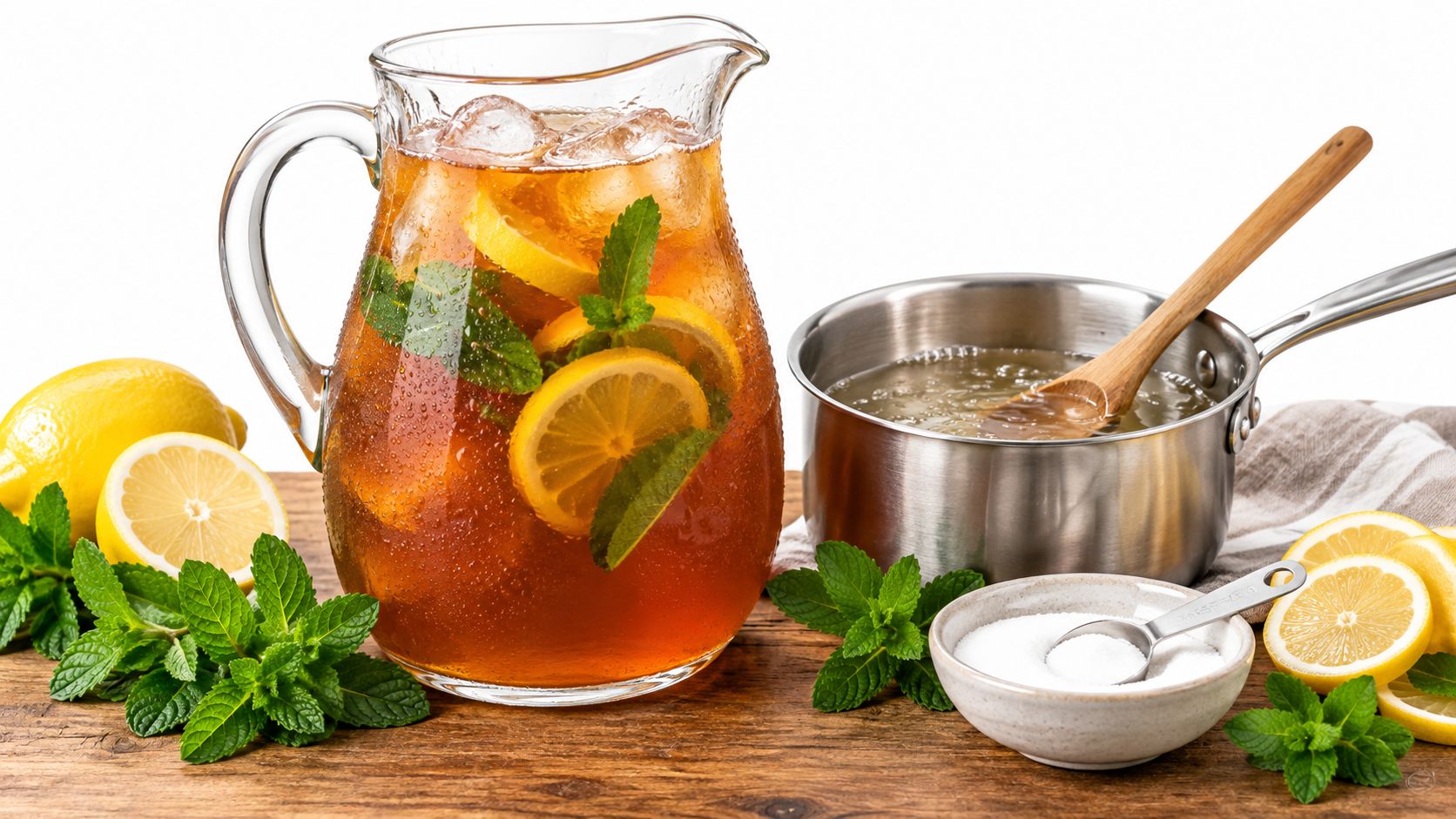
You've got a glass of iced tea that tastes fine for the first few sips, then turns rough at the bottom because the sugar never fully dissolved. That's the moment many people stop trusting the pitcher and start looking for a better way to sweeten cold tea. Simple syrup for iced tea fixes that problem by sweetening the whole glass evenly, from the first sip to the last.
Table of Contents
- Why Simple Syrup Beats Granulated Sugar
- How to Make Standard 1-1 Simple Syrup
- Choosing Between Light and Rich Syrup Ratios
- Infusing Flavor Into Your Tea Syrup
- Storage Guidelines and Shelf Life Secrets
- Troubleshooting Common Syrup Issues
Why Simple Syrup Beats Granulated Sugar
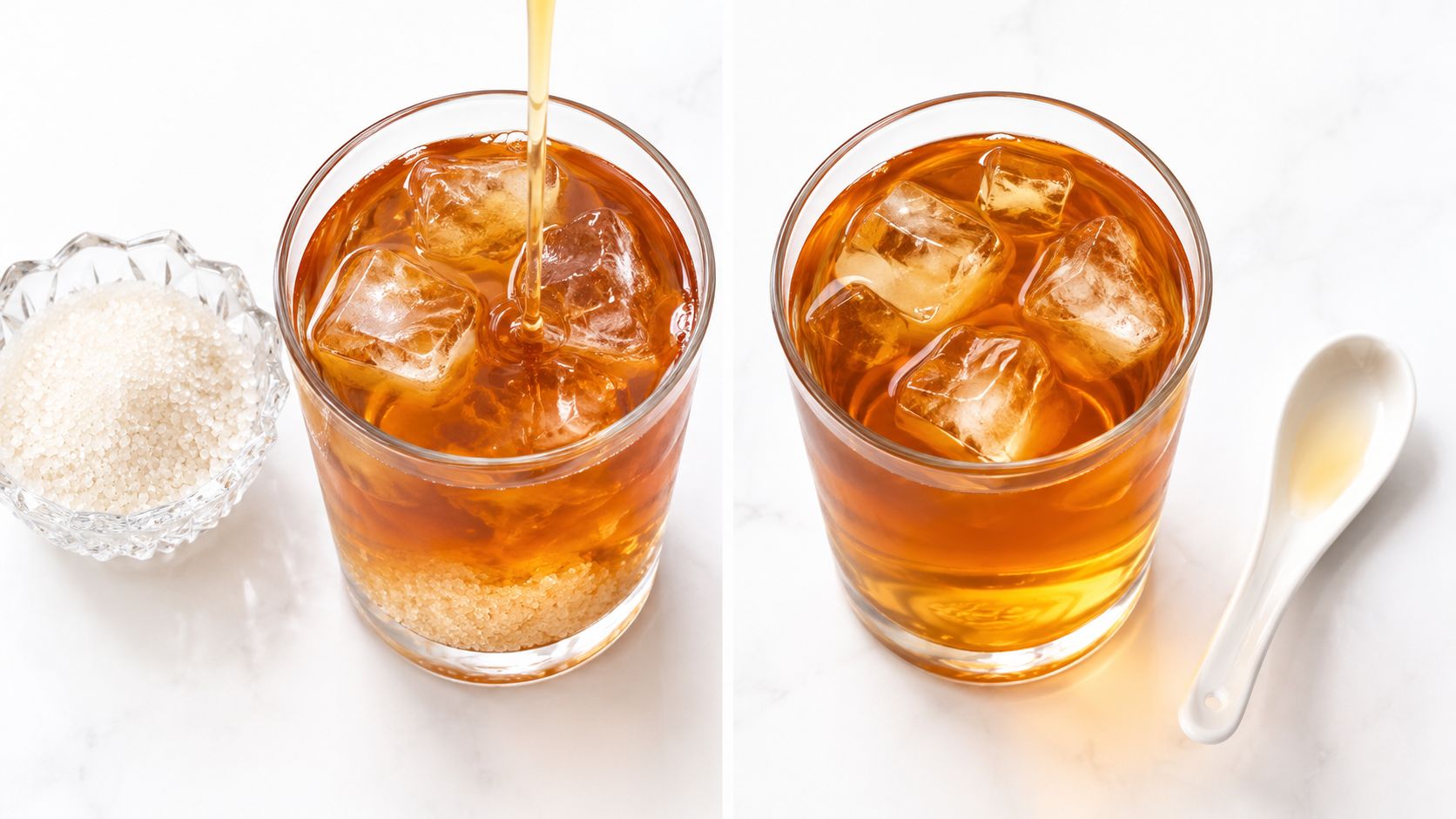
The gritty layer at the bottom of a cold glass is the whole reason I keep syrup on hand. Granulated sugar behaves well in hot tea, but once the liquid cools, the crystals can hang around and settle where you least want them, especially in a glass already full of ice. A pre-dissolved sweetener changes that completely, because the sweetness is already suspended in liquid form and mixes in fast.
What changes in the glass
The practical difference shows up immediately. Dry sugar can leave you stirring, tasting, and still finding crystals at the bottom, while syrup distributes sweetness much more consistently in tea that's already cool, because the sugar has already been dissolved before it ever meets the ice according to practical guidance on syrup integration. That consistency matters even more when you pour a whole pitcher at once, because every glass should taste the same.
This isn't a new trick. Sweetened tea has a long history of moving from dry sugar toward liquid sweetening as tea service shifted into colder, larger-scale serving. Early printed sweet tea recipes used granulated sugar, and later practice moved toward syrup because it dissolves more reliably in hot tea before chilling, a pattern that fits the way iced tea became popularized from the 1870s onward and then pushed into the mainstream at the 1904 St. Louis World's Fair historical timeline iced tea's broader rise.
Practical rule: if the tea is already cold, syrup is the safer sweetener. Dry sugar is for hot liquids, not for a pitcher that's headed straight to the refrigerator.
If you also like cocktails, the same logic shows up in classic drinks that need sweetness to blend cleanly into a cold glass. A good example is this old fashioned cocktail with ROCKS, where liquid sweetness helps the drink come together without leftover grit.
How to Make Standard 1-1 Simple Syrup
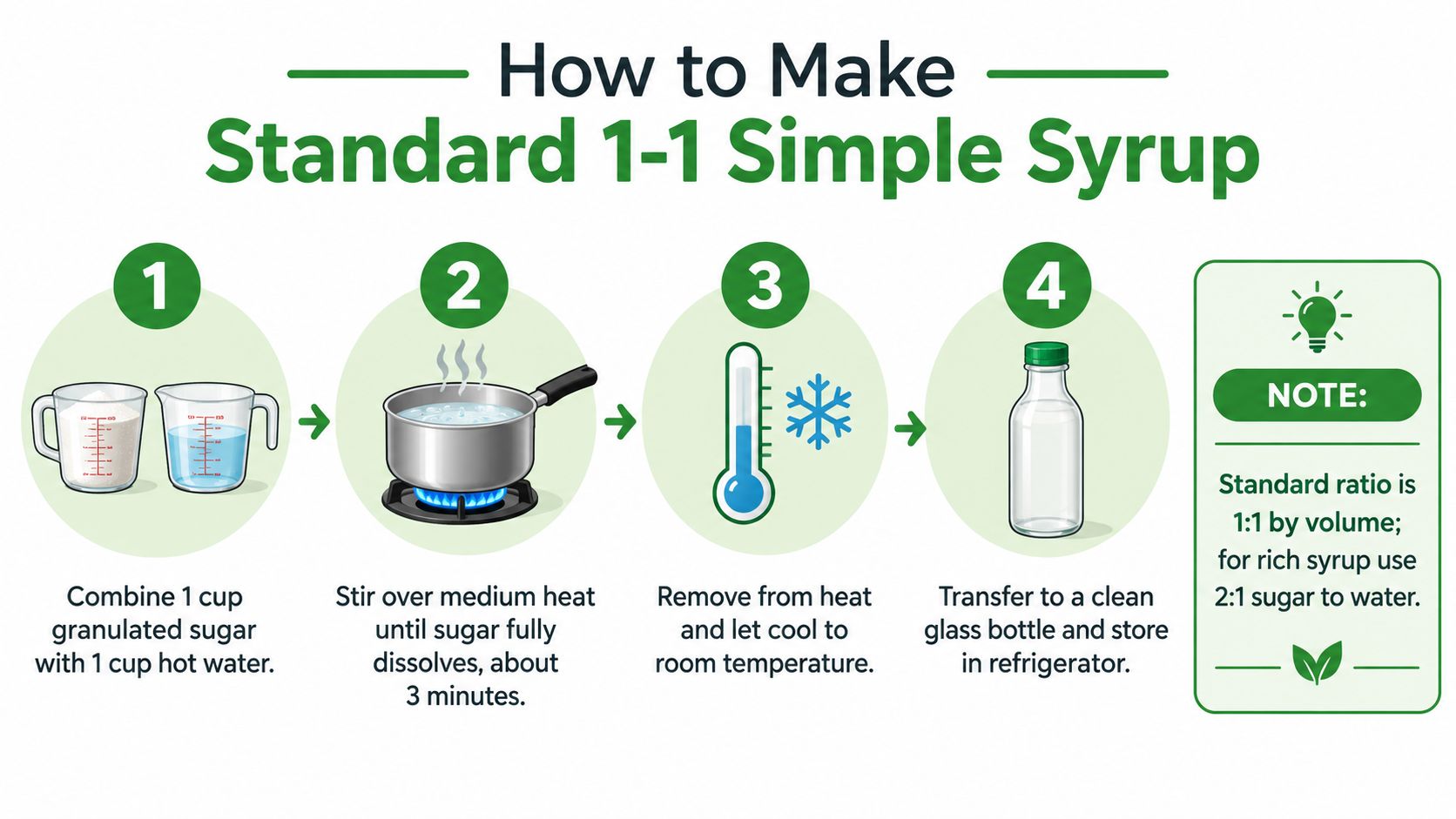
A pitcher of iced tea can taste uneven when granulated sugar settles at the bottom. Standard 1:1 simple syrup prevents that sediment by dissolving the sugar before it reaches the cold tea. Combine equal parts sugar and water, then warm them over medium heat until the liquid turns clear and no crystals remain. Clarity, rather than a boil or long simmer, signals that the syrup is ready.
The exact workflow I trust
For a practical home batch, measure one cup of sugar and one cup of water by volume. Stir over medium heat until the mixture becomes clear and the crystals disappear, usually within 2 to 5 minutes according to this standard workflow. Stop heating at that point. Extra cooking adds no benefit for iced tea and can push the syrup toward a cooked flavor or darker color.
Remove the pan from the heat and cool the syrup before transferring it to a bottle. Filling a container while the syrup is very hot can create condensation inside, adding moisture that works against storage quality. For comparison, vanilla rock sugar shows how sugar behaves when it remains solid instead of being dissolved into a liquid.
What the finished syrup should look like
Finished syrup should be clear, smooth, and free of visible crystals. Cloudiness or grains indicate that some sugar remains undissolved, which can later settle in the tea. A cooked smell or developing color means the syrup stayed on the heat too long for a neutral tea sweetener.
Good syrup looks boring. It should add sweetness without adding its own flavor, unless you plan to infuse it.
Choosing Between Light and Rich Syrup Ratios
The first choice after the standard syrup is simple, a 1:1 syrup or a 2:1 rich syrup. The lighter version is the usual default for balanced sweetness and easy mixing. The richer one gives you more sweetness per ounce and a thicker pour, which matters when you want the tea sweetened without adding much extra liquid.
When each ratio makes sense
A 1:1 syrup is the everyday choice. It stirs into tea quickly and works well for a pitcher you plan to serve right away. A 2:1 syrup becomes more attractive when you want less added volume and a denser sweetener.
If you remake syrup often, 1:1 keeps the routine simple. If you pour iced tea through the week and prefer fewer batches, rich syrup can fit that rhythm better. The trade-off is straightforward. The thicker syrup gives more sweetness in a smaller pour, but it can also feel more assertive if you overshoot.
Trade-offs that matter in the kitchen
Rich syrup is not a universal upgrade. Its higher concentration changes the mouthfeel, and that can be helpful in sweet tea or a cold-brew style pitcher, but it is less forgiving when you want a light hand. The standard mix is easier to adjust because you can add a little more without pushing the glass too far.
The refrigerator question matters too. A denser syrup often makes sense for slower tea routines, especially when you want to keep a batch ready without rebuilding it often. The lighter syrup fits better when you like iced tea bright, quick, and easy to fine-tune by taste. In practice, the better ratio is the one that matches how fast you drink the tea and how carefully you like to dose sweetness.
Infusing Flavor Into Your Tea Syrup
Plain syrup is useful, but it's also the cleanest blank canvas in the kitchen. Once you've made the base, you can steep herbs, spices, peels, or floral notes into it so the sweetness carries a flavor that fits the tea instead of flattening it. That's where iced tea starts feeling deliberate rather than merely sweet.
Flavor pairings that stay useful, not gimmicky
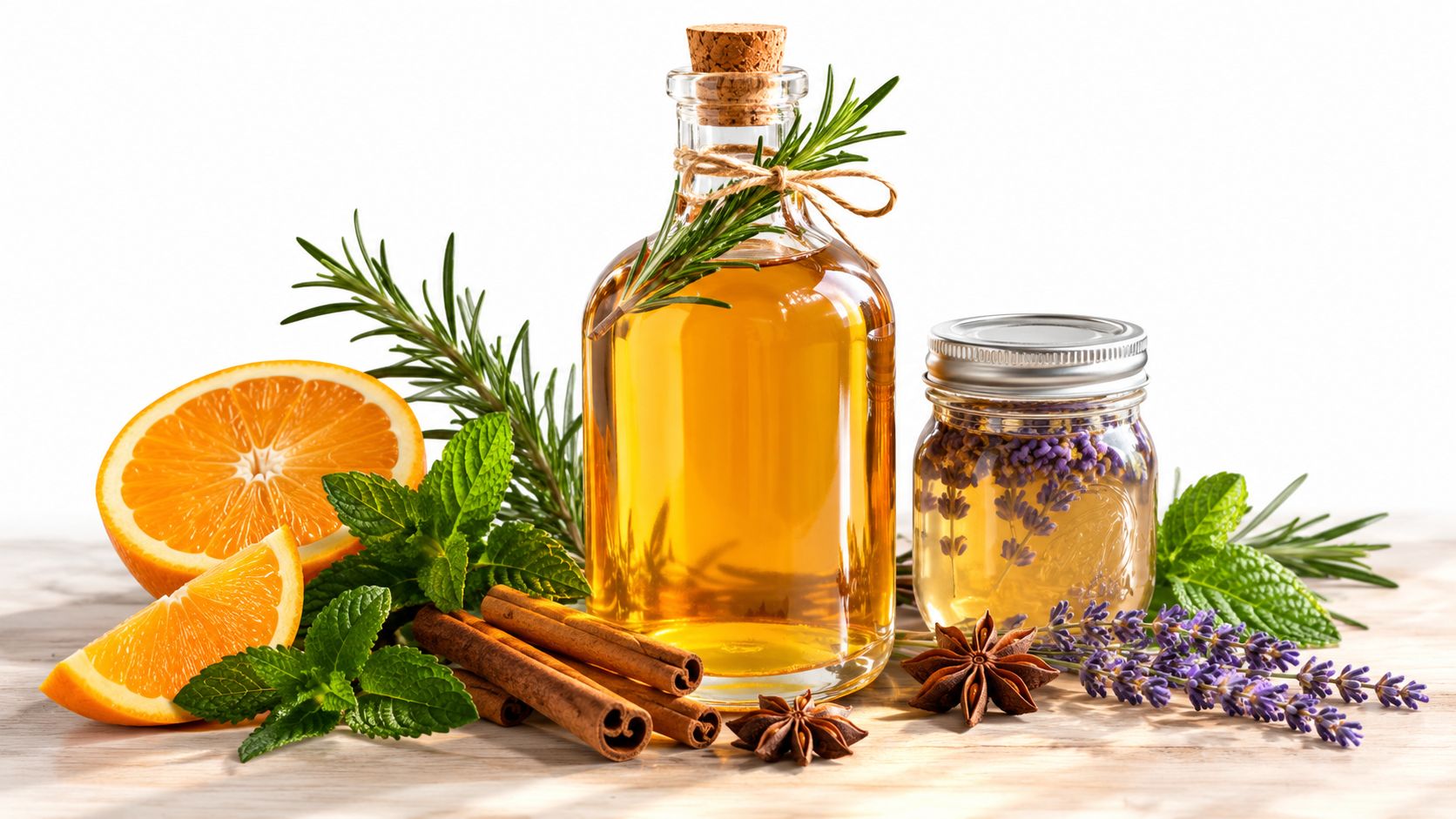
Citrus peel gives black tea a brighter edge. Mint works when the tea already has a clean finish, and ginger adds lift without making the glass taste dessert-like. Herbs and florals need a lighter hand, because their strength builds quickly once they're in hot syrup.
I like to keep the tea base in mind before I infuse anything. Strong black teas can handle rosemary or citrus peel, while gentler herbal blends are often better with softer notes like lavender or mint. If you want a place to browse herbal tea ideas, Loose Tea is a straightforward catalog category with a widest selection of different loose leaf tea.
How to infuse without muddying the syrup
Add the flavoring while the syrup is still warm, then let it sit long enough to pick up aroma without turning bitter. Remove solids before storing so the syrup stays clean and easy to pour. If you want a floral direction, lavender flowers fit especially well when you want the syrup to smell more layered than sweet.
Keep infusions restrained. The syrup should support the tea, not compete with it.
The best flavored syrups feel like an accent, not a separate drink. If you can still taste the tea clearly after the first sip, the infusion is doing its job.
Storage Guidelines and Shelf Life Secrets
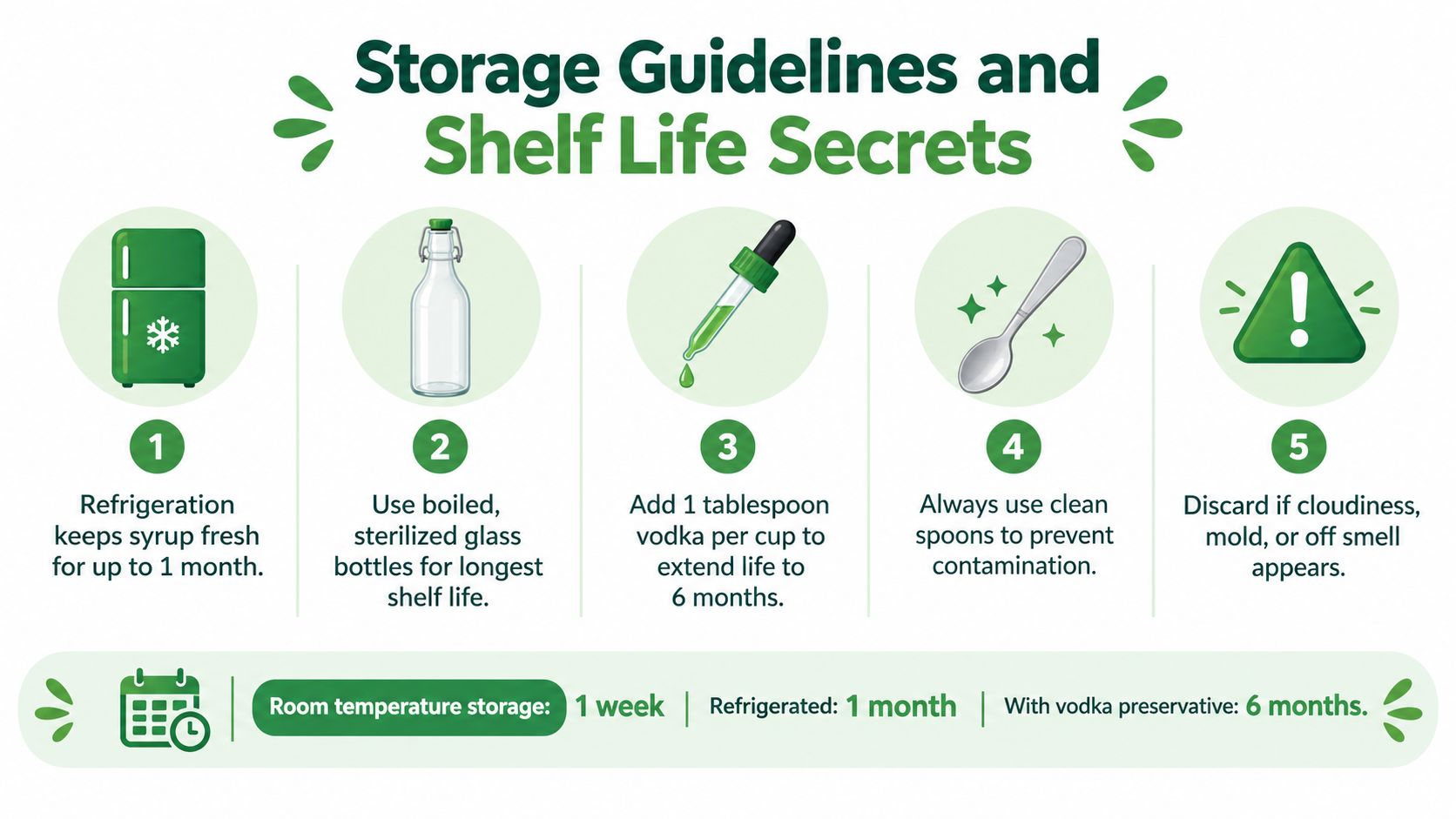
Storage is where simple syrup advice gets fuzzy, and fuzzy advice wastes pitchers. Plain 1:1 syrup is commonly described as lasting about 14 to 30 days refrigerated, while richer 2:1 syrup can last roughly 30 to 180 days depending on method, temperature, and preservatives storage timelines. Flavored syrups with fruit or herbs usually have a much shorter window, often 1 to 2 weeks or less, because the added ingredients bring more spoilage risk.
What actually shortens shelf life
The sugar is rarely the problem by itself. Contamination, extra water from ingredients, and cloudy residue are what shorten a batch fastest. That is why clean containers matter so much, and why flavored syrups age faster than plain syrup, especially when herbs or fruit sit in the jar.
Refrigeration is the baseline. Recent food-safety guidance also points toward sterilized containers, pasteurization, and careful handling for longer stability, which puts syrup storage closer to kitchen safety practice than casual pantry advice. For tea drinkers who care about preservation methods, tea preservation guidance pairs well with a batch-making routine.
My storage rule
I label every jar with the date, refrigerate it right away, and discard it the moment it smells off, turns cloudy in a way that was not there before, or shows any sign of mold. If I am making syrup for the week, plain 1:1 is usually enough. If I know I will stretch the batch longer, rich syrup gives me more time before the jar needs replacing.
That choice also solves the problem that plain granulated sugar can leave behind in iced tea, an undissolved layer at the bottom of the glass. A well-stored syrup pours in evenly and keeps the last sip as balanced as the first.
Troubleshooting Common Syrup Issues
Crystallization is the most common annoyance, and it usually means the sugar didn't fully dissolve before storage or the syrup got contaminated by a wet spoon. If you notice crystals forming at the bottom, rewarm the syrup gently and stir until it clears again. If it keeps happening, the container may not be as clean or dry as you thought.
Cloudiness is a different warning. A clear syrup should stay clear, so a change in appearance can point to spoilage, leftover solids, or a poorly strained flavored batch. When in doubt, throw it out instead of trying to rescue a jar that smells sour or fermented.
Fast fixes that prevent repeat failures
- Use warm liquid, not cold water: Sugar dissolves more reliably when the water starts hot enough to carry it.
- Stop stirring once it's clear: Overcooking doesn't improve sweetness, it just changes the syrup's character.
- Keep utensils dry and clean: Extra water or residue shortens storage life fast.
- Strain flavored batches carefully: Herb bits and fruit pieces are the fastest route to cloudy syrup.
- Store in a sealed glass jar: A tight lid and clean container give you the least trouble later.
If you're shopping for tea bases to test with a syrup routine, Matcha Green Tea is one option that also benefits from clean, even sweetness, especially when you want the drink to stay smooth instead of grainy.
A syrup that behaves well should disappear into the tea without making you think about it. If you're ready to build a better iced tea routine, visit Tealyra for loose tea, matcha, and tea accessories that make it easier to keep your kitchen stocked for the next pitcher.