 by Tealyra
Loose Leaf Tea for Beginners: Guide to Your First Cup
Explore loose leaf tea for beginners with our simple guide. Learn how to brew your first delicious cup, choose the right tea, and adjust flavors with ease.
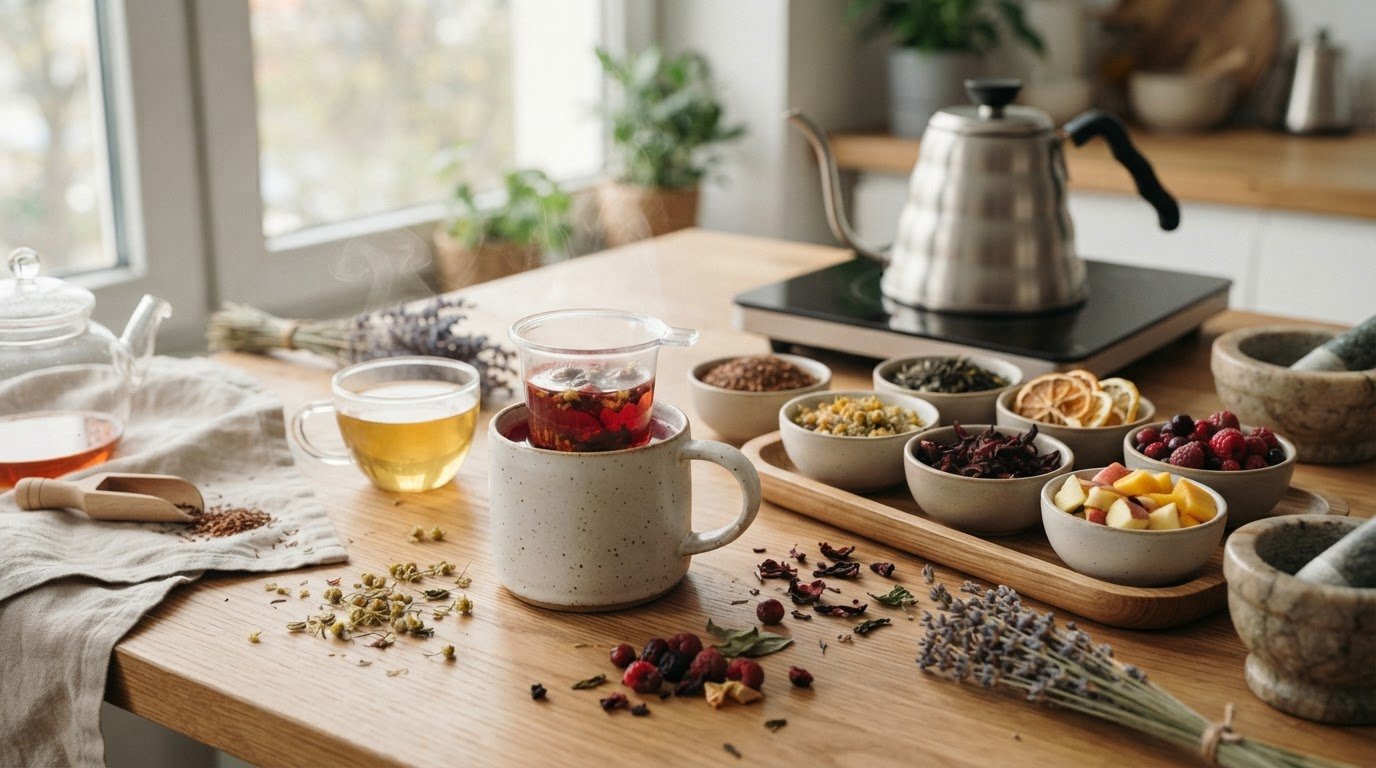
The best first cup of loose-leaf tea may come from the simplest setup, not a cabinet full of specialized teaware. A mug, hot water, and a basic infuser are enough to begin.
If you’re exploring loose leaf tea for beginners, the choices can feel like a lot: black, green, oolong, white, herbal, each with its own character. It’s natural to wonder how much leaf to use, how hot the water should be, or whether a few extra minutes will make the cup too strong. You don’t need to master every detail before taking that first sip.
This guide will help you choose a beginner-friendly tea by flavor, measure and brew it with straightforward equipment, and make small adjustments to suit your taste. We’ll begin with a simple starting point, then look at how different tea types call for different water temperatures and steeping times. If your first cup tastes faint or too bold, you’ll know what to change next. A little attention is all it takes to find a cup that feels like yours.
Key Takeaways
- Loose leaf tea for beginners is easier to explore when you choose by the flavors you already enjoy, rather than searching for one universally “best” tea.
- Tea is a format, not a test of expertise; a simple infuser or teapot can help, but special equipment isn’t essential.
- For a balanced first brew, follow the tea’s own directions for leaf quantity, water, and steeping time instead of relying on one rule for every tea.
- If a cup tastes weak, bitter, flat, or too intense, adjust one brewing variable at a time to discover what suits your palate.
- Notice the aroma, flavor, and strength of each cup, and let a familiar brew become a relaxed starting point for exploring more.
Table of Contents
What Is Loose Leaf Tea, and Why Is It Simple to Begin With?
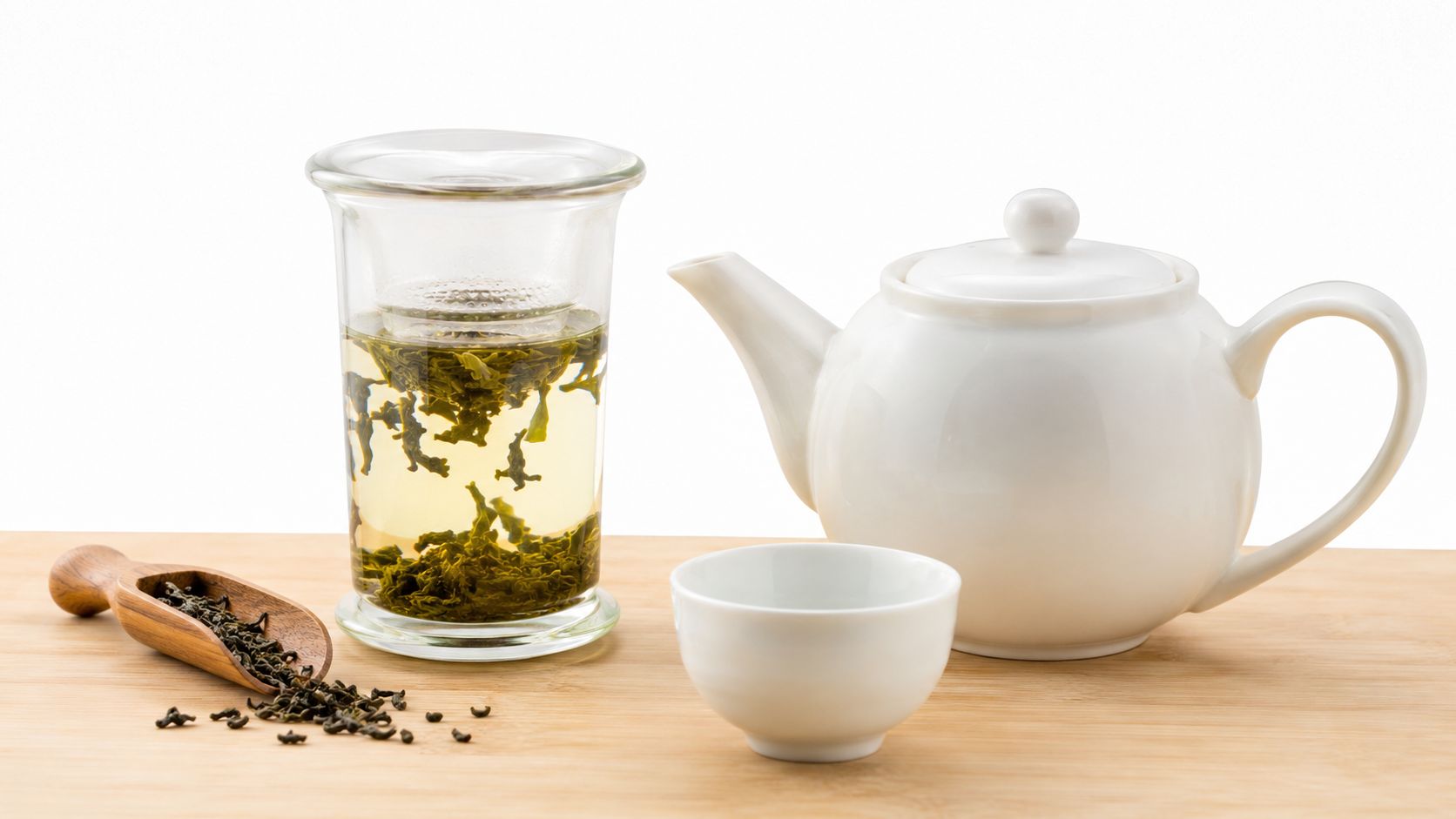
Loose leaf tea is a format, not a test of expertise. The leaves, herbs, or other ingredients are sold loose rather than portioned into individual tea bags, so you measure what you need and steep it in a cup, pot, or infuser. For loose leaf tea for beginners, the essential idea is simple: give the ingredients hot water, let them infuse, then separate them from the drink.
Leaf size, processing, and added ingredients all shape what you see, smell, and taste. Large leaves may unfurl into recognizable shapes; smaller pieces can brew differently, while flowers, fruit, and spices bring their own color and aroma. No special ritual is required to notice those details. Start with a tea that sounds appealing, and let curiosity do the rest.
A short visual introduction can make the loose-leaf format easier to picture:
How Is Loose Leaf Tea Different From Tea Bags?
The main difference is how the tea is portioned and brewed. With loose leaf, you measure leaves into an infuser, strainer, or teapot; a tea bag comes pre-portioned in its own sachet. Loose leaves may have room to expand and unfurl in a spacious infuser, though the experience depends on the tea and brewing vessel. A strainer or infuser simply keeps leaves out of the finished cup. Quality varies in both formats, so loose leaf isn’t automatically fresher or better. You can explore the loose tea selection to see the range of formats and styles.
Do All Loose Leaf Teas Come From the Same Plant?
True tea is made from the leaves of Camellia sinensis; black, green, white, oolong, and pu-erh are styles of this plant, shaped by processing and growing conditions. Rolling, oxidation, and drying help create their distinct appearances and flavors. For an accessible overview of how tea is processed, see the linked reference. Herbal infusions, by contrast, are made from other plants. Chamomile and rooibos are familiar examples, not Camellia sinensis teas. Both kinds can be brewed loose, so the term describes the format, not the plant.
Which Loose Leaf Tea Should a Beginner Try First?
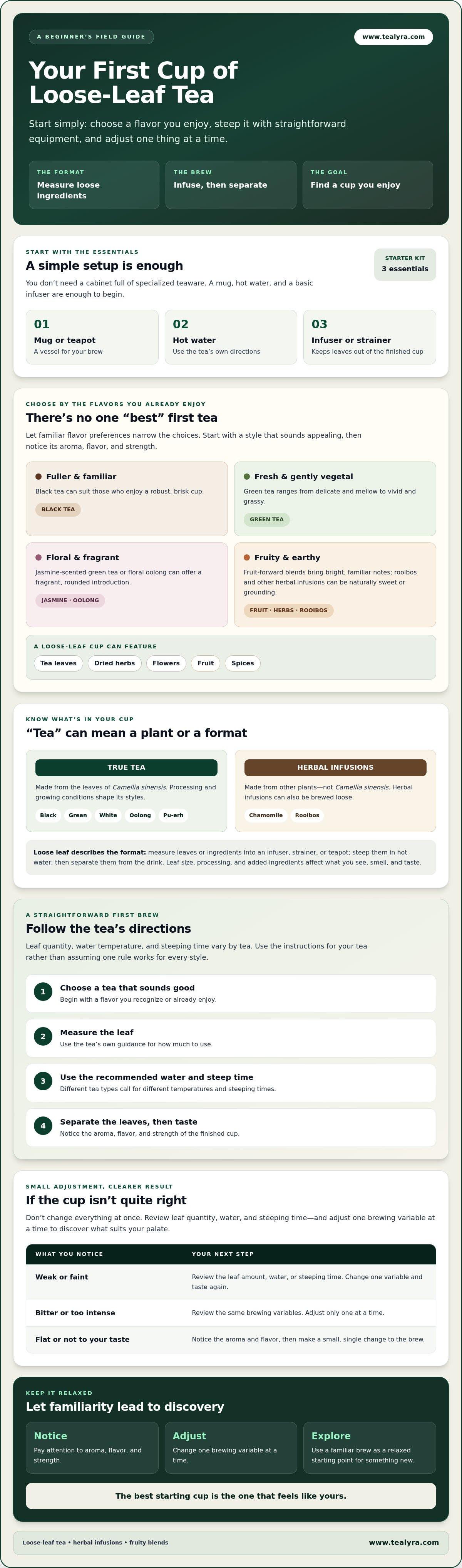
There isn’t one “best tea for beginners.” The right first cup is the one that feels familiar enough to enjoy, while still offering something new to notice. Think of flavors you already like: a brisk, full-bodied drink, a soft floral aroma, or a mellow, earthy finish. Let preference narrow the choices before tea names and categories start to blur together.
Let your preferred flavor guide your first loose leaf tea choice, whether that means a brisk black tea, a gentle green, a floral blend, or an earthy herbal infusion.
Which Tea Types Suit Different Flavor Preferences?
Use this quick guide to choose one style to explore:
- Fuller and familiar: Black tea can suit those who enjoy a robust, brisk cup. Browse the range of black tea varieties if that sounds inviting.
- Fresh or gently vegetal: Green tea has a wide range of character, from delicate and mellow to more vivid and grassy. Its style and preparation influence the cup.
- Floral: Jasmine-scented green tea or a floral oolong can offer a fragrant, rounded introduction.
- Fruity or earthy: Fruit-forward blends bring bright, familiar notes, while rooibos and other herbal infusions can offer a naturally sweet or grounding character.
Caffeine varies by tea type and product, so check the package details if it matters to your choice. Herbal infusions differ in their ingredients, too; don’t assume every blend has the same caffeine profile. For a measured overview of tea and its possible health benefits, Harvard T.H. Chan School of Public Health is a useful reference, though flavor preference is reason enough to choose a tea.
How Can You Choose Without Buying Several Teas at Once?
Begin with one tea that matches a taste you already enjoy. If you like a fragrant cup, try a floral style; if you lean toward deeper flavors, choose black tea; if you prefer fruit, look for a fruit-forward blend. Brew it according to its directions, then decide whether you’d like more brightness, softness, or depth next time. This gives your palate a clear starting point without crowding your cupboard with choices.
You can browse loose leaf tea selections by broad style when you’re ready to compare options. Take your time: a first tea doesn’t need to become a favorite forever. It only needs to make the next cup easier to choose. Explore the tea range from Tealyra Store - The Best Galaxy of Teas when you’d like to see more styles in one place.
How Do You Brew Loose Leaf Tea for the First Time?
A first brew is a simple sequence: choose your tea, read its directions, measure the leaves and water, steep, strain, then taste. The package is your best starting guide because leaf quantity, water temperature, and steeping time vary by tea. There’s no single setting that suits every cup.
What Equipment Do You Need to Brew Loose Leaf Tea?
A mug or teapot and a way to catch the leaves are enough to begin. A basket infuser sits inside a cup and lifts out easily; a teapot strainer holds leaves as you pour; a French press can steep tea in its carafe before the plunger separates the leaves. None is essential if you already have a suitable strainer. Where possible, choose an infuser with room for leaves to expand rather than packing them tightly. A simple setup is often all loose leaf tea for beginners needs.
How Much Tea, Water, and Steeping Time Should You Use?
Use the tea supplier’s instructions for the starting quantity, water temperature, and steeping time. Tea styles and leaf shapes differ, so avoid treating a familiar scoop or timer setting as a universal rule. Measure the water as well as the leaves: changing the water volume while keeping the same amount of tea can alter the cup’s strength.
For your first try, follow these steps:
- 1. Select a tea. Choose one you’re curious to taste.
- 2. Check its directions. Find the recommended leaf amount, water temperature, and steep time on the package.
- 3. Measure. Use the suggested amount of leaves for the volume of water you plan to brew.
- 4. Steep. Set a timer for the recommended time and let the leaves infuse.
- 5. Strain. Remove the infuser or pour through a strainer so the leaves don’t keep steeping in the cup.
- 6. Taste. Notice the aroma, strength, and finish before deciding what you’d change next time.
Taste near the end of the suggested steep, especially if you’re unsure how strong you like the tea. If it’s too light or too intense, adjust the leaf amount or steeping time gradually on your next brew, changing one variable at a time. Small changes make it easier to understand what shaped the flavor.
You can begin with a kitchen strainer and the cup you already own; an infuser or teapot is simply a helpful option if you’d like a more contained brew. Explore tea infusers and teaware if you’re ready to consider a dedicated brewing tool.
How Can You Fix a Loose Leaf Tea That Tastes Too Strong or Weak?
An imperfect cup is useful feedback. A brew that tastes faint, sharp, or heavier than you like doesn’t mean you chose the wrong tea; it may simply need a small adjustment. For loose leaf tea for beginners, the clearest approach is to compare the result with the tea’s directions, then change one brewing variable at a time. That way, you can tell what made the difference.
Why Can Loose Leaf Tea Taste Bitter?
Start by checking the steeping time and water temperature against the tea’s own recommendations. If the leaves steeped longer or in hotter water than directed, the flavor may become sharper or more astringent. Tea types respond differently, so don’t apply the same fix to every leaf. Next time, follow the package guidance closely; if bitterness persists, shorten the steep slightly or adjust the water conditions modestly, while keeping the other variables steady.
How Do You Make a Cup Taste Stronger or More Delicate?
Use the flavor as a clue, then make one gentle change to the next brew. Keep a brief note of what you altered and whether the cup improved. This simple record can help you repeat a balance you enjoy instead of guessing from cup to cup.
- Weak or watery: Try a little more leaf or a slightly longer steep, not both at once.
- Bitter or drying: Check whether the water was hotter or the steep longer than the tea directions recommend; adjust one of those conditions next time.
- Flat or muted: Confirm that you followed the recommended temperature and steep time, then try a small change to one variable. Also check that the tea has been stored away from moisture and strong odors.
- Overly intense: Use a little less leaf or shorten the steep on your next cup. Keep the water volume and other conditions consistent so you can judge the change.
These are starting points, not fixed rules. The tea type and supplier’s directions should guide each adjustment, since a method that softens one tea may not suit another. For more reliable results over time, keep tea sealed and protect it from moisture, strong odors, heat, and light.
A few tasting notes are enough: “light and floral,” “too sharp,” or “just right.” Record the leaf amount, water conditions, and steep length alongside your impression. Then you can recreate a pleasing cup or make a thoughtful adjustment. Explore loose leaf teas and infusers as you refine your preferred brew.
How Can You Build a Relaxed Loose Leaf Tea Ritual?
A tea ritual doesn’t need elaborate tools or a schedule. Begin by brewing one familiar tea the same way for a few cups. Once you recognize its aroma and balance, try a neighboring style or adjust one part of the brew. Keeping one element steady makes new flavors easier to notice and helps loose leaf tea for beginners feel like an enjoyable habit, not another skill to perfect.
As you sip, make a few simple notes: “floral aroma,” “soft body,” “brisk finish,” or “a little too strong.” Everyday descriptions are enough. They help you remember what you enjoyed and give you a useful reference when you try something new.
How Can You Explore New Tea Styles at Your Own Pace?
Use a favorite flavor as a bridge. If you enjoy a fragrant cup, explore another floral tea; if you prefer a fresh, vegetal taste, compare green tea styles rather than choosing several unrelated teas at once. For example, a drinker who likes light, fresh flavors might explore Chinese green tea styles. Brew the new tea according to its own directions, then notice what feels familiar and what differs in aroma, flavor, and body.
There’s no need to build a large collection. One new tea alongside a familiar favorite gives you a gentle point of comparison, and you can decide later whether you’d like to explore further.
What Makes a Beginner’s Tea Routine Easy to Sustain?
Keep the essentials together: your tea, a cup or teapot, and a simple strainer or infuser. If you need practical tools to streamline your brewing space, retailers like Happy Home Shopping Guyana carry a range of useful kitchen gadgets. A small, ready-to-use setup removes extra steps without making the ritual feel rigid. Follow the product-specific brewing directions as your baseline, then make personal adjustments gradually as you learn how you like each tea.
Some days you may pause to notice a sweet aroma or a lingering finish; other days, a quiet, familiar cup is enough. The ritual can be as attentive or uncomplicated as the moment allows.
When you feel ready to explore beyond your first favorite, take a leisurely look at the loose leaf teas from Tealyra Store - The Best Galaxy of Teas and choose a style that catches your curiosity. There’s no rush. Each cup offers another small opportunity to discover what you enjoy.
Let Your Next Cup Be a Simple Beginning
Loose leaf tea for beginners doesn’t require expert knowledge or elaborate equipment. Start with a tea that suits your taste, follow its brewing directions, and use each cup to learn what you enjoy. If the flavor feels too strong or too delicate, adjust one detail at a time and try again.
A familiar brew can become a calming daily pause, while a few simple tasting notes may point you toward a new style when you’re ready. Tealyra Store - The Best Galaxy of Teas offers hundreds of tea varieties sourced directly from growers, along with loose-leaf teas and helpful teaware or infusers for exploring at your own pace.
Explore loose leaf teas at your own pace, and let curiosity guide your next cup. There’s no perfect way to begin, just one small, enjoyable discovery at a time.
Frequently Asked Questions
How much loose leaf tea should I use per cup?
For loose leaf tea for beginners, a common starting point is about one teaspoon per 8-ounce cup, but leaf size and tea type can change the amount you need. Check the package directions first and measure for your actual water volume. If the cup tastes too light or strong, adjust the leaf quantity slightly next time, keeping the other brewing conditions steady.
What is the easiest way to brew loose leaf tea without a teapot?
Steep the leaves directly in a mug, then pour the tea through a small kitchen strainer into another cup. A basket infuser that fits inside your mug is another simple option: add the leaves, pour in water, and lift the infuser out when steeping is complete. Use the tea’s directions for quantity and timing, and strain the leaves promptly to prevent continued steeping.
What temperature should water be for loose leaf tea?
The right temperature depends on the tea, so use its package directions whenever available. As general guidance, black and herbal teas often use near-boiling water; green tea is commonly brewed with cooler water. Oolong and white teas fall between, with their own recommended ranges. If you don’t have a temperature-controlled kettle, allow boiling water to cool before brewing teas that call for a lower temperature.
How long should loose leaf tea steep?
Follow the steeping time listed for your specific tea, since one timing won’t suit every leaf or blend. As a broad guide, black, oolong, and white teas often steep for about three to five minutes; green tea commonly steeps for two to three minutes, and herbal infusions for four to five minutes or longer. Taste near the end of the recommended time, then strain when the flavor suits you.
Can you steep loose leaf tea more than once?
Some loose leaf teas can be steeped again, but the number of satisfying infusions depends on the tea, leaf condition, and brewing directions. After the first infusion, taste a second one to see whether it still has flavor you enjoy. Later steeps may be lighter or reveal different notes. Follow the supplier’s guidance, and don’t assume every tea or blend is intended for repeated brewing.
Is loose leaf tea stronger than tea bags?
Not automatically. A cup’s strength depends on factors such as the tea itself, the amount used, water temperature, and steeping time. Loose leaf lets you adjust the quantity and steep to your preference, while tea bags are pre-portioned. Either format can make a bold or delicate cup. Compare teas using their recommended brewing directions, then change one variable if you’d like a different strength.
How should beginners store loose leaf tea?
Keep loose leaf tea in a clean, tightly closed container in a cool, dry place, away from direct light, heat, moisture, and strong odors. These conditions help protect its aroma and flavor. Close the package promptly after measuring, and keep it away from fragrant spices or coffee that could affect its scent. Check the supplier’s storage advice for any tea-specific recommendations.
Article by
Tealyra
The Best Galaxy Of Teas