 by Tealyra
How to Brew Green Tea: Temperature, Time, and Taste
Learn how to brew green tea without bitterness. Master water temperature, steeping time, and leaf ratios to craft a perfectly smooth, flavorful cup every time.
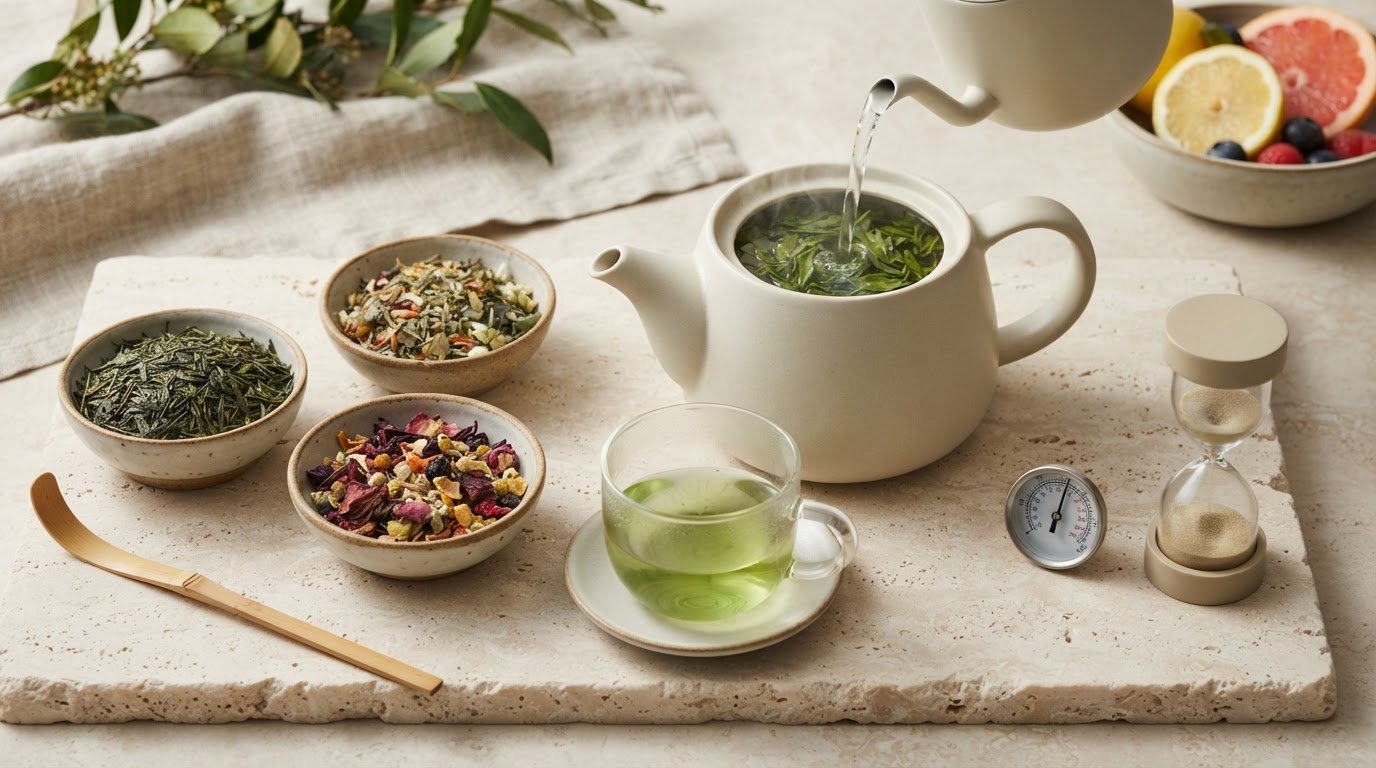
Boiling water can make a good green tea taste harsh instead of bringing out its best. If you’ve wondered how to brew green tea without bitterness, or why the same method gives you a weak cup one day and a strong one the next, the answer isn’t a single perfect recipe. It’s a few small adjustments to water temperature, leaf quantity, and steeping time.
It’s natural to look for one temperature and one timer setting. But green teas vary: a delicate Japanese tea and a fuller Chinese style may reveal their sweetness, freshness, and texture under different conditions. Once you understand how water temperature, leaf quantity, and time work together, brewing becomes easier to repeat and more rewarding to fine-tune.
This guide offers a simple starting method, explains how to adjust it when a cup tastes bitter or faint, and shows how to adapt your approach to different green tea styles. You don’t need elaborate equipment, just good leaves, fresh water, and a little attention to the aroma and taste as the tea steeps.
Key Takeaways
- Learn how to brew green tea with a flexible method you can fine-tune to the leaves in your cup.
- Adjust temperature and steeping time to suit Japanese, Chinese, and flavored green tea styles.
- Use fresh-tasting water and measure loose leaves consistently for a more balanced infusion.
- When a cup tastes bitter, weak, dull, or overly astringent, change one brewing variable at a time.
- Build a repeatable ritual by following the tea’s own brewing guidance, then refining the taste to your preference.
Table of Contents
How to Brew Green Tea for a Clear, Balanced Cup
A pleasant cup doesn’t depend on one exact recipe. Think of how to brew green tea as balancing four elements: leaf quantity, water temperature, steeping time, and water quality. Start with a flexible baseline, then adjust one detail at a time until the tea tastes clear, gently sweet, and satisfying to you.
Green tea includes leaves shaped and processed in different ways, so follow the tea’s package instructions when available. For a broader look at tea history and variety, see Green tea.
For a visual introduction to brewing, watch this guide:
A simple starting recipe for loose-leaf green tea
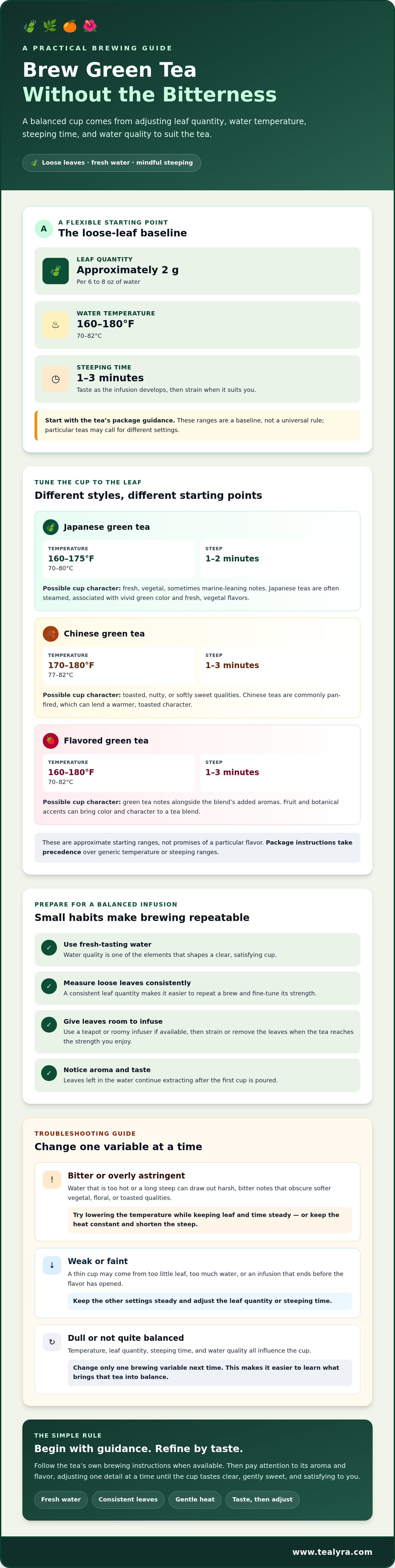
Use this as a baseline, not a universal rule. Start with approximately 2 grams of loose tea per 6 to 8 ounces of water, water at 160°F to 180°F (70°C to 82°C), and a steep of 1 to 3 minutes. These ranges give you room to suit the leaf. Check its package first, since particular teas may call for different settings.
Steep in a teapot or roomy infuser if you have one. Taste as the infusion develops, then strain or remove the leaves when it reaches the strength you enjoy. Leaving leaves in the water continues extraction after you pour your first cup.
Why green tea can taste bitter or flat
Water that is too hot and a long steep can draw out astringent, bitter notes that obscure softer vegetal, floral, or toasted qualities. A thin cup may have the opposite problem: too little leaf, too much water, or an infusion that ends before the flavor has opened.
Too much heat or time can make green tea’s delicate brightness harsh; too little leaf or steeping can leave it faint. If the flavor misses the mark, change only one variable next time. Keep the leaf and time steady while lowering the water temperature, or keep the heat constant and add a little more leaf. Making one adjustment at a time helps you discover what brings each tea into balance. Try the same approach with loose-leaf green tea styles from Tealyra, using each tea’s guidance as your starting point.
Choose Green Tea Water Temperature and Steeping Time by Leaf Style
Temperature and time are useful starting points, not fixed rules for every green tea. Processing, leaf shape, and added ingredients all influence how quickly a tea releases its aroma and flavor. The table offers broad guide ranges for how to brew green tea by style. Use them to orient your first cup, then taste and adjust.
| Broad style | Starting temperature | Starting steep | What you may notice |
|---|---|---|---|
| Japanese | 160-175°F (70-80°C) | 1-2 minutes | Fresh, vegetal, sometimes marine-leaning notes |
| Chinese | 170-180°F (77-82°C) | 1-3 minutes | Toasted, nutty, or softly sweet qualities |
| Flavored | 160-180°F (70-82°C) | 1-3 minutes | Green tea notes alongside the blend’s added aromas |
These are approximate starting ranges, not promises of a particular flavor. The tea’s package instructions should take precedence over any generic temperature or steeping range. For background on how tea processing shapes different styles, the UBC Tea Course offers useful context.
How Japanese and Chinese green teas may differ in the cup
Japanese teas are often steamed, a process associated with vivid green color and fresh, vegetal flavors. Some cups can suggest sea breeze or tender greens. Chinese teas are commonly pan-fired, which can lend a warmer, toasted character, with nutty or gently sweet notes. These are broad tendencies, not guarantees: cultivar, processing choices, and leaf shape also matter. Explore Japanese green tea styles from Tealyra to notice how the leaf’s character changes from one tea to another.
Leaf shape can affect extraction, too. Broad, rolled, or tightly shaped leaves may unfurl at different rates, so a first taste can tell you whether to extend the steep slightly. The dry leaf’s appearance and the aroma as it opens offer clues, but the cup is the surest guide.
What to adjust for flavored green tea
Jasmine, fruit, and other additions can change the aroma and how strong the tea seems, even when the green tea base is brewed similarly. Begin with the package directions, then adjust one element at a time. For instance, steep a little longer if the tea tastes faint. If you’re curious about blends, explore flavored green tea from Tealyra alongside unflavored styles.
A roomy infuser or teapot can help leaves open freely, but neither is essential. As you explore green tea styles, compare how different leaves smell and taste using the same brewing method.
Prepare Green Tea: Water, Leaf Quantity, and Brewing Equipment
A consistent setup makes each cup easier to understand and refine. Fresh, clean-tasting water lets the tea’s character come through, while a steady leaf measure helps you repeat a brew you enjoyed. You don’t need specialized equipment to learn how to brew green tea; a cup, a way to strain the leaves, and a few simple habits are enough.
Start with fresh, cold water. Filtered or spring water can provide a clean-tasting base, while hard tap water may dull the infusion. Distilled water is not usually the best choice for flavor, either. If the tea tastes muted despite careful steeping, consider whether the water is affecting its clarity.
How much green tea and water should you use?
As an adjustable starting point, measure approximately 2 grams of loose-leaf tea per 6 to 8 ounces of water. A teaspoon may be a convenient rough equivalent, but spoon volume is less reliable than weight. Large, airy leaves take up more room than small, dense leaves, even when the amount of tea is similar. A small kitchen scale offers the most consistent measure, though it isn’t essential.
Once you find a cup you love, write down the leaf quantity, water amount, temperature, and steeping time. That note gives you a dependable reference for brewing the same tea again, with room to adjust to taste.
Which teapot or infuser works well for green tea?
Choose a vessel that gives the leaves room to unfurl and lets water move around them. A basket-style infuser or a teapot with a removable strainer is practical for loose-leaf tea; a cramped tea ball can restrict the leaves’ movement. No special vessel is required, though. If you already have a way to steep and separate the leaves, you can begin with that.
A thermometer can make water temperature easier to repeat, but you can brew without one. If your kettle doesn’t offer temperature settings, bring fresh water to a boil, then let it stand for about 2 to 3 minutes before pouring. Treat this as an approximation, since cooling depends on the water and surroundings. Follow the tea’s package directions when available.
For brewing tools, Tealyra offers teaware and infusers. Choose a setup that makes it easy to measure, steep, and remove the leaves when the flavor feels balanced. You can also explore tea and teaware from Tealyra as you shape a simple brewing ritual.
Fix Common Green Tea Brewing Problems One Adjustment at a Time
A disappointing cup is useful information. Bitterness, thinness, muted aroma, and puckering astringency can each point to a different brewing variable, but no single adjustment is guaranteed to solve every tea. Keep the leaf and water consistent while testing one change, then taste again. This makes it easier to learn how to brew green tea to suit the leaves you have.
- Bitter: Try slightly cooler water or a shorter infusion, changing just one of the two. Keep the same amount of tea so you can tell which adjustment helps. Also check that you removed or strained the leaves when the steep was finished. Extraction continues as long as they sit in the water.
- Weak: Check that you used enough leaf for the amount of water, and that the infusion lasted long enough for the tea to open. If those details are steady, try a little more leaf or a slightly longer steep, but not both at once.
- Dull or muted: Consider more than the timer. Water with a strong taste can mask a tea’s finer aromas, and leaves exposed to air, light, heat, or moisture may lose some fragrance. Try fresh-tasting water and check how the tea has been stored before changing your whole method.
- Overly astringent: If the cup feels drying or sharply puckering, shorten the infusion or lower the temperature slightly. If you’ve already adjusted heat and time, review the leaf quantity and package instructions. A particular tea may need a gentler approach.
Freshness is worth considering, but age alone doesn’t explain every flat or harsh cup. Storage conditions, water, leaf size, and how long the leaves remain in contact with the infusion can all affect the result. Treat each brew as a small comparison: hold everything steady, change one variable, and note whether the aroma and finish become more balanced.
A simple note beside your tea can help: record the leaf amount, water volume, temperature, steeping time, and what you noticed in the cup. If the next infusion tastes better, you’ll know what contributed. If it doesn’t, return to your previous method and test another adjustment. Patient tasting is more reliable than changing several things at once.
As you refine your approach, explore Tealyra’s green tea selection and compare how different leaves respond to your brewing method.
Make Green Tea Brewing a Repeatable, Enjoyable Ritual
A balanced cup comes from a simple rhythm, repeated with care and adjusted to the tea in front of you. The aim isn’t to find one perfect number for every leaf, but to create a reliable starting point, taste attentively, and remember what you enjoy. With that approach, how to brew green tea becomes less a puzzle and more a small daily ritual.
A five-step green tea brewing routine
- Choose and read. Select your tea and check its package for suggested water temperature and steeping time. Use those directions as your first guide.
- Measure. Add a consistent amount of leaf and water. A scale is useful for repeatability, but a familiar spoon measure can work as a practical starting point.
- Heat. Bring the water to the tea’s recommended temperature. If you don’t have a temperature-controlled kettle, use a thermometer or allow boiled water to cool before pouring. Exact cooling time can vary.
- Steep and separate. Start a timer, then remove or strain the leaves when the infusion reaches the recommended time. This keeps the brew from continuing to strengthen while you sip.
- Taste and note. Notice the aroma, first impression, and finish. If the cup is too faint or too sharp, record one adjustment to try next time rather than changing several things at once.
Small notes can make the routine genuinely repeatable. Jot down the leaf and water amounts, temperature, steeping time, and what you’d like to change. Follow the tea’s own instructions first, then refine the cup to your preference. A slightly different result isn’t a failure; it’s a cue to taste, learn, and adjust.
Explore green tea styles at your own pace
Once you’re familiar with your method, try comparing Japanese, Chinese, and flavored green teas. One may taste fresh and vegetal, another gently toasted, while a flavored blend brings its own aromatic notes to the cup. Keep your brewing routine steady at first so you can notice how each tea’s character differs before making small, style-specific adjustments.
There’s no need to master every variable at once. Choose a tea that appeals to you, brew it with attention, and let your palate guide the next cup. If you’d like to continue exploring, browse Tealyra’s green tea styles and discover which leaves invite you back for another steep.
Let Each Cup Teach You What You Enjoy
A balanced cup begins with a flexible method, not a rigid formula. Use the tea’s package directions as your starting point, then pay attention to how water temperature, leaf quantity, and steeping time shape its flavor. If the brew tastes bitter, thin, or muted, adjust one variable at a time and taste again.
Different green teas reward different approaches. Japanese leaves may offer fresh, vegetal notes, while Chinese styles can lean toasted or softly sweet. Flavored teas bring their own aromatic layers. A simple teapot or infuser can help, but careful tasting matters more than specialized equipment.
With a little practice, you’ll discover how to brew green tea in a way that feels repeatable and personal. Let each infusion be an invitation to slow down, notice the aroma, and enjoy the character of the leaves. Explore Tealyra’s green tea styles and brewing accessories at Tealyra to find leaves and tools for your next cup.
Frequently Asked Questions
What is the best temperature to brew green tea?
For many green teas, a useful starting range is 160°F to 180°F (70°C to 82°C), with 175°F (80°C) a practical middle point. Japanese teas often suit the cooler end, while some Chinese styles work well toward the warmer end. Delicate teas may need cooler water still. To learn how to brew green tea to suit a particular leaf, follow its package directions first, then fine-tune by taste.
How long should green tea steep?
Most green tea can start with a steep of 1 to 3 minutes, though the best time depends on the leaf and water temperature. Check the tea’s instructions, then taste near the shorter end of the suggested range. If you’d like a fuller cup, extend the steep a little on the next brew. Remove or strain the leaves when the flavor reaches the strength you enjoy, since they’ll continue to infuse in the water.
Why does my green tea taste bitter?
Green tea often tastes bitter when the water is too hot or the leaves steep too long. Try lowering the temperature slightly or shortening the infusion, changing just one variable so you can tell what helps. Also check that you remove the leaves promptly after steeping. If the bitterness persists, review the tea’s brewing directions and consider whether the water or leaf condition may be affecting the cup.
How much green tea should I use per cup?
A practical starting measure is approximately 2 grams of loose-leaf green tea per 6 to 8 ounces of water. Treat this as adjustable, not a fixed rule, and check the tea’s package guidance. A teaspoon is convenient, but leaf size and density mean spoonfuls can vary; weighing gives a more consistent measure. If you enjoy a particular cup, note the quantity so you can repeat it.
Can you brew green tea with boiling water?
You can, but boiling water may make many green teas taste harsh or overly astringent by drawing out stronger bitter notes. For a gentler cup, let boiled water cool before pouring, or use a kettle with temperature control. The right temperature varies by tea, so use its package instructions when available. If the brew tastes sharp, try cooler water next time and keep the leaf quantity and steeping time steady.
Can green tea be steeped more than once?
Yes, good-quality loose-leaf green tea can often be steeped again, with later infusions offering a different balance of aroma and flavor. After the first brew, remove the leaves from the water and set them aside rather than letting them sit in the cup. Re-steep them promptly, following the tea’s directions if provided. The number of satisfying infusions depends on the tea and how it was brewed.
Do I need a special teapot to brew green tea?
No special teapot is required. You can brew loose leaves in any clean vessel that lets them steep, then pour the infusion through a strainer or remove the leaves with an infuser. A roomy basket infuser or teapot with a removable strainer is convenient because it gives leaves space to open and water room to circulate. Use what you have, and focus on measuring, steeping, and separating the leaves at the right time.
Article by
Tealyra
The Best Galaxy Of Teas