 by Tealyra
Best Tea for Sleep and Relaxation: A Gentle Guide for 2026
Discover the best tea for sleep and relaxation with our 2026 guide. Compare chamomile, rooibos, and herbal blends to build your soothing evening routine today.
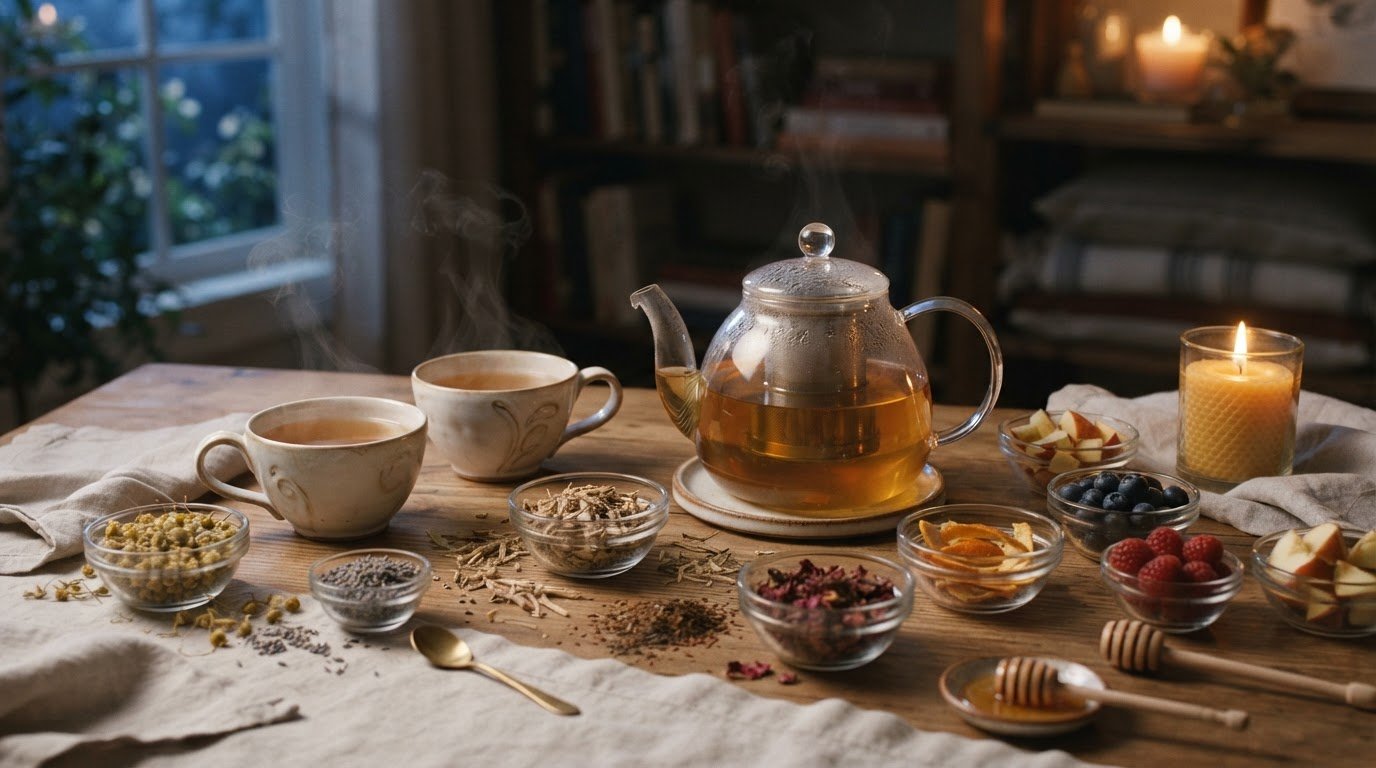
The best tea for sleep and relaxation is not necessarily the blend with the boldest promises. Think of a gentle cup as part of a wind-down routine, not a guaranteed sleep remedy. If you’ve found conflicting claims about bedtime teas, you’re not alone. It can be hard to tell which options are caffeine-free, what the evidence says, or when to brew a cup.
This guide compares familiar choices, from floral chamomile to naturally caffeine-free rooibos, so you can choose a flavor and ritual that appeal to you. Ingredient labels matter: herbal infusions are often caffeine-free, but blends vary, while true tea made from green or black tea leaves contains caffeine.
You’ll find practical guidance on what to try and how to brew it, alongside a clear-eyed look at the limits of sleep research. A warm, aromatic cup can mark a quieter transition into evening, but it isn’t a treatment for ongoing sleep problems. It can simply be a small pleasure, prepared with care.
Key Takeaways
- Compare chamomile, lavender, valerian, and rooibos by flavor and caffeine status to find an evening cup you enjoy.
- The best tea for sleep and relaxation is one that suits your taste and supports a calming routine, not a guaranteed remedy.
- Check the full ingredient list. Blends vary and may include caffeinated tea leaves.
- Follow the tea’s label for leaf quantity, water temperature, and steeping time.
- Herbal tea and rooibos can be comforting additions to an evening ritual, but expectations about sleep benefits should remain realistic.
Table of Contents
What makes a tea a good choice for sleep and relaxation?
A bedtime tea is best understood as a drink chosen to accompany a calmer evening, rather than as a remedy with guaranteed effects. Some options are herbal infusions, while others are made from tea leaves and may contain caffeine. The distinction matters: a soothing name or “nighttime” label alone doesn’t tell you what’s in the cup or what it can do.
A bedtime tea can be a warm, aromatic drink that makes a wind-down routine more enjoyable. It isn’t a guaranteed sleep aid or a treatment for insomnia or other sleep disorders. If sleep difficulties persist or affect daily life, consider seeking advice from a healthcare professional rather than relying on tea alone.
Choosing the best tea for sleep and relaxation is personal. Caffeine content is one practical consideration, but flavor, serving temperature, and how much you enjoy the preparation matter too. A cup you find too bitter, floral, or hot may not feel comforting, whatever its ingredients.
How can an evening tea ritual support relaxation?
Boiling water, the first herbal aromas, and a warm cup in your hands can create a small pause in a busy evening. That sensory experience may make a routine feel more deliberate, but it isn’t proof that tea directly changes sleep or treats a sleep condition.
Notice what you genuinely enjoy: a soft floral scent, a mellow earthy flavor, or simply sitting quietly while the tea steeps. Keep the ritual uncomplicated and repeatable, so it feels like an invitation to slow down rather than another task to complete.
Does caffeine-free mean sleep-promoting?
No. “Caffeine-free” describes stimulant content, not demonstrated sleep benefits. An herbal infusion without caffeine may be a pleasant evening choice, but that alone doesn’t show that its herbs improve sleep. Evidence can differ by ingredient and preparation, and traditional use isn’t the same as proof of a reliable effect. For background on one herb often discussed in bedtime blends, read about Valerian.
Check the full ingredient list and serving guidance before brewing. Blends can combine several botanicals, and a product name may not reveal whether it includes tea leaves or other ingredients. Browse herbal teas and choose by ingredients and flavor rather than assuming every caffeine-free cup promotes sleep. Follow the package directions and choose a drinking temperature that feels comfortable.
Best teas for sleep and relaxation: compare gentle herbal options
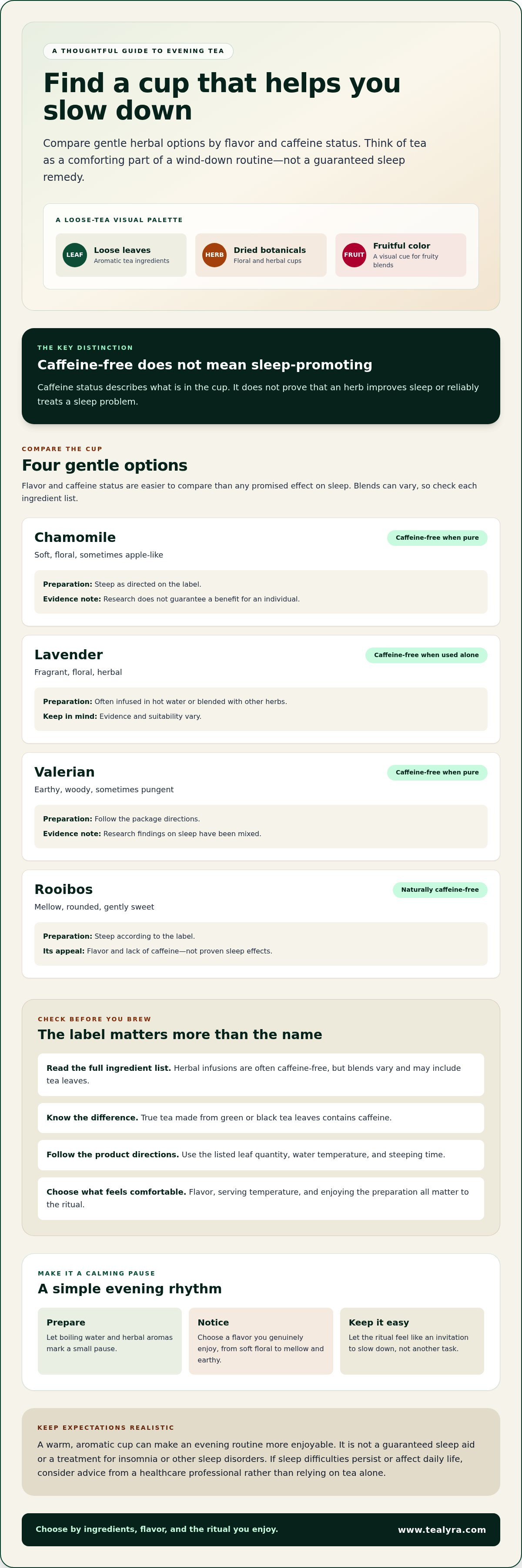
Choosing the best tea for sleep and relaxation starts with what you enjoy drinking, then with whether the ingredients suit your evening. Chamomile, lavender, valerian, and rooibos are often considered for nighttime cups, but flavor and caffeine status are easier to compare than any promised effect on sleep. Use the table as a starting point, and check the ingredients and brewing directions for each product, especially for blends.
| Tea | Flavor | Caffeine status | Preparation and evidence note |
|---|---|---|---|
| Chamomile | Soft, floral, sometimes apple-like | Caffeine-free when pure | Steep as directed. Research on sleep does not guarantee a benefit for an individual. |
| Lavender | Fragrant, floral, herbal | Caffeine-free when used alone | Often infused in hot water or blended with other herbs. Evidence and suitability vary. |
| Valerian | Earthy, woody, sometimes pungent | Caffeine-free when pure | Follow package directions. Research findings on sleep have been mixed. |
| Rooibos | Mellow, rounded, gently sweet | Naturally caffeine-free | Steep according to the label. Its appeal is its flavor and lack of caffeine, not proven sleep effects. |
Chamomile, lavender, and valerian: how do they differ?
Chamomile tends to make a delicate, familiar floral cup, while lavender is more aromatic and pronounced. Valerian is earthier and can taste assertive, so it may appeal more in a blend than on its own. A systematic review and meta-analysis examined valerian for sleep, but the evidence does not establish a dependable effect for everyone. These herbs aren’t interchangeable, and individual responses can differ.
Before trying a new herb, check reliable, current safety guidance. Allergies, pregnancy, existing health conditions, or medicines may affect whether an ingredient is suitable. Ask a healthcare professional or pharmacist if you’re unsure. Don’t assume a tea is appropriate for everyone just because it’s herbal.
Is rooibos a soothing caffeine-free evening option?
Pure rooibos is naturally caffeine-free, with a rounded, gentle flavor that suits drinkers who prefer a less floral cup. Blends can contain additional ingredients, so check the label rather than relying on the category name alone. Explore rooibos tea options if you’d like to compare styles. Choose by taste and ingredients, not with the expectation that rooibos will induce sleep.
Herbal tea for sleep: what it can and cannot do
An herbal cup can offer comfort, warmth, and a little hydration at the end of the day. Choosing, preparing, and sipping the same tea can also become a familiar cue to pause. Those are worthwhile reasons to enjoy it, but they don’t establish that the drink itself causes sleep or treats what’s keeping you awake.
Herbal tea may be part of a relaxing bedtime routine, but it isn’t a proven substitute for care or treatment for a sleep disorder. Finding the best tea for sleep and relaxation is less about seeking a guaranteed result and more about choosing a drink you like, with ingredients that are suitable for you.
Can tea help you sleep, or is the ritual the main benefit?
A warm cup may feel calming, and its aroma and familiar preparation can make an evening feel more settled. Your own experience matters when deciding whether a ritual is pleasant, but it isn’t clinical evidence that a particular herb improves sleep. Research into herbs and sleep outcomes varies, and findings shouldn’t be treated as a promise that tea will help you fall asleep or stay asleep.
Traditional use and personal testimonials can offer context, but neither proves medical efficacy. Think of tea as one optional part of a wind-down routine, alongside other calming habits that suit you. If it doesn’t feel helpful or enjoyable, there’s no need to make it a nightly rule.
Who should check herbal tea ingredients before drinking?
Herbal doesn’t automatically mean appropriate for everyone. Ingredients may prompt questions for people with allergies, those who are pregnant, anyone taking medication, or people managing health conditions. Blends can contain several herbs, so read the complete ingredient list rather than relying on the front label or the word “sleep.”
If you’re unsure whether an ingredient is suitable for you, ask a qualified healthcare professional or pharmacist. They can consider your individual circumstances. Avoid relying on general claims about an herb to answer personal safety questions.
If sleep difficulties persist, recur, or interfere with daily life, consult a qualified healthcare professional. Tea may remain a comforting beverage, but it shouldn’t delay advice or treatment for ongoing sleep concerns. A gentle ritual can have a place in the evening without carrying the burden of a cure.
How to choose and brew a relaxing bedtime tea
A calming cup should suit your palate and your evening routine. Start with the ingredients, then consider whether the flavor and preparation feel like a pleasure rather than another task. The best tea for sleep and relaxation isn’t necessarily elaborate. It’s a caffeine-conscious choice you enjoy and can prepare comfortably.
What should you look for in a relaxing bedtime tea?
Use this simple sequence to narrow your options:
- Check caffeine content. Look for clear information about whether the tea contains caffeine, and remember that blends may include different kinds of ingredients.
- Read the complete ingredient list. Don’t rely on a product name alone to tell you what’s in the cup.
- Choose a flavor you enjoy. You might prefer delicate florals, mellow earthiness, or a lightly sweet profile.
- Consider the preparation. Loose-leaf tea may invite a slower brewing ritual, while another format may fit more easily into a busy evening.
Preference is practical, not frivolous. If you like the aroma and taste, you’re more likely to enjoy making the tea part of your routine. If loose-leaf brewing appeals to you, a suitable infuser or teapot can make preparation simpler. Browse tea accessories to explore brewing options.
How do you brew herbal tea for a calm evening?
Follow the package directions for the specific tea. Leaf quantity, water temperature, and steeping time can differ among herbs and blends, so there isn’t one recipe for every cup. If the instructions aren’t clear, check the product information rather than guessing.
Let the process be unhurried: measure the tea, warm the water as directed, and give the infusion its recommended time. Notice the aroma as it develops, then taste before adding anything. If the cup seems too strong or too delicate, adjust gradually next time while staying within the package guidance.
Timing and serving size are personal, too. Experiment gently with when you drink it and how much feels comfortable, without assuming there’s a universal bedtime schedule or that a particular amount will improve sleep. A smaller cup may suit you better if you’d rather not drink much liquid late in the evening. The aim is a pleasant, repeatable pause, not a prescribed treatment.
Explore Tealyra herbal teas for your evening ritual
Once you’ve considered caffeine, ingredients, and the flavors you enjoy, browsing by tea category can help you find an option for your evening ritual. Tealyra offers herbal teas and rooibos alongside a broad selection of other teas. The store sources hundreds of tea varieties directly from growers, giving you different styles to explore without suggesting that any particular tea is a sleep treatment.
Where can you explore herbal teas and rooibos?
Start with Tealyra’s herbal tea selection if you’re curious about caffeine-conscious infusions. Rooibos is another category to consider: pure rooibos is naturally caffeine-free, though blends may include additional ingredients. Its flavor may appeal if you prefer a rounded, mellow cup to a pronounced floral profile.
Categories are a place to browse, not a guarantee about a specific blend. Before choosing an individual tea, read its current ingredient information and serving guidance, and check product details for availability. This helps you select based on what’s actually in the cup, rather than a name or expectation.
How can you make tea part of a personal wind-down routine?
Pair a chosen tea with a quiet, low-stimulation habit you already enjoy, such as reading a few pages or sitting away from screens. Keep the steps easy: prepare the tea according to its directions, notice its aroma and flavor, and let the moment become a pause in your evening. Try different styles and brewing preferences until the ritual feels natural.
The best tea for sleep and relaxation is one that suits your taste and fits comfortably into your routine, not one expected to prevent or treat a sleep condition. There’s no need to make the ritual elaborate or buy a tea that doesn’t appeal to you. If you’d like to explore a mellow, naturally caffeine-free category, take a look at Tealyra’s Rooibos Red Tea and compare the available options by their ingredients and flavor descriptions.
Choose a gentler way to wind down
The best tea for sleep and relaxation is one you enjoy and can prepare as part of a calm, caffeine-conscious evening routine. Chamomile, lavender, valerian, and rooibos offer different flavors, but caffeine-free doesn’t automatically mean sleep-promoting, and evidence for herbal effects varies. Check ingredients, follow the brewing directions, and choose a cup for its comfort rather than expecting it to treat a sleep problem.
A familiar ritual can be simple: let the aroma rise, take a quiet pause, and savor a flavor that feels right to you. If sleep difficulties persist or affect your daily life, seek guidance from a qualified healthcare professional.
Tealyra offers herbal teas and rooibos, with hundreds of tea varieties sourced directly from growers. Explore the selection at your own pace and see what might suit your evening: Explore Tealyra’s herbal teas for a gentler evening ritual.
May your next cup bring a welcome moment of quiet, whatever the night holds.
Frequently Asked Questions
What is the best tea for sleep and relaxation?
There isn’t one universally best tea for sleep and relaxation. The right choice depends on your taste, caffeine preferences, and the ingredients you’re comfortable drinking. Chamomile may appeal if you enjoy a gentle floral cup, while pure rooibos offers a mellow, naturally caffeine-free option. Neither should be expected to guarantee sleep. Check labels, follow brewing directions, and choose a tea you find pleasant.
Can herbal tea help you sleep?
Herbal tea may feel comforting as a warm drink and can become a familiar part of a wind-down routine, but its effects aren’t guaranteed. Evidence about specific herbs and sleep outcomes varies, so a soothing taste or traditional use doesn’t establish that a tea will improve sleep. Think of it as an enjoyable beverage, not a treatment. For persistent sleep difficulties, ask a qualified healthcare professional for guidance.
Is chamomile tea good before bed?
Chamomile can be a pleasant before-bed choice if you like its soft, floral flavor and want a caffeine-free infusion made from chamomile alone. Some research has examined chamomile and sleep, but that doesn’t guarantee an effect for every person or establish it as a treatment for sleep problems. Check the ingredient label, especially for blends, and consider allergies or other individual concerns before making it a regular choice.
Which teas should you avoid before bed?
If caffeine affects your sleep or makes you feel alert, consider avoiding caffeinated teas close to bedtime. Black, green, white, and oolong teas are made from tea leaves and contain caffeine; matcha is also a caffeinated green tea. Amounts can vary by tea and preparation. Check the label for blends, since ingredients may differ, and use your own response to caffeine to guide what and when you drink.
Is rooibos tea caffeine-free?
Pure rooibos is naturally caffeine-free, making it an option for people who want an evening drink without caffeine. Its rounded, mellow flavor may suit those who prefer a less floral cup. Blends can include other ingredients, so check the product’s full ingredient list rather than assuming every rooibos blend has the same contents. Caffeine-free describes stimulant content; it doesn’t prove that a tea promotes sleep.
When should you drink tea for sleep and relaxation?
There’s no single bedtime schedule that suits everyone. Choose a time that lets you enjoy the cup without making your routine feel rushed, and consider how drinking fluids late in the evening feels for you. Follow the tea’s brewing guidance, then adjust timing and serving size to your comfort. A cup can mark a quiet pause, but drinking it at a particular time won’t guarantee better sleep.
Can you drink herbal tea every night?
Whether nightly herbal tea is suitable depends on its ingredients and your individual circumstances. Read the label each time you choose a blend, and check with a healthcare professional or pharmacist if you have allergies, are pregnant, take medication, or have a health condition. Herbal products aren’t automatically suitable for everyone. If sleep problems continue or affect your daily life, seek professional advice rather than relying on tea alone.
Does bedtime tea have to be caffeine-free?
No, but a caffeine-free option may be preferable if you’re sensitive to caffeine or find it interferes with your sleep. Bedtime tea is a routine, not a specific type of tea, so start by checking the caffeine information and ingredients. Traditional tea leaves, including black and green tea, contain caffeine; pure herbal infusions and rooibos are often chosen as caffeine-free alternatives. Choose according to your preferences and response.
Article by
Tealyra
The Best Galaxy Of Teas