 by Tealyra
Best Tea for Energy and Focus: Natural Mental Clarity
Discover the best tea for energy and focus without jitters. Compare matcha, green tea, black tea, and yerba mate to boost natural alertness and mental clarity.
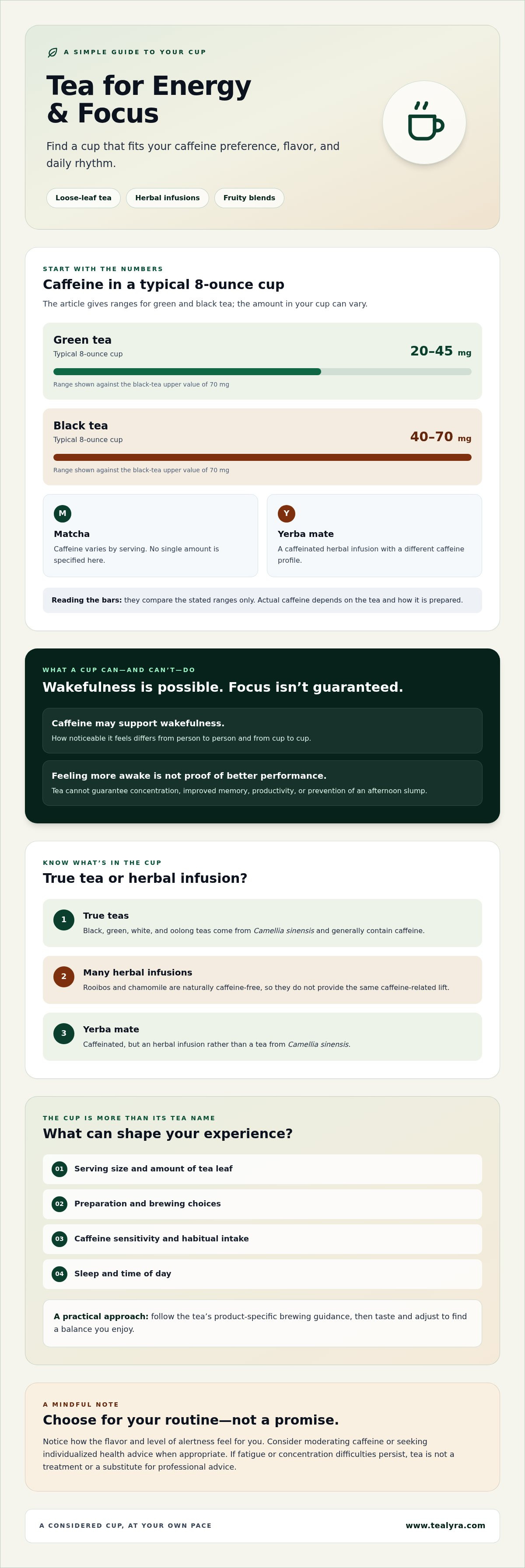
The strongest cup isn’t always the best one for a clear, steady morning. If you’re choosing tea for energy and focus, the right fit depends on how much caffeine you want, how you like your tea to taste, and when you plan to drink it. A typical 8-ounce cup can range from 20-45 mg of caffeine for green tea to 40-70 mg for black tea, while matcha varies by serving and yerba mate offers another profile altogether. Brewing choices matter, too.
It makes sense to want more alertness without a harsh, jittery cup, but caffeine can support wakefulness without guaranteeing better focus. This guide compares matcha, green tea, black tea, and yerba mate, with practical notes on caffeine, flavor, and brewing so you can find a cup that suits your preferences and daily rhythm. You’ll also learn how herbal teas differ from caffeinated true teas, and when it may be wise to moderate caffeine or seek individualized health advice. A little understanding can make the ritual feel more considered, and the choice much easier.
Key Takeaways
- Tea may support wakefulness, but its effect on alertness varies from person to person and isn’t a guaranteed focus boost.
- Compare matcha, green tea, black tea, and yerba mate by caffeine preference, flavor, and the kind of preparation that fits your routine.
- For tea for energy and focus, consider how serving size, brewing, and your caffeine tolerance shape the cup you experience.
- Follow the tea’s product-specific brewing guidance, then taste and adjust your approach to find a balance you enjoy.
- Explore Tealyra’s confirmed tea categories with your preferences in mind, and moderate caffeine or seek individualized health advice when appropriate.
Table of Contents
Tea for Energy and Focus: What a Cup Can, and Cannot, Do
A cup of tea can mark a gentle transition into the day: warmth in your hands, a fragrant lift of steam, and a moment to gather your attention before work or study. In this context, “energy” means subjective alertness, not a guaranteed increase in physical energy or a promise of sharper thinking. Caffeinated tea may support wakefulness, but how noticeable it feels depends on the person and the cup.
A useful distinction: caffeine-related alertness is a possible feeling, not proof of improved memory, attention, or productivity. Tea can be part of a familiar routine, but it can’t guarantee concentration or prevent an afternoon slump. For background on tea’s plant, processing, and components, see this overview of Tea.
For another perspective on tea and mental performance, watch this video:
What does “tea for focus” mean in everyday use?
Usually, it means choosing a warm, measured drink for a morning routine, a study session, or a pause between tasks. That ritual may feel centering, while caffeine may make some people feel more awake. Those experiences are not the same as established improvements in focus or cognitive performance, and they won’t be identical for everyone. A tea for energy and focus is best understood as a beverage choice, not a performance guarantee.
If fatigue or concentration difficulties persist, tea isn’t a treatment or a substitute for individualized health advice. Consider speaking with a healthcare professional about ongoing concerns.
Does every tea provide a noticeable lift?
Not necessarily. Black, green, white, and oolong teas come from Camellia sinensis and generally contain caffeine. Most herbal infusions, such as rooibos or chamomile, are naturally caffeine-free, so they won’t offer the same caffeine-related lift. Yerba mate is a caffeinated herbal infusion, rather than a tea from Camellia sinensis.
The caffeine in a cup isn’t fixed: tea type, the amount of leaf, and preparation all play a part, and an individual’s response varies too. For a simple starting point, explore green tea options and follow the brewing guidance for the tea you choose. Notice how the flavor and level of alertness feel in your own routine, without assuming every cup will have the same effect.
How Caffeine, L-Theanine, and Brewing Shape Tea’s Effects
Caffeine is the familiar stimulant in many true teas, and it may increase subjective alertness. The experience isn’t identical from one person to the next: sensitivity, habitual caffeine intake, sleep, serving size, and the time of day can all shape how a cup feels. Feeling more awake, however, doesn’t establish that you’ll work, study, or perform better.
What role can caffeine play in alertness?
A tea’s effect depends on more than its name. Someone who drinks caffeinated tea regularly may notice a different response than someone who rarely does; a cup enjoyed after a restful night may feel different from one after too little sleep. Timing matters as well, especially for people who find caffeine later in the day affects their rest. Pay attention to your own response rather than assuming a particular tea will deliver a set level or duration of alertness.
Tea also contains L-theanine, an amino acid found naturally in tea leaves. It’s often discussed alongside caffeine, but that pairing shouldn’t be treated as a guarantee of calm focus or as proof that L-theanine cancels unwanted caffeine effects. A study measuring these compounds in different tea samples illustrates that amounts can vary; the Theanine and Caffeine Content findings are useful context, not a promise about every cup.
Why do tea type and brewing change the cup?
Steeped tea releases compounds from leaves into water. Matcha is prepared differently: the finely powdered tea leaf is whisked into the drink, so the powder itself is consumed rather than removed after infusion. That difference affects the preparation and texture of the cup, but doesn’t make matcha a guaranteed stronger focus aid.
Caffeine comparisons between teas are approximate because the leaf, serving, and preparation all influence what ends up in your cup. A larger amount of leaf, hotter water, a longer steep, or a larger serving can change extraction and flavor. A longer infusion may taste more pronounced or astringent, too, so stronger brewing isn’t automatically more enjoyable.
- Leaf quantity: More leaf can make an infusion stronger.
- Water temperature and steep time: These influence extraction and taste; follow the tea’s product-specific guidance rather than using one rule for every style.
- Serving size: A larger cup may contain more brewed tea, so consider the amount you actually drink.
For a considered starting point, brew a familiar serving as directed, then adjust one variable at a time and notice the result. If you’d like to explore different leaves and preparations, browse loose-leaf tea options and choose by taste as well as caffeine preference.
Matcha, Green Tea, Black Tea, or Yerba Mate: Which Fits Your Routine?
The best tea for energy and focus is a personal match between flavor, caffeine preference, and the small ritual you want to return to. These four choices differ in how they’re made and enjoyed, but none guarantees a particular level of concentration. Use the comparison as a starting point, then consider your own sensitivity and serving habits.
| Tea | Caffeine source | Flavor character | Preparation | Ritual that may suit |
|---|---|---|---|---|
| Matcha | Powdered Camellia sinensis leaf | Often vegetal, with a rich, smooth texture | Whisk powder into water | A deliberate pause for whisking and sipping |
| Green tea | Camellia sinensis leaves | Varies by style, from fresh and grassy to mellow | Infuse leaves according to product guidance | A simple pot or cup during a morning or work break |
| Black tea | Camellia sinensis leaves | Often brisk and full-bodied, with diverse profiles | Infuse leaves according to product guidance | A familiar breakfast cup or afternoon pause |
| Yerba mate | Ilex paraguariensis leaves | Distinctive, often grassy and earthy | Prepare as directed for the mate style | A traditional, unhurried infusion ritual |
When might matcha or green tea suit your day?
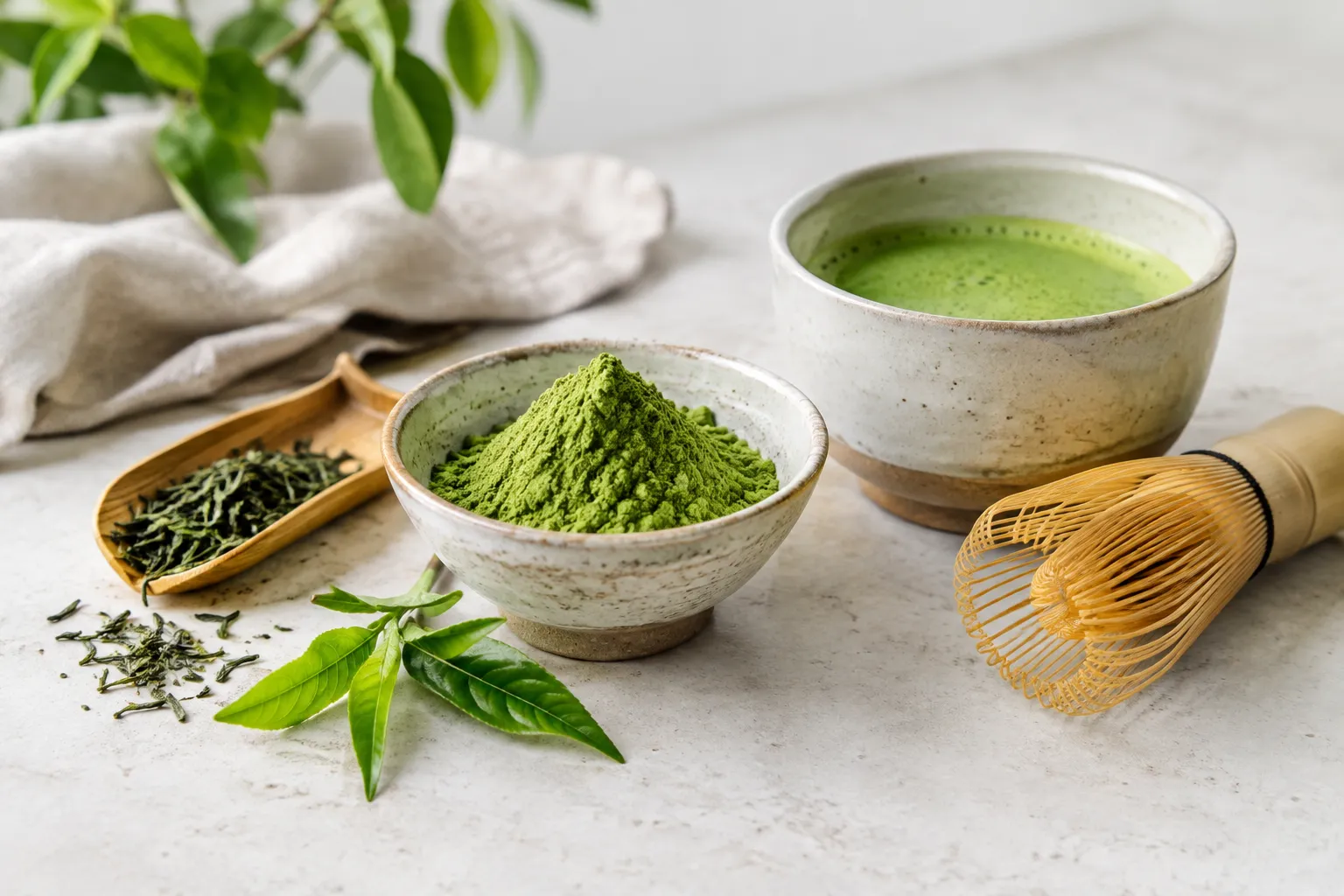
Matcha brings a more hands-on preparation: whisking the powder creates a vivid, opaque cup, with the leaf itself remaining in the drink. If you enjoy that texture and have a moment for the ritual, explore matcha tea. It isn’t automatically a stronger or more reliable focus aid; consider the serving and how caffeine tends to affect you.
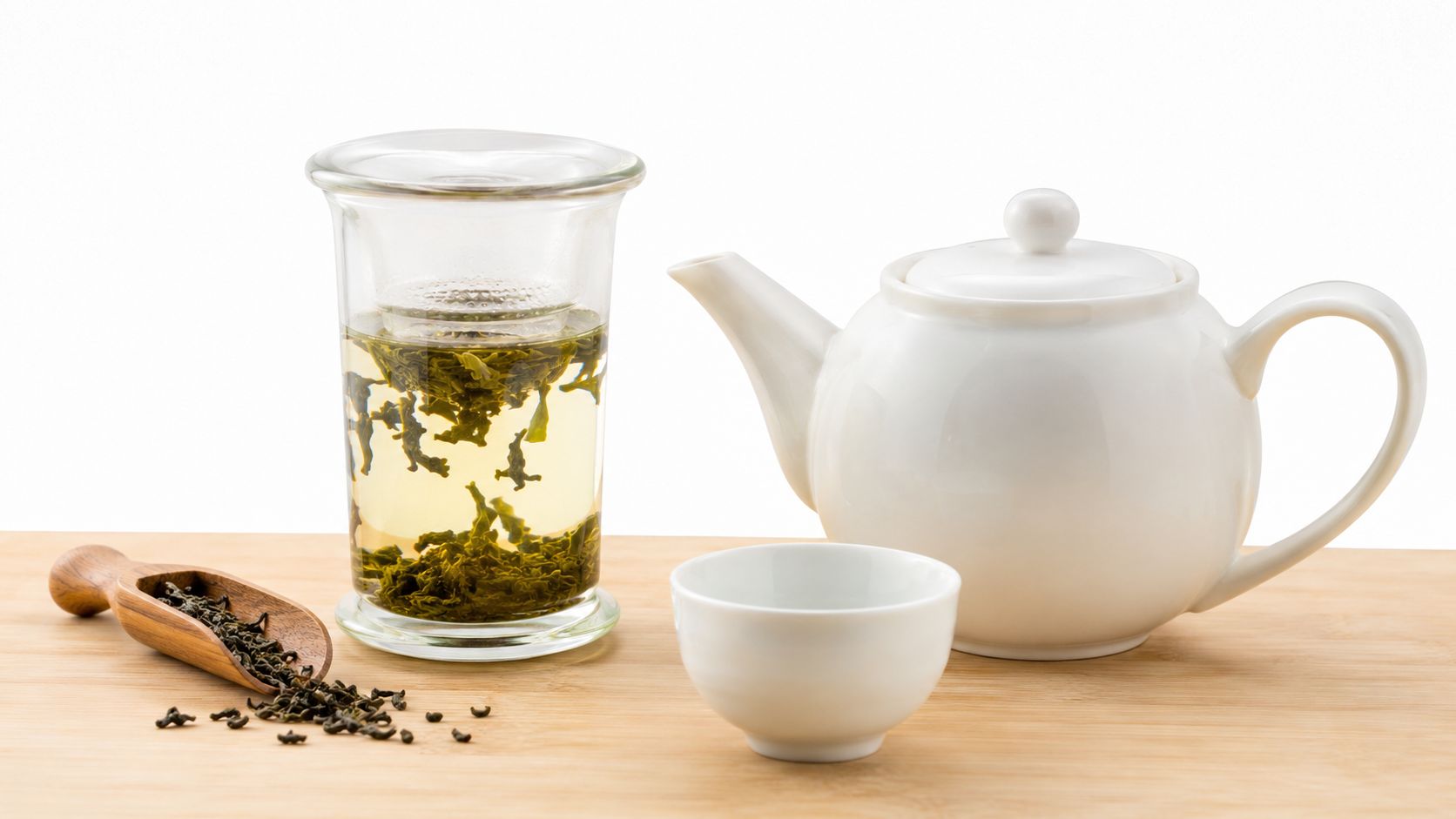
Green tea is steeped, and its leaf styles offer a broad range of aromas and tastes. It may fit a routine that calls for an easy-to-prepare cup, with room to explore different profiles through green tea. Choose by flavor and preparation as much as by the lift you hope to feel.
When might black tea or yerba mate appeal?
Black tea can be a familiar, brisk choice, yet its flavor varies across styles, so “black tea” doesn’t describe one single cup or a fixed caffeine level. Browse black tea if you enjoy a fuller taste. Yerba mate is a separate caffeinated infusion, not a true tea from Camellia sinensis, and has its own preparation traditions. See yerba mate tea as another option to explore.
Rather than expecting equal effects, compare the taste, serving size, and preparation that feel comfortable in your day. A cup you genuinely enjoy is a more useful starting point than a promise of sustained energy.
How to Choose and Brew Tea for Energy and Focus
A considered cup begins with your preferences, not a promise on the label. If you’re exploring tea for energy and focus, use a simple process to find a style and strength that feels comfortable in your day. When you’re unsure how caffeine affects you, begin with a modest serving and pay attention to how you feel.
- 1. Choose a caffeine preference. Decide whether you want a caffeinated tea or a caffeine-free herbal infusion. If your sensitivity is uncertain, start modestly rather than making a strong cup your first trial.
- 2. Select a tea. Choose a style whose flavor and preparation appeal to you. A cup you enjoy is easier to make part of a routine.
- 3. Brew it as directed. Check the product-specific instructions for leaf quantity, water temperature, and steeping time. There isn’t one temperature or steeping method that suits every tea.
- 4. Taste before adjusting. Notice the aroma, body, and finish. If the cup tastes too light or too intense, change one brewing variable next time rather than altering several at once.
- 5. Observe your response. Note the serving, time of day, and how alert or comfortable you feel. A few observations can help you choose a better fit, without assuming the same cup will always feel the same.
How should you adjust steeping and serving?
Use the tea’s own brewing guidance as your starting point. The amount of leaf, water temperature, steep duration, and serving size all influence the cup; changing them may shift both flavor and caffeine extraction. A longer steep or extra leaf can make the taste more pronounced, but it may also bring out astringency. Make small adjustments and jot down what you prefer, especially if you’re comparing teas or changing your usual serving.
A cup’s perceived strength depends on the tea, leaf quantity, water temperature, steep time, serving size, and your own caffeine sensitivity.
When should you consider caffeine and personal limits?
Take your full day into account, not just the tea in your cup. Coffee, cola, chocolate, and other caffeinated drinks can contribute to your intake, while the time you drink tea may matter if caffeine affects your sleep. There’s no single personal response, so notice patterns and adjust your choices if needed rather than relying on a universal rule.
If you have health concerns, take medication, or have questions about caffeine during pregnancy, consult a qualified clinician for advice suited to you. To make your next cup part of a more intentional routine, explore teas for your daily ritual.
Make a More Mindful Tea Ritual with Tealyra’s Loose-Leaf Selection
The most suitable cup is the one that meets you where you are: in its flavor, caffeine profile, preparation, and place in your daily rhythm. Matcha, green tea, black tea, and yerba mate each offer a different way to enjoy a brewed drink, but none promises a particular level of energy or focus. Let personal taste and comfort guide the choice.
How can loose-leaf tea make the ritual your own?
Loose-leaf tea invites small, thoughtful adjustments. Start with the product’s brewing instructions, then explore how the aroma and flavor shift when you adjust the leaf quantity or steeping time. A little more leaf may give a fuller cup; a shorter infusion may suit your palate better. Change one variable at a time, so it’s easier to notice what you enjoy.
A teapot, infuser, or cup can make preparation more convenient, but accessories are tools for brewing, not performance enhancers. If you’d like to compare tea formats and styles, explore loose-leaf tea options.
What is a sensible next step for choosing a tea?
Begin with a familiar style, then try one new option alongside it. For example, if you already enjoy green tea, matcha offers a different preparation to explore; if you prefer a fuller cup, black tea may be a natural comparison. Tealyra Store - The Best Galaxy of Teas offers matcha, green tea, black tea, and yerba mate categories, giving you a few distinct styles to consider by taste and ritual.
Before preparing any cup, review the product details and its brewing instructions, including serving guidance. Product-specific information matters, and caffeine can vary with the tea and how it’s prepared. If you’re sensitive to caffeine, choose a modest serving and notice how it fits your routine rather than expecting a guaranteed effect.
A good tea ritual doesn’t need to be complicated. Make a cup, take a moment with its fragrance and flavor, and let your preferences lead the next choice. When you’re ready to explore, Tealyra Store - The Best Galaxy of Teas offers a welcoming place to begin.
Choose a Cup That Fits Your Day
The right tea for energy and focus isn’t a guaranteed shortcut to sharper thinking. Caffeinated teas may support subjective alertness, but your response depends on personal sensitivity, timing, serving, and how the tea is brewed. Matcha, green tea, black tea, and yerba mate each bring a different flavor and preparation ritual, so let your preferences guide the choice.
Start with a tea you know you enjoy, then explore another style at a modest serving. Follow its brewing instructions, make small adjustments, and notice how the flavor and caffeine feel in your routine. A thoughtful cup can be a welcome pause, without needing to promise more than a beverage can offer.
Tealyra Store - The Best Galaxy of Teas offers matcha, green tea, black tea, and yerba mate, along with loose-leaf tea and tea accessories online. If you’re ready to find a style that suits your daily ritual, explore the loose-leaf teas from Tealyra Store - The Best Galaxy of Teas. Enjoy the discovery, one considered cup at a time.
Frequently Asked Questions
What tea gives you the most energy?
No single tea is the strongest choice for everyone, since perceived energy depends on caffeine, serving size, brewing, and personal tolerance. Matcha, black tea, green tea, and yerba mate are all caffeinated options, but their caffeine content can vary by product and preparation. Compare product details and choose by flavor, caffeine preference, and routine rather than expecting a particular effect or duration.
Is tea better than coffee for energy and focus?
Neither tea nor coffee is universally better for energy and focus; both contain caffeine, and amounts vary with serving size and preparation. Your preference may depend on taste, caffeine sensitivity, and the kind of drink you enjoy in your routine. Tea doesn’t guarantee focus or necessarily prevent jitters or provide longer-lasting energy. Compare similar serving sizes, consider other caffeine you consume, and notice how each feels for you.
Can green tea help with focus?
Green tea contains caffeine, which may contribute to subjective alertness, but its effect differs from person to person and doesn’t guarantee improved concentration. Leaf quantity and brewing also shape the cup. If you’re curious, try a modest serving prepared according to its instructions, then consider both its flavor and how you respond. Green tea is a beverage, not a treatment for persistent focus difficulties.
Does matcha have more caffeine than regular green tea?
There isn’t one universal comparison because caffeine depends on the matcha or green tea product, serving size, and preparation. Matcha is powdered green tea whisked into a drink, while steeped green tea leaves are usually removed before serving. For a fair comparison, check product information and compare like-for-like serving sizes. Avoid assuming that every matcha serving contains more caffeine than every cup of steeped green tea.
Is there a caffeine-free tea for energy and focus?
Caffeine-free herbal infusions can offer a warming, enjoyable ritual, but they don’t provide caffeine-driven alertness. Be cautious with products marketed for botanical “energy” or focus, since such claims need appropriate evidence and careful interpretation. If fatigue persists or concentration concerns are affecting daily life, tea shouldn’t replace professional advice. Consider speaking with a qualified healthcare professional about what may be contributing to your symptoms.
How should I brew tea for energy and focus?
Follow the preparation instructions for your tea, since matcha, green tea, black tea, and yerba mate use different formats and methods. For steeped tea, leaf quantity, water temperature, and steeping time affect flavor and may influence caffeine extraction. Adjust one variable at a time, tasting as you go. Rather than aiming for maximum strength, note which preparation you enjoy and how it feels in your routine.
Can tea for focus affect sleep?
Yes, caffeinated tea may affect sleep for some people, depending on sensitivity, serving size, and timing. If you notice that it disrupts your rest, try having caffeinated tea earlier or choosing a caffeine-free herbal infusion later in the day. There isn’t one cutoff time that suits everyone. For personal health concerns or questions about caffeine, ask a qualified clinician for guidance suited to you.
Article by
Tealyra
The Best Galaxy Of Teas