 by Tealyra
What Is Flowering Tea? How It Blooms and How to Brew It
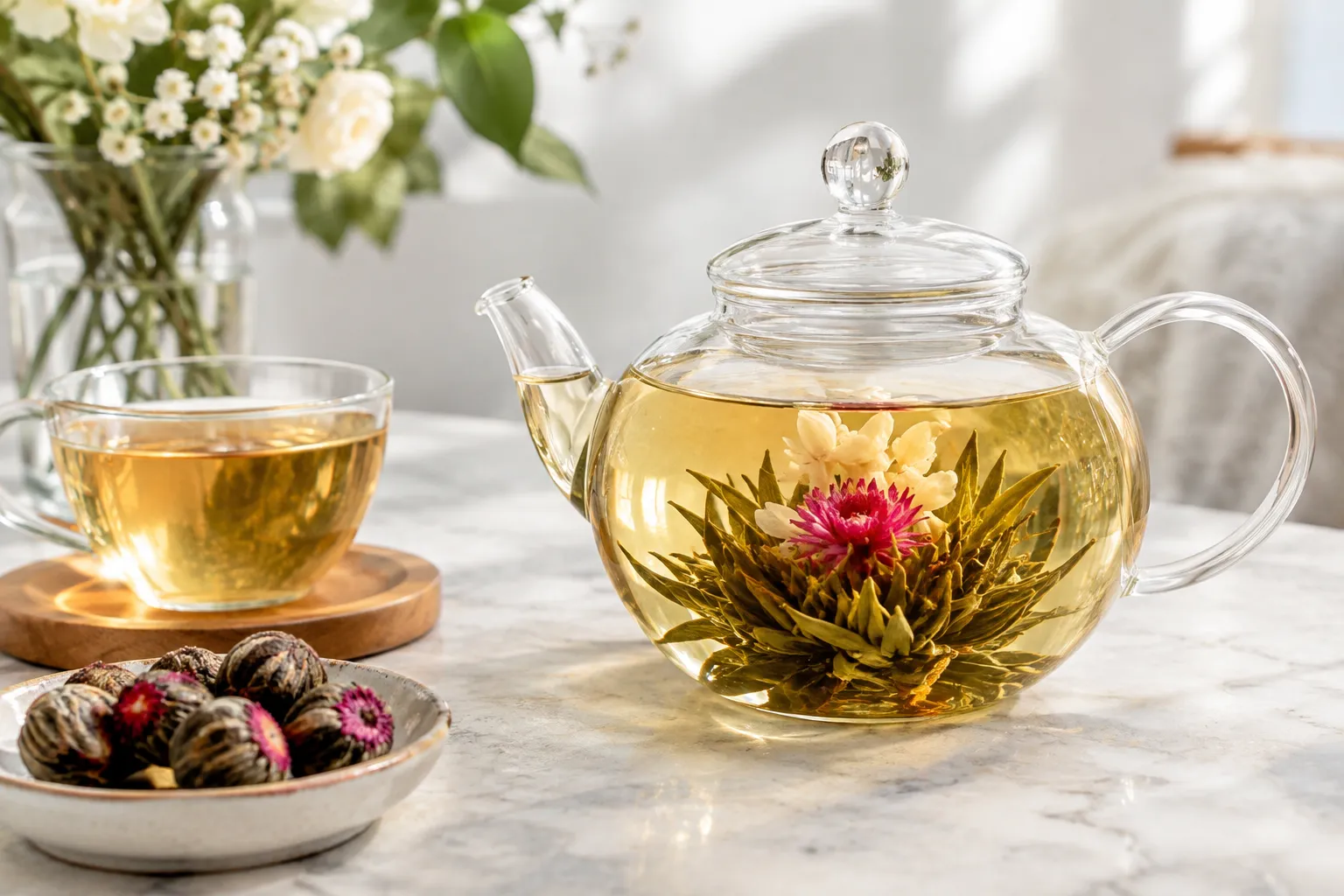
Flowering tea turns steeping into a small display: a compact bundle opens in hot water to reveal flowers among the tea leaves.
In This Article
- What flowering tea is and how it blooms
- How flowering tea bundles are made
- Tea leaves and flowers used in flowering tea
- How to brew and serve flowering tea
- Choosing and storing flowering tea
- Flowering Tea FAQs
- What is blooming tea good for?
- How long does blooming tea take to work?
- What does Flowering Tea taste like?
- How many times can you use blooming tea?
- Does flowering tea contain caffeine?
- Are the flowers in flowering tea edible?
- Can you make flowering tea with water that is not boiling?
- How should unopened flowering tea be stored?
- Choose a flowering tea to brew at home
Flowering tea turns steeping into a small display: a compact bundle opens in hot water to reveal flowers among the tea leaves. If you are wondering what flowering tea is, how it tastes, or how to brew it at home, the key is to think of it as both an infusion and a carefully arranged tea bundle.
What flowering tea is and how it blooms
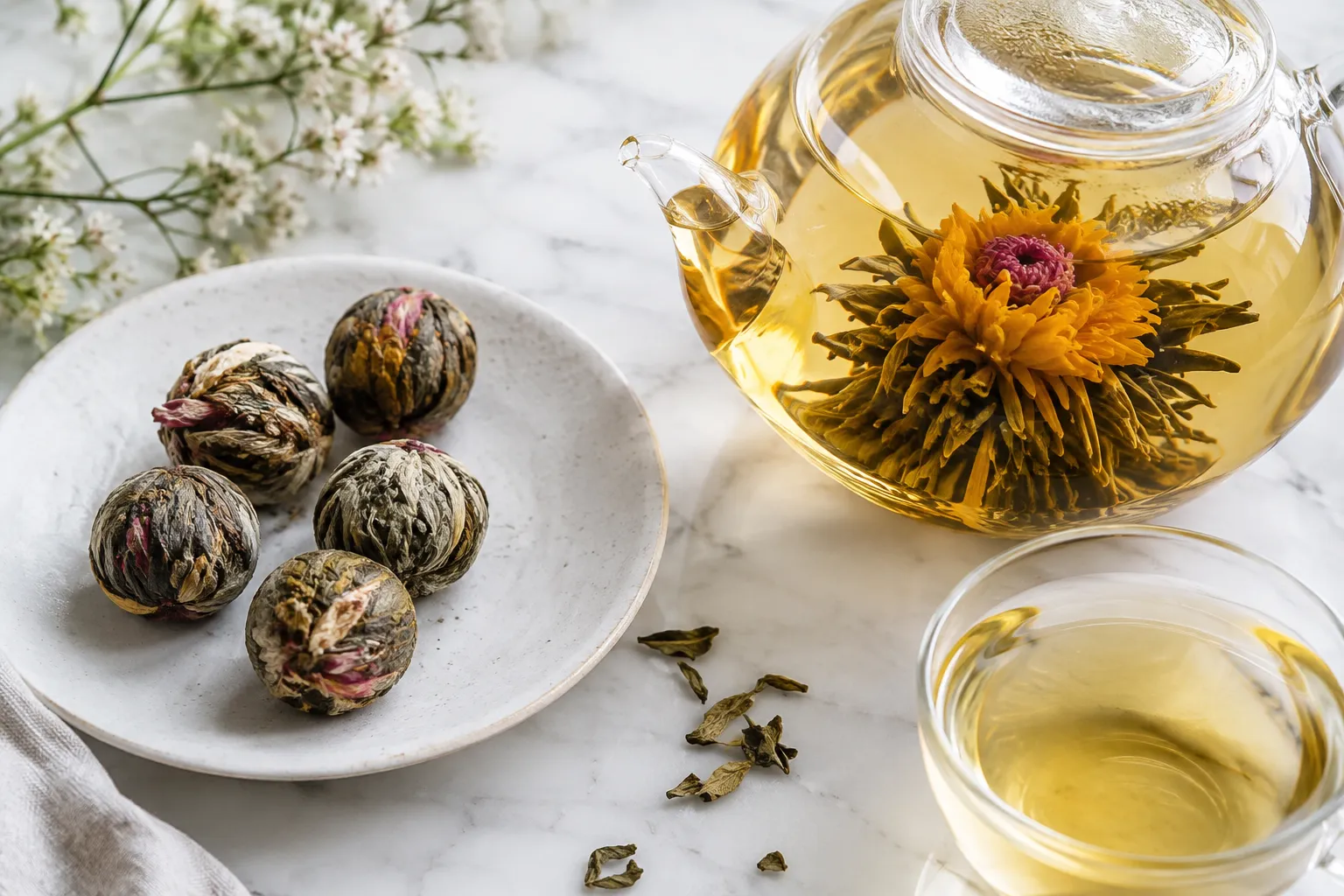
Flowering tea is a hand-tied bundle of tea leaves and flowers that unfurls as it steeps. It is also commonly called blooming tea. The bundle is shaped to stay compact when dry, then opens in hot water so the flowers become visible.
The bloom is part of the presentation, not a separate brewing method. The tea leaves and flowers steep together, and the resulting drink reflects the ingredients inside the bundle. For a closer look at available styles, visit Tealyra’s blooming tea page.
A clear, heat-safe vessel makes it easier to watch the bundle open. The size and shape of the bloom can vary, so give it room in the water rather than trying to judge the tea by its dry appearance alone.
How flowering tea bundles are made
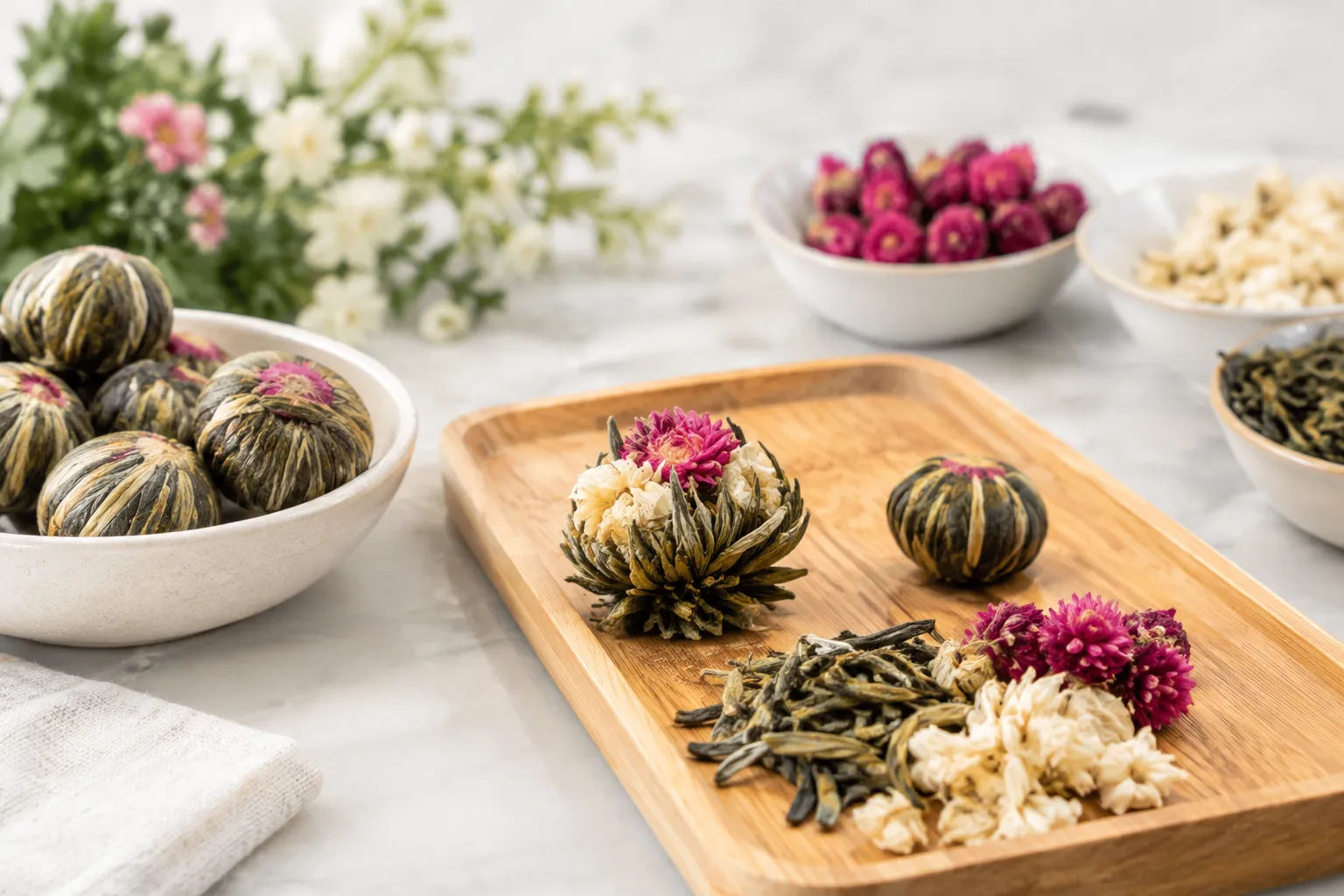
To make a flowering tea bundle, leaves and selected flowers are arranged into a compact shape and tied together. The precise ingredients, shape, and tying technique can differ from one tea to another; there is no single arrangement that defines every flowering tea.
When hot water reaches the bundle, the leaves loosen and spread. As they open, the flowers inside become visible. This gradual unfolding is why a glass teapot or cup is often a practical serving choice: it lets you see the bundle without disturbing it.
The bundle needs enough space to expand. A narrow vessel can make the display harder to see and may crowd the tea as it opens. If you are choosing a vessel, look for one that is heat-safe, clear, and roomy enough for the dry bundle to unfold in the water.
Tea leaves and flowers used in flowering tea
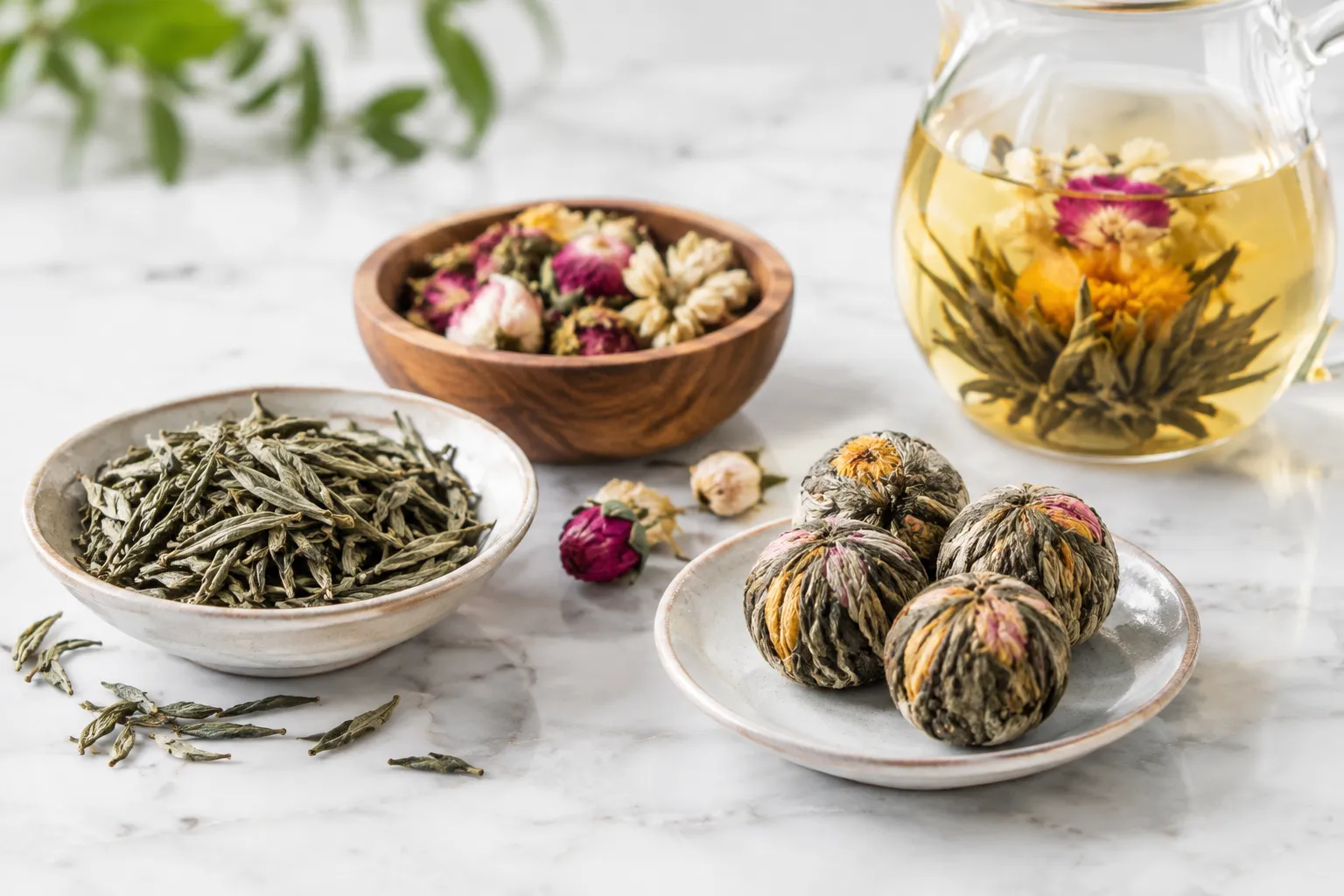
Flowering tea commonly uses a tea base, often green tea, with one or more flowers. The exact combination varies by blend, and the ingredients influence both the appearance and the flavor of the infusion.
Green tea leaves can give the drink a fresh, vegetal, or gently grassy character, though the flavor depends on the tea and how it is brewed. The flowers may contribute their own aroma and flavor, but they do not all taste alike. Check the ingredient list rather than assuming every bundle contains the same flowers or has the same taste.
If you enjoy exploring tea bases, browse Tealyra’s green tea selection. Comparing ingredient lists can help you decide whether a flowering tea’s base and flowers sound appealing before choosing one.
How to brew and serve flowering tea
Follow the package directions for the particular bundle, since water temperature and steeping time can vary with the tea. A straightforward approach is to:
- Choose a clear, heat-safe teapot or cup with room for the bundle to open.
- Place the bundle gently in the vessel.
- Add hot water as directed on the package.
- Let the bundle unfurl without stirring or pressing it.
- Once it has opened and steeped as directed, pour or serve the infusion.
A transparent vessel makes the unfolding easier to watch, while a teapot can be convenient if you are serving more than one cup. If you do not have a glass vessel, flowering tea can still be brewed in another suitable heat-safe container; the bloom will simply be less visible.
Avoid using water that is too cool for the directions on the package, since the bundle may not open or steep as intended. When serving, pour gently so the leaves and flowers remain settled rather than breaking apart.
Choosing and storing flowering tea
Start with the ingredient list. Look for the tea base and flowers named on the package, then consider whether those flavors sound like a fit for you. If you are unsure about a particular flower or tea style, choosing based on the stated ingredients is more useful than relying only on a bundle’s appearance.
The dry bundle’s shape can offer a preview of its arrangement, but it does not tell you exactly how the brewed tea will taste. Packaging also matters: an intact, well-sealed pack helps protect tea from moisture and outside odors. Check the product details and package label for information about ingredients, storage, and preparation.
Keep unopened flowering tea dry and away from direct light, heat, and strong odors. A cool, dry cupboard is generally a suitable place. Once opened, reseal the package or transfer the bundles to an airtight container, taking care not to store them beside strongly scented foods or spices.
For readers who are discovering loose leaf tea, flowering tea offers a different format from loose leaves brewed in an infuser. You can explore other styles through Tealyra’s loose leaf tea selection and compare ingredients and brewing directions to find a starting point that suits your preferences.
Flowering Tea FAQs
What is blooming tea good for?
Blooming tea is suited to a brewing moment when you want to watch the tea bundle open as well as drink the infusion. Its flavor depends on the tea leaves and flowers in the blend.
How long does blooming tea take to work?
Blooming tea is not a product that “works” in the sense of producing a specific effect; it steeps as the bundle opens. Follow the package’s steeping directions, since timing varies by blend.
What does Flowering Tea taste like?
Flowering tea tastes like the tea base and flowers used in its bundle, so flavor varies between blends. A green tea base may taste fresh or vegetal, while the flowers can add different aromas and notes.
How many times can you use blooming tea?
Many flowering tea bundles can be steeped more than once, though later infusions may taste lighter. Follow the package directions and use fresh hot water for each steep.
Does flowering tea contain caffeine?
Flowering tea contains caffeine when its tea base includes caffeinated tea leaves, such as green tea. Check the ingredient list; a blend made only with caffeine-free ingredients may differ.
Are the flowers in flowering tea edible?
Flowers in flowering tea are selected for use in an infusion, but that does not mean every flower or part is intended to be eaten. Check the product’s ingredient information and enjoy the brewed tea as directed.
Can you make flowering tea with water that is not boiling?
Yes, if the package directions recommend a lower temperature; water does not need to be boiling for every flowering tea. Use the temperature stated for the specific blend to avoid brewing it in a way that affects its flavor.
How should unopened flowering tea be stored?
Store unopened flowering tea in a cool, dry place away from direct light, heat, moisture, and strong odors. Keep it in its original sealed packaging until you are ready to use it.
Choose a flowering tea to brew at home
To choose a flowering tea, compare the stated tea base and flowers, consider the kind of vessel you have, and check the brewing directions. If you are new to the style, those details can help you choose a bundle based on more than its appearance. Explore Tealyra’s blooming tea selection to see which ingredients and formats suit your tea routine.