 by Tealyra
Turkish Tea: How to Brew It the Traditional Way
Turkish tea is a strong black tea brewed in a two-tier teapot called a çaydanlık and served in tulip glasses. How to brew it at home, how strong to make it, and how it is served.
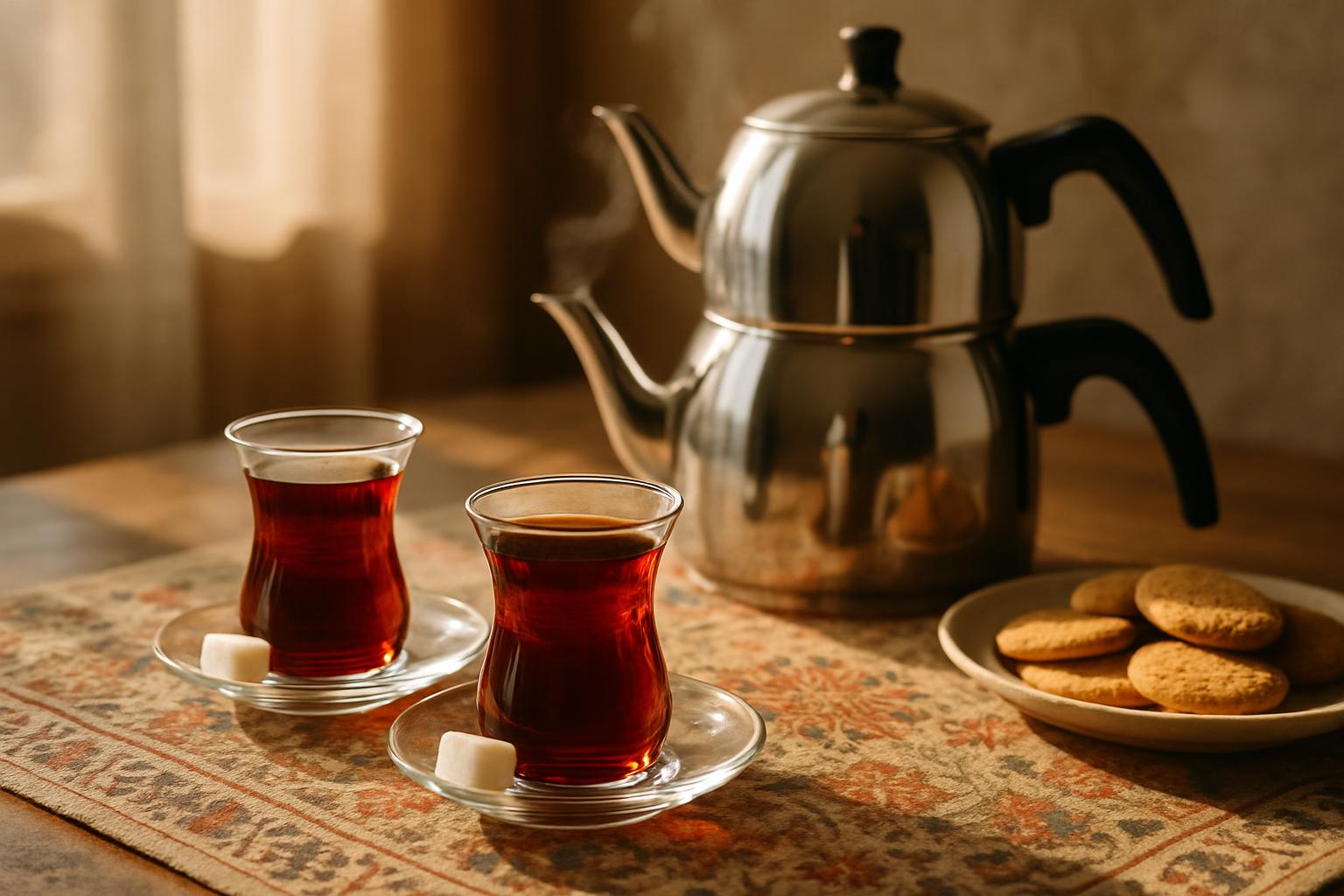
In short: Turkish tea (çay) is a strong black tea brewed slowly in a two-tier teapot called a çaydanlık. Water boils in the bottom kettle while loose tea steeps in the small top pot for 10 to 15 minutes, making a concentrate. Each glass gets some concentrate topped up with hot water, so everyone can drink it as light or as dark as they like. It is served in small tulip-shaped glasses, without milk, often with a sugar cube.
In Turkey, tea is everywhere: at breakfast, in shops, in offices and after every meal. Glasses of deep red tea are offered to guests, carried on trays through markets, and refilled again and again throughout the day. The method behind that cup is simple, and you can recreate it at home with a few basic tools.
This guide explains what Turkish tea is, how the two-tier pot works, how to brew it step by step, and how it is traditionally served.
What is Turkish tea?
Turkish tea is a black tea. Most of it is grown in the Rize region, on misty green hills along the Black Sea coast in northeastern Turkey. The leaves are usually small and finely cut, which suits the long, slow brewing method.
The resulting cup is:
- Deep red or amber in color, often called "rabbit's blood" when brewed just right.
- Strong but smooth, with a full body and a clean, slightly brisk finish.
- Simple in flavor, with no added flavorings: just honest black tea.
If you don't have Rize tea, any small-leaf, full-bodied black tea such as a Ceylon or a breakfast blend will give you a cup in the same spirit.
How a çaydanlık works
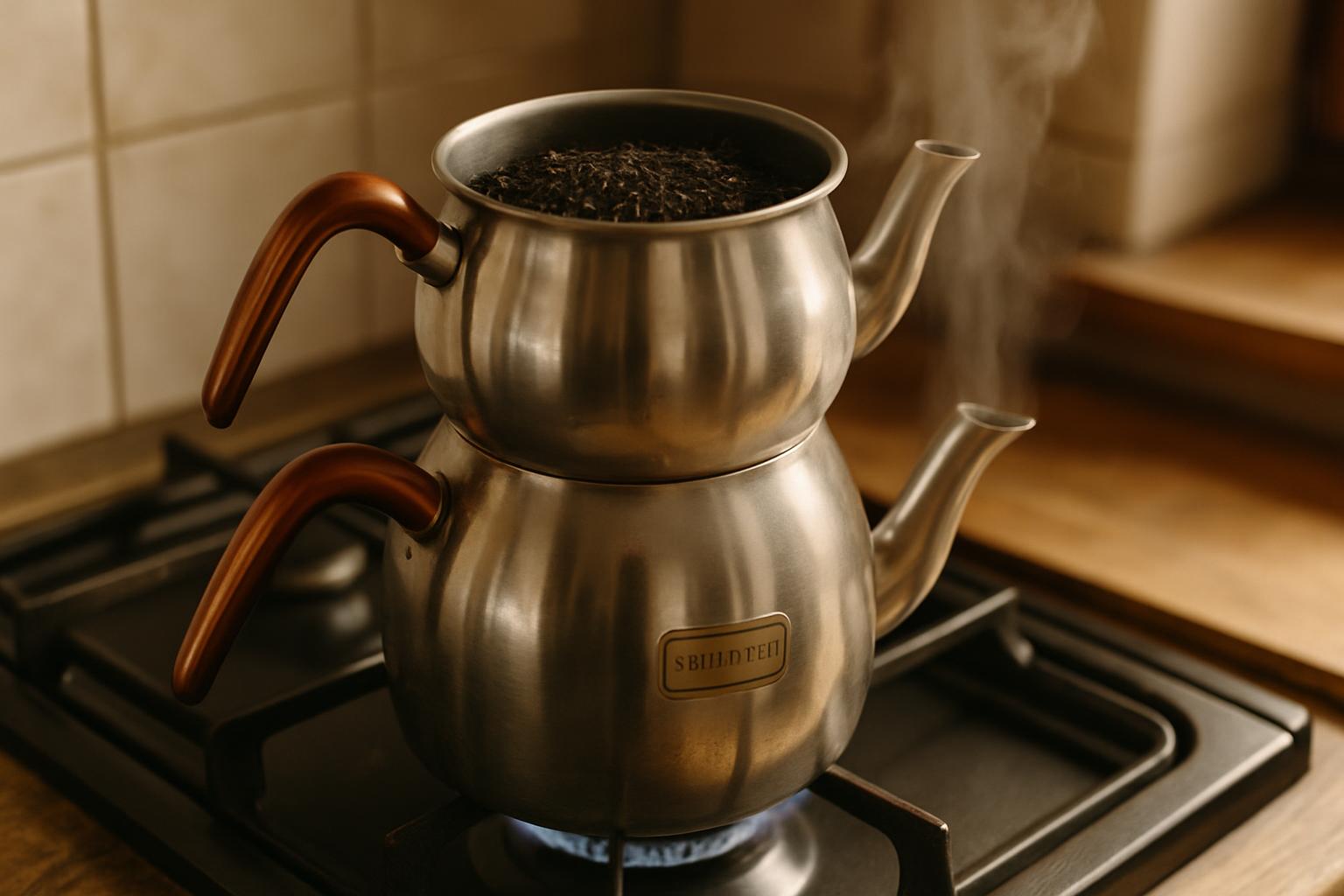
The çaydanlık is the heart of Turkish tea. It is two stacked pots:
- The bottom pot, a larger kettle, holds water. It sits directly on the stove.
- The top pot, smaller, holds the dry tea leaves. It sits on top of the kettle, warmed by its steam.
The design does two jobs at once. The bottom kettle heats water, and the steam keeps the top pot warm while the tea brews slowly into a strong concentrate. When you serve, you pour a little concentrate from the top pot into a glass, then top it up with hot water from the bottom kettle.
| Part | What it holds | Purpose |
|---|---|---|
| Bottom pot (kettle) | Water | Boils water and keeps the top pot warm |
| Top pot (demlik) | Loose tea and some hot water | Brews a strong tea concentrate |
| Tulip glass | Concentrate plus hot water | Lets each person choose their strength |
How to brew Turkish tea
What you need
- A çaydanlık, or a small teapot that sits securely on top of a larger kettle
- Loose Turkish or other small-leaf black tea
- Water
- Tulip-shaped tea glasses and saucers, if you have them
Step by step
- Fill the bottom pot. Fill the large kettle about three-quarters full with fresh water.
- Add tea to the top pot. Use about 1 tablespoon of loose tea for every 2 glasses you plan to serve. For 4 to 6 glasses, 2 to 3 tablespoons is a good start.
- Stack and heat. Put the top pot on the kettle and bring the water to a boil. The dry leaves warm up while the water heats.
- Pour water over the tea. Once the water boils, pour enough into the top pot to cover the leaves and fill it about halfway or a little more. Then refill the bottom kettle with water.
- Brew slowly. Put the top pot back on the kettle and turn the heat to low. Let the tea brew for 10 to 15 minutes. You'll see the leaves sink to the bottom when the tea is ready.
- Serve. Pour concentrate into each glass, then top it up with hot water from the kettle to the strength each person likes.
How strong should it be?
In Turkey people often order their tea by color:
| Style | Turkish name | Concentrate in a tulip glass | Color |
|---|---|---|---|
| Light | Açık | About one-quarter | Light amber |
| Medium | Normal | About one-third to half | Deep amber red |
| Strong | Koyu or demli | Half or more | Dark red |
Hold your glass up to the light. A good medium Turkish tea should glow a clear, deep red.
How Turkish tea is served
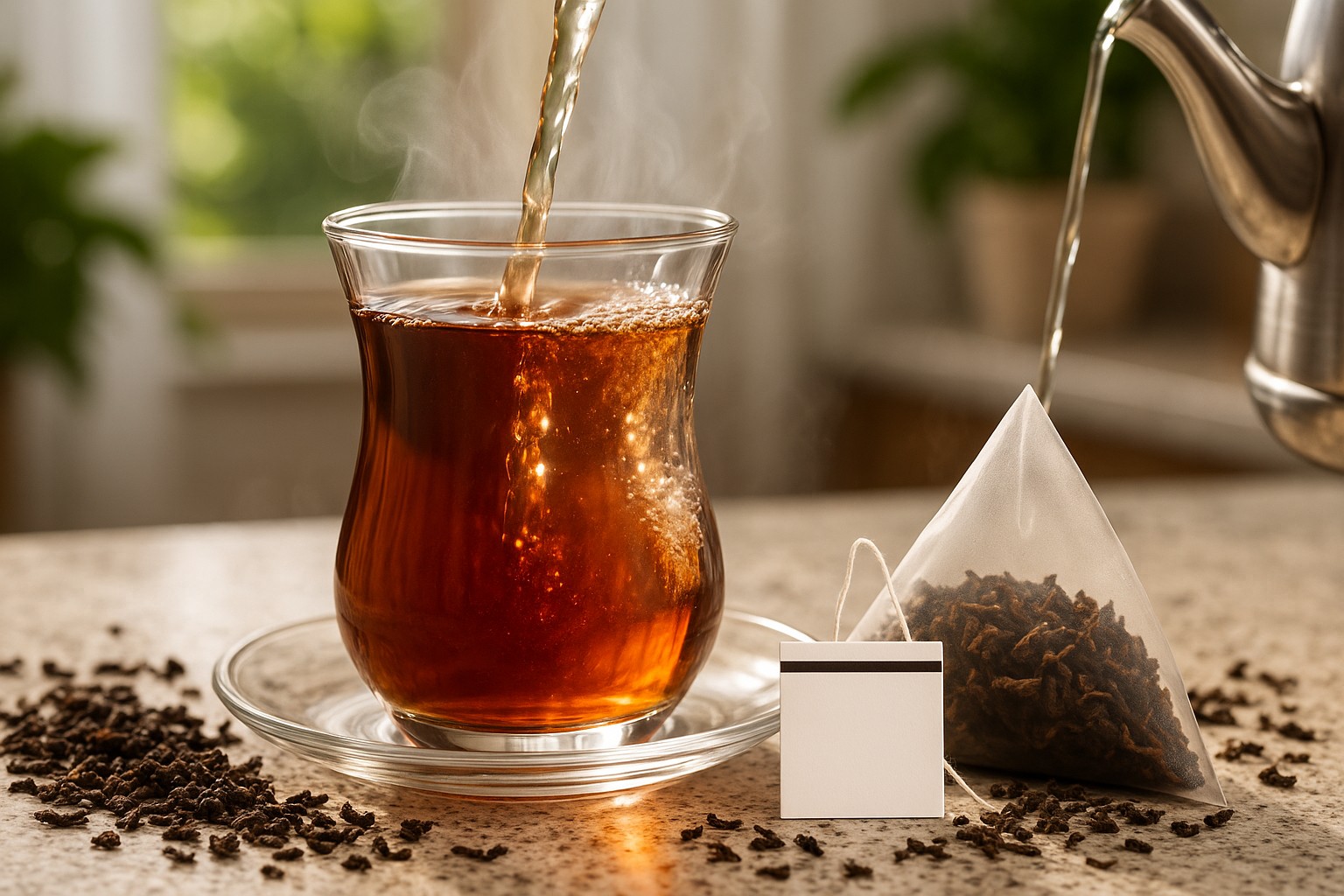
- In tulip glasses. The small, curved glass lets you see the color and keeps the tea hot at the bottom while cooling at the rim. It is usually held by the rim to avoid burning your fingers.
- On a small saucer, with a tiny spoon.
- Without milk. Turkish tea is enjoyed plain.
- With sugar on the side. One or two sugar cubes are common, but many people drink it unsweetened.
- Refilled often. It is normal to drink several glasses in one sitting. Your host will keep refilling your glass until you lay your spoon across the top.
What to eat with Turkish tea
Turkish tea goes with almost anything. Classic pairings include:
- A Turkish breakfast with bread, cheese, olives, tomatoes and cucumbers
- Simit, a sesame-crusted bread ring
- Simple butter cookies or shortbread
- Dried fruit and nuts
Making Turkish tea without a çaydanlık
You can still enjoy Turkish-style tea with ordinary equipment.
Stacked teapot method. Set a small ceramic or metal teapot securely on top of a larger kettle or saucepan of simmering water. Brew the tea in the small pot as you would in a çaydanlık.
Concentrate method. Brew a strong concentrate in any teapot: about 2 tablespoons of tea in 2 cups of boiling water, steeped for 10 minutes and kept warm. Pour some into each glass and dilute with freshly boiled water.
Either way, the key is the same: a strong concentrate, diluted to taste.
Tips for a better cup
- Use fresh water. Start with fresh, cold water each time, not water that has been boiled before.
- Don't boil the tea itself. The top pot should stay warm and steaming, but the tea should never boil hard. Boiling makes it bitter.
- Serve within about an hour. The concentrate slowly turns bitter if kept warm too long. Brew a fresh pot for later.
- Rinse the pot. Empty and rinse the top pot after each brew so old leaves don't spoil the next batch.
Common mistakes
- Steeping too short. Five minutes isn't enough. Turkish tea needs its long, slow brew.
- Too much heat. Keep the stove low once the tea is brewing.
- Too little tea. If your tea tastes thin even with a lot of concentrate, add more leaves next time.
- Using large, whole-leaf tea. Large, open leaves can work, but small, finely cut leaves give the classic deep red color and body.
Turkish tea vs. other tea traditions
| Tradition | Tea | Brewing | Served with |
|---|---|---|---|
| Turkish | Small-leaf black tea | Slow concentrate in a two-tier pot | Sugar on the side, no milk |
| British | Black tea blends | Steeped 3 to 5 minutes in a teapot | Milk, sometimes sugar |
| Russian | Black tea | Concentrate (zavarka) diluted with hot water | Lemon, sugar, jam |
| Moroccan | Green tea with mint | Brewed with sugar and fresh mint | Poured from a height into small glasses |
| Indian | Black tea with spices | Simmered with milk | Masala chai |
Turkish and Russian tea share the idea of a strong concentrate topped with hot water, which is an easy, flexible way to serve tea to a group.
The bottom line
Turkish tea is all about a slow, strong brew and a glass you can make as light or as dark as you like. With a çaydanlık, or a simple stacked-pot setup, a good small-leaf black tea and a little patience, you can bring a piece of Turkish tea culture to your own table. Free US shipping is available on Tealyra orders if you'd like to try a new black tea for your next pot.
Frequently asked questions
What kind of tea is Turkish tea?
Turkish tea is a black tea, most of it grown on the hills of the Rize region near the Black Sea coast. It has small leaves and brews into a deep red, strong but smooth cup.
Do I need a çaydanlık to make Turkish tea?
It helps, but you can improvise with a small teapot set on top of a larger kettle, or brew a strong concentrate in any teapot and dilute it with hot water.
How long should Turkish tea brew?
Let the tea steep in the top pot over low heat for about 10 to 15 minutes. That long, gentle brew is what gives Turkish tea its depth.
Is Turkish tea served with milk?
No. Turkish tea is traditionally served without milk, often with one or two sugar cubes on the side.
How do I make Turkish tea lighter or stronger?
Adjust the ratio of concentrate to hot water in the glass. Use less concentrate for a light amber açık tea, or more for a dark red koyu tea.