 by Tealyra
Pu Erh Tea: A Guide to Its Origins, Styles, and Brewing
Explore pu erh tea with our guide to Yunnan origins, raw sheng and ripe shou styles, cake formats, and essential brewing tips for crafting the perfect cup.
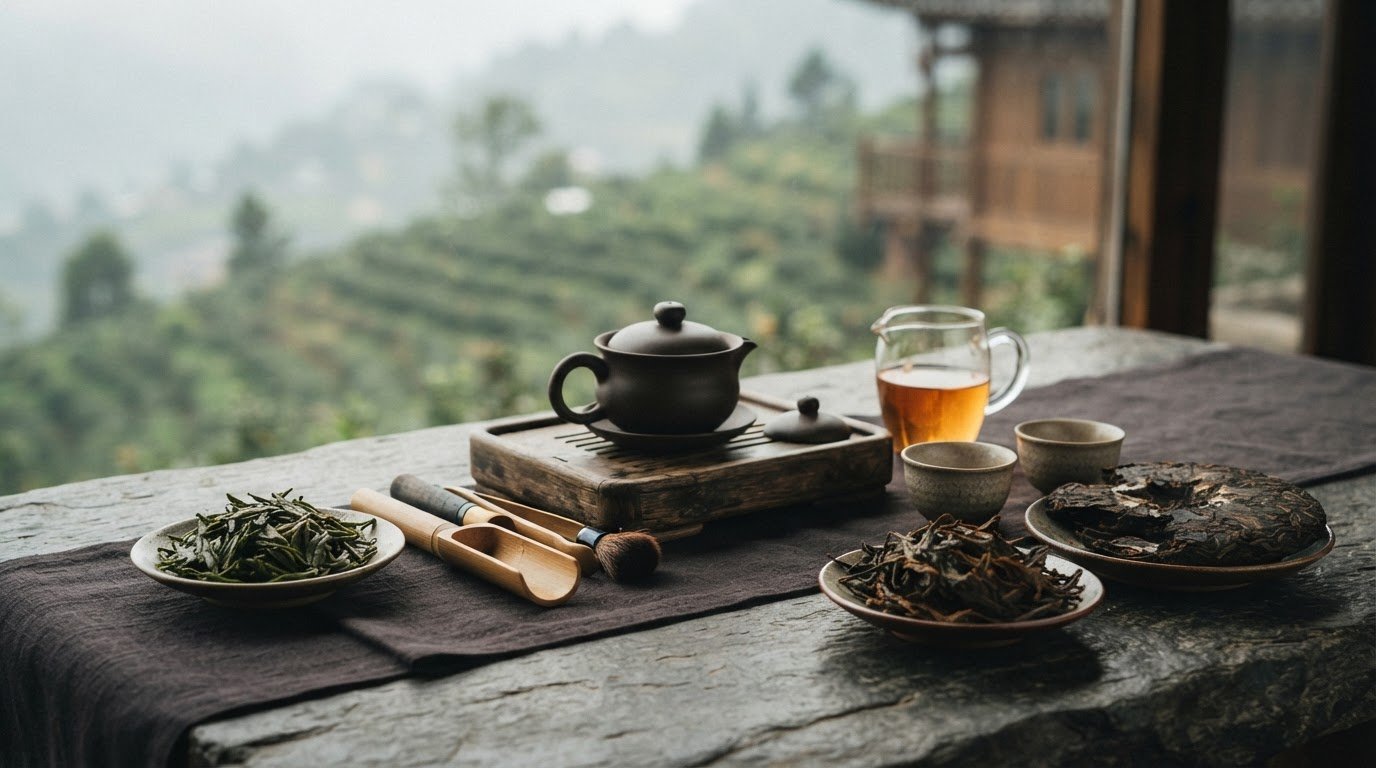
What if pu erh tea isn’t defined by one deep, earthy flavor, but by two distinct styles that can lead to very different cups? If terms like sheng, shou, and post-fermentation make the category feel more complicated than inviting, you’re not alone. Pu-erh comes from Yunnan, China, and its character depends on how the leaves are processed and, in some styles, how they change with age.
You don’t need specialist vocabulary or a single “correct” tasting note to begin. Sheng, or raw pu-erh, and shou, or ripe pu-erh, follow different processing paths, so their flavors can differ markedly. Earthiness is one possible impression, not a rule for every tea.
This guide explains pu-erh’s defining terms, compares its main styles and formats, and shares brewing principles you can adjust to suit your taste. From loose leaves to compressed cakes, you’ll find a practical way to choose a starting point and make each cup your own.
Key Takeaways
- Learn what gives pu erh tea its distinct identity beyond broad flavor labels.
- Compare sheng and shou by how they’re processed and the flavor directions they may take.
- Understand how loose-leaf and compressed formats can shape your choice of tea.
- Adjust leaf quantity, water, vessel, and steeping to explore a balanced cup that suits your taste.
- Use a taste-led framework to find a comfortable starting point, including Aged Ripe Pu’erh Tea.
Table of Contents
Pu-erh Tea Explained: What Makes This Chinese Tea Distinct?
Pu-erh is a category of Chinese tea associated with Yunnan, distinguished by its leaf origin and processing rather than one fixed flavor or age. It can be fresh or aged, loose or compressed, and its taste varies with the style, production, and storage. The name describes a family of teas, not a single tasting note.
What does the name pu-erh describe?
The names pu-erh, pu erh, and puerh are different spellings for the same tea category. The hyphen and spacing vary across English-language sources and product labels; they don’t signal different styles. You may also encounter sheng, meaning raw, and shou, meaning ripe. These terms describe two broad processing paths, each of which can produce varied cups.
Pu-erh is often associated with earthiness, but that impression doesn’t describe every example. Processing, storage conditions, age, and the starting leaves can all shape a tea’s character. A label offers useful context, but it can’t promise a precise aroma or flavor.
For a broader overview of its history and styles, see Pu-erh Tea: Origins, Processing, and Styles. The key distinction is simple: age is one influence, not the definition of the category, and older tea isn’t automatically a better match for every palate.
Where does pu-erh tea come from?
Yunnan, in southwestern China, is pu-erh’s traditional geographic home. The region gives the tea an important point of origin, but it doesn’t guarantee a particular taste. Different source leaves and production choices can lead to distinct results, even within the same broad category. Consider origin alongside style and handling, rather than using it as a shortcut to predict flavor.
Geographic naming matters, too. China’s geographical-indication standard ties the formal designation Pu-erh to defined production areas in Yunnan. Tea made in a similar style elsewhere may be described as dark tea or pu-erh-style tea, rather than carrying the same formal designation. This context can help make sense of labels without turning origin into a flavor promise.
To explore examples in the pu-erh tea category, use style and origin details as starting points, then let your own preferences guide the cup. The name opens the door; the leaves and their journey give each tea its character.
How Pu-erh Tea Is Made: From Leaf Processing to Aging
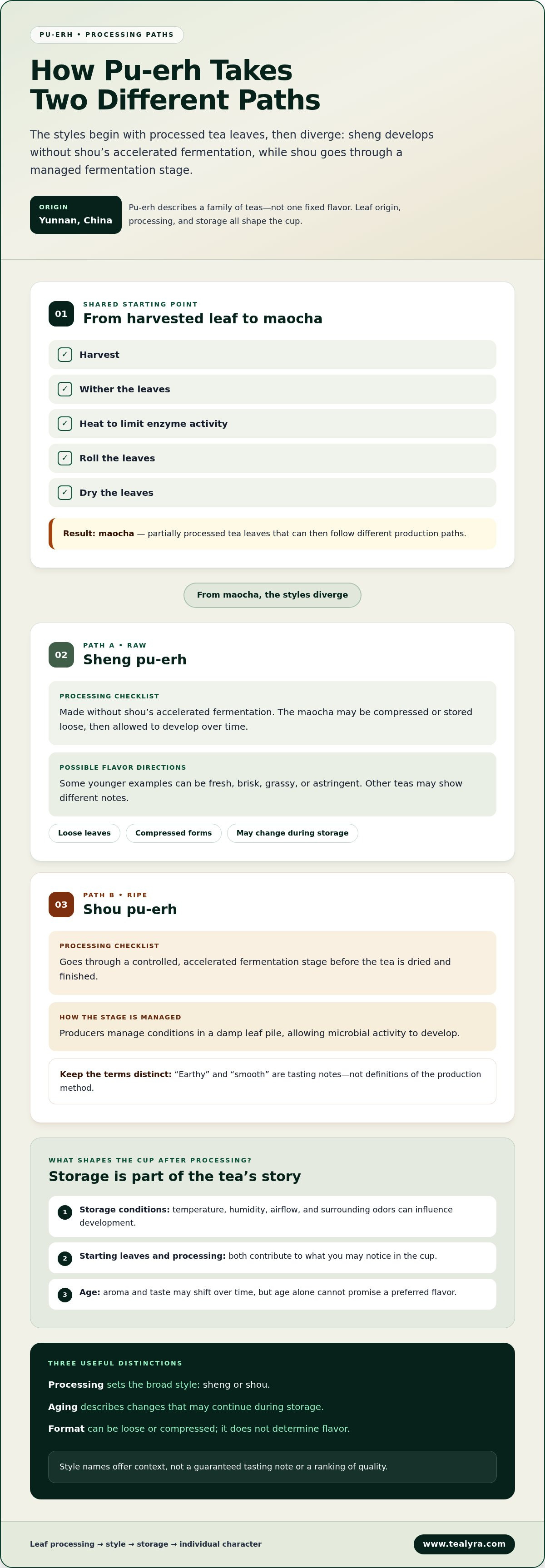
Pu-erh’s character begins well before the leaves meet hot water. After harvest, leaves are withered, heated to limit enzyme activity, rolled, and dried. This produces maocha, or partially processed tea leaves, which can then follow different paths. Some are shaped and left to mature naturally; others undergo a managed fermentation process before being finished.
Processing creates a style, while aging describes changes that may continue during storage. Sheng, or raw pu-erh, is generally made from maocha that is compressed or stored loose and allowed to develop over time. Shou, or ripe pu-erh, goes through a controlled, accelerated fermentation stage. Either style may be sold loose or pressed into cakes, though the format itself doesn’t determine the flavor.
Pu-erh’s range comes from choices at each stage, from leaf processing and fermentation to compression and storage. Age is only one part of that story.
What does post-fermentation mean in pu-erh production?
In pu-erh, “post-fermentation” refers to changes that occur after the leaves have been processed, with microbial activity playing a role in the tea’s transformation. It differs from ordinary enzymatic oxidation, which is associated with changes in leaves during conventional tea production. The terms are sometimes blurred in casual descriptions, but they refer to distinct processes.
For shou, producers encourage fermentation by managing conditions in a damp leaf pile, allowing microbial activity to develop before the tea is dried and finished. Sheng doesn’t undergo this same accelerated step; its character can evolve during later storage. “Earthy” and “smooth” are tasting notes, not definitions of the production method.
How do age and storage influence a tea?
Over time, a pu-erh’s aroma and taste may shift as the tea interacts with its storage environment. Temperature, humidity, airflow, and surrounding odors can all influence its development. Storage is part of the tea’s history, not simply a matter of leaving it untouched until it becomes better.
Results vary. Starting material, processing, and storage conditions all shape what you may notice in the cup, so age alone can’t promise greater depth or a flavor you’ll prefer. Some teas may develop softer or more integrated impressions, while others may not move in a direction that suits every drinker. Tasting is the surest way to discover what appeals to you.
Compression is another production choice. Pressed leaves form a compact cake, while loose tea is ready to portion without breaking apart a cake. Compressed pu-erh cakes offer one way to explore this traditional format.
Sheng vs. Shou Pu-erh: Compare the Two Main Styles
The words sheng and shou describe two different pu-erh styles, not a scale from ordinary to superior. Sheng means “raw” and refers to tea made without the accelerated fermentation used for shou, or “ripe” pu-erh. Each style can offer a broad range of aromas and tastes, so the labels are a starting point, not a complete tasting description.
Sheng is the raw style, while shou is the ripe style made with an accelerated fermentation step. Neither name promises a particular flavor or level of quality.
| Style | Processing | Possible flavor direction | Common forms |
|---|---|---|---|
| Sheng (raw) | Processed without shou’s accelerated fermentation; it may continue to change during storage. | Can be fresh, brisk, grassy, or astringent, particularly in some younger examples. Other teas may show different notes. | Loose leaves or compressed forms, including cakes. |
| Shou (ripe) | Undergoes a managed fermentation stage before the finished tea is prepared. | May lean toward earthy, mellow, or smooth impressions, though character varies from tea to tea. | Loose leaves or compressed forms, including cakes. |
How does sheng pu-erh differ from shou pu-erh?
“Raw” and “ripe” refer to how the tea is made, not how good it is. Some drinkers enjoy sheng for its livelier, sometimes more astringent profile; others prefer the deeper, rounded impressions they may find in shou. These are tendencies, not guarantees. Leaf material, processing, storage, and brewing all influence what reaches the cup.
Not every sheng needs to be kept for years before it can be enjoyed. Age may influence taste, but it isn’t a requirement or a promise of improvement. Pu erh tea isn’t always intensely earthy, either. That familiar note is more associated with some ripe teas, while other cups may be brighter, softer, or more layered.
Does pu-erh come loose or compressed?
Both styles may be sold as loose leaves or pressed into shapes such as cakes. Loose tea is straightforward to portion; a cake needs to be gently loosened before brewing. Compression describes presentation, not style or a guarantee of quality, age, or flavor. Pu-erh tea cakes are another format to explore.
If you’re drawn to the ripe style, Tealyra offers Aged Ripe Pu’erh Tea as a place to begin. Let the style label guide your first choice, then notice which aromas and flavors you enjoy in the cup.
How to Brew and Store Pu-erh Tea for a Balanced Cup
There isn’t one mandatory recipe for pu erh tea. The amount of leaf, water, vessel, and steeping time all influence the result. Use this method as a starting point, then adjust one element at a time so you can notice what brings the cup into balance for you.
What is a gentle starting method for brewing pu-erh?
- Choose and portion the leaves. Begin with a modest amount relative to the water in your teapot or infuser. If the tea tastes too light, add a little more leaf next time; if it feels too concentrated, use less.
- Prepare the leaves. Measure loose tea directly. For a compressed piece, ease off a small portion with a tea pick or another clean, blunt tool, working gently to keep the leaves as intact as possible.
- Heat fresh water. Use water hot enough to draw out the tea’s aroma and flavor. The ideal temperature can vary by tea and preference, so follow any brewing guidance supplied for your leaves rather than treating one temperature as universal.
- Steep and taste. Infuse the leaves, then taste before deciding whether the cup needs more time. A longer steep or more leaf can create a fuller, stronger infusion; a shorter steep or less leaf may feel lighter.
- Adjust for another infusion. Some pu-erh can be steeped more than once, especially with a small amount of leaf and short successive infusions. Add time gradually and taste each infusion to see what suits the tea and your preferred brewing style.
A small teapot or infuser gives you control over how readily leaves meet the water, while a larger vessel can make a more generous infusion. Choose a shape that makes it easy to contain and remove the leaves when the taste is where you want it. Tea accessories include practical options for preparing loose-leaf tea.
How should loose-leaf and compressed pu-erh be handled?
Loose leaves are ready to measure. Compressed tea takes a little more care: lift a small piece from the edge rather than crushing the cake, so you can portion it without turning the leaves into fine fragments. Adjust the portion to suit your vessel and taste.
Store tea away from direct sunlight, strong odors, and damp conditions, and keep it clean and dry. For everyday use, close the packaging or container after each opening. If you’re intentionally storing tea to mature, remember that conditions influence how it develops; there’s no guaranteed result or fixed schedule for a preferred flavor. Storage guidance is separate from brewing: prepare only the portion you’re ready to steep.
Explore Tealyra’s tea selection and accessories to put these brewing ideas into practice. Browse Tealyra’s tea selection and find a pu-erh style to enjoy at your own pace.
Choosing Pu-erh Tea: Find a Style That Suits Your Cup
Choosing a first pu-erh can be simple: begin with the kind of cup you’re curious to taste, not with a rule about what beginners should drink. Sheng and shou are distinct approaches, but neither is reserved for a particular level of experience. Your preference for brisk or mellow impressions, and your openness to unfamiliar flavors, can help you decide where to start.
Which pu-erh style might suit your preferences?
If you enjoy teas that can feel lively or a little astringent, try exploring sheng. Its character varies, and some examples may offer fresher, brighter impressions. If you’re drawn to a rounder, deeper direction, shou may be worth tasting; some ripe teas lean earthy or smooth. These are broad tendencies, not promises about every cup.
You don’t need to choose one style forever. Trying both in separate sessions lets you notice whether you prefer a brisker edge or a more settled impression. Keep preparation consistent when comparing them: use the same vessel and water, and adjust the amount of leaf or steeping only after tasting. That makes the differences easier to follow.
Age and format can prompt curiosity, too, but they shouldn’t make the choice feel like a test. You don’t have to seek out an old tea to appreciate sheng, and a compressed cake isn’t automatically more suitable than loose leaves. Let the style description guide your first exploration, then use your own senses to refine what you enjoy.
Where can a beginner begin exploring pu-erh?
Tealyra offers Aged Ripe Pu’erh Tea as a place to begin exploring ripe pu-erh. Its name identifies the style and age character without dictating exactly what you’ll taste; brewing choices and individual preferences shape the experience in the cup.
Browse the pu-erh tea selection with a simple question in mind: are you more curious about raw or ripe, loose leaves or a compressed format? Choosing one point of interest makes the category easier to explore without narrowing your curiosity too soon. If earthy notes appeal, ripe pu-erh is a natural style to sample; if you’d like to explore a different direction, consider sheng as well.
Start with the style that sounds inviting, prepare it gently, and give yourself time to notice its aroma and flavor. There’s no need to settle on a favorite in one cup. Explore Tealyra’s selection and let your next pot be guided by what you most want to taste.
Let Your Next Cup Lead the Way
Let your own tasting guide you. As you explore pu erh tea, notice which aromas draw you in, how the cup feels as it cools, and whether you prefer a lighter or more concentrated infusion. A few observations can make your next choice more personal than any broad flavor label.
You might keep a simple note after each cup: the style, how you prepared it, and what stood out. There’s no need to find the perfect description. Even a few words, such as “bright,” “earthy,” or “gentle,” can help you recognize what you’d like to revisit or explore further.
Tealyra’s online selection brings pu-erh teas and tea accessories together for further exploration. Take your time, choose a tea that feels inviting, and let each infusion offer something new to notice. Explore Tealyra’s pu-erh tea selection and enjoy discovering where your next cup takes you.
Frequently Asked Questions
Does pu-erh tea contain caffeine?
Yes. Pu-erh is made from tea leaves and contains naturally occurring caffeine. The amount in a cup varies with the tea, how much leaf you use, and how you brew it, so one general figure can’t describe every serving. For a more specific estimate, look for information about the particular tea and preparation rather than relying on a category-wide number. A stronger infusion may taste more concentrated, too.
Can you drink pu-erh tea with milk or sweetener?
Yes, you can add milk or sweetener if that’s how you enjoy it. Try a small cup plain first, then add a little of either and taste again. Milk can soften the cup’s texture, while sweetener changes its perceived balance. This comparison helps you notice what the additions contribute. There’s no single required way to serve pu-erh, so adjust it to your preference.
Why can some pu-erh tea smell musty or earthy?
Some teas have earthy aromas, but their intensity and character vary. A musty note alone doesn’t establish a tea’s quality, age, or storage history, and aroma isn’t enough to judge whether a particular tea has been stored well. If a scent seems unexpected, consult reliable information about that tea and its handling rather than drawing a conclusion from smell alone. Tasting notes are personal impressions, not guarantees.
Is pu-erh tea always dark in color?
No. The infusion’s color can differ with the tea, the amount of leaf, and the way you brew it. A paler cup doesn’t automatically mean the tea is inauthentic, just as a dark infusion doesn’t prove it’s old or superior. Notice color alongside aroma and taste. For a practical comparison, keep your brewing vessel and water consistent while sampling different teas, then observe how each cup appears.
How do you pronounce pu-erh?
Pronunciation can vary with language and speaker, and English-language guides don’t always represent the Chinese name in the same way. Rather than treating one simple English phonetic spelling as definitive, listen to a reliable language source if you’d like to hear it spoken. In writing, you may see “pu-erh,” “pu erh,” or “puerh”; these are spelling variations, not separate tea styles.
Is pu-erh tea naturally flavored?
Not necessarily. Pu-erh names a tea category, but the wording alone doesn’t tell you whether a particular tea is plain or includes added ingredients. Read the product description to understand the contents of the tea you’re considering, especially if it’s presented as a blend. This is more useful than assuming every pu erh tea shares the same ingredient list. The flavor you taste may reflect the tea itself or additions described for that product.
Article by
Tealyra
The Best Galaxy Of Teas