 by Tealyra
Masala Chai: Ingredients, Brewing Tips, and Flavor
Masala chai is tea brewed with spices, often with milk and sweetener. Its flavor can be bold and warming, gently aromatic, or somewhere in between, depending on the tea, spice balance, and brewing method.
In This Article
- Masala chai’s roots and place in daily life
- How tea, spices, milk, and sweetness shape the cup
- Brew masala chai on the stovetop
- Serve masala chai hot, iced, or as a latte
- Choose a blend and make the next cup your own
- Masala Chai FAQs
- Recommended next steps
Masala chai is tea brewed with spices, often with milk and sweetener. Its flavor can be bold and warming, gently aromatic, or somewhere in between, depending on the tea, spice balance, and brewing method. There is no single formula: you can adjust each part to suit your taste.
Below, we explain what goes into masala chai, how to make it on the stovetop, and how to choose between mixing spices yourself and starting with a prepared blend.
Masala chai’s roots and place in daily life
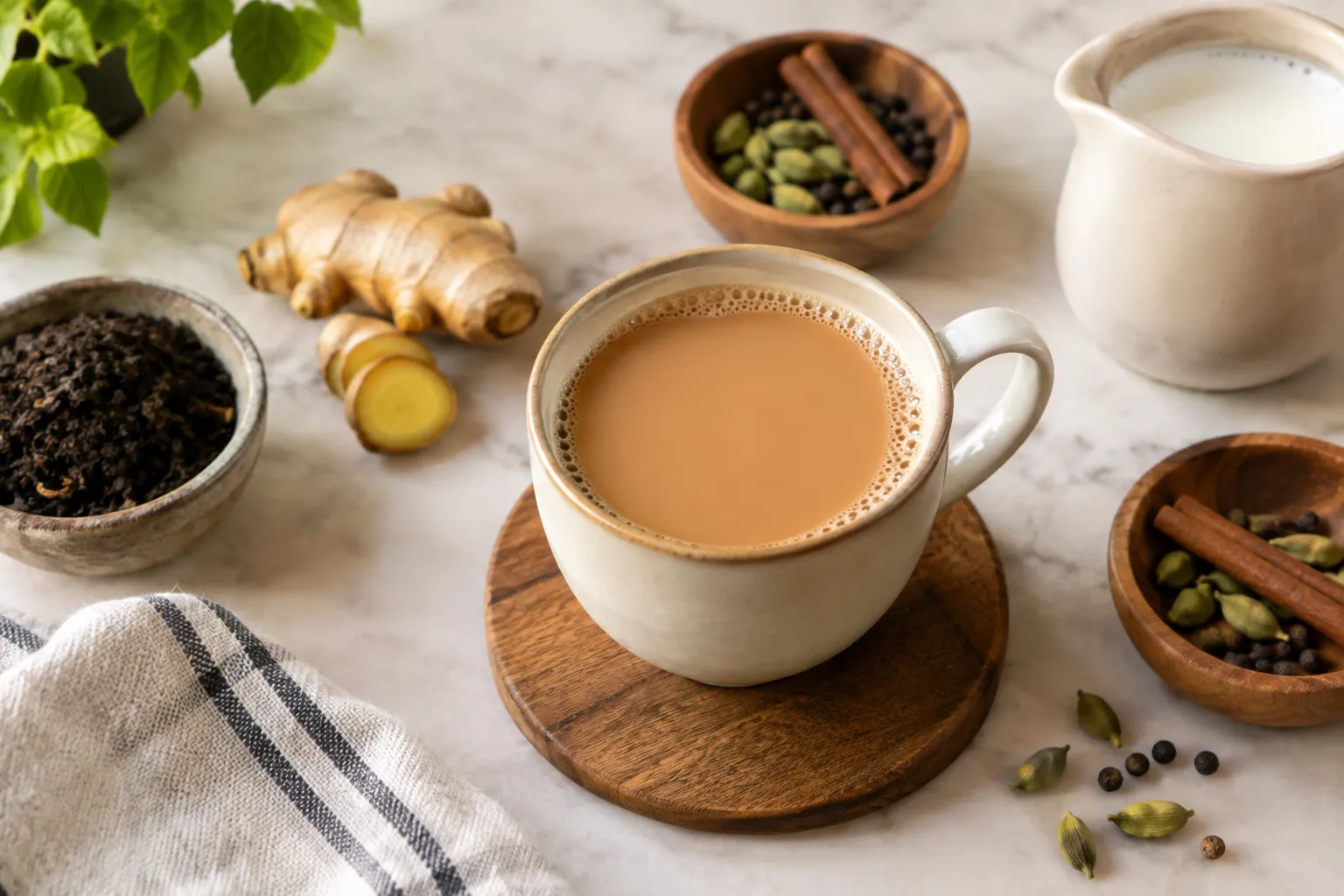
“Chai” means tea, while “masala” refers to a spice mixture. Masala chai, then, is spiced tea. It is closely associated with India, where tea is prepared in many different ways and enjoyed in homes and everyday settings. Recipes vary from one household or region to another, so no single spice list or set of proportions defines every cup.
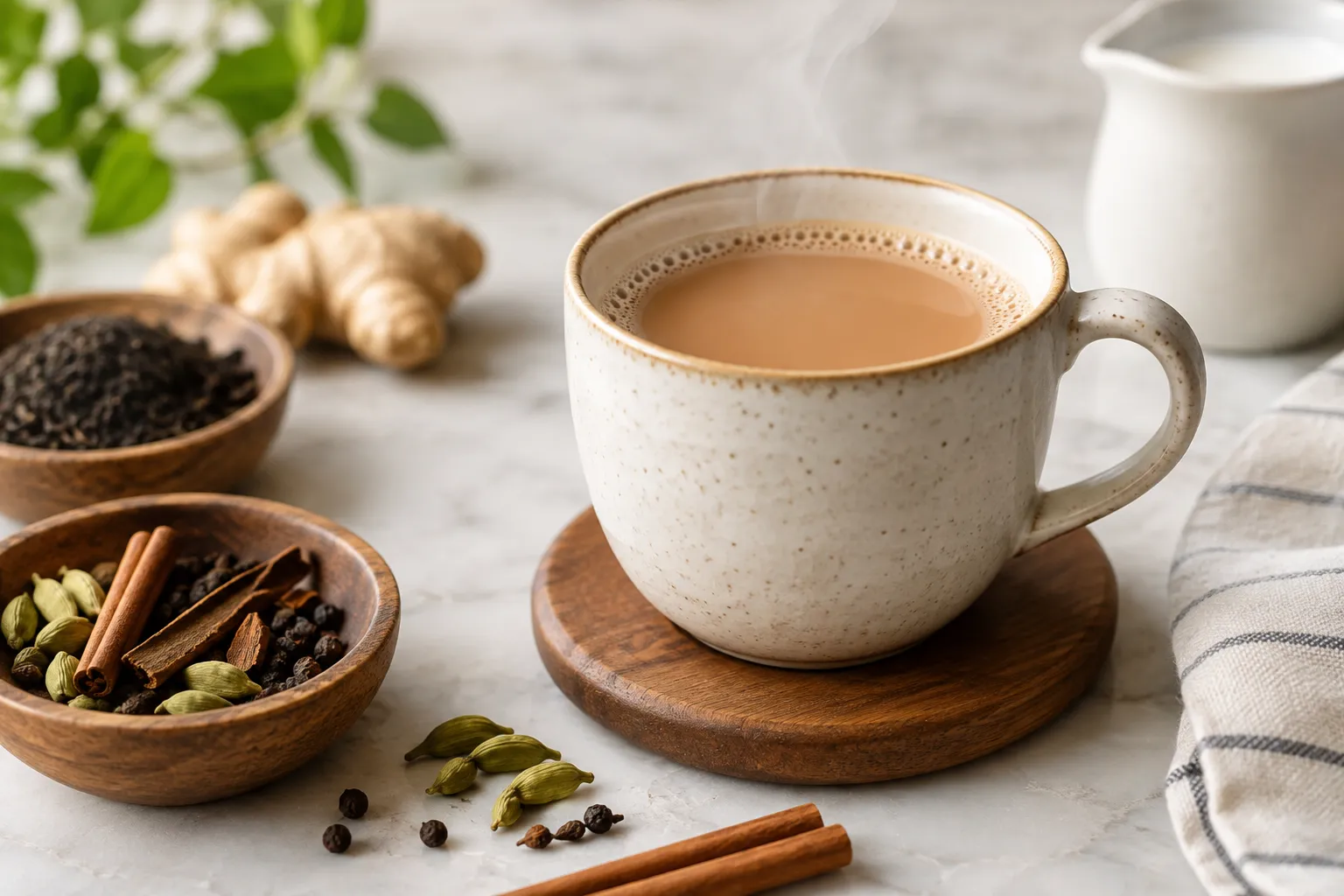
A familiar version combines black tea, spices, milk, and sometimes sugar. The spices may include cardamom, ginger, cinnamon, cloves, or black pepper, but the mix can change. Some cups highlight one spice; others aim for a rounder blend. The amount of milk and sweetener also varies.
That flexibility is part of what makes masala chai approachable at home. You do not need a fixed “authentic” recipe to begin. Think of the ingredients as a set of choices: tea provides the base, spices add aroma and flavor, and milk and sweetener shape the finish.
If you are exploring tea styles, browsing black tea can help you get familiar with the category often used as a base for masala chai.
How tea, spices, milk, and sweetness shape the cup
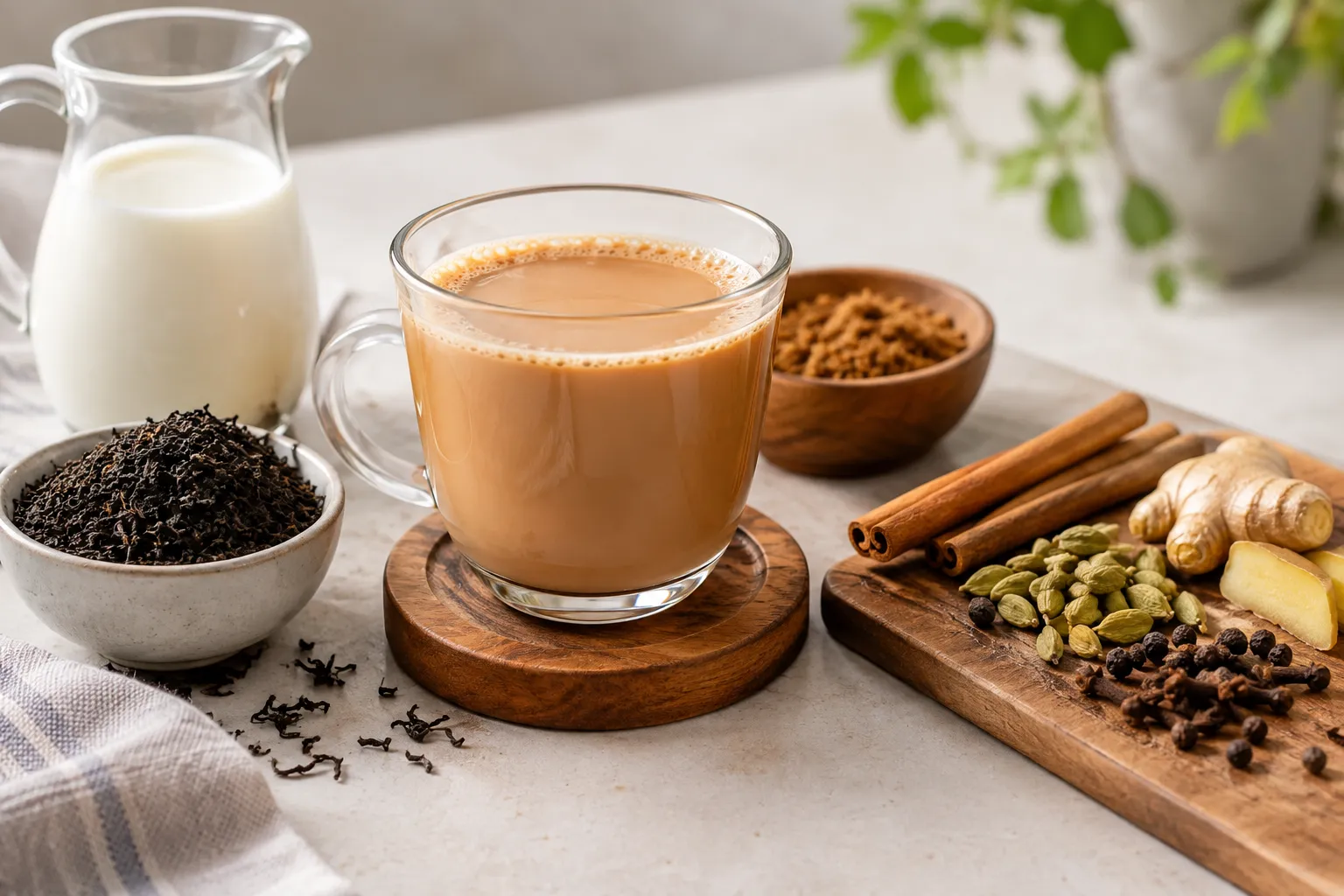
A well-balanced cup lets the ingredients work together. Strong tea can stand up to spices and milk, while spices bring aroma and complexity. Milk softens the edges and adds body; sweetener can round out the flavor, though it is optional.
Instead of trying to reproduce a particular formula immediately, notice what you want more or less of. If the tea flavor gets lost, use more tea or less milk. If the spice feels too sharp, reduce the amount of pepper or ginger next time. Small adjustments make it easier to find your preferred balance.
Choosing tea and whole or ground spices
A robust black tea is a common choice because its flavor remains noticeable alongside spices and milk. A lighter or more delicate tea may be harder to taste in a rich, strongly spiced brew. For a first attempt, start with a black tea you enjoy drinking on its own, then adjust the spice level around it.
Whole spices and ground spices behave differently in the pot. Crushed whole spices release flavor during simmering and can be strained out before serving. Ground spices disperse through the liquid more readily, so they may leave a slightly textured cup. If you use whole spices, a gentle crush can expose their aroma without grinding them into tiny pieces.
A simple starting combination might include cardamom and cinnamon, with a little ginger or black pepper if you like more warmth and bite. These are options, not requirements. Try one change at a time so you can tell which ingredient makes the difference.
Use spices that smell aromatic when you open their containers. Store them closed and away from heat and moisture to help preserve their flavor. If your cupboard contains several old spices, it may be easier to start with a smaller combination rather than adding everything at once.
Adjusting milk and sweetener
Milk changes both the texture and taste of masala chai. More milk creates a creamier, softer cup; less milk leaves the tea and spices more prominent. Dairy milk is one option, but you can also try a plant-based alternative. Since different milks vary in flavor and texture, the finished cup will vary too.
Sweetener is a matter of preference, not a required ingredient. Sugar is common in some preparations, but you can leave it out or add a little after brewing. Adding it gradually lets you taste how sweetness changes the spice and tea balance.
If the cup tastes too rich, reduce the milk next time or use more water in the base. If it tastes thin, try a little more milk or a stronger tea infusion. Adjust one part at a time rather than changing the tea, spices, and milk all at once.
Brew masala chai on the stovetop
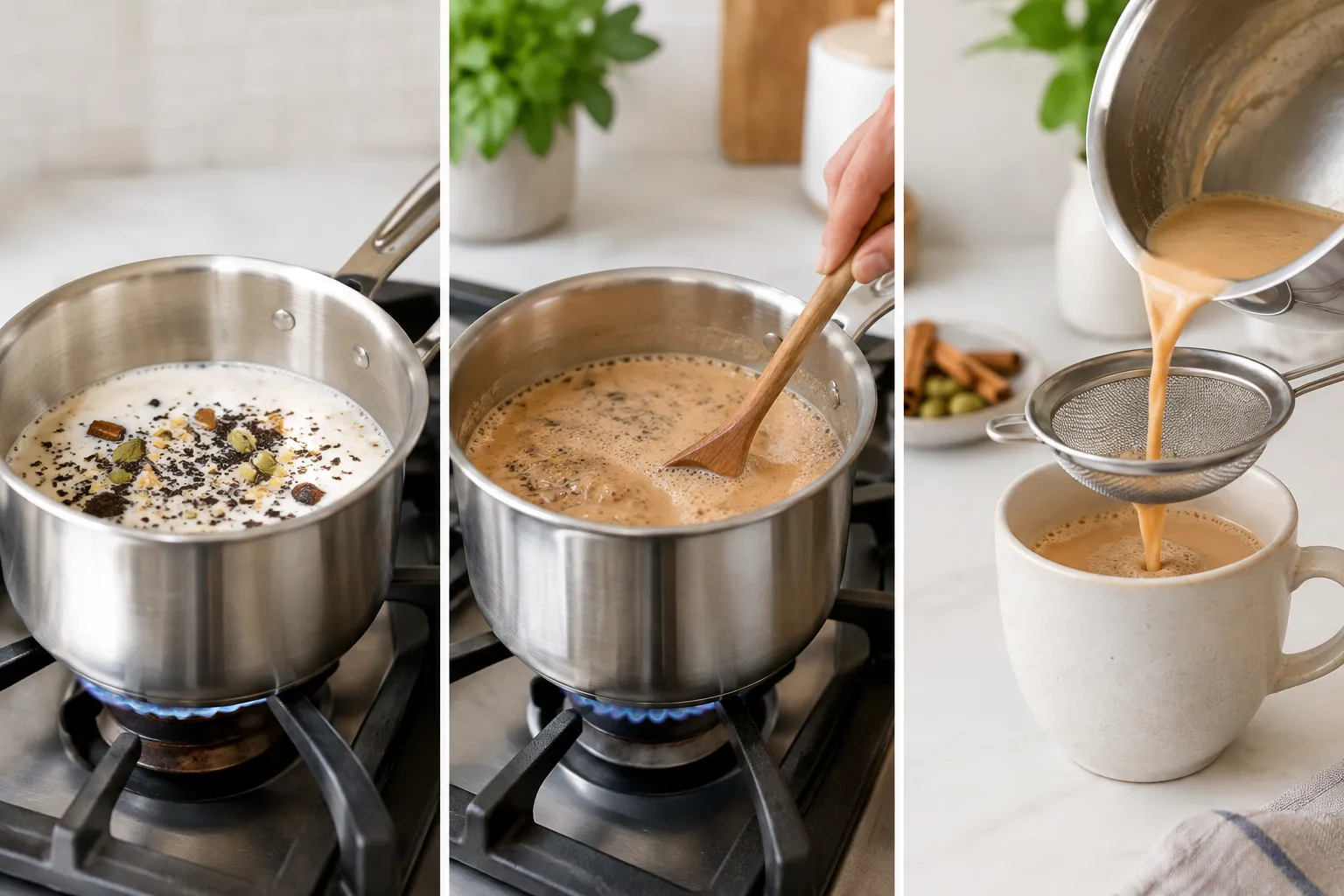
Stovetop brewing gives you control over how the spices, tea, and milk come together. This two-cup starting point is a guide rather than a fixed recipe:
- 1 cup water
- 1 cup milk
- 2 teaspoons loose black tea
- About 1 teaspoon of lightly crushed mixed spices, adjusted to taste
- Sweetener, if desired
Put the water and spices in a small saucepan and bring them to a gentle simmer. Let them simmer briefly to release their aroma, then add the tea. After a short infusion, add the milk and warm the mixture gently. Strain into cups and sweeten to taste.
The amount of liquid, tea, and spice can be changed to suit your pot and preferred strength. If you are using a prepared blend, check its brewing directions and use those as your starting point.
Build flavor without over-steeping the tea
Give the spices a head start in the water. This lets their flavor develop before the tea is added. Once the tea goes in, keep an eye on the pot and taste as it brews. Leaving tea in a simmering mixture for too long can make the result taste overly strong or harsh.
Add milk after the tea has had time to infuse, then warm the mixture rather than boiling it vigorously. Strain promptly when the flavor is where you want it. If the result is too intense, dilute it with a little hot water or milk; next time, shorten the tea’s brewing time or use less tea.
The exact timing will depend on the tea and spices you choose. Rather than relying on the clock alone, use aroma and taste as guides.
Make a stronger or lighter cup
For a stronger cup, add a little more tea or reduce the amount of water relative to milk. You can also use more spices, but increase them gradually: a small amount of pepper or ginger can quickly make the blend more assertive.
For a lighter cup, use less tea or spices, add more water, or shorten the tea infusion. If you want a milder spice profile without losing all its aroma, reduce the most prominent spice rather than cutting every spice equally.
Keep notes if you are experimenting: write down the tea, approximate spice amounts, and whether you used more water or milk. That simple record can help you repeat a version you like.
Serve masala chai hot, iced, or as a latte
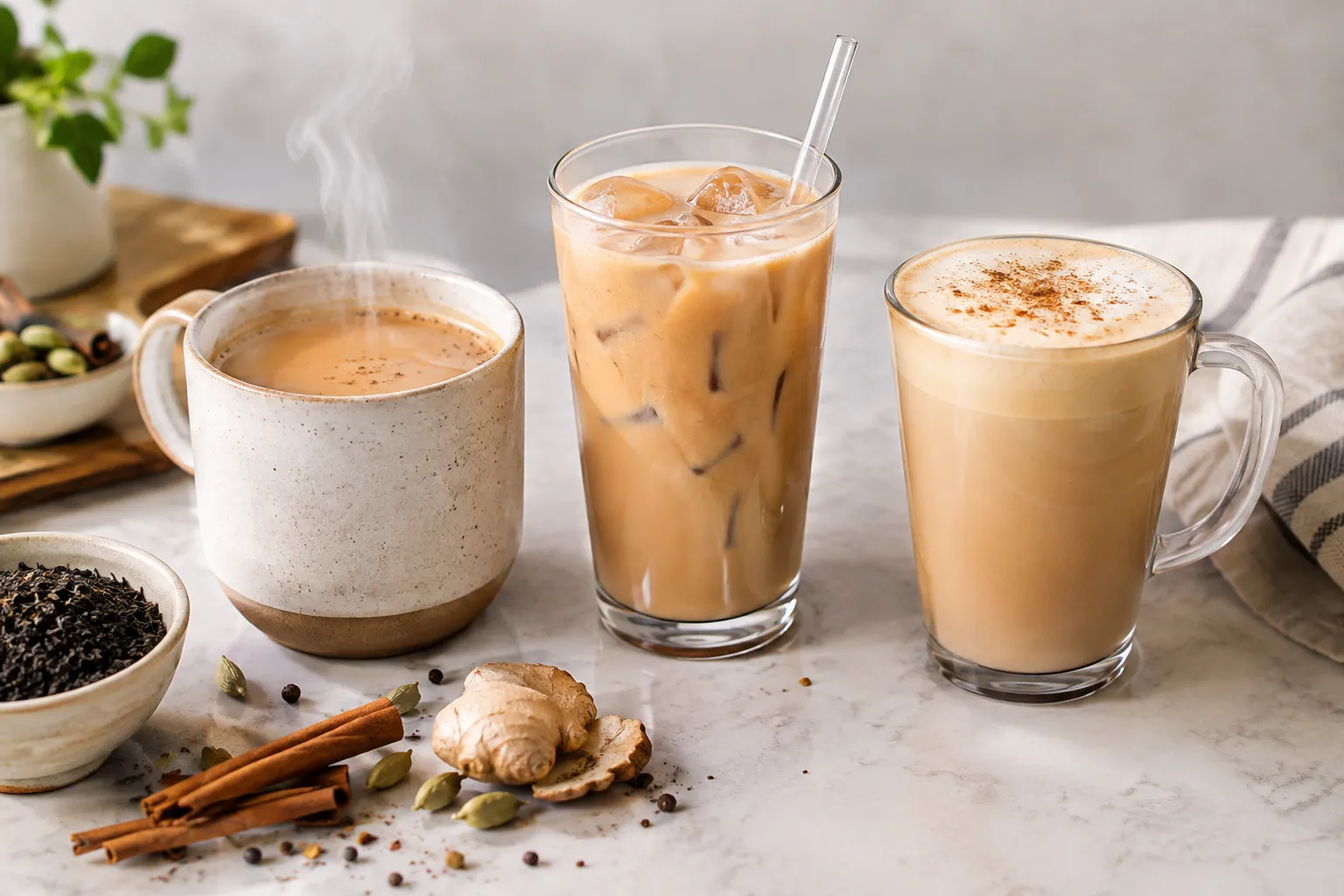
Masala chai is often served hot, freshly strained into a cup. For a smoother texture, you can warm the milk separately and combine it with the brewed tea, or use a milk frother if you have one. The spice and tea balance will still be the main character; foam is an optional finishing touch.
To make an iced version, brew the chai a little stronger than you would for a hot cup, strain it, and let it cool before pouring it over ice. Ice dilutes the drink as it melts, so a more concentrated starting brew helps retain its flavor. Add milk or sweetener to taste.
A chai latte is a milk-forward serving of spiced tea. You can make one at home by preparing a concentrated chai base and adding warm or cold milk. A concentrate is simply a stronger brew intended to be combined with milk; adjust the proportions until the tea and spices remain noticeable.
Choose a blend and make the next cup your own
There are two easy ways to begin: combine tea and spices yourself, or use a prepared masala chai blend. Mixing your own gives you control over each spice and makes it easier to explore different balances. A prepared blend offers a convenient starting point when you would rather not select and measure each spice separately.
When choosing a blend, read the product description and ingredient list so you know what is included. Consider whether you want a strong spice profile, whether you plan to add milk, and how often you expect to brew it. If you are unsure about a flavor, begin with a modest amount and adjust after tasting rather than committing to a highly spiced pot.
Tealyra’s chai tea selection is a place to explore chai styles. For a specific prepared option, see Traditional Masala Chai. Check the product page for its ingredients and preparation guidance, then decide whether its described style fits the cup you want to make.
Masala Chai FAQs
What is masala chai made of?
Masala chai is commonly made with black tea, spices, water, and milk, with sweetener added if desired. The spice mixture varies and may include cardamom, ginger, cinnamon, cloves, or black pepper.
What is the difference between masala chai and regular chai?
Masala chai is tea brewed with spices; “chai” on its own simply means tea and does not always specify a spiced recipe. In some places, though, “chai” is used informally to mean a spiced milk tea.
Is masala chai tea healthy?
Masala chai is a tea drink, but whether it suits someone’s diet depends on its ingredients and how it is prepared. Milk and sweetener change the drink’s nutritional content, so check ingredient labels and tailor the recipe to your needs.
Is masala chai high in caffeine?
Masala chai made with black tea contains caffeine, and the amount varies with the tea and brewing method. A longer or stronger brew may have more caffeine than a lighter infusion.
Who should not drink masala tea?
Masala chai may not suit someone who avoids caffeine, dairy, or a particular spice or ingredient. Check the ingredients and consider your own dietary needs when choosing or preparing a cup.
Is masala chai healthier than coffee?
Neither drink is universally healthier; they differ in ingredients, caffeine, and serving style. Compare the specific cup you drink, including its size and any milk or sweetener, rather than treating all chai or coffee as the same.
Can I make masala chai without milk?
Yes. Brew the tea and spices in water, then strain and serve it as is or add a milk alternative. Without milk, the tea and spices will taste more pronounced.
How should I store leftover masala chai?
Refrigerate leftover chai promptly in a covered container and use it within a few days. Reheat only the amount you plan to drink, and discard it if its appearance or smell seems unusual.
Recommended next steps
Start with a simple cup and change only one thing at a time. Choose a black tea you like, keep the first spice mix modest, and decide whether you prefer more tea, spice, milk, or sweetness after tasting it. If you want to explore ready-to-brew options, browse Tealyra’s chai tea selection and compare the ingredient descriptions with the flavor profile you have in mind.