 by Tealyra
Jasmine Dragon Pearls: What They Are and How to Brew Them
Jasmine dragon pearls are hand-rolled green or white tea scented with fresh jasmine blossoms. How they are made, how to brew them, and how to tell good pearls from ordinary ones.
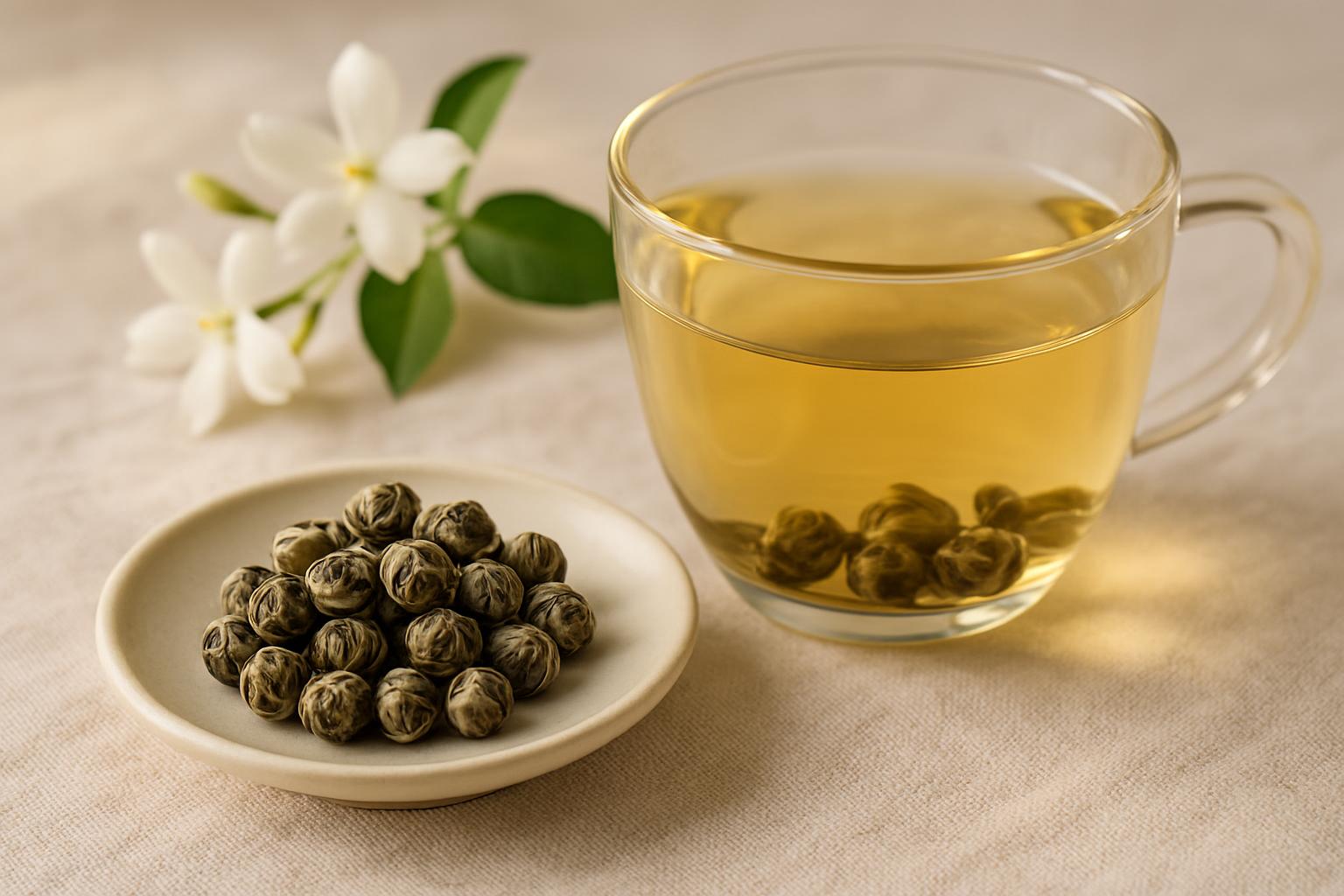
In short: jasmine dragon pearls are young green or white tea leaves that are hand-rolled into small pearls and scented with fresh jasmine blossoms. Brew 6 to 8 pearls per cup in water at 175 to 185°F (80 to 85°C) for 2 to 3 minutes, and watch them slowly unfurl. Good pearls give a sweet, floral cup that tastes of both tea and jasmine, and they can be steeped three or four times.
Few teas are as pleasant to watch as jasmine dragon pearls. A spoonful of small, tightly rolled balls goes into the pot, and a few minutes later each one has opened into a long, whole leaf and bud. The cup they make is light, sweet and fragrant, with a jasmine aroma that fills the room.
This guide explains what jasmine pearls are, how they are made, how to brew them well, and what separates a fine batch from an ordinary one.
What are jasmine dragon pearls?
Jasmine dragon pearls, also called jasmine pearls or dragon phoenix pearls, are a style of scented tea from Fujian province in southeast China. They combine two traditions: careful hand-rolling of fresh tea leaves and the old Chinese craft of scenting tea with flowers.
The base is usually a green tea, sometimes a white tea, made from young shoots: one bud and one or two leaves. After the leaves are processed, workers roll small bundles of them by hand into tight pearls about the size of a pea. The pearls are then scented with fresh jasmine blossoms over several nights.
The result is a tea that is easy to recognize: silvery green pearls, often with downy white tips, and a fresh floral scent the moment you open the package.
| Feature | Jasmine dragon pearls |
|---|---|
| Tea type | Scented green tea (sometimes white tea) |
| Origin | Fujian province, China |
| Leaf style | Hand-rolled pearls of buds and young leaves |
| Flavor | Sweet, floral, smooth, light body |
| Caffeine | Yes, similar to other green teas |
| Re-steeps | Usually 3 to 4 |
How jasmine dragon pearls are made
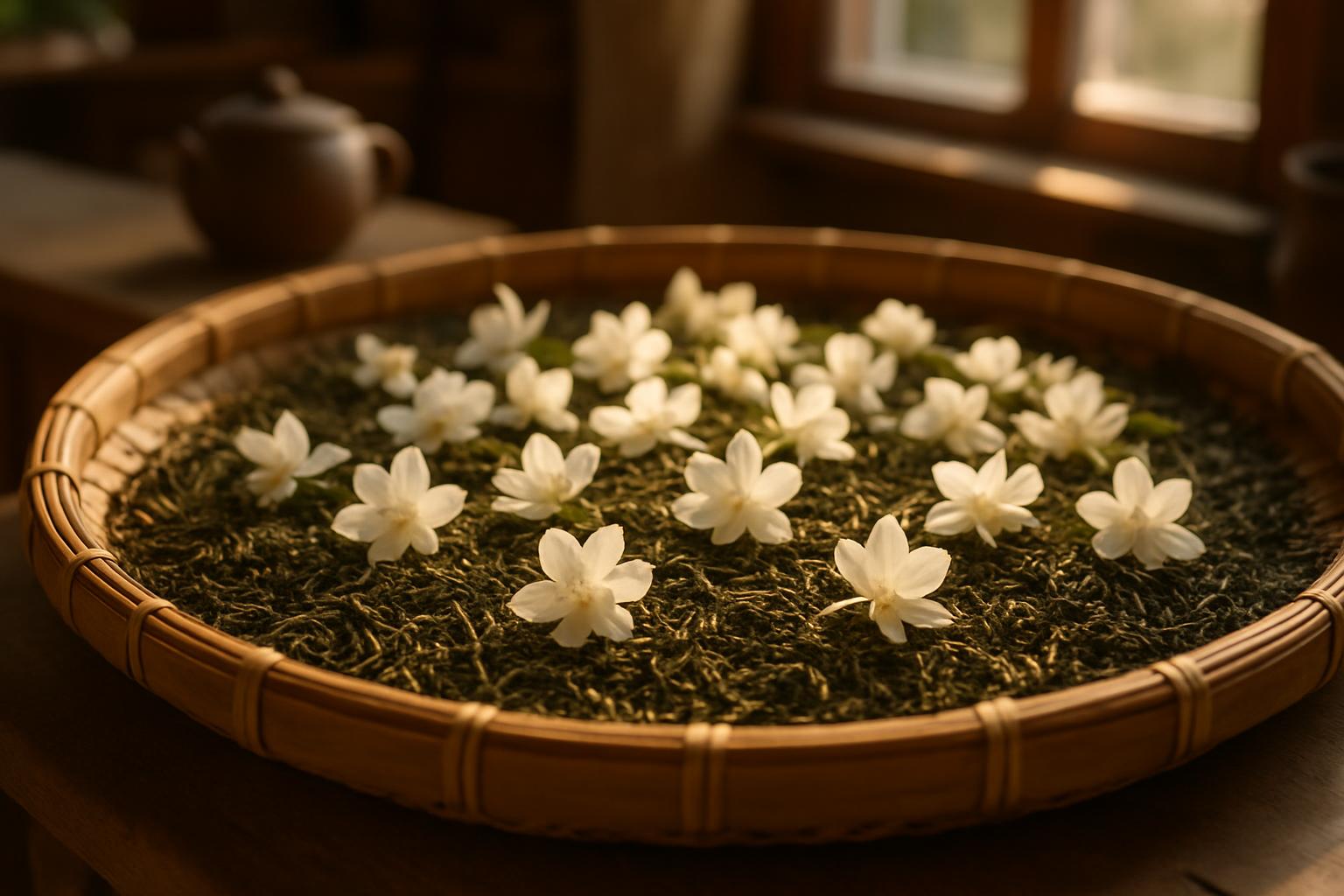
Making jasmine pearls takes weeks, and much of the work is done by hand.
- Picking. Young tea shoots are picked in spring, when the leaves are tender and sweet.
- Processing the base tea. The leaves are heated to stop oxidation, the step that keeps green tea green, and then partly dried.
- Rolling. Small bundles of leaves are rolled by hand into tight pearls. Skilled workers roll each one so the leaves stay whole inside.
- Storing. The finished green tea is stored until summer, when jasmine flowers bloom.
- Scenting. Jasmine blossoms are picked during the day while still closed. In the evening, as they open and release their fragrance, they are layered with the tea. Over several hours the tea absorbs the scent.
- Repeating. The spent flowers are removed and the tea is gently dried. For high grades, the scenting is repeated with fresh blossoms several times over several nights.
The number of scentings matters. More rounds give a deeper, longer-lasting jasmine aroma that is woven into the tea rather than sitting on top of it. In fine pearls, you will find few or no dried flowers left in the tea. The scent is in the leaves, not in added petals.
What do jasmine pearls taste like?
A good cup of jasmine pearls is:
- Floral but balanced. The jasmine is clear and fresh, never perfumy or soapy.
- Sweet. The young buds give a natural sweetness, with no sugar needed.
- Smooth. The body is light and silky, with very little bitterness when brewed at the right temperature.
- Layered. Under the jasmine, you can still taste the green tea: fresh, a little vegetal, sometimes with a hint of honey.
Later steeps change the balance. The first cup is usually the most fragrant; the second and third show more of the tea itself.
How to brew jasmine dragon pearls
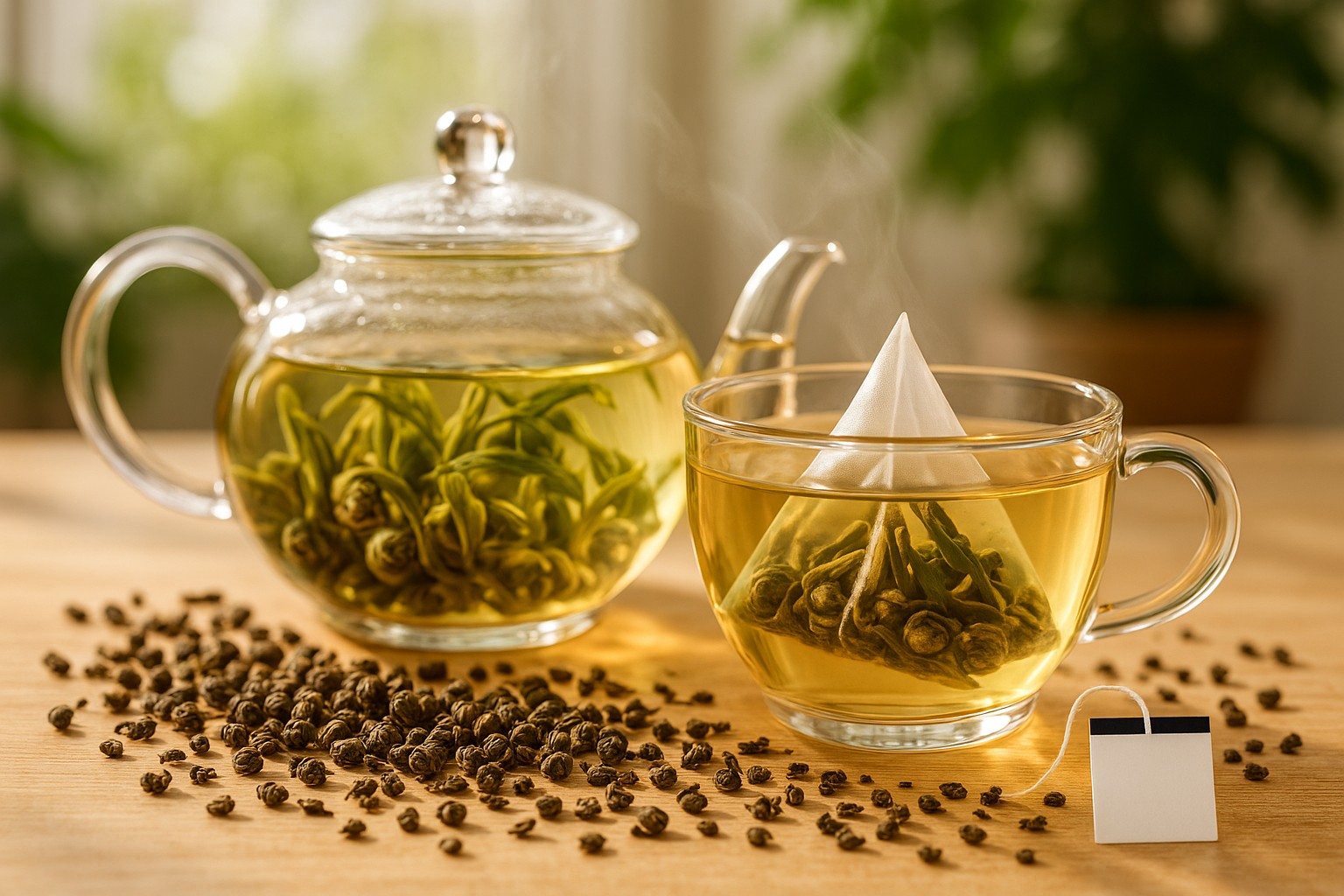
Jasmine pearls are forgiving, but a few details make a big difference.
What you need
- A glass teapot, a gaiwan or a teapot with a roomy infuser
- Water heated to 175 to 185°F (80 to 85°C)
- About 2 to 3 grams of pearls (6 to 8 pearls) per 8 oz cup
A glass teapot is the most fun option, because you can watch the pearls unroll.
Step by step
- Warm the pot. Rinse it with a little hot water and pour it out.
- Add the pearls. Use 6 to 8 pearls per 8 oz of water.
- Pour the water. Use water just off the boil, around 175 to 185°F (80 to 85°C). If you don't have a thermometer, let boiled water rest for about two to three minutes.
- Steep for 2 to 3 minutes. The pearls will start to open in the first minute.
- Pour off all the tea. Leaving the leaves sitting in water makes later cups bitter.
- Re-steep. Add fresh water and steep again, adding 30 seconds to a minute each time.
| Steep | Time | What to expect |
|---|---|---|
| 1st | 2 min | Strongest jasmine aroma, light body |
| 2nd | 2.5 to 3 min | Fuller body, jasmine and tea in balance |
| 3rd | 3 to 4 min | Softer jasmine, more of the green tea |
| 4th | 4 to 5 min | Gentle, sweet finish |
Grandpa style
You can also brew a few pearls directly in a tall glass and top up the water as you drink, without ever removing the leaves. This is called grandpa style. Use fewer pearls, about 4 to 5 per 12 oz glass, and refill when the glass is a third full.
Iced jasmine pearls
Jasmine pearls make lovely iced tea. For a cold brew, put about 10 grams of pearls in a quart of cold water and leave it in the refrigerator for 6 to 8 hours. Strain and serve over ice. Cold brewing gives a very smooth, sweet result with almost no bitterness.
Common brewing mistakes
- Water that is too hot. Boiling water flattens the jasmine and can bring out bitterness. Let it cool a little.
- Too many pearls. Remember they expand to several times their size. Too many in a small pot makes the tea harsh.
- Steeping too long. Two to three minutes is plenty for the first cup.
- Leaving tea on the leaves. Pour off all the liquid between steeps.
How to tell good jasmine pearls from ordinary ones
Not all jasmine pearls are equal. Here is what to look for.
Dry leaf:
- Pearls are small, even in size and tightly rolled.
- You can see silvery white down on many pearls, a sign of young buds.
- The scent is fresh and natural, not sharp or artificial.
- There are few or no dried jasmine petals mixed in. Lower grades sometimes add petals for looks.
Wet leaf:
- The pearls open into whole buds and young leaves, not broken pieces.
- The leaves are bright green and tender.
In the cup:
- The liquor is pale gold and clear.
- The jasmine aroma lasts through several steeps.
- There is no harsh or chemical aftertaste. A strong, fake-smelling jasmine is often a sign of added flavoring instead of real scenting.
Jasmine pearls vs. other jasmine teas
Jasmine tea comes in several styles. Dragon pearls are among the most prized, but each has its place.
| Style | Leaf shape | Character | Best for |
|---|---|---|---|
| Jasmine dragon pearls | Hand-rolled pearls | Sweet, smooth, refined | Slow sipping, re-steeping, gifting |
| Jasmine green tea (loose) | Long or twisted leaves | Fresh, lively, everyday | Daily cups, iced tea |
| Jasmine silver needle | Whole white tea buds | Very delicate, honeyed | Special occasions |
| Jasmine tea bags | Broken leaf | Quick, simple | Convenience |
If you already enjoy green tea or Chinese green tea, jasmine pearls are an easy next step. If you prefer gentle, sweet teas, try them alongside a white tea.
How to store jasmine pearls
The jasmine aroma is delicate, so storage matters.
- Keep them airtight. Use a sealed tin or pouch.
- Keep them away from light, heat and moisture. A cool cupboard is ideal.
- Keep them away from strong smells. Tea absorbs odors easily, which is exactly how scenting works. Don't store pearls next to spices or coffee.
- Enjoy them fresh. Jasmine pearls taste best within about a year. The scent slowly fades with time.
Pairing jasmine pearls with food
The light, floral character of jasmine pearls suits gentle flavors:
- Steamed dumplings and light rice dishes
- Fresh fruit, especially pears, peaches and melon
- Simple almond or butter cookies
- Mild cheeses
Avoid very spicy or heavily smoked foods, which can drown out the jasmine.
The bottom line
Jasmine dragon pearls bring together careful hand-rolling and the old craft of scenting tea with real flowers. Brew them with water below boiling, use a few pearls per cup, and pour off the tea between steeps. You will get several sweet, floral cups from one spoonful, and a small show in the teapot each time. Free US shipping is available on Tealyra orders if you'd like to try them at home.
Frequently asked questions
What are jasmine dragon pearls?
They are young green or white tea leaves and buds that are hand-rolled into small pearls and scented with fresh jasmine blossoms. In hot water the pearls slowly unroll into whole leaves.
Do jasmine pearls contain caffeine?
Yes. Jasmine dragon pearls are made from real tea leaves, usually green tea, so they contain caffeine. The amount is usually similar to other green teas and depends on how much tea you use and how long you steep it.
How many jasmine pearls should I use per cup?
Start with about 6 to 8 pearls, roughly 2 to 3 grams, for an 8 oz cup. Use a few more for a stronger cup and fewer if you plan to re-steep many times.
What water temperature is best for jasmine pearls?
Use water at about 175 to 185°F (80 to 85°C). Boiling water can make the tea taste flat or slightly bitter and dulls the jasmine aroma.
How many times can I re-steep jasmine dragon pearls?
Good pearls can usually be steeped three or four times. Add 30 seconds to a minute to each new steep as the leaves open up.