 by Tealyra
How to Make Iced Matcha: A Smooth, Refreshing Recipe
Learn how to make iced matcha that is smooth, bright, and clump-free. Discover easy brewing techniques, whisking tips, and the best way to balance flavor.
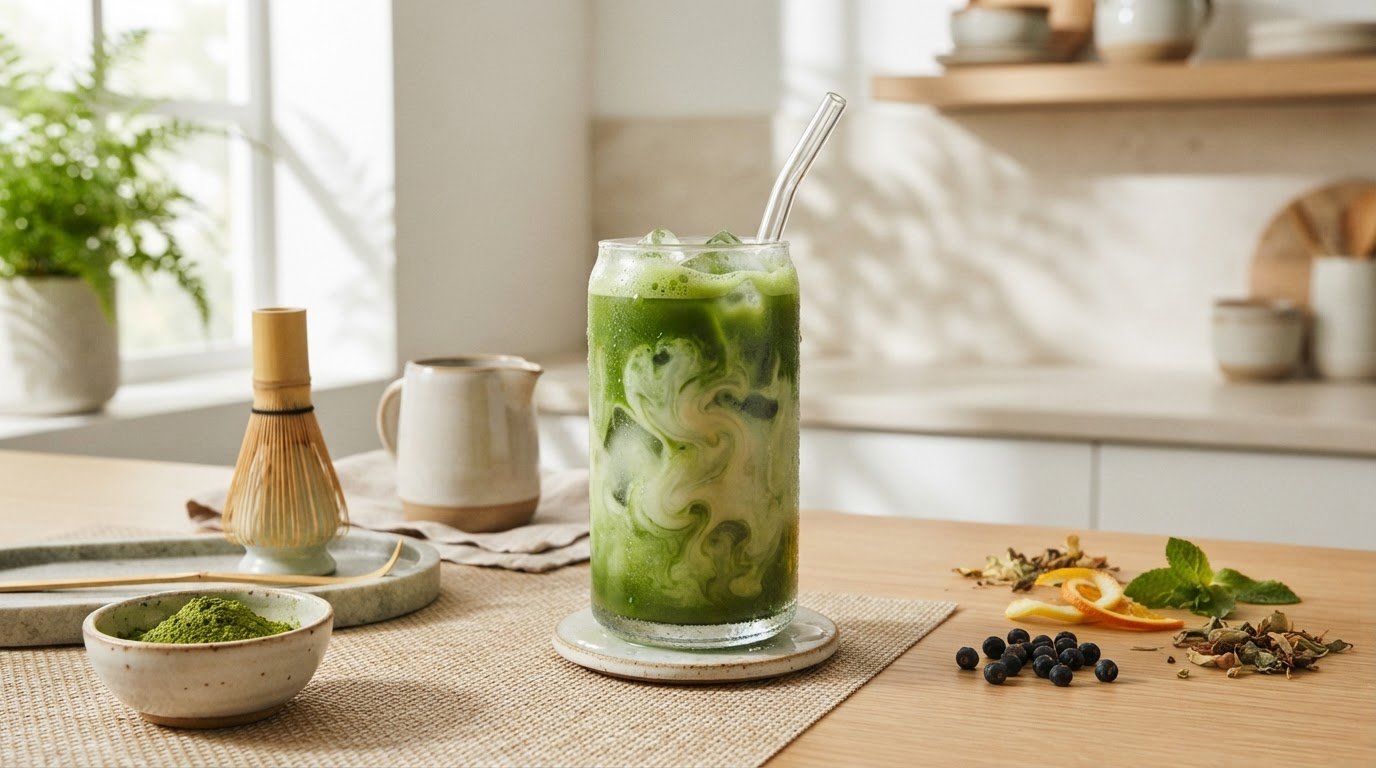
What if the secret to bright, smooth iced matcha isn’t more whisking, but a better starting point? If you’ve watched matcha gather into stubborn green flecks in cold milk, or tasted a drink that’s bitter one moment and watery the next, you’re not alone. Learning how to make iced matcha starts with a concentrated, lump-free base. Whisk the powder with a little warm water before adding ice or cold liquid.
This step helps disperse the powder evenly, so its fresh, grassy notes stay clear and balanced. You don’t need elaborate equipment: a bamboo whisk, small handheld frother, or tightly sealed jar can all help create a smooth base. Choose based on the texture you enjoy and the tools you have.
In this recipe, you’ll learn a simple method and how to adjust the matcha’s strength and sweetness without losing its character. You’ll also see which tools and ingredients are useful, and which are optional.
Key Takeaways
- Learn how to make iced matcha with a simple method that keeps its flavor clear and refreshing.
- Compare whisking, shaking, and frothing to find a preparation style that suits your tools and preferred texture.
- Adjust matcha, liquid, ice, or sweetener in small steps to bring an unbalanced cup back into harmony.
- Choose matcha for a cold drink by paying attention to its color, aroma, and flavor.
Table of Contents
Why Does Iced Matcha Turn Clumpy, Bitter, or Watery?
A glass of iced matcha should feel cool and refreshing, with a vivid green hue and a clean, gently grassy finish. If powder floats in stubborn specks or the drink tastes too sharp or thin, the issue is often how the matcha meets the liquid. These are common preparation snags, not a sign that you need complicated equipment or a practiced hand.
Iced matcha is finely milled tea powder mixed into liquid and served cold over ice. Unlike tea leaves that are steeped and removed, matcha remains suspended in the drink. Its flavor can be grassy, gently sweet, or savory. A harsh or watery cup often points to an imbalance in the amount of powder, liquid, or melting ice. Knowing this makes how to make iced matcha feel more approachable.
The basic principle is simple: disperse the powder in a small amount of liquid first, then add the rest. A concentrated base gives you a chance to break up dry pockets before the powder is surrounded by a full glass of cold water or milk. Tealyra’s matcha green tea powder can be prepared this way, with the strength adjusted to suit your preference.
What gives iced matcha its smooth texture?
Matcha particles don’t dissolve like sugar; they remain suspended in the liquid. Dry powder can catch on itself when it hits a larger volume of cold liquid, forming clumps with dry centers. Starting with a little liquid lets you whisk the particles into a smooth concentrate before thinning it. Sifting can help loosen compacted powder, but it’s optional for a casual glass.
Look for an even, fluid base before adding more liquid. If you spot dry flecks on the sides of the bowl or shaker, pause to whisk or shake them in. A fine sieve is useful when the powder is compacted, but careful mixing is the essential step.
Why can cold matcha taste harsh or diluted?
Too much water can soften matcha’s green-tea character until its flavor seems faint. Using more powder than you enjoy may make its grassy, savory notes feel intense or bitter. Taste is personal, so adjust the powder or liquid gradually rather than immediately masking the tea with sweetener.
Ice brings another change. As it melts, it adds water to the drink, gradually diluting its flavor and texture. If your matcha tastes balanced at first but turns thin as you sip, try using less ice or serving it promptly. The aim isn’t to eliminate matcha’s natural edge, but to find a proportion where its fresh, green notes remain distinct and pleasant.
Matcha also carries a history shaped by exchange and tradition. Matcha originated through cultural exchanges between China and Japan in the premodern period, developing from earlier powdered tea practices in China that were transmitted to Japan by Zen Buddhist monks. A little attention to the first mix honors that powdered-tea preparation while keeping this cool, simple version easy to make at home.
How to Make Iced Matcha: The Basic Whisked Recipe
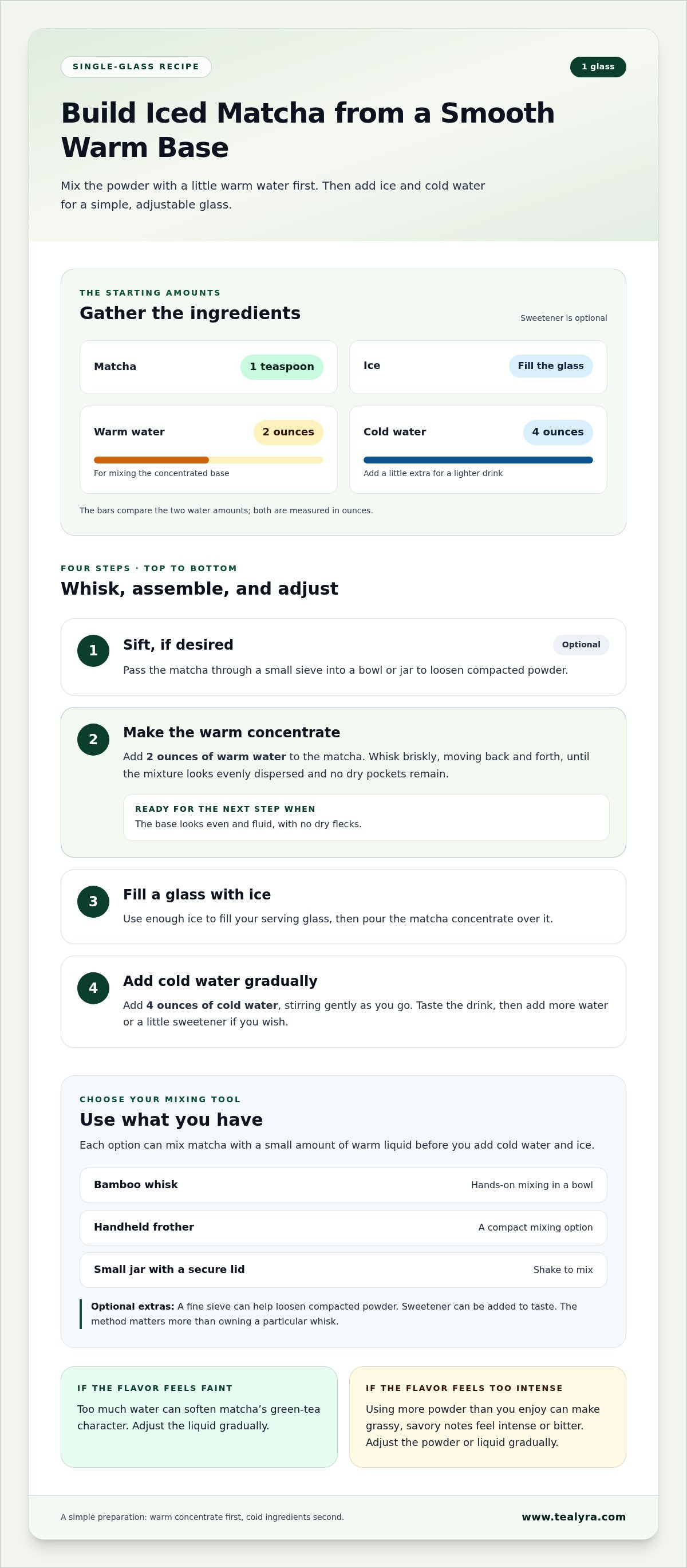
This easy, single-glass recipe gives you a vivid green drink with room to adjust the strength. Warm water helps make a smooth matcha concentrate, while cold water and ice bring the drink together. Treat the quantities as a starting point: matcha’s flavor and your preferred balance can vary.
Which ingredients and tools do you need?
Gather matcha, warm water, cold water, and ice. Sweetener is optional. A bowl and bamboo whisk make a traditional pairing, though a small jar with a secure lid or a handheld frother can also mix the powder. A fine sieve is useful if the matcha is compacted, but not essential.
- Matcha: 1 teaspoon
- Warm water: 2 ounces
- Cold water: 4 ounces, with a little extra if you prefer a lighter drink
- Ice: enough to fill your serving glass
- Optional: sweetener to taste
Yield: 1 glass. You’ll also need a small bowl or jar for mixing and a glass for serving. If you’re exploring matcha preparation accessories, choose a tool that feels comfortable to use. The method matters more than owning a particular whisk.
How do you whisk and assemble the drink?
Prepare the matcha with warm water first, then add the cold ingredients. This gives you a chance to blend the powder evenly before it meets the ice. Use a bamboo whisk, frother, or sealed jar, whichever suits your kitchen and preferred texture.
- Sift, if desired. Pass the matcha through a small sieve into a bowl or jar to loosen compacted powder.
- Add warm water. Pour in the 2 ounces and whisk briskly, moving the whisk back and forth until the concentrate looks evenly dispersed and no dry pockets remain.
- Fill a glass with ice. Pour the matcha concentrate over the ice.
- Finish with cold water. Add the 4 ounces gradually, stirring gently as you go. Taste, then add more water or a little sweetener if you wish.
The color and flavor come from the finely ground tea itself. The USDA Agricultural Research Service describes matcha constituents associated with its green color and its umami, astringent, and bitter notes, which can all be part of its character. Let the first sip guide your final adjustment. Explore matcha green tea powder for your next glass.
Whisk, Shake, or Froth: Which Iced Matcha Method Works Best?
There’s no single correct tool for making iced matcha. A bamboo whisk offers hands-on control, a jar makes for a quick shake, and a handheld frother keeps the process compact. Each can disperse matcha into a small amount of warm liquid before you add cold water and ice. Choose the method that fits your kitchen and the texture you enjoy.
Equipment
Steps
Likely texture
Best fit
Bamboo whisk
Whisk matcha with a little warm water in a bowl, then pour over ice and add cold water.
Evenly mixed, with control over how much foam forms.
A measured preparation and hands-on whisking.
Jar with lid
Combine matcha and warm water, seal the jar securely, and shake until dispersed.
Mixed through shaking; foam may form.
A simple approach when you want to use a jar you already have.
Handheld frother
Move the frother through matcha and warm water until the concentrate looks evenly mixed.
A briskly mixed concentrate; the result depends on how you use the tool.
A compact option for mixing directly in a suitable cup or small vessel.
Can you make iced matcha without a bamboo whisk?
Yes. A clean jar with a tightly fitting lid can mix matcha and warm water. Leave enough room for the liquid to move, secure the lid, and shake until you no longer see dry pockets. Mixing the powder with warm liquid first can make stubborn clumps less likely than adding it straight to a full glass of cold liquid.
A handheld frother is another practical choice. Keep its head beneath the surface as you mix to limit splashing, and use a vessel with enough room for the liquid to move. These alternatives won’t reproduce every detail of whisking, but they can make a well-mixed base without specialized equipment. You can explore matcha accessories if a dedicated preparation tool would suit your routine.
How does each method affect the finished cup?
A bamboo whisk gives your hand direct control over mixing, while shaking trades that control for convenience. A frother offers a compact way to mix, though you’ll need to guide it through the concentrate. The result depends on careful mixing and your own preference.
The texture can also change after the matcha is mixed. Ice begins to melt, adding water and softening the drink as you sip. If you prefer a fuller flavor, add cold water gradually and taste before serving. For a lighter cup, keep adjusting until it feels balanced. The best method is the one you’ll use comfortably and that leaves your iced matcha pleasant to drink.
How to Adjust Iced Matcha for a Balanced, Refreshing Taste
A good iced matcha is personal: one drinker may love a pronounced, savory green-tea note, while another prefers a lighter, softer cup. Once you have a smooth base, make changes one at a time. This makes it easier to tell whether the flavor shifted because of the matcha, liquid, ice, or sweetness.
How can you make iced matcha less bitter or more flavorful?
If the matcha tastes too intense, add a little more cold water and taste again. If it feels weak, strengthen the next glass with slightly more matcha rather than changing several things at once. This gradual approach preserves matcha’s fresh, grassy and sometimes savory character instead of burying it beneath sweetness.
Sweetener is optional. Try a small amount after you’ve found a balance you enjoy, then stir and taste before adding more. For a simple comparison, prepare two small pours from the same batch: leave one unsweetened and lightly sweeten the other. Notice how sweetness changes the grassy flavor and whether you prefer the plain version’s savory edge. There’s no single right answer.
If the drink tastes clumpy, return to the concentrate before adding ice. Mix it again until the powder is evenly dispersed. Adding more liquid to a clumpy glass may loosen the texture, but it won’t necessarily blend the powder smoothly. Address the mixing first, then adjust the flavor.
How can you keep the drink from becoming watery?
Ice gradually melts into the drink, so serve your matcha soon after assembling it for a more defined flavor. If you’ll sip slowly, begin with a stronger-tasting concentrate, then add cold liquid cautiously. Taste before adding more. A small adjustment is easier than trying to bring back flavor after the glass has become diluted.
For a creamy variation, replace some of the cold water with milk or a milk alternative. This changes the drink’s body and flavor: the result may feel rounder and softer, with less emphasis on matcha’s crisp green notes. Since milk varies in richness and sweetness, substitute only part of the cold liquid at first, then adjust the next glass to your taste. Keep the concentrate smooth before adding milk or ice.
Think of each glass as a tasting exercise. If it’s too strong, ease it with liquid; if it’s thin, adjust the next concentrate; if sweetness takes over, use less next time. Change one element at a time to clarify your preferences. To explore matcha for your next cup, find matcha green tea powder.
Choose Matcha and Serve Your Iced Matcha with Care
The matcha you choose shapes the character of the finished glass, but iced matcha doesn’t call for one prescribed grade or style. Consider the flavor you enjoy: perhaps a fresh, grassy cup with a gentle savory note, or a more pronounced green-tea taste that stays noticeable over ice. Choose a matcha whose aroma and flavor appeal to you when prepared with water, then adjust it to your preferred strength.
What should you look for in matcha for an iced drink?
Notice the powder’s color and aroma as you prepare it, then taste the concentrate before adding ice. A lively green appearance and fresh, grassy scent can make the preparation inviting, while the first sip tells you whether the flavor leans delicate, savory, or more assertive. Matcha can vary in character, so let your palate guide your choice rather than relying on a grade label alone.
If you’re choosing tea for this recipe, browse matcha green tea powder and consider how you plan to drink it. A cup served with water lets the matcha’s own notes come forward; a version with milk or sweetener will taste different. Start with the flavor you want to notice, then adjust the preparation to bring it into focus.
How can you make iced matcha part of an easy ritual?
Keep the sequence calm and repeatable: measure your matcha, prepare a smooth concentrate, then pour it over ice and finish with cold liquid. A small bowl and whisk can make the mixing feel intentional, while a jar or handheld frother is a practical alternative. These tools can support the ritual, but none is required for enjoying a glass at home.
Once you’ve found a proportion you like, note it down or remember the balance that made the flavor feel right. Next time, change one detail, perhaps a little more matcha for a bolder cup or less sweetener to let the grassy notes shine. Serving in a clear glass makes the green concentrate and ice part of the pleasure, too.
For a refreshing afternoon drink, mix matcha smoothly with a little warm water, add ice, then finish with cold water and taste. Keep the recipe simple, and let the tea’s color, aroma, and flavor guide small adjustments. Explore Tealyra’s matcha green tea powder and choose a cup that suits your taste.
Make Your Next Glass Your Own
Your next cup can be a small invitation to notice what you enjoy: a brighter grassy note, a softer finish, or a little more body. Let curiosity guide your adjustments rather than aiming for one perfect formula. Over time, how to make iced matcha becomes less about exact steps and more about finding a balance that feels distinctly yours.
Keep the preparation relaxed. Choose a matcha whose aroma appeals to you, use tools that feel comfortable in your hands, and leave room to experiment with the final taste. A quiet afternoon is as good a moment as any to begin again, one refreshing glass at a time.
Explore Tealyra’s matcha green tea powder for your next refreshing cup, and enjoy discovering the version you’ll look forward to making.
Frequently Asked Questions
How do you keep iced matcha from getting clumpy?
Start by breaking up compacted powder with a small sieve or the back of a spoon. Add liquid in stages rather than filling the cup all at once, and check the bottom of your bowl or jar for dry powder. If a few flecks remain, keep mixing the base before adding ice. This helps catch clumps before they reach the serving glass.
Can you make iced matcha with cold water?
Yes, though cold water can take more mixing to disperse the powder evenly. For how to make iced matcha with only cold water, put the matcha and a small splash of water in a jar, close the lid firmly, and shake until the mixture looks even. Then add the remaining cold water and ice. A frother is another option for working the powder into a small amount of cold liquid.
What is the best liquid to mix with iced matcha?
Water is a good choice if you want matcha’s grassy, savory notes to stay clear. Milk or a milk alternative makes the cup creamier and changes its body, so the tea may seem softer. Start with water if you’re learning the flavor, then try replacing part of it with milk in a later glass. The best option is the one that suits your palate.
Can you make iced matcha ahead of time?
You can prepare the matcha base ahead of assembling the drink, but add ice just before serving for a more vivid flavor and less dilution. If you mix a full glass in advance, melting ice may gradually soften its taste. For an easier later preparation, measure the matcha and set out your tools beforehand, then whisk, add liquid, and serve when you’re ready.
How much matcha should you use for one glass?
For one glass, begin with 1 teaspoon of matcha, whisked with 2 ounces of warm water. Add ice and about 4 ounces of cold water, then taste before changing the balance. For a more pronounced green-tea flavor, use a little more matcha next time; for a gentler cup, add more water. Adjust one element at a time so you can notice the difference.
Can you make iced matcha without added sweetener?
Absolutely. Matcha can be served unsweetened, allowing its fresh, grassy character and savory notes to come through without added sweetness. Taste it before deciding whether to add anything. If the flavor feels too pronounced, try a small increase in water or a splash of milk rather than sweetener. There’s no required level of sweetness; let your preferred balance guide the glass.
Article by
Tealyra
The Best Galaxy Of Teas