 by Tealyra
What Is Hojicha? Taste, Brewing and How It Differs from Matcha
Hojicha is roasted Japanese green tea: toasty, nutty and low in caffeine. Learn how it's made, how it tastes, how to brew it and how it compares with matcha.
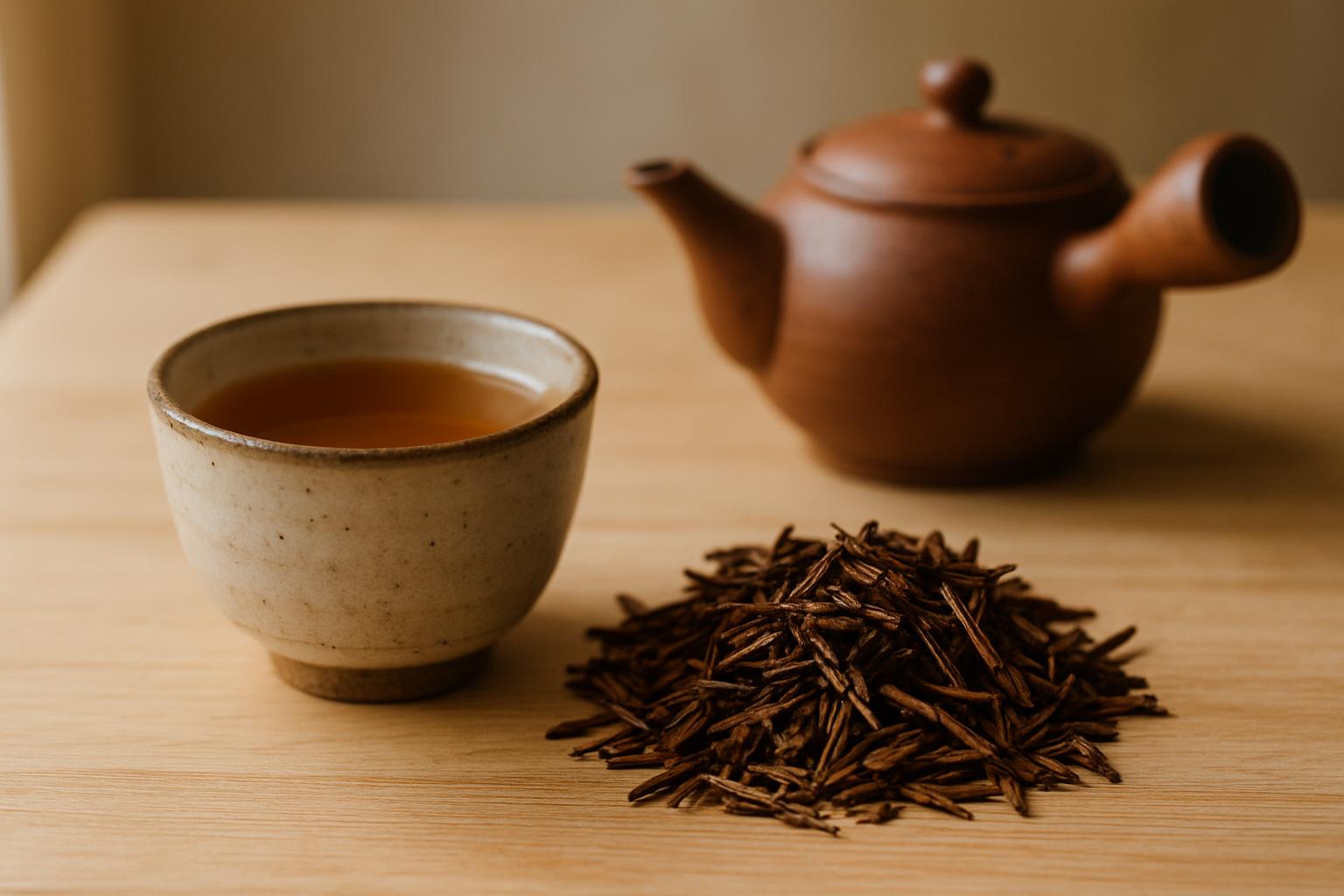
In short: hojicha is Japanese green tea roasted until it turns reddish-brown. It tastes toasty, nutty and sweet, is generally low in caffeine, and brews easily at 80–90°C (176–194°F). Unlike matcha, you steep the leaves rather than whisking a powder.
If you love the comfort of a warm, toasty cup but find most green teas too grassy, hojicha might be your new favorite. This roasted Japanese green tea has a reddish-brown color, a nutty, caramel-like flavor and a naturally gentle character that makes it easy to enjoy any time of day.
What is hojicha?
Hojicha (焙じ茶, also spelled houjicha) means "roasted tea" in Japanese. It starts as ordinary Japanese green tea, usually bancha or sencha leaves and stems, which is then roasted over high heat. The roasting turns the leaves from green to warm brown and changes the flavor completely.
Hojicha is said to have been created in Kyoto in the 1920s, when tea merchants began roasting leftover leaves and stems so nothing went to waste. Today it is one of the most popular everyday teas in Japan, served after meals and in many restaurants.
What does hojicha taste like?
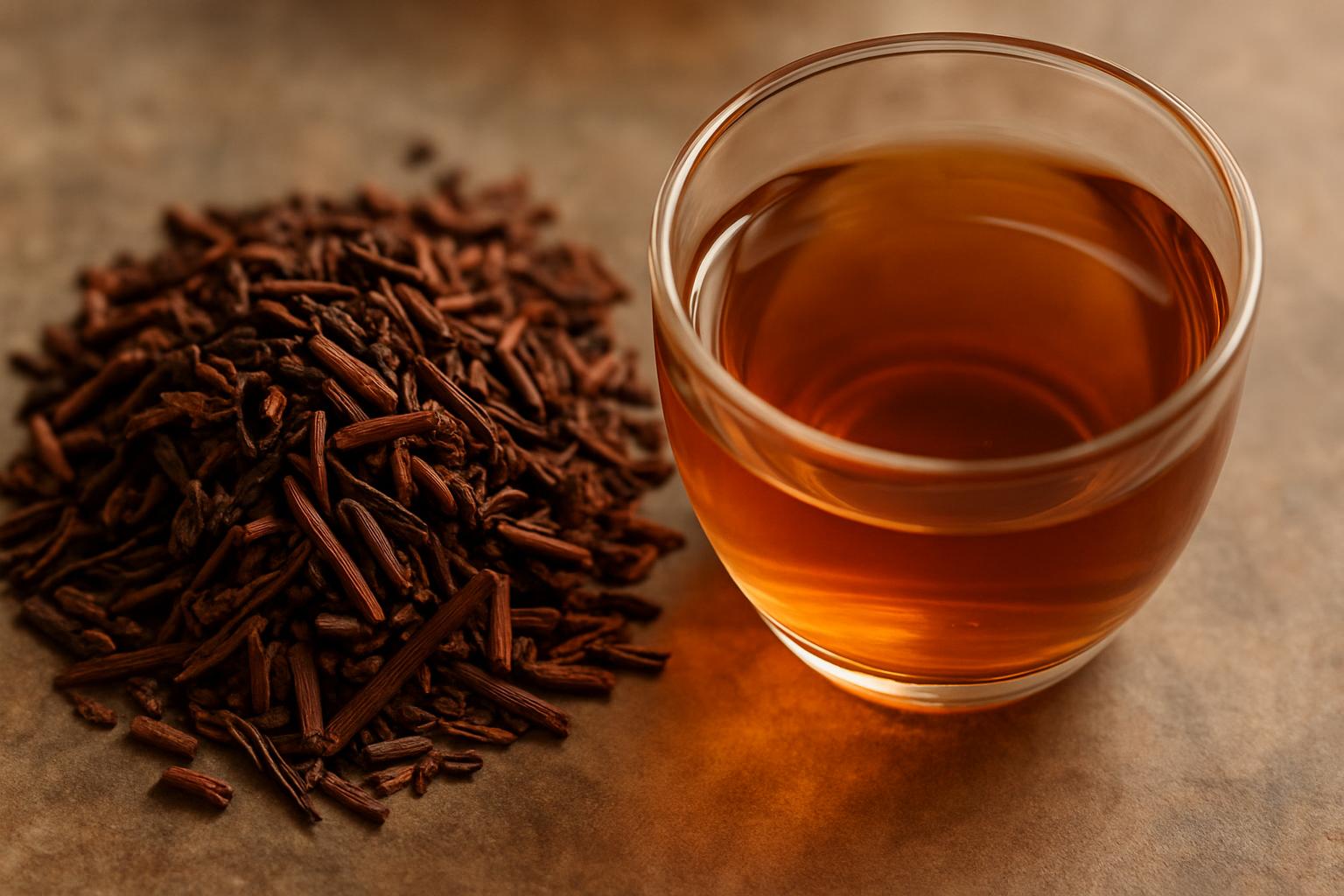
Roasting removes most of the fresh, vegetal notes you find in green tea. In their place you get:
- Toasty and nutty notes, like roasted grains or hazelnuts
- Natural sweetness, often with a hint of caramel or cocoa
- A smooth, round body with very little bitterness or astringency
The brewed tea is amber to reddish-brown, closer in color to a light black tea than to green tea.
Is hojicha low in caffeine?
Hojicha is generally considered low in caffeine. It is often made with more mature leaves and stems, which contain less caffeine than young buds, and the high-heat roasting reduces it further. That's why many tea drinkers in Japan enjoy it in the evening.
How to brew hojicha
Hojicha is forgiving and hard to make bitter. For one 240 ml (8 oz) cup:
- Use about 1 heaped teaspoon (2–3 g) of leaves. Hojicha leaves are light and bulky.
- Heat water to 80–90°C (176–194°F). Hotter water brings out more roasted flavor.
- Steep for 30 seconds to 1 minute in a small Japanese teapot, or 2–3 minutes in a mug with an infuser.
- Re-steep the same leaves two or three times, adding a little time for each infusion.
Hojicha latte: brew a strong cup with double the leaves, then top with steamed milk or a plant-based alternative. Add a little honey or maple syrup if you like it sweet.
Iced hojicha: cold-brew 2 teaspoons of leaves in 500 ml of cold water in the fridge for 6–8 hours, then strain.
Hojicha vs matcha
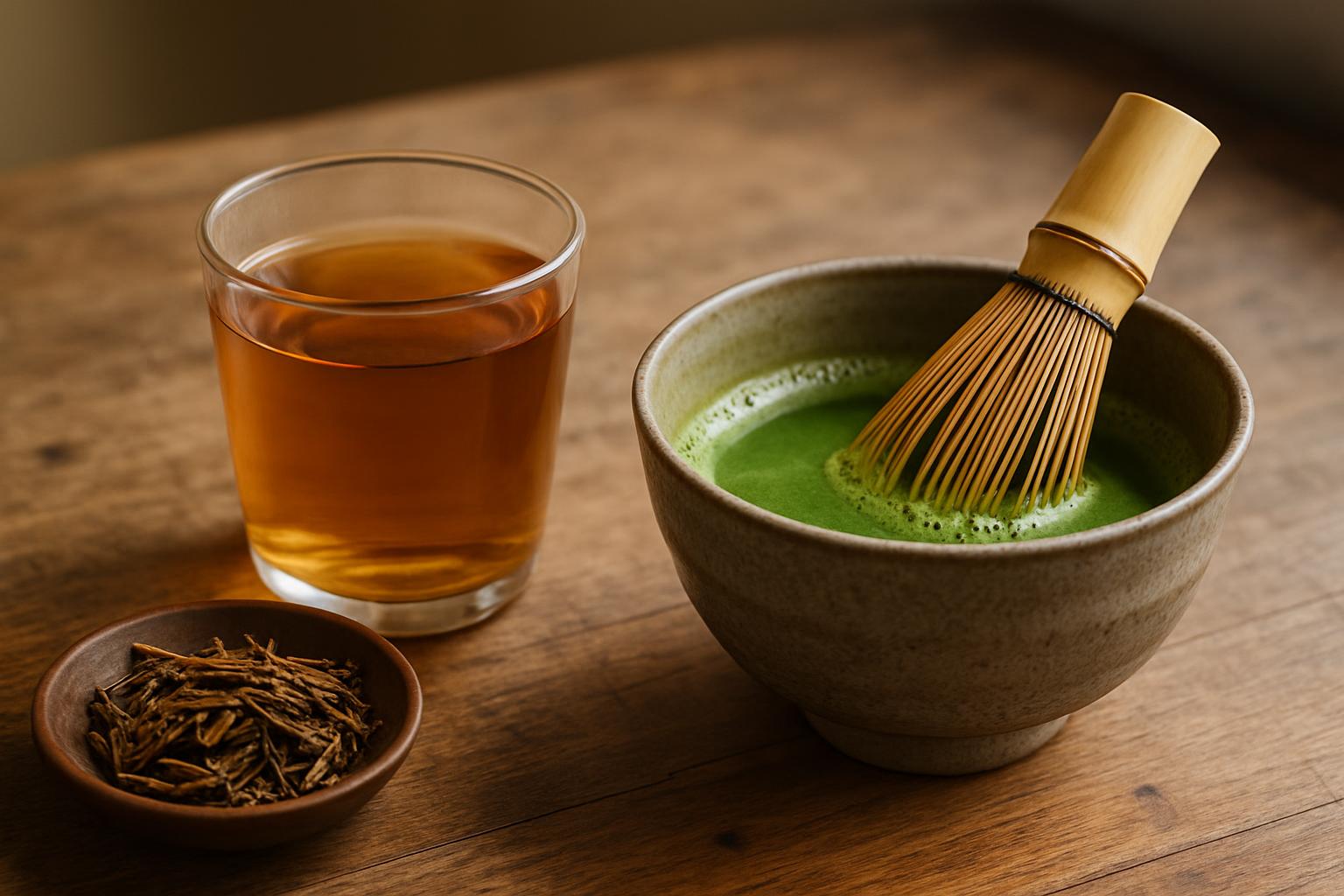
Both are Japanese green teas, but they are very different in the cup.
| Hojicha | Matcha | |
|---|---|---|
| How it's made | Green tea leaves and stems roasted at high heat | Shade-grown leaves stone-ground into fine powder |
| Color | Reddish-brown | Bright green |
| Taste | Toasty, nutty, sweet, caramel | Rich, vegetal, umami, slightly bitter |
| Caffeine | Low | High |
| How to prepare | Steep the leaves like any loose tea | Whisk the powder into water |
| Best for | Evening cups, everyday sipping, lattes | Morning energy, ceremonies, lattes and baking |
If matcha feels too intense or you want a cozy cup later in the day, hojicha is the easy-going choice. You can also find hojicha powder for lattes, but loose leaf hojicha gives the cleanest, most aromatic cup.
Hojicha from Tealyra
We carry two loose leaf hojicha teas:
- Hojicha: a Kyoto-style classic, roasted at high heat. Reddish-brown, toasty, nutty and sweet with a caramel hint.
- Superior Miyazaki Hojicha: pan-roasted first-flush green tea from Gokase in Miyazaki. Sweet, toasty and especially smooth.
Explore more of our Japanese green teas, or see our guide on how to brew loose leaf tea.
Frequently asked questions
Is hojicha green tea? Yes. Hojicha is green tea that has been roasted after processing, which changes its color and flavor.
Can I drink hojicha at night? Many people do, because hojicha is generally low in caffeine. If you are sensitive to caffeine, start with a lighter cup.
Does hojicha go well with milk? Yes. Its toasty, caramel notes make it one of the best teas for lattes.
How should I store hojicha? Keep it in an airtight container away from light, heat and moisture, and enjoy it within a few months for the best aroma.